Boost your child's math skills with our engaging Addition & Subtraction Worksheets designed for ages 5-8! These printable resources focus on enhancing comprehension, helping kids not just memorize facts, but truly understand the concepts behind addition and subtraction. With colorful illustrations and fun exercises, children will enjoy learning at their own pace. Our worksheets target crucial skills, ensuring that young learners develop a solid mathematical foundation. Designed by educators, these materials promote problem-solving and critical thinking, making math enjoyable and effective. Start your child on the path to math mastery today with our carefully crafted worksheets!
Check out this FREE Trial Lesson on Addition & Subtraction for age 5-8!

A

Favorites
With answer key
Interactive
  • 5-8
  • Enhance comprehension
  • Addition & Subtraction
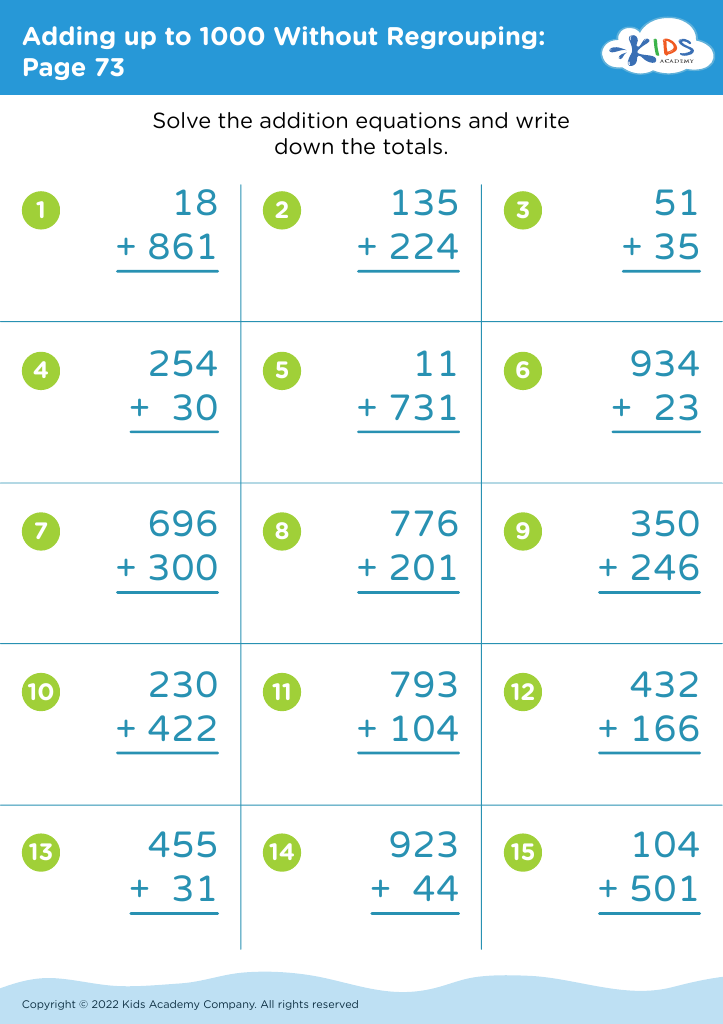
Adding up to 1000 Without Regrouping: Page 73
Worksheet
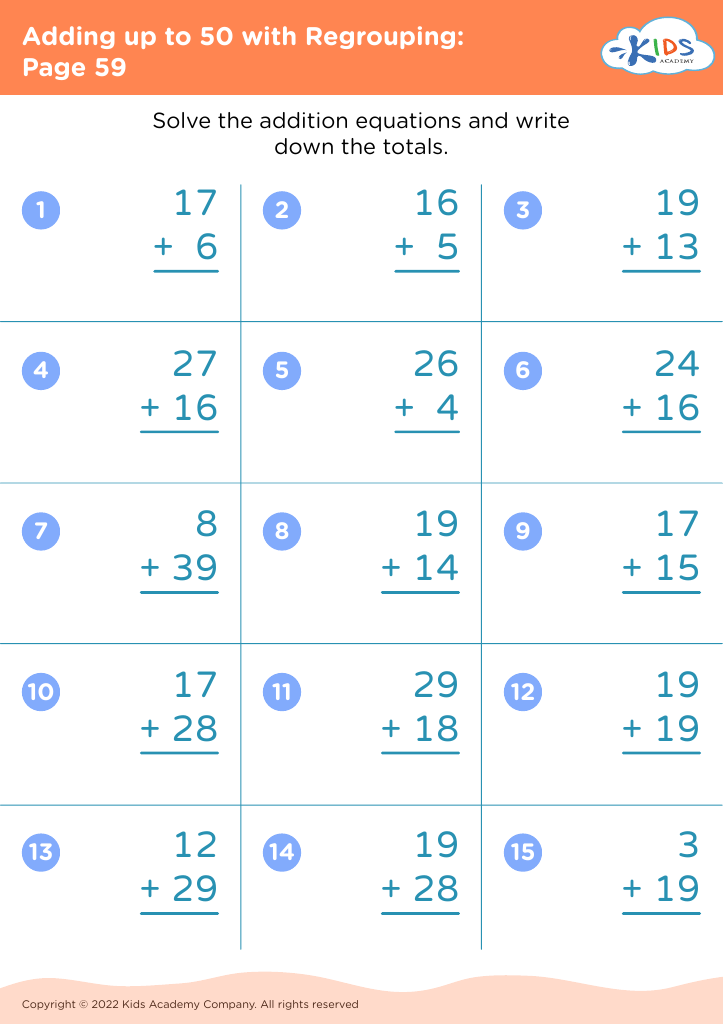
Adding up to 50 with Regrouping: Page 59
Worksheet
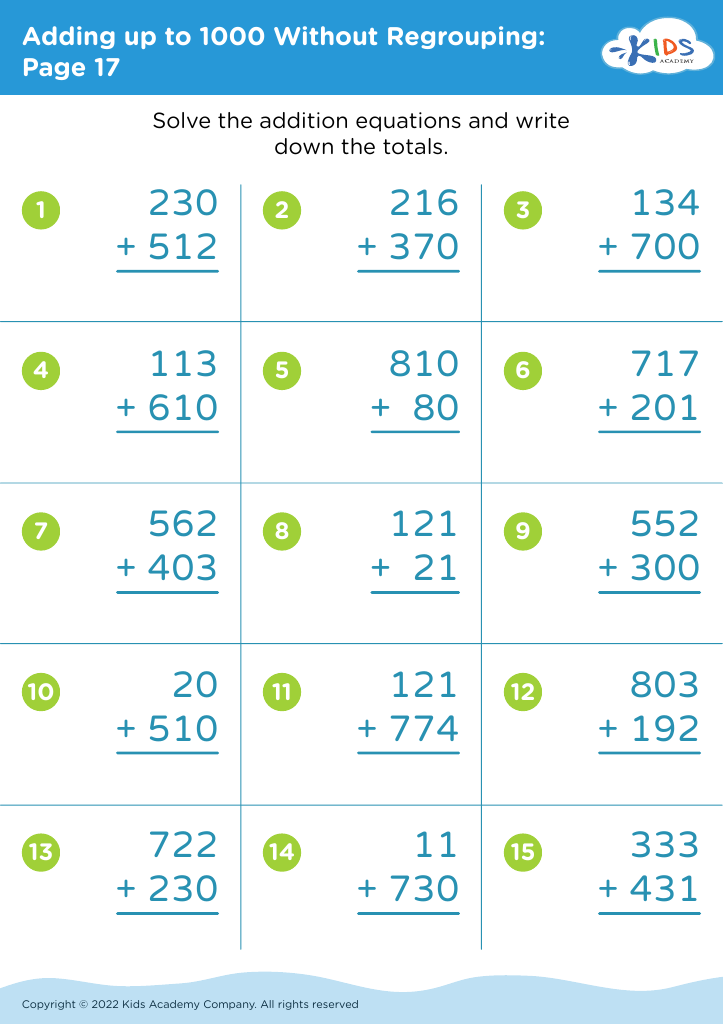
Adding up to 1000 Without Regrouping: Page 17
Worksheet
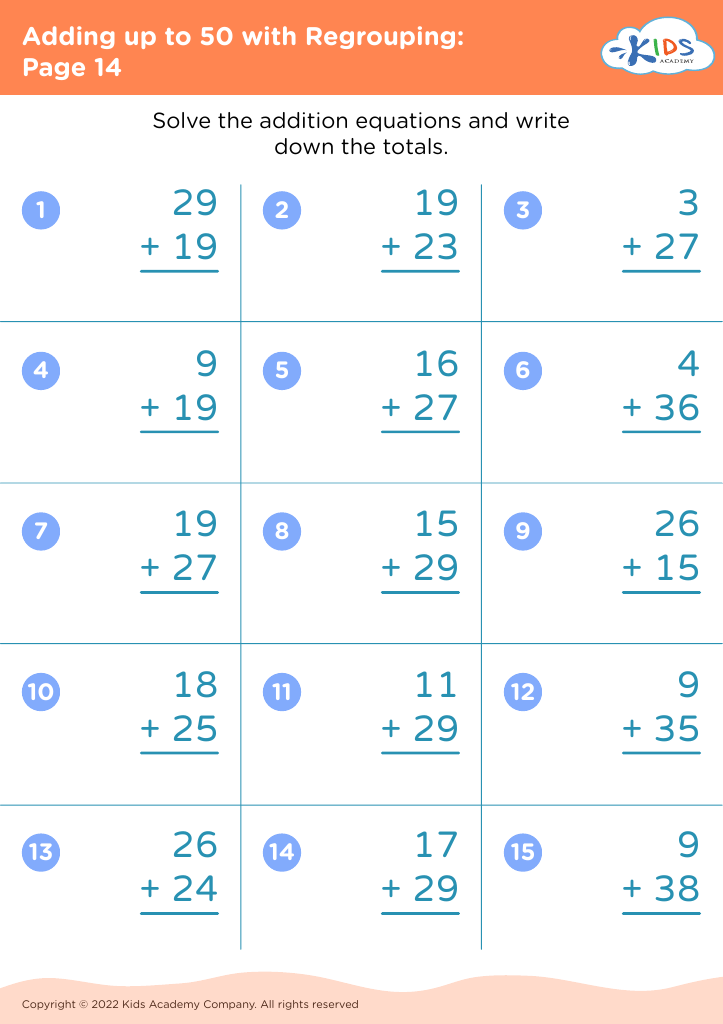
Adding up to 50 with Regrouping: Page 14
Worksheet
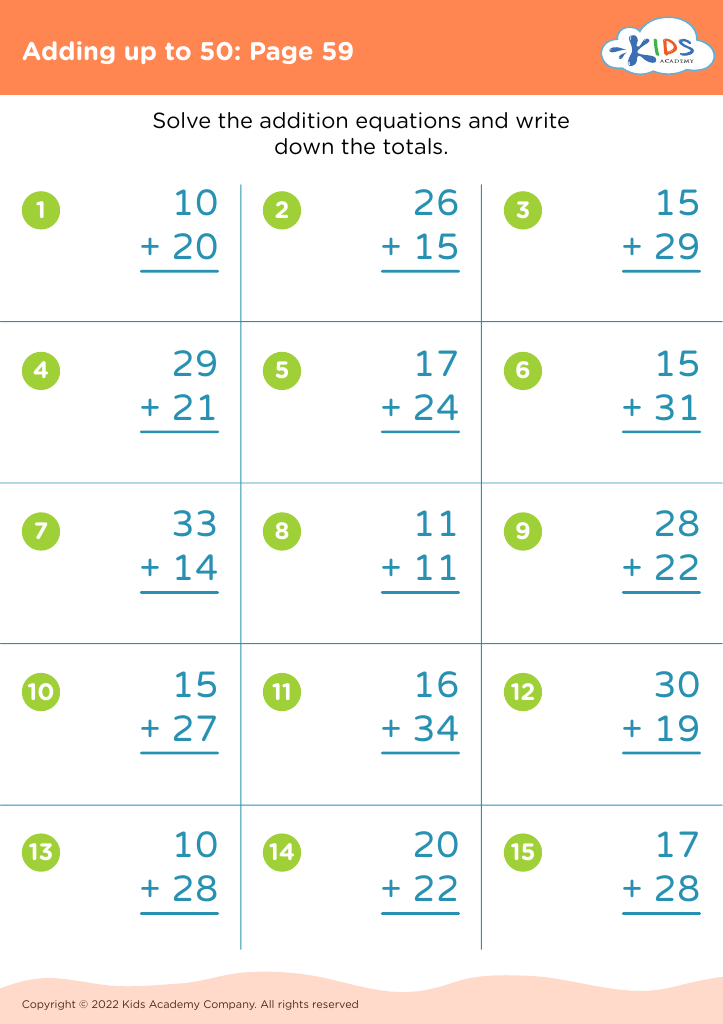
Adding up to 50: Page 59

Adding up to 50: Page 59

Adding up to 50: Page 59
Worksheet
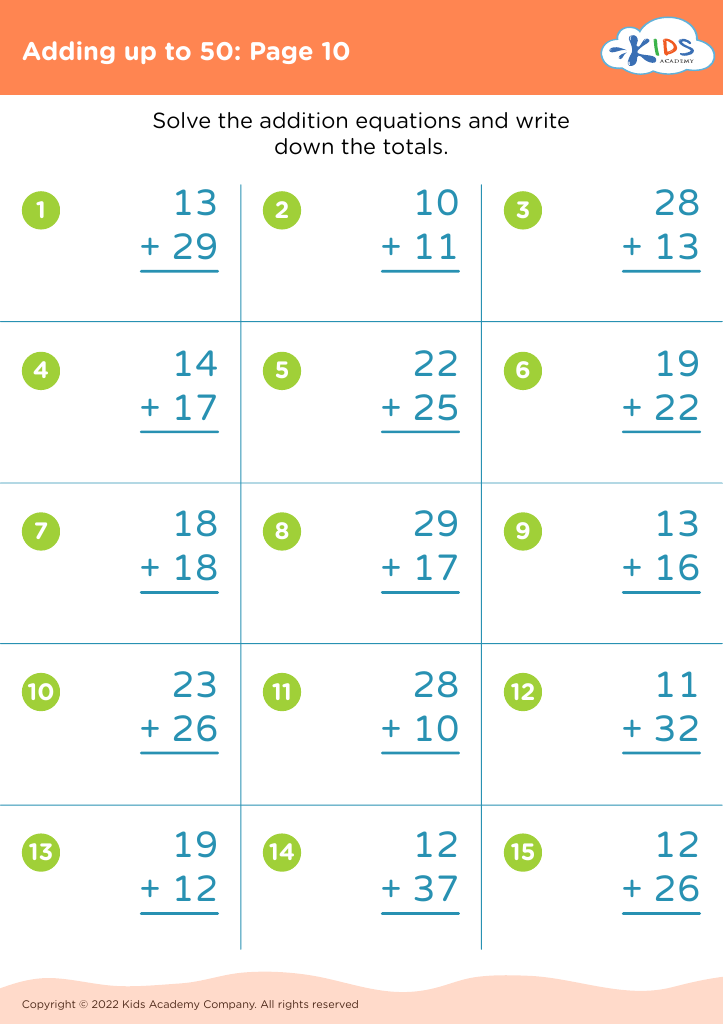
Adding up to 50: Page 10

Adding up to 50: Page 10

Adding up to 50: Page 10
Worksheet
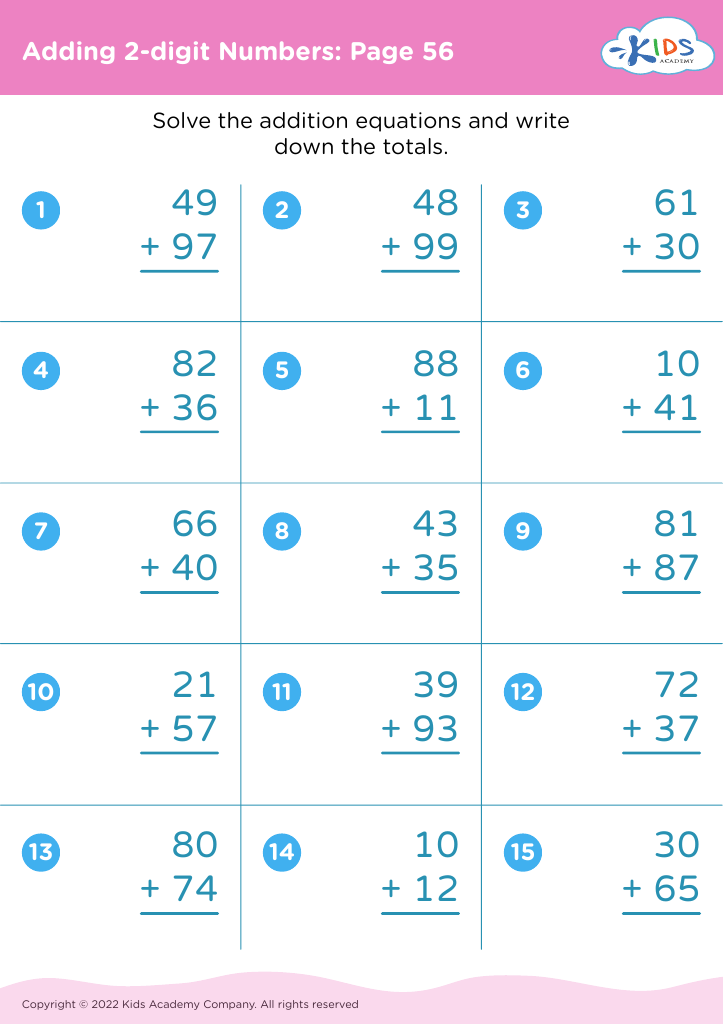
Adding 2-digit Numbers: Page 56

Adding 2-digit Numbers: Page 56

Adding 2-digit Numbers: Page 56
Worksheet
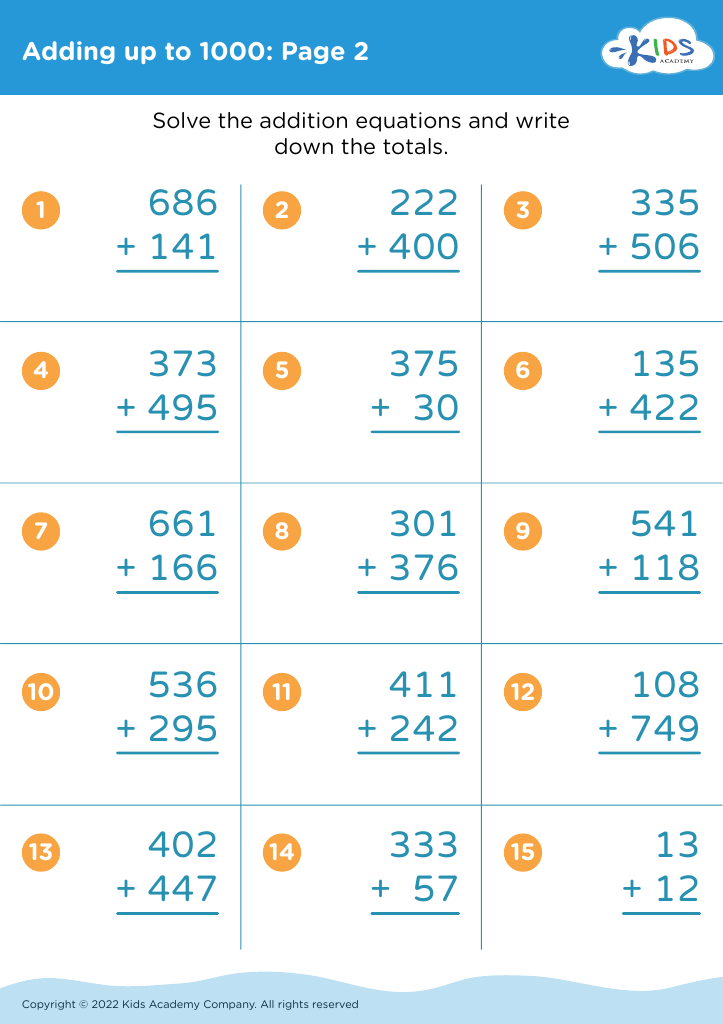
Adding up to 1000: Page 2

Adding up to 1000: Page 2

Adding up to 1000: Page 2
Worksheet
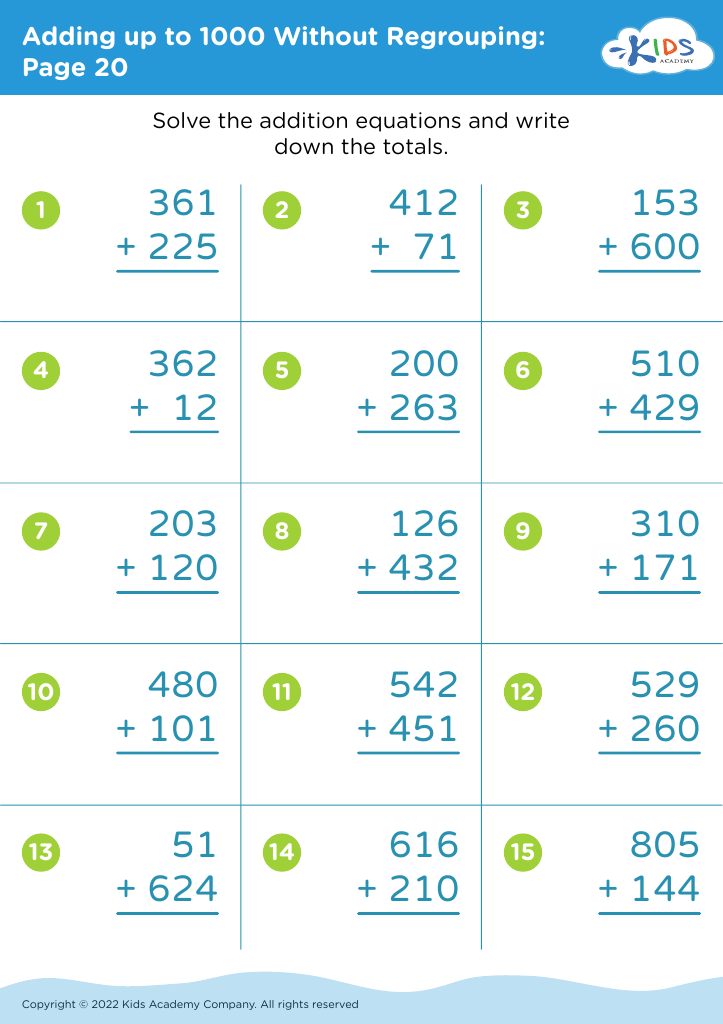
Adding up to 1000 Without Regrouping: Page 20
Worksheet
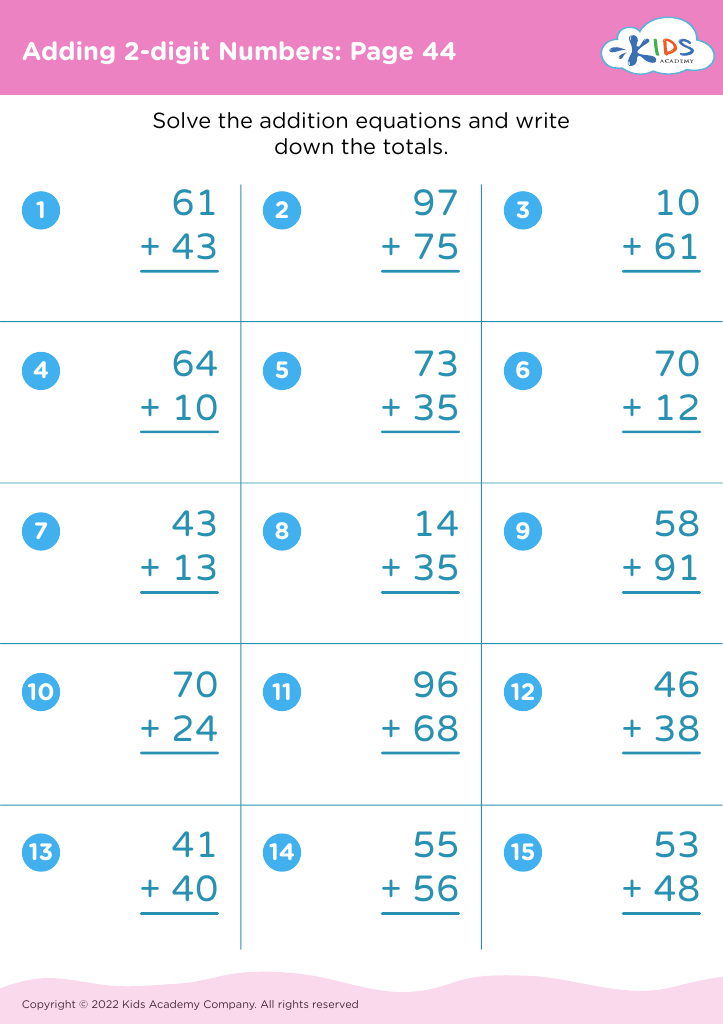
Adding 2-digit Numbers: Page 44

Adding 2-digit Numbers: Page 44

Adding 2-digit Numbers: Page 44
Worksheet
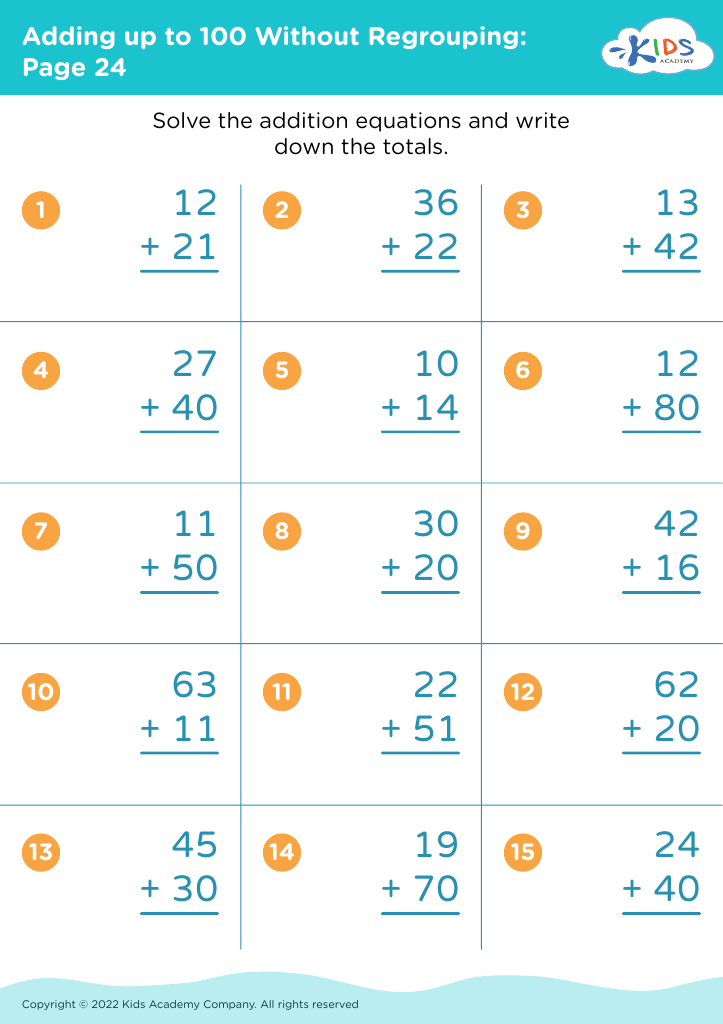
Adding up to 100 Without Regrouping: Page 24
Worksheet
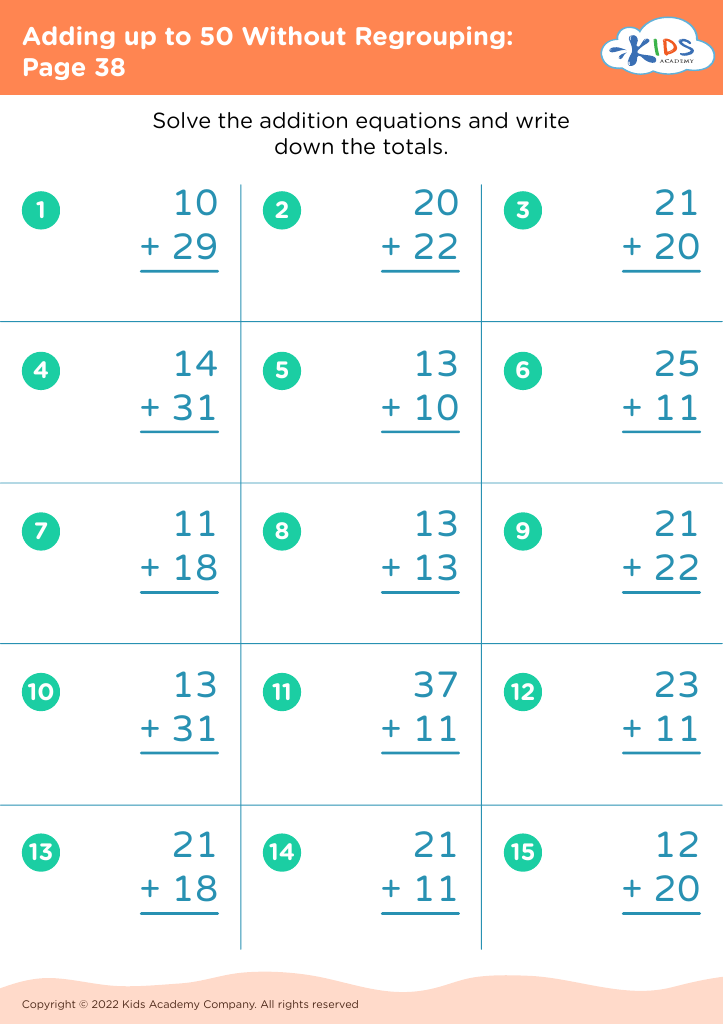
Adding up to 50 Without Regrouping: Page 38
Worksheet
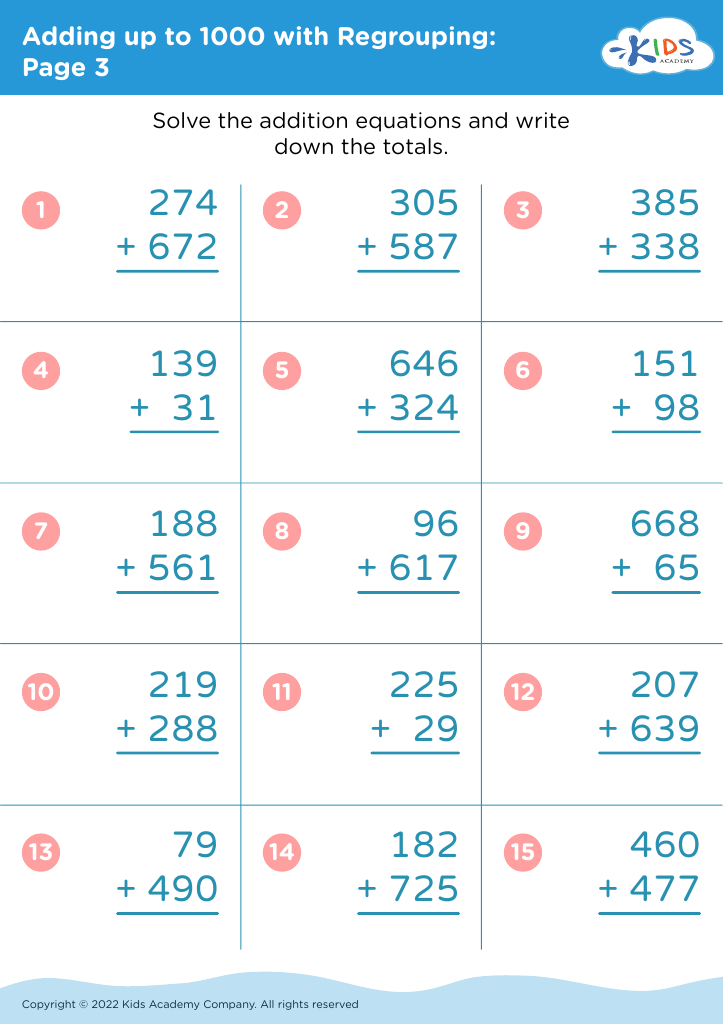
Adding up to 1000 with Regrouping: Page 3
Worksheet
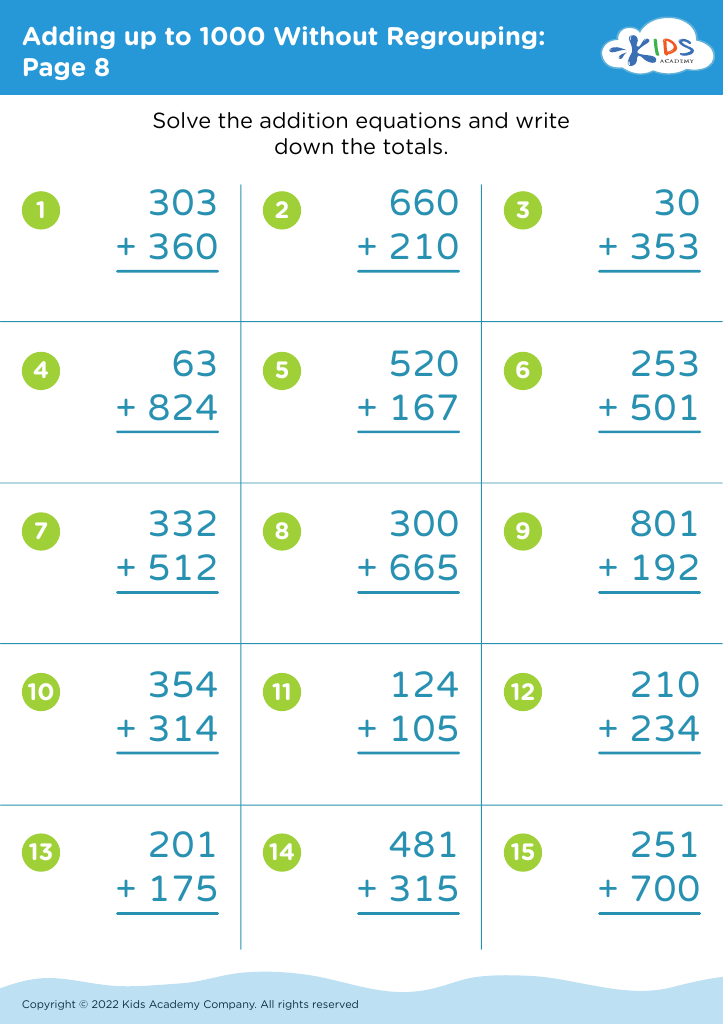
Adding up to 1000 Without Regrouping: Page 8
Worksheet
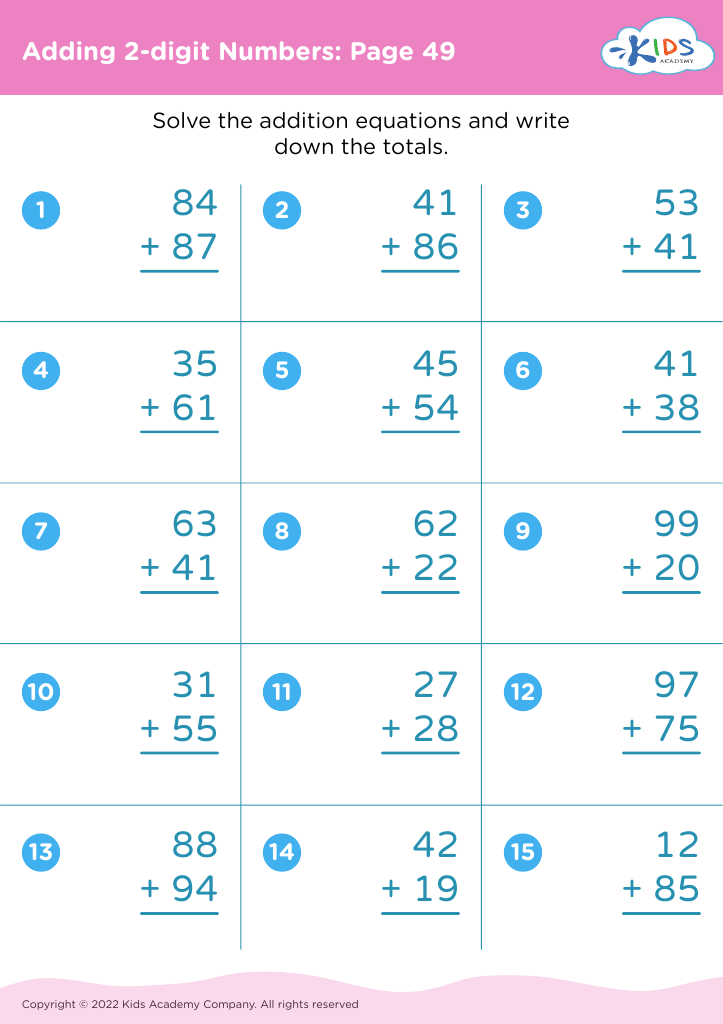
Adding 2-digit Numbers: Page 49

Adding 2-digit Numbers: Page 49

Adding 2-digit Numbers: Page 49
Worksheet
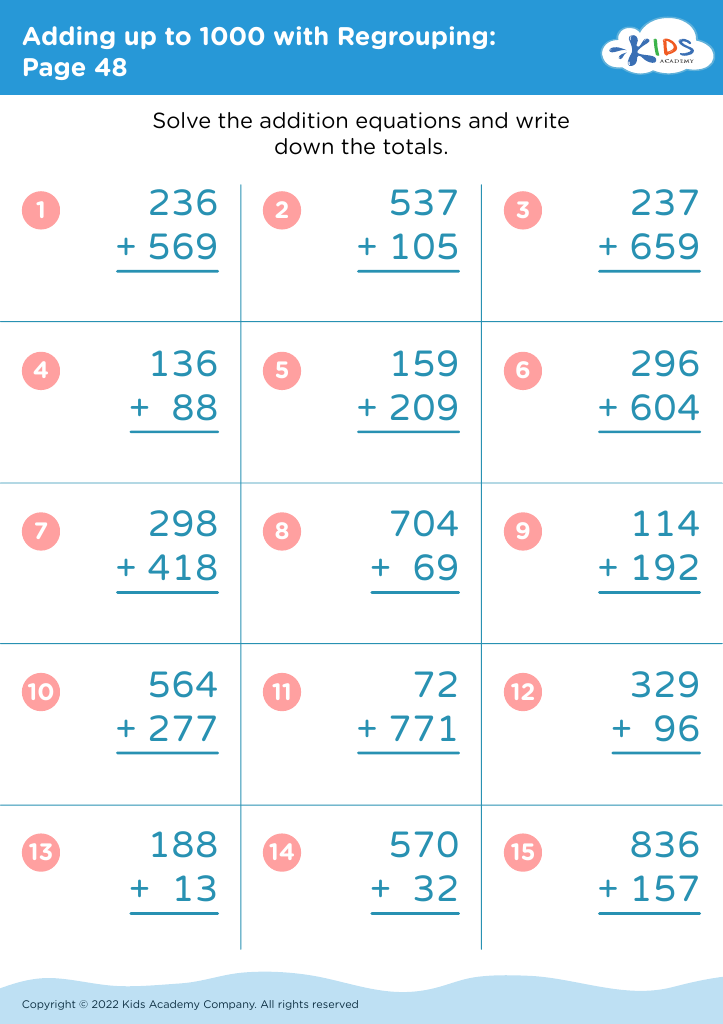
Adding up to 1000 with Regrouping: Page 48
Worksheet
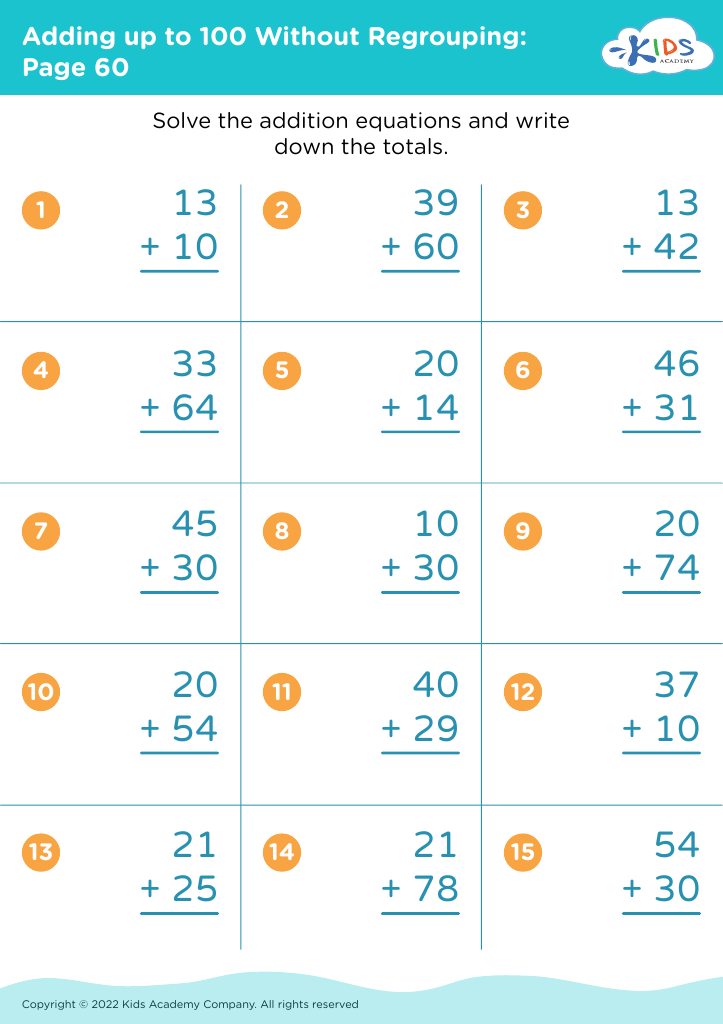
Adding up to 100 Without Regrouping: Page 60
Worksheet


Enhancing comprehension in addition and subtraction for children aged 5-8 is crucial for their overall academic success and mathematical development. At this age, children are at a pivotal stage of cognitive growth where foundational skills are established. A thorough understanding of these basic math concepts not only builds numerical fluency but also boosts problem-solving abilities, enabling young learners to tackle more complex math in the future.

Parents and teachers play a significant role in fostering a positive attitude towards math. By providing engaging, age-appropriate methods to enhance comprehension, they can help children see math as enjoyable and relevant to their everyday lives. This early investment in mathematical understanding can lead to greater confidence, which is essential as children progress through their education.

Moreover, strong addition and subtraction skills enable children to understand other mathematical concepts, such as multiplication and division, and help them in subjects beyond math, such as science and economics. Consequently, nurturing these skills contributes to critical thinking, analytical reasoning, and self-esteem—qualities that benefit children well beyond the classroom. Supporting their growth in these areas ultimately lays the groundwork for a lifelong appreciation and understanding of mathematics.