Filters

1258 filtered results

Clear all filters
Favorites
With answer key
Interactive

1258 filtered results

Difficulty Level

Grade


Subject

    Check out this FREE Trial Lesson on Addition for age 5-8!

    A

    Favorites
    With answer key
    Interactive
    • 5-8
    • Addition
    Adding up to 1000 with Regrouping: Page 36
    Adding up to 1000 with Regrouping: Page 36
    Adding up to 1000 with Regrouping: Page 36
    Worksheet
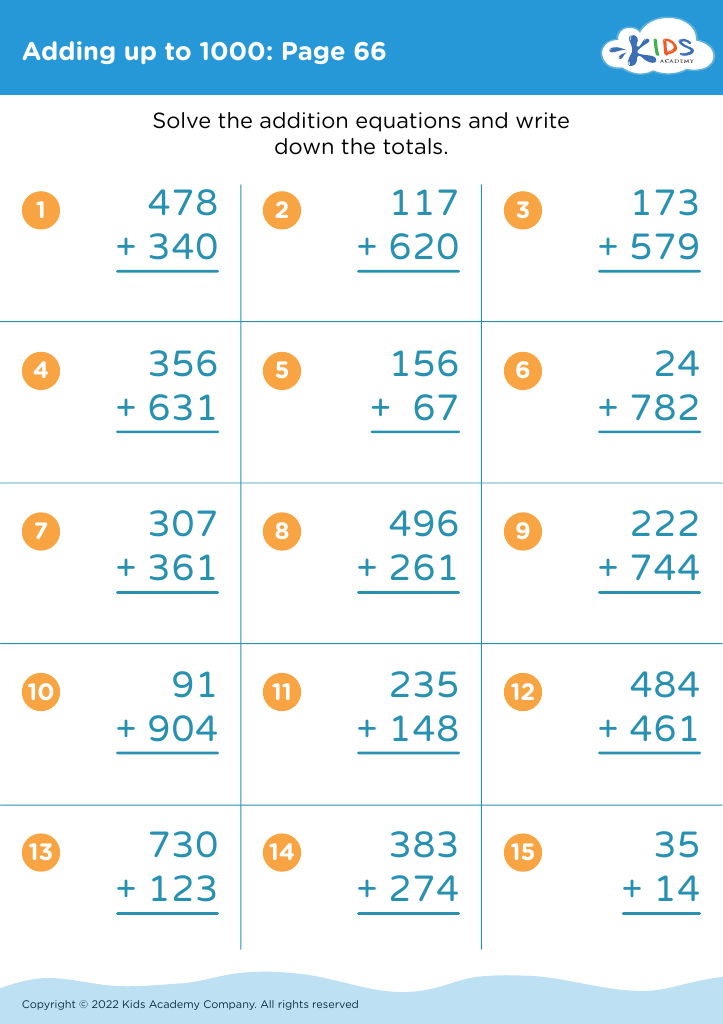
    Adding up to 1000: Page 66
    Adding up to 1000: Page 66

    Adding up to 1000: Page 66

    Adding up to 1000: Page 66
    Worksheet
    Adding up to 100: Page 68
    Adding up to 100: Page 68

    Adding up to 100: Page 68

    Adding up to 100: Page 68
    Worksheet
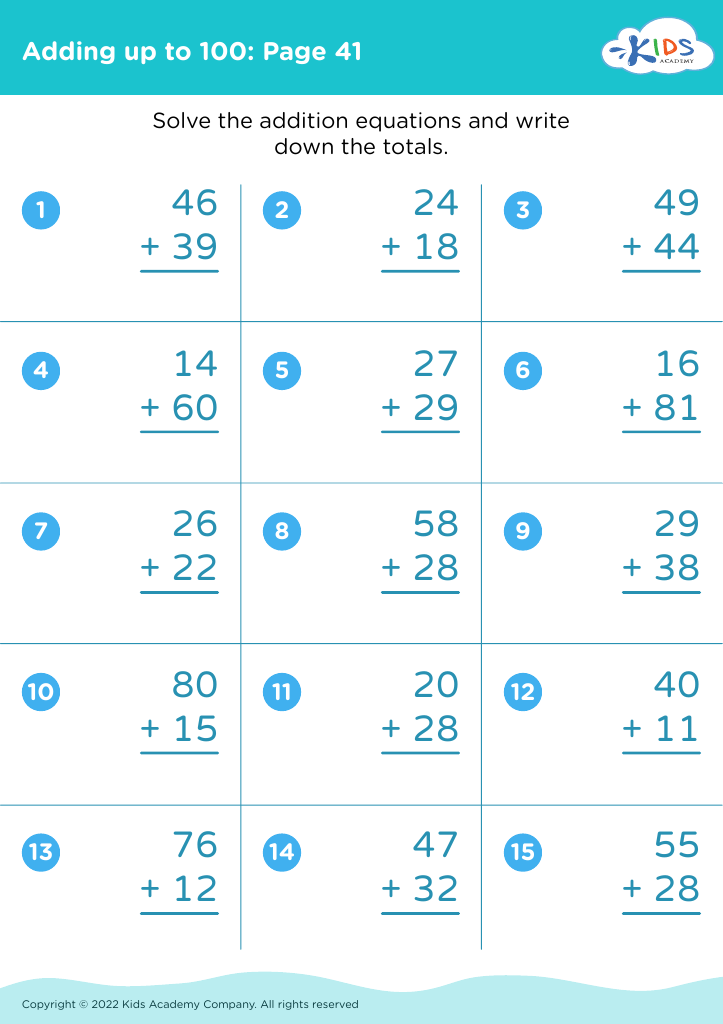
    Adding up to 100: Page 41
    Adding up to 100: Page 41

    Adding up to 100: Page 41

    Adding up to 100: Page 41
    Worksheet
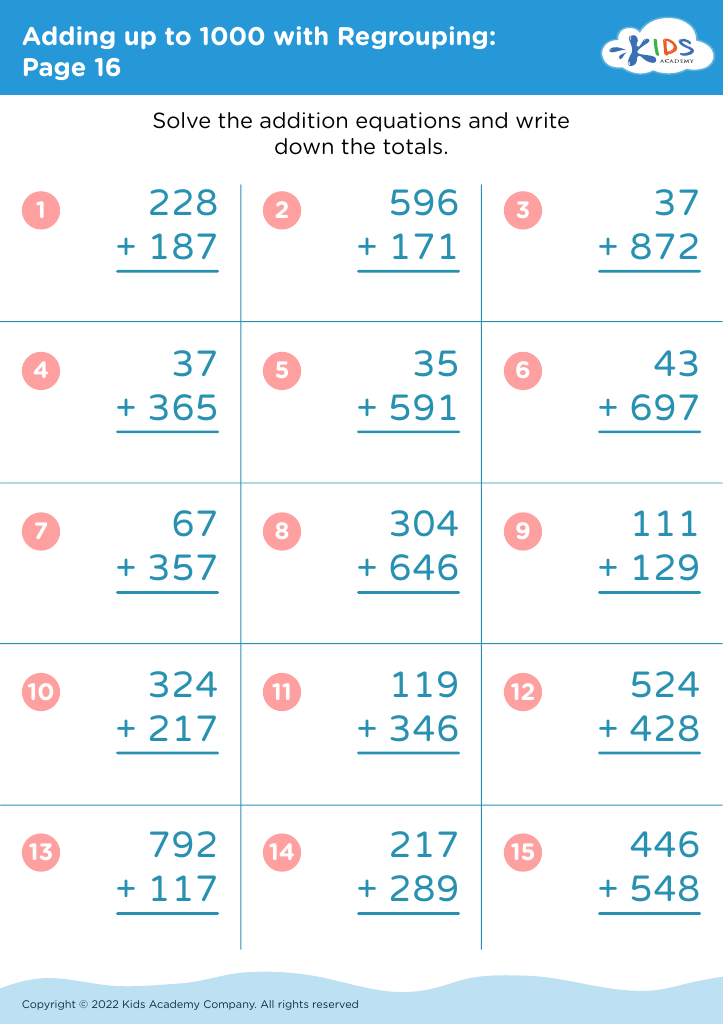
    Adding up to 1000 with Regrouping: Page 16
    Adding up to 1000 with Regrouping: Page 16
    Adding up to 1000 with Regrouping: Page 16
    Worksheet
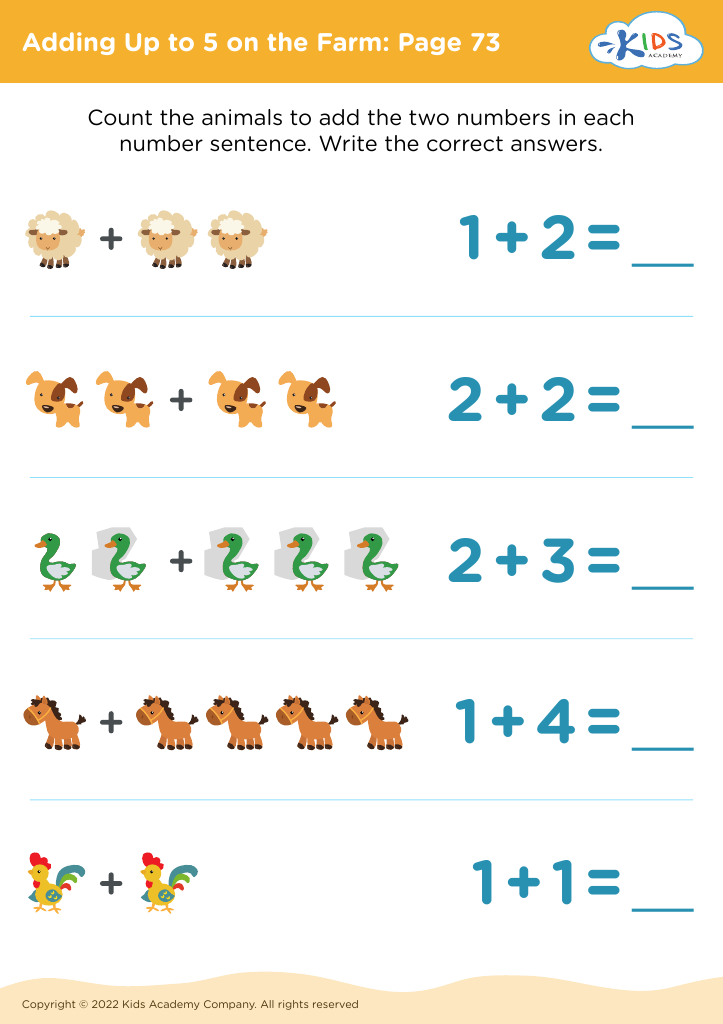
    Adding Up to 5 on the Farm: Page 73
    Adding Up to 5 on the Farm: Page 73
    Adding Up to 5 on the Farm: Page 73
    Worksheet
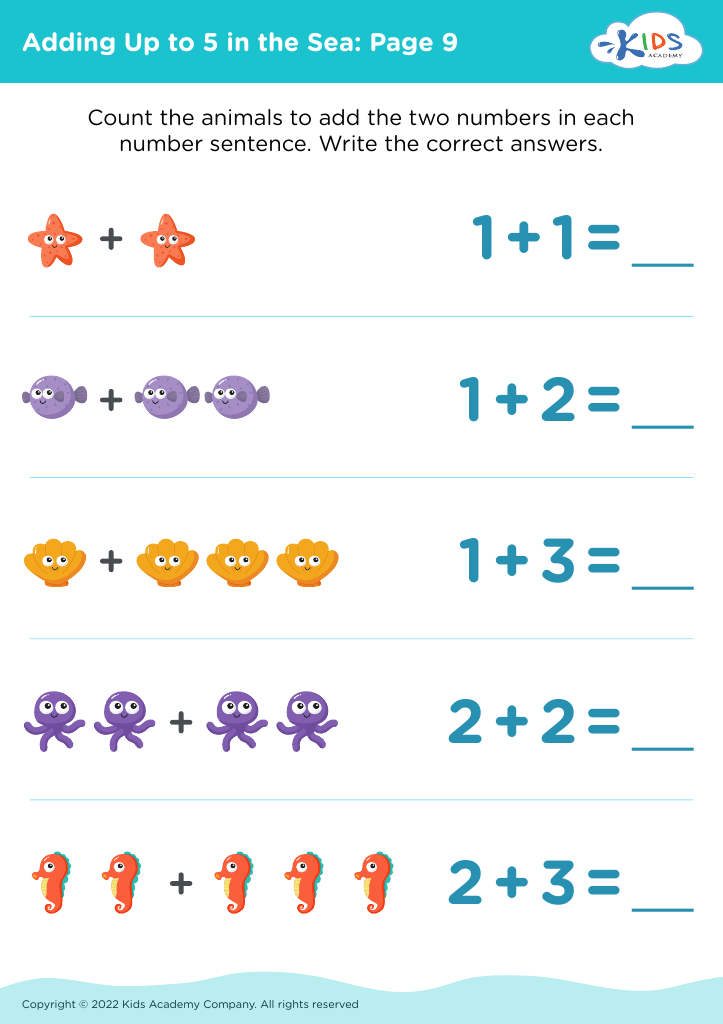
    Adding Up to 5 in the Sea: Page 9
    Adding Up to 5 in the Sea: Page 9

    Adding Up to 5 in the Sea: Page 9

    Adding Up to 5 in the Sea: Page 9
    Worksheet
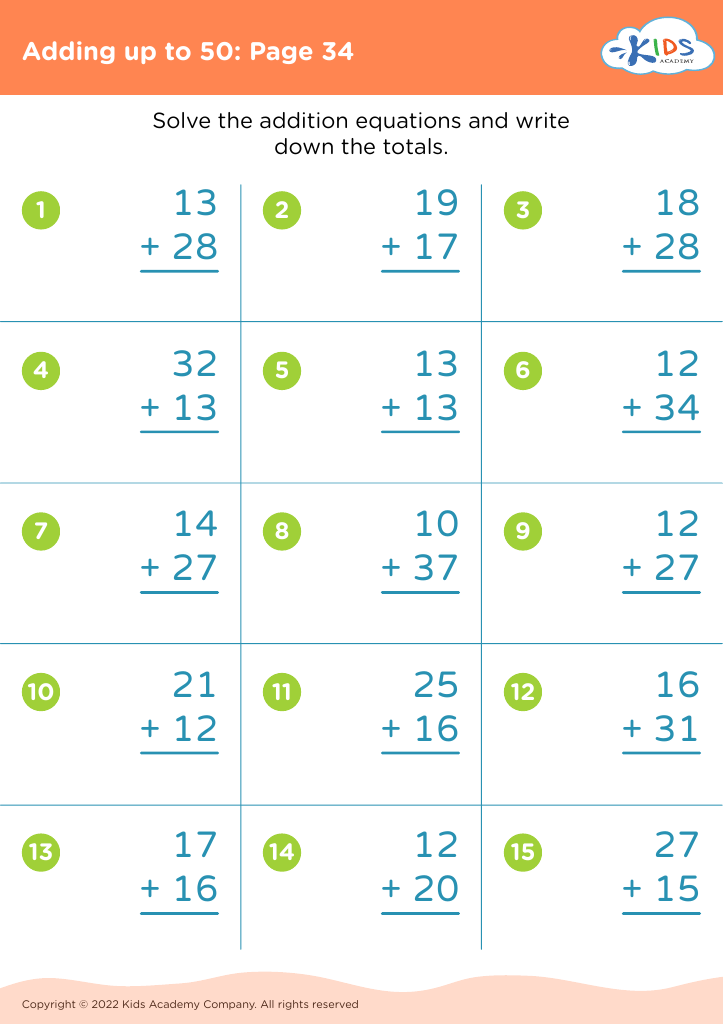
    Adding up to 50: Page 34
    Adding up to 50: Page 34

    Adding up to 50: Page 34

    Adding up to 50: Page 34
    Worksheet
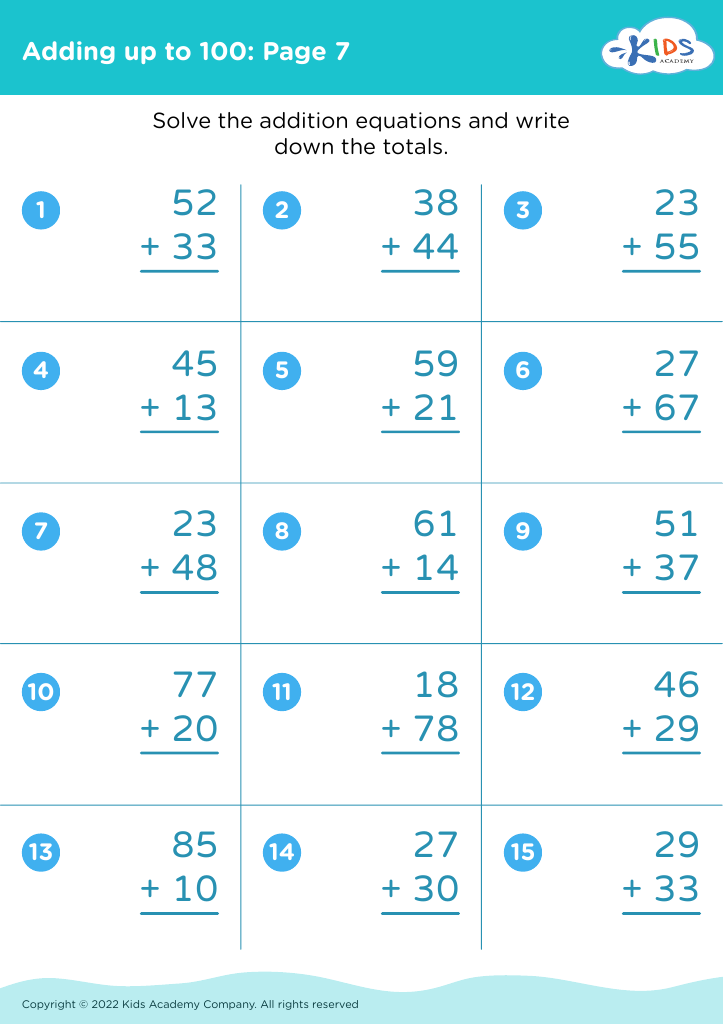
    Adding up to 100: Page 7
    Adding up to 100: Page 7

    Adding up to 100: Page 7

    Adding up to 100: Page 7
    Worksheet
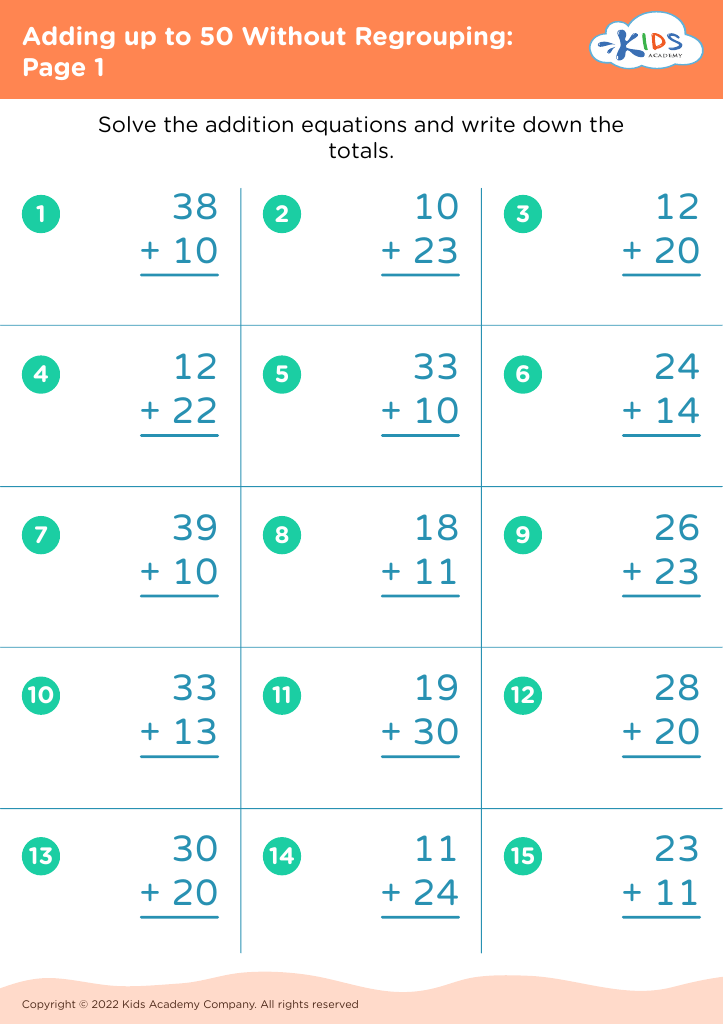
    Adding up to 50 Without Regrouping: Page 1
    Adding up to 50 Without Regrouping: Page 1
    Adding up to 50 Without Regrouping: Page 1
    Worksheet
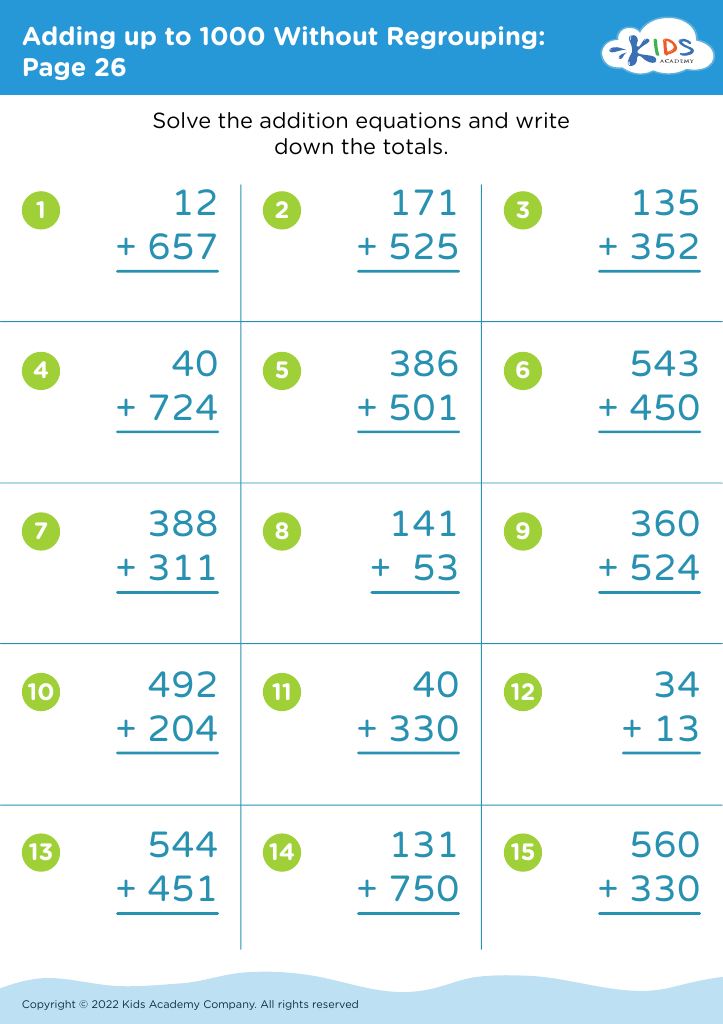
    Adding up to 1000 Without Regrouping: Page 26
    Adding up to 1000 Without Regrouping: Page 26
    Adding up to 1000 Without Regrouping: Page 26
    Worksheet
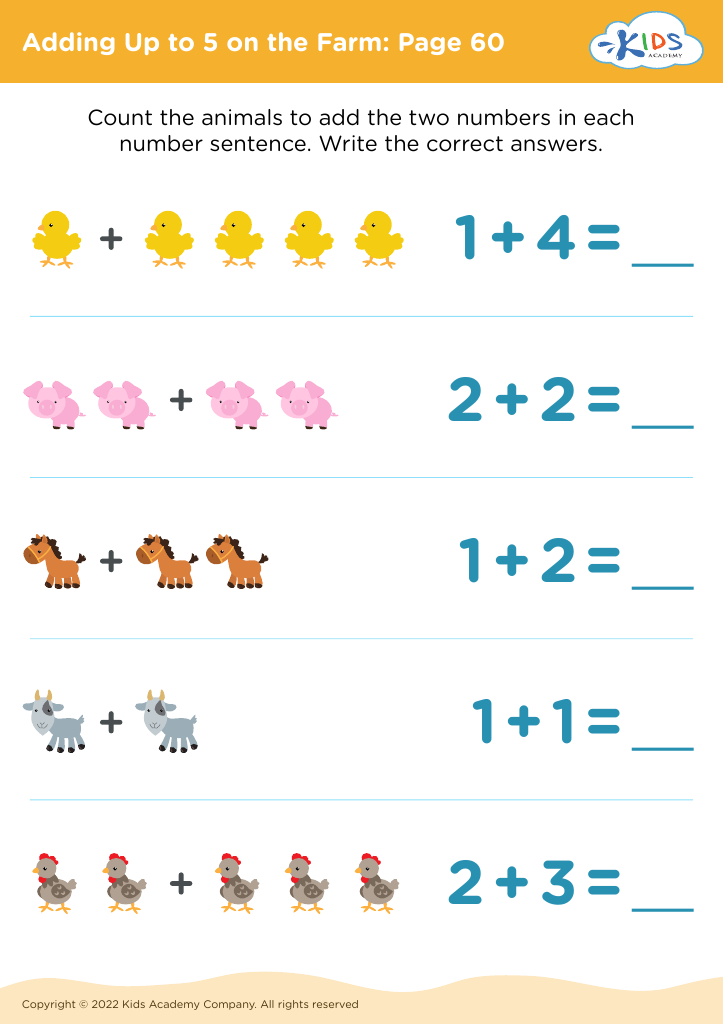
    Adding Up to 5 on the Farm: Page 60
    Adding Up to 5 on the Farm: Page 60
    Adding Up to 5 on the Farm: Page 60
    Worksheet
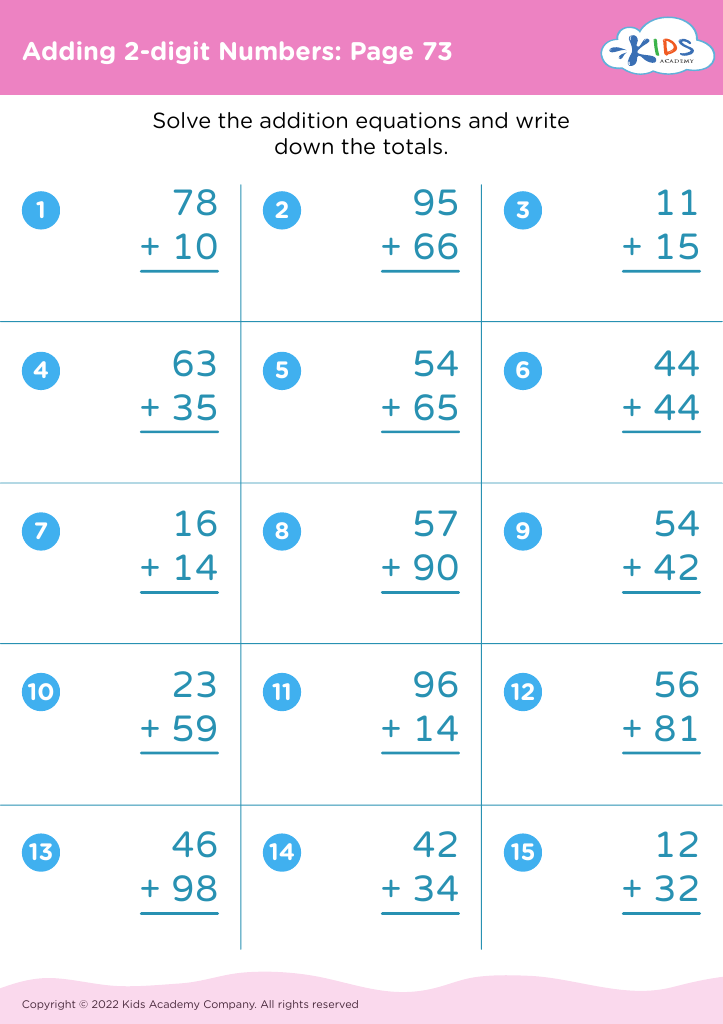
    Adding 2-digit Numbers: Page 73
    Adding 2-digit Numbers: Page 73

    Adding 2-digit Numbers: Page 73

    Adding 2-digit Numbers: Page 73
    Worksheet
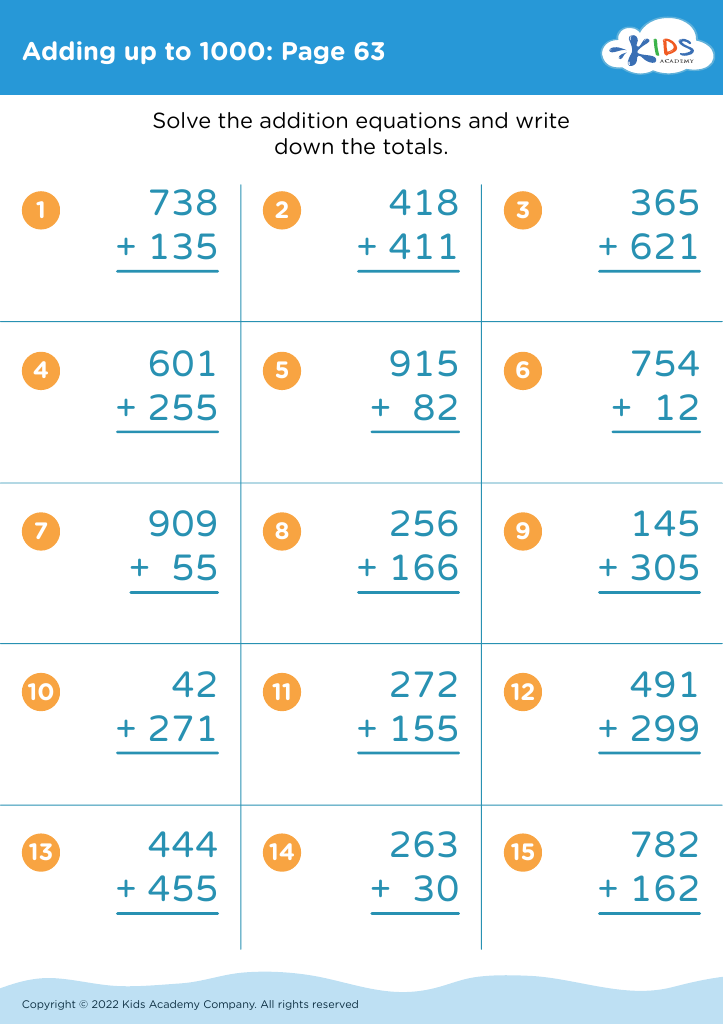
    Adding up to 1000: Page 63
    Adding up to 1000: Page 63

    Adding up to 1000: Page 63

    Adding up to 1000: Page 63
    Worksheet
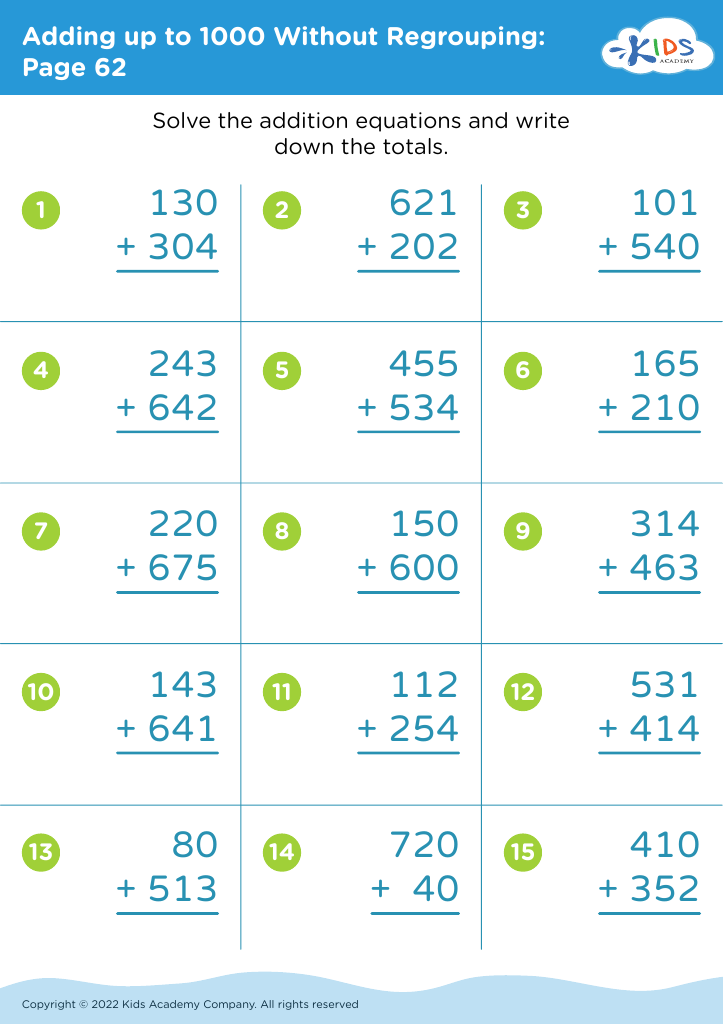
    Adding up to 1000 Without Regrouping: Page 62
    Adding up to 1000 Without Regrouping: Page 62
    Adding up to 1000 Without Regrouping: Page 62
    Worksheet
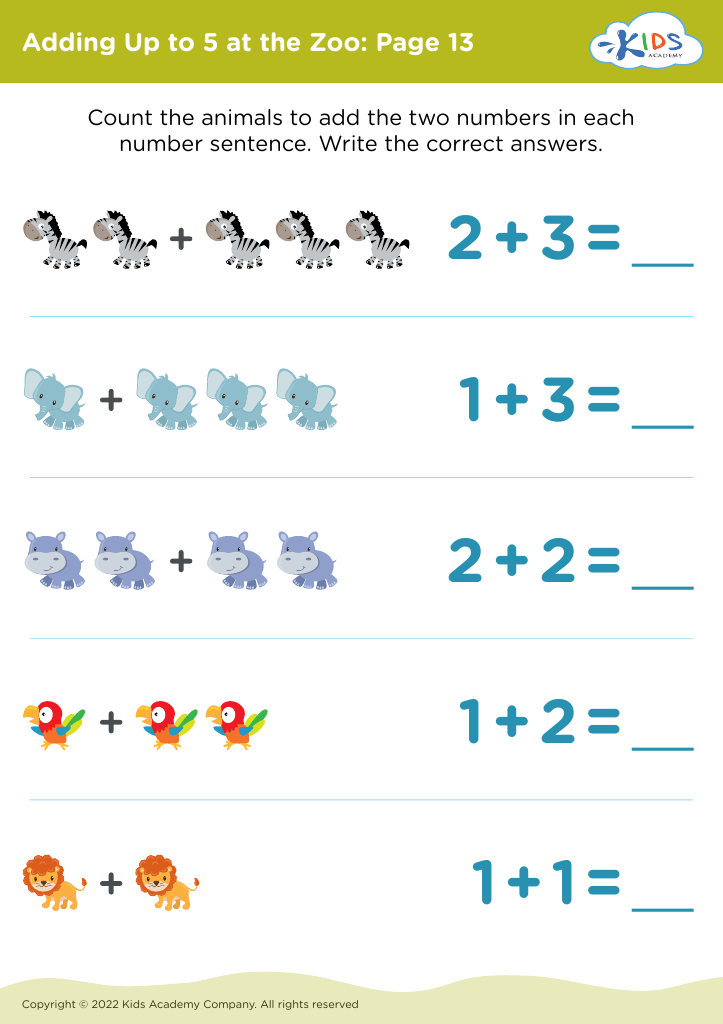
    Adding Up to 5 at the Zoo: Page 13
    Adding Up to 5 at the Zoo: Page 13
    Adding Up to 5 at the Zoo: Page 13
    Worksheet
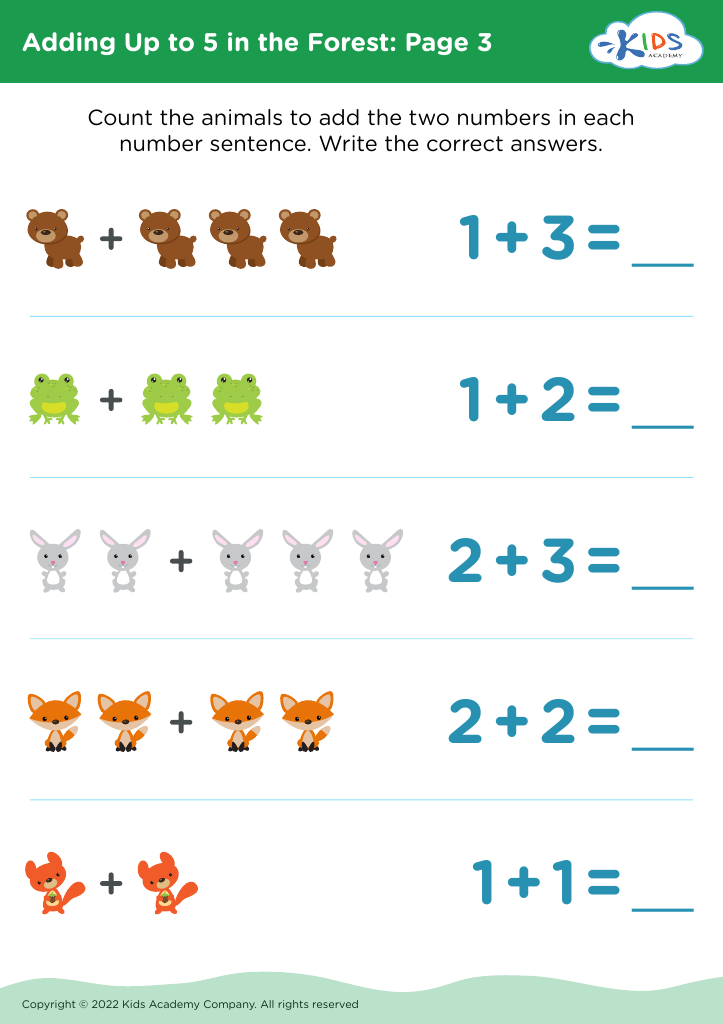
    Adding Up to 5 in the Forest: Page 3
    Adding Up to 5 in the Forest: Page 3
    Adding Up to 5 in the Forest: Page 3
    Worksheet
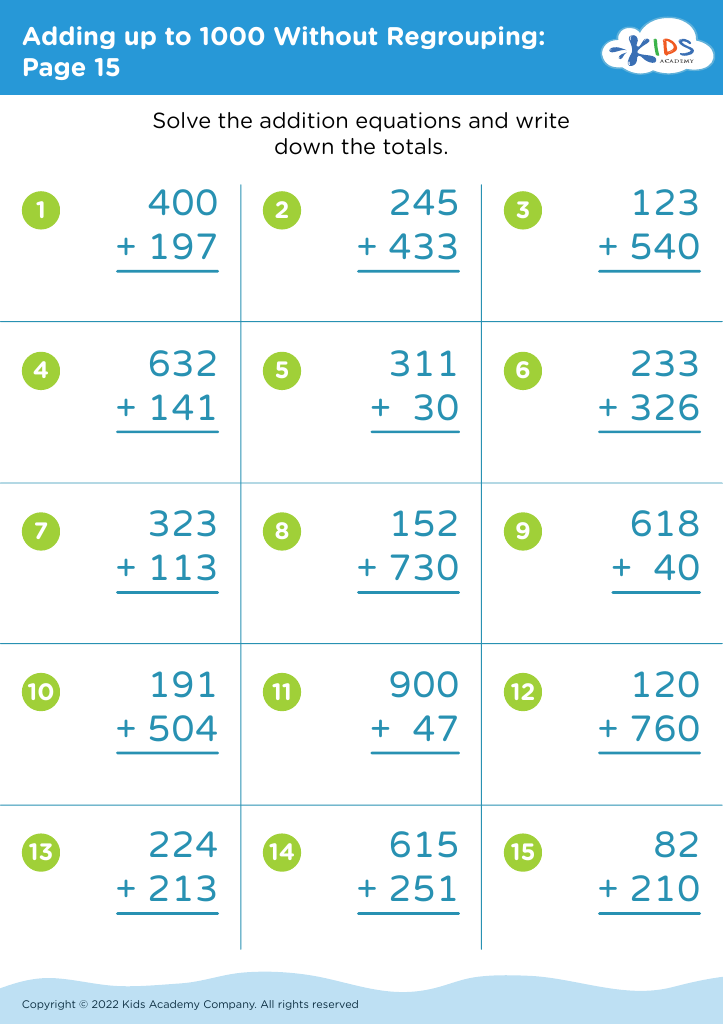
    Adding up to 1000 Without Regrouping: Page 15
    Adding up to 1000 Without Regrouping: Page 15
    Adding up to 1000 Without Regrouping: Page 15
    Worksheet
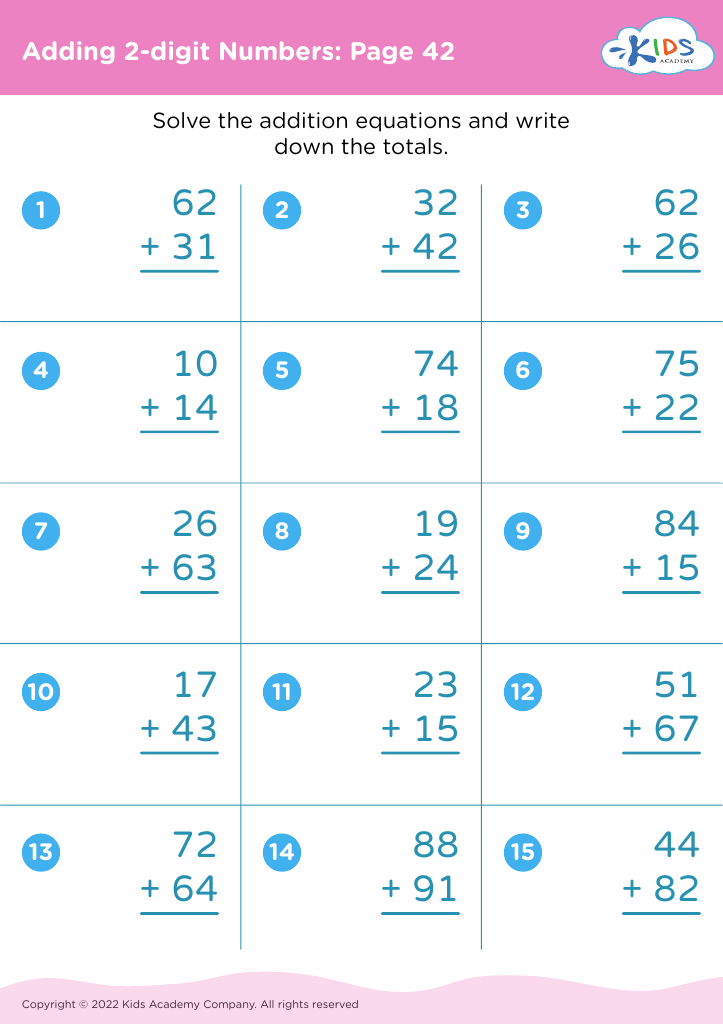
    Adding 2-digit Numbers: Page 42
    Adding 2-digit Numbers: Page 42

    Adding 2-digit Numbers: Page 42

    Adding 2-digit Numbers: Page 42
    Worksheet
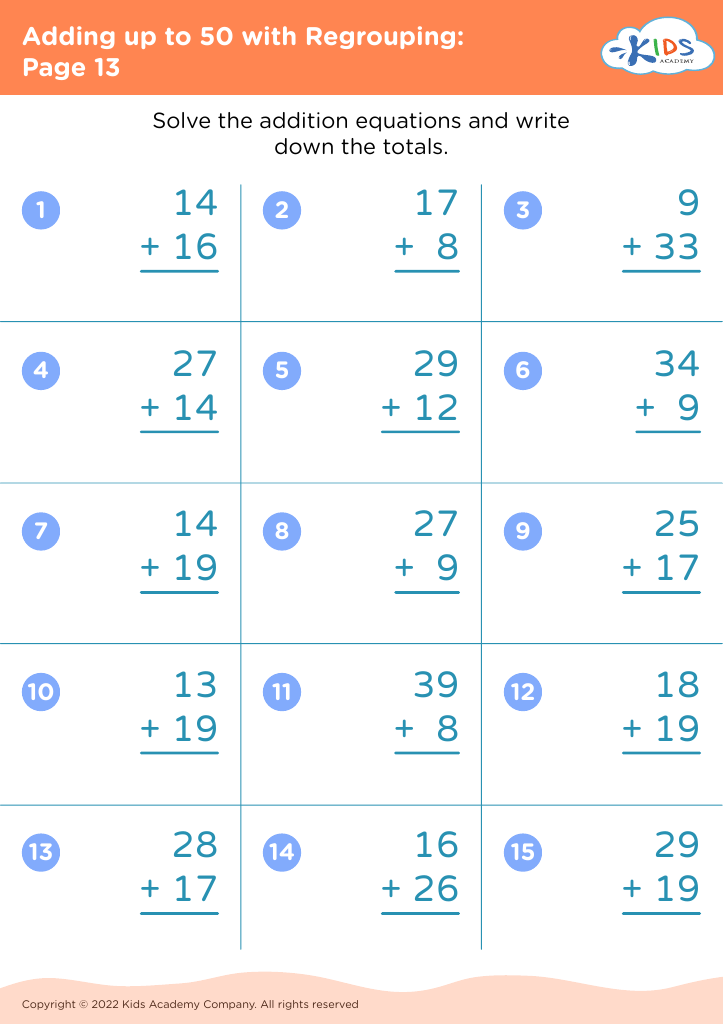
    Adding up to 50 with Regrouping: Page 13
    Adding up to 50 with Regrouping: Page 13
    Adding up to 50 with Regrouping: Page 13
    Worksheet
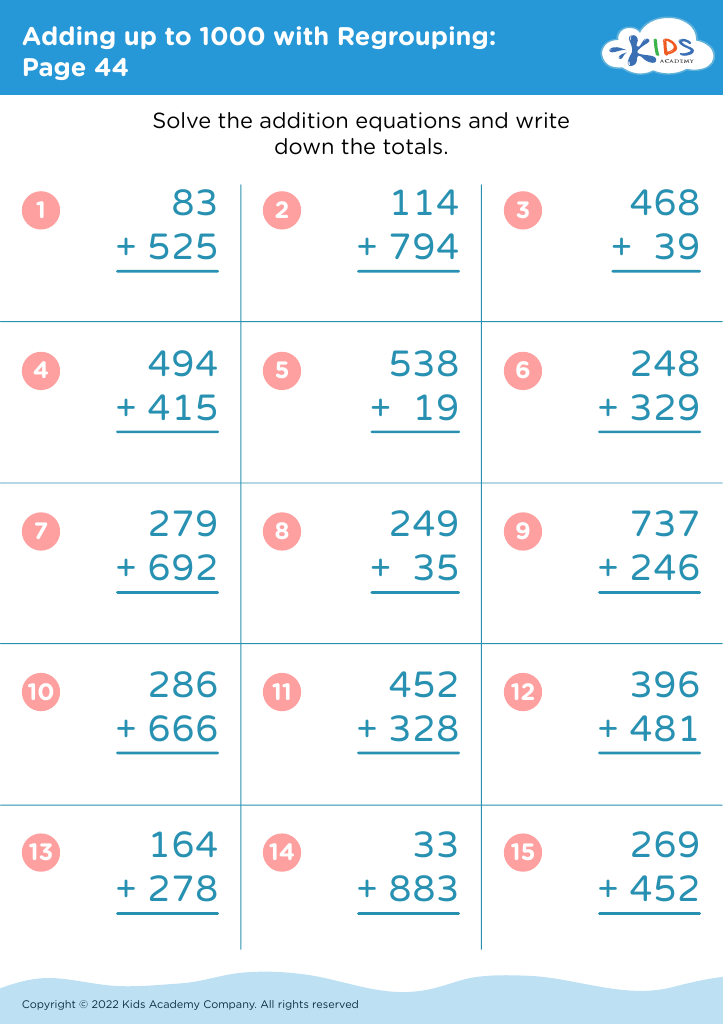
    Adding up to 1000 with Regrouping: Page 44
    Adding up to 1000 with Regrouping: Page 44
    Adding up to 1000 with Regrouping: Page 44
    Worksheet
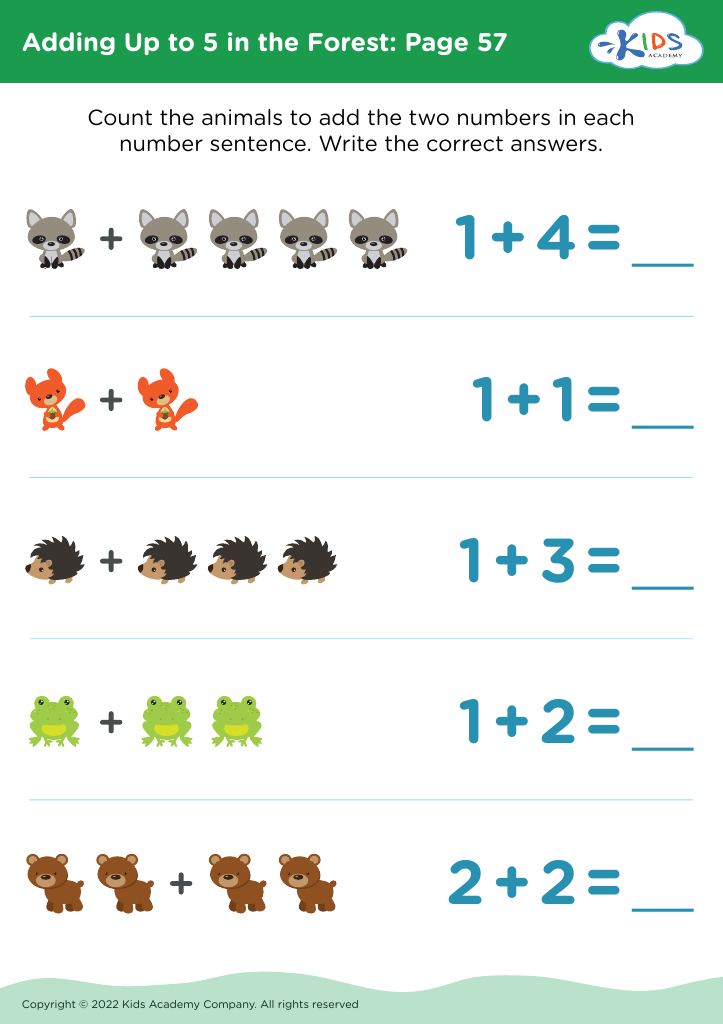
    Adding Up to 5 in the Forest: Page 57
    Adding Up to 5 in the Forest: Page 57
    Adding Up to 5 in the Forest: Page 57
    Worksheet
    Adding up to 1000 Without Regrouping: Page 24
    Adding up to 1000 Without Regrouping: Page 24
    Adding up to 1000 Without Regrouping: Page 24
    Worksheet
    Adding up to 50: Page 65
    Adding up to 50: Page 65

    Adding up to 50: Page 65

    Adding up to 50: Page 65
    Worksheet


    Parents and teachers should care about teaching addition to children ages 5-8 because it's a foundational math skill that fosters cognitive development and sets the stage for more advanced arithmetic and problem-solving abilities. Learning addition helps young children understand numbers and their relationships, which are critical for navigating not only school-based math but also practical situations like sharing toys or dividing snacks.

    Early exposure to addition builds confidence and enthusiasm for math, which can prevent math anxiety and contribute to a lifelong positive attitude toward problem-solving. When children develop a strong grasp of basic addition, they are better equipped to tackle more complex mathematical concepts such as subtraction, multiplication, and division later on.

    Additionally, addition promotes logical thinking and enhances memory and attention to detail due to the step-by-step processes involved. It integrates well with other developmental skills like counting and pattern recognition. By ensuring that children ages 5-8 have robust addition skills, parents and teachers are investing in their overall educational foundation, critical thinking, and everyday practical life skills, thus better preparing them for future academic challenges and real-world scenarios.