Comparing shapes Geometry Worksheets for Ages 5-8
4 filtered results
-
From - To
Unlock the world of geometry with our "Comparing Shapes Geometry Worksheets for Ages 5-8." Designed to captivate young learners, these worksheets enhance their understanding of different shapes through engaging activities. Your child will practice identifying and comparing common geometric shapes, honing their spatial reasoning and critical thinking skills. Each worksheet is crafted to reinforce key mathematical concepts while making learning fun and interactive. Perfect for classroom use or home practice, these worksheets will instill a strong foundation in geometry. Visit our website to start a delightful learning journey with our expertly designed resources.
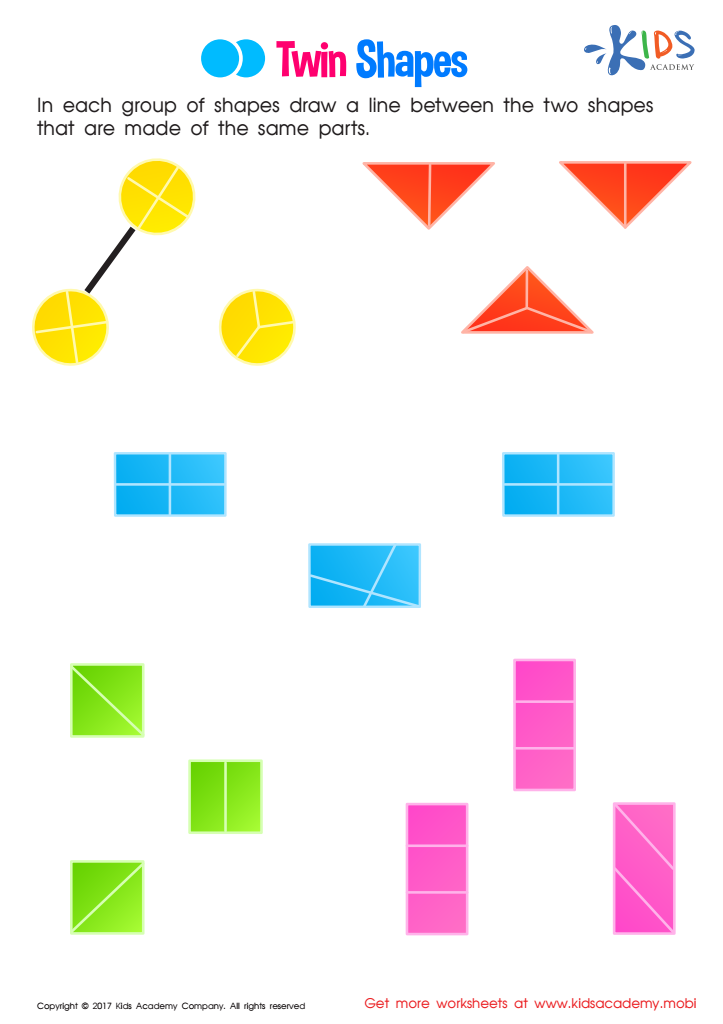
Twin Shapes Worksheet
 Assign to My Students











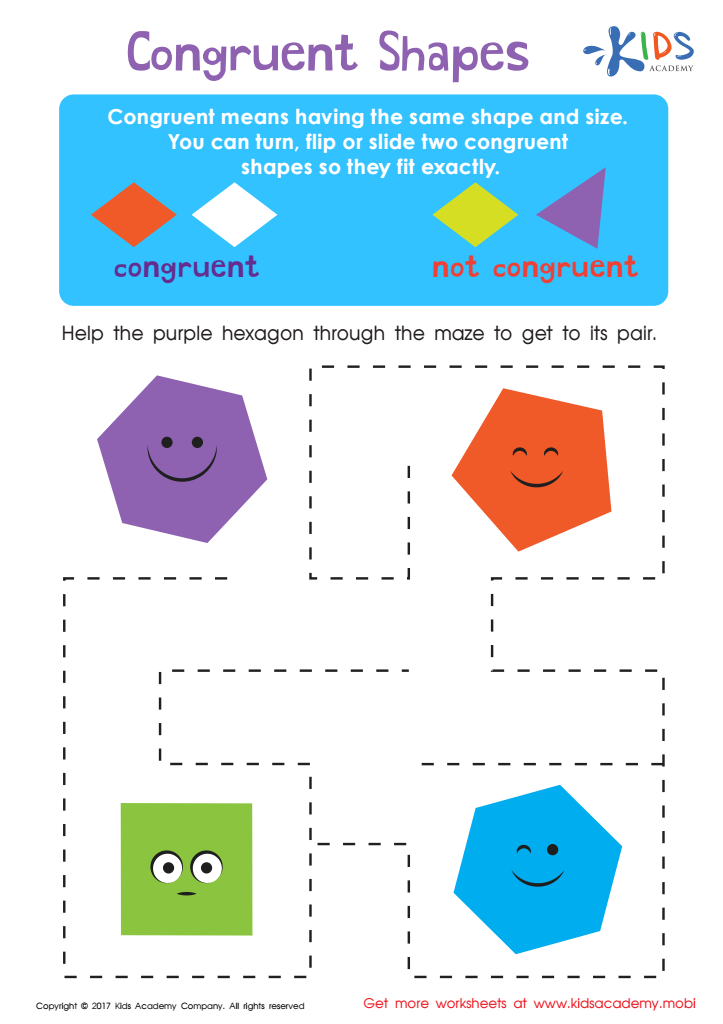
Congruent Shapes Worksheet
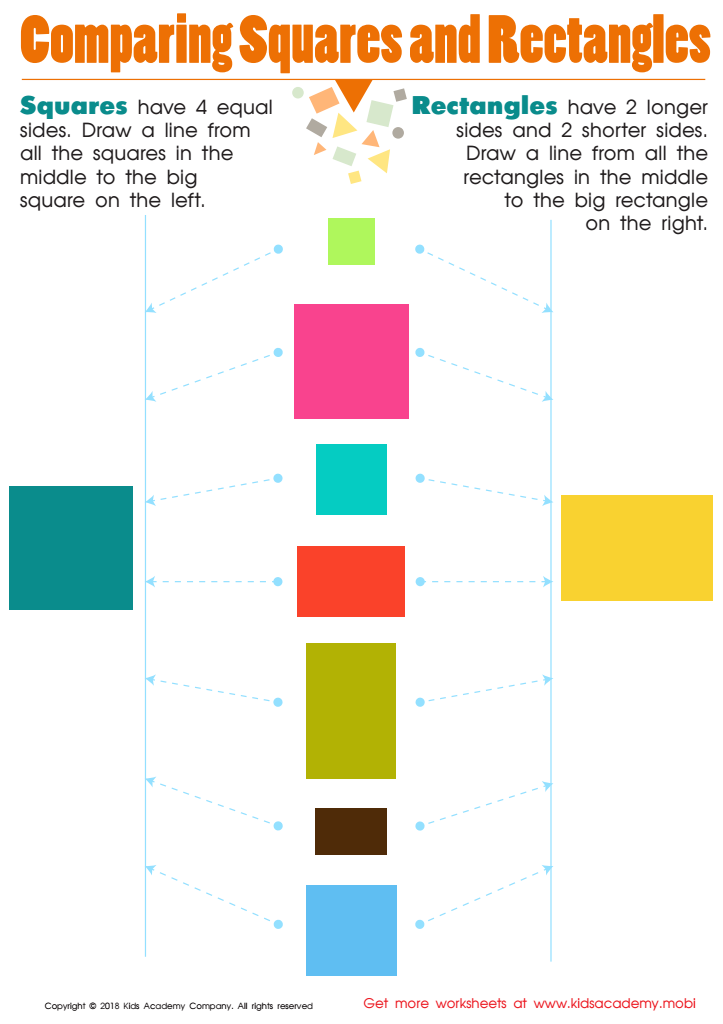
Comparing Squares Rectangles Worksheet
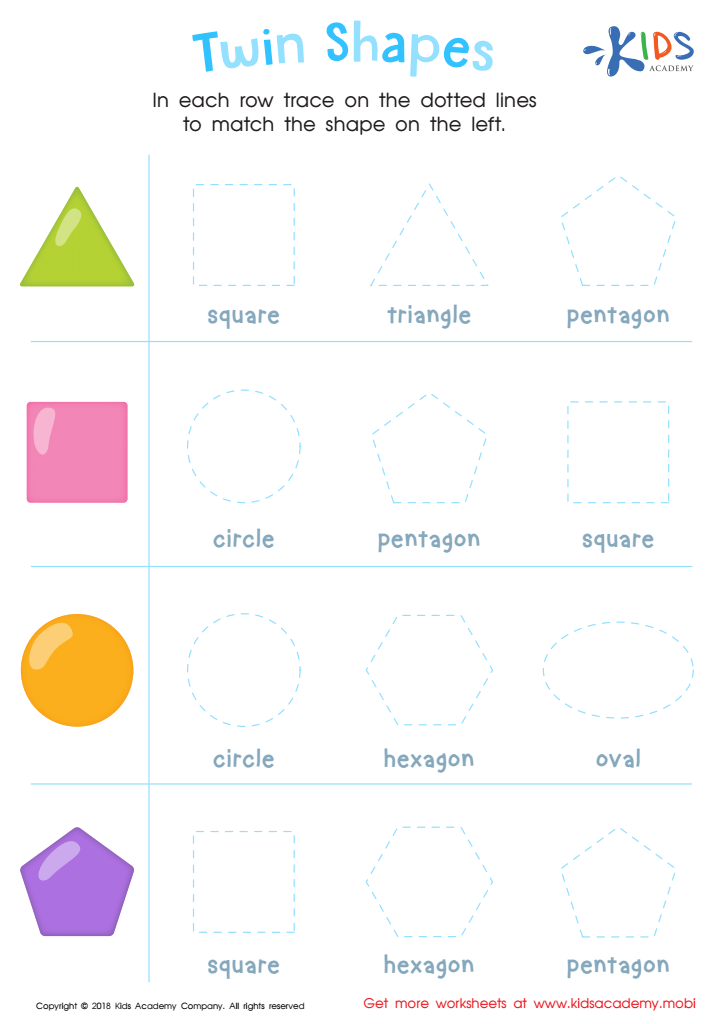
Twin Shapes Dot-to-Dot Worksheet








Understanding and comparing shapes in early childhood is fundamental for children's cognitive and academic development. At ages 5-8, children’s brains are highly receptive to foundational math concepts, and engaging with shapes lays the groundwork for more complex mathematical reasoning and spatial awareness.
When parents and teachers prioritize shape activities, children learn to identify, compare, and analyze the properties and attributes of various shapes. This not only enhances their geometric understanding but also fosters critical thinking and problem-solving skills. For instance, by comparing a square and a rectangle, children grasp essential concepts such as the number of sides and vertices, aiding in their ability to classify shapes and understand relationships between them.
Moreover, shape comparison activities support the development of fine motor skills, particularly when children manipulate physical shapes during hands-on activities. This integration of movement and learning enhances memory retention and engagement.
Additionally, recognizing and comparing shapes bolster literacy and vocabulary as children learn and use geometric terms. It also supports comprehension and writing skills, as children describe shapes and their features.
In summary, by emphasizing geometry and shape comparison activities, parents and teachers equip young learners with tools for future academic achievements while nurturing an innate curiosity and confidence in exploring mathematical concepts.








