Comparing Fractions Numbers Worksheets for Ages 5-8
7 filtered results
-
From - To
Introducing our Comparing Fractions Numbers Worksheets for ages 5-8, an essential tool for young learners developing math proficiency. These worksheets are crafted to make fraction comparison fun and engaging, guiding children through easy-to-understand steps. Bright illustrations and intuitive exercises help young minds grasp the concept of fractions and their respective sizes effortlessly. Perfect for classroom use or at-home practice, each worksheet is designed to build confidence and foundational math skills. Unlock your child’s potential with our expertly created resources that make learning fractions a delightful adventure! Ideal for teachers and parents committed to excellence in early grade math education.
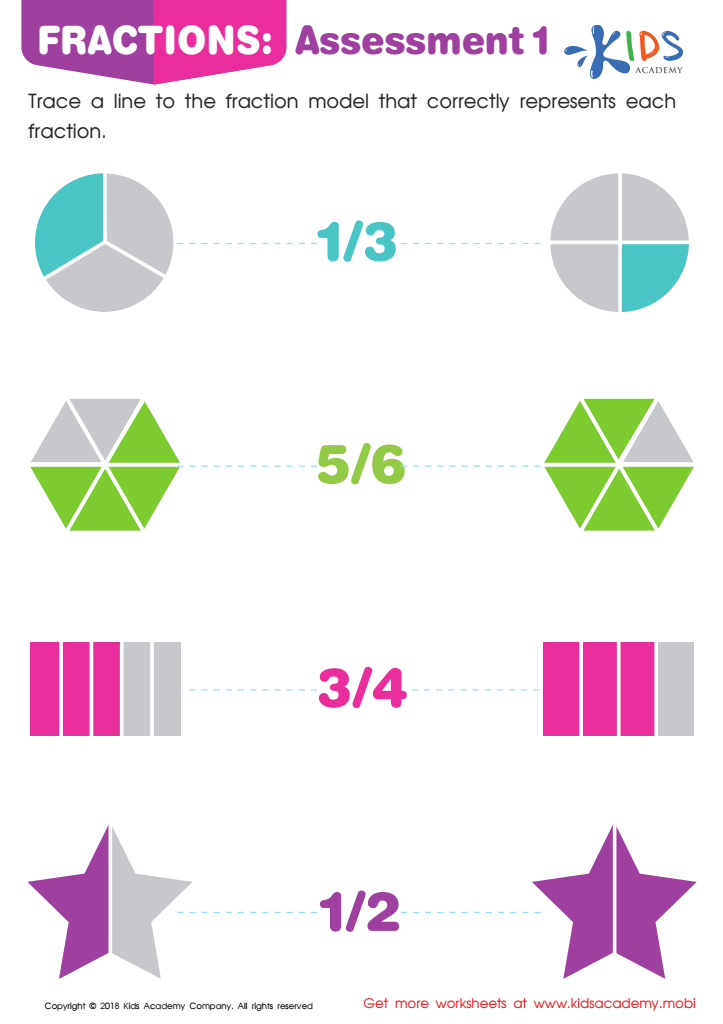
Fractions: Assessment 1 Worksheet
 Assign to My Students
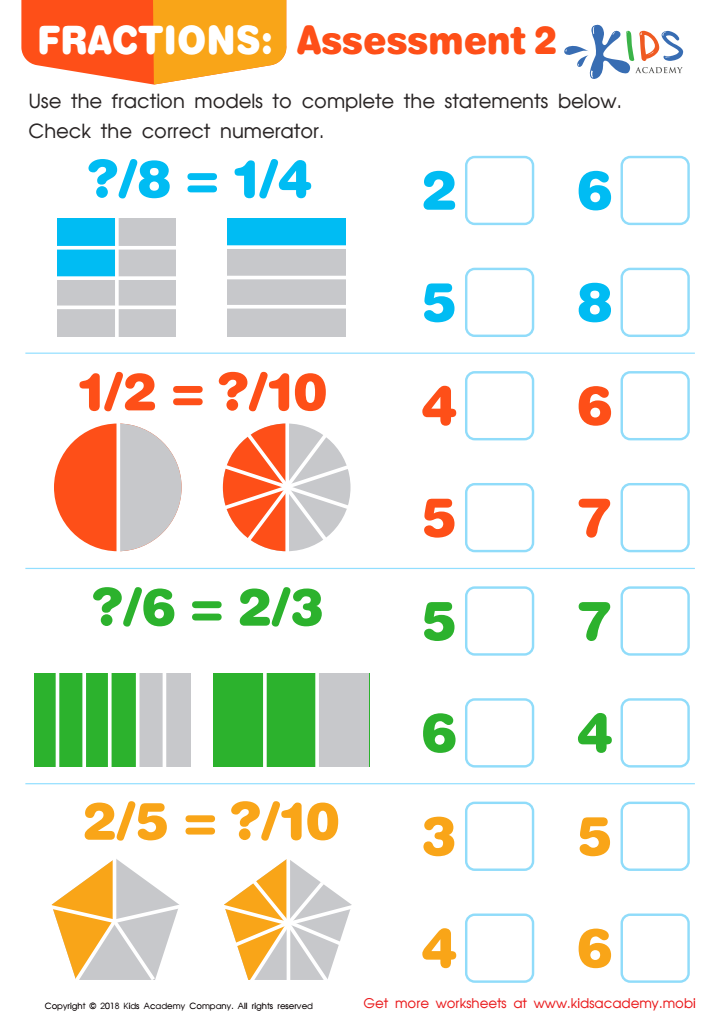
Fractions: Assessment 2 Worksheet
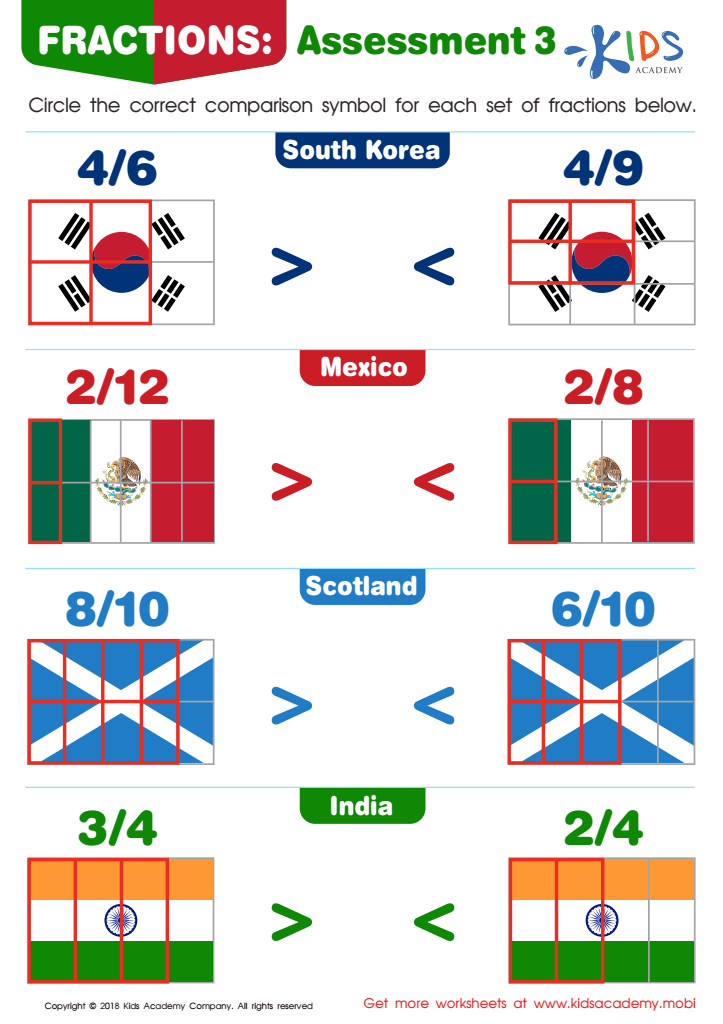
Fractions: Assessment 3 Worksheet
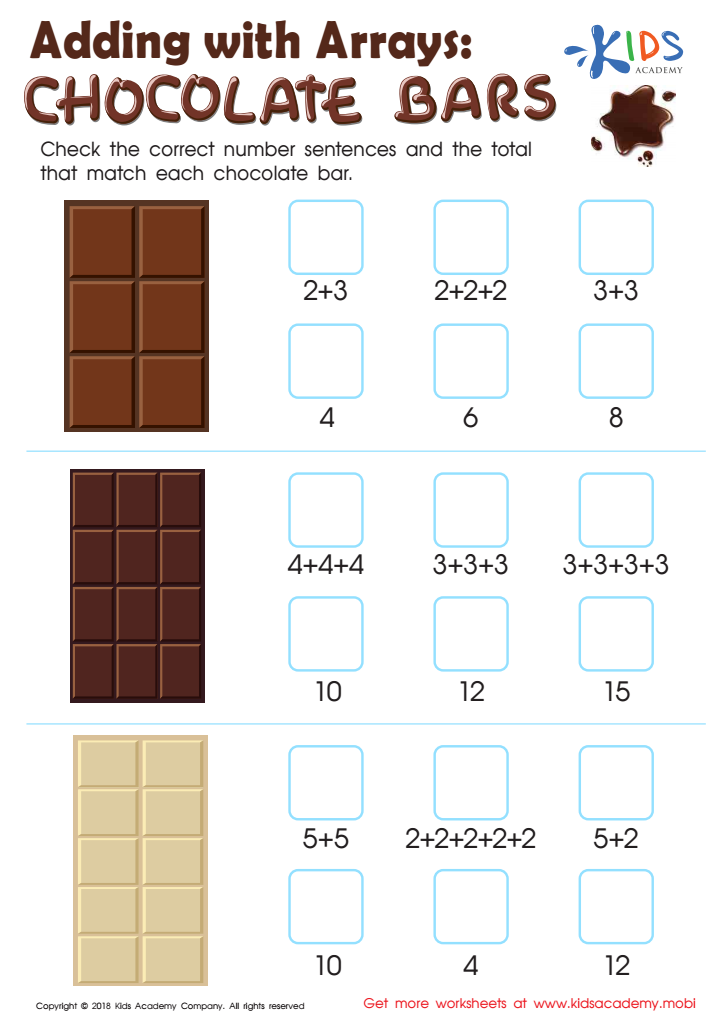
Adding with Arrays: Chocolate Bars Worksheet
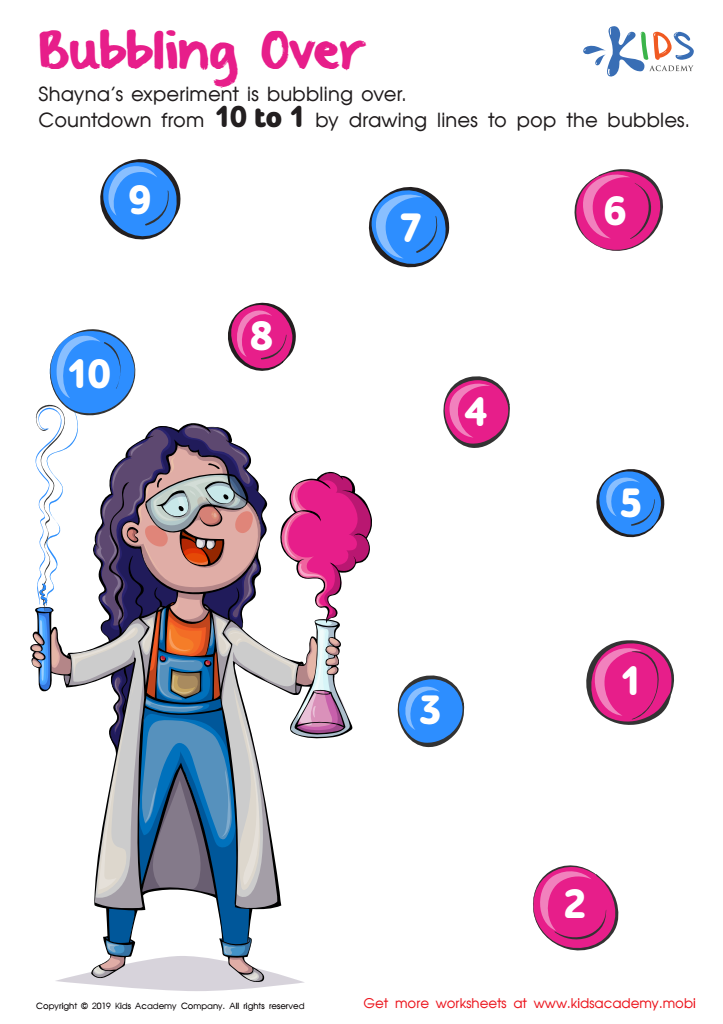
Bubbling Over Worksheet
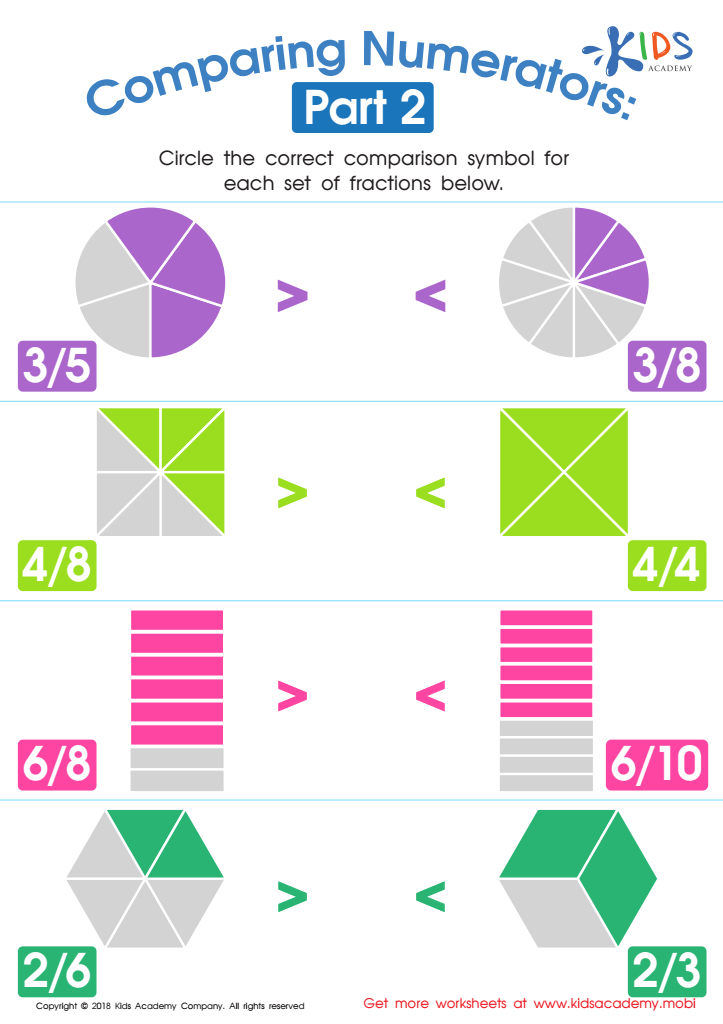
Comparing Numerators Part 2 Worksheet
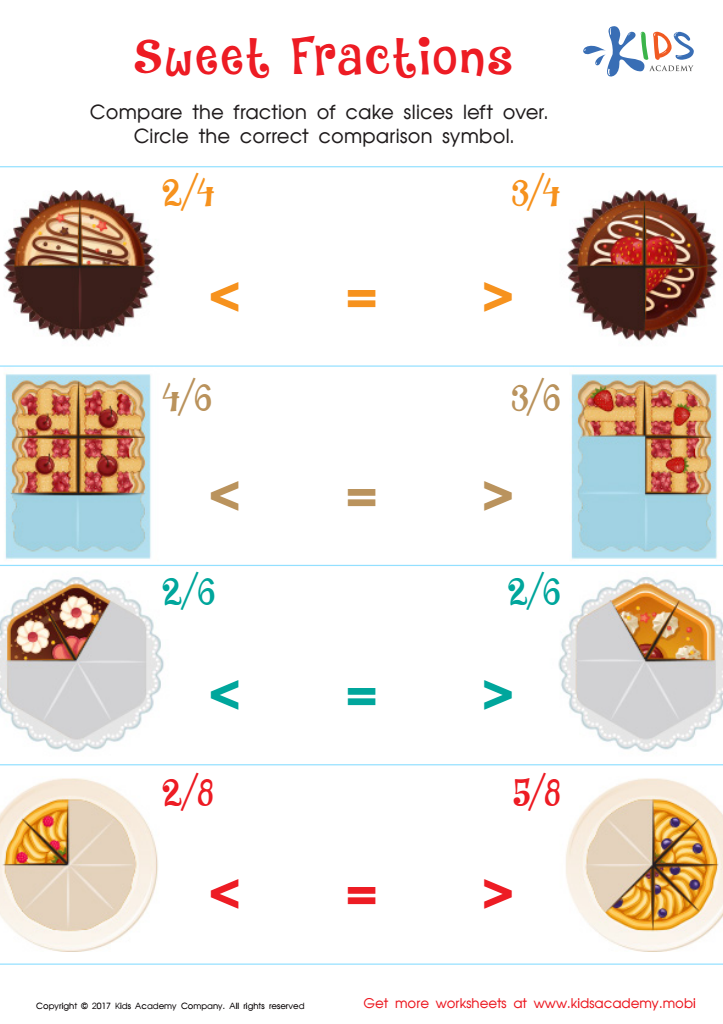
Compare Fractions Worksheet








Comparing fractions is foundational for mathematical understanding and problem-solving, making it crucial for children aged 5-8. At this developmental stage, young learners are forming essential cognitive skills, and grasping the concept of fractions supports both numerical and abstract thinking.
First, it builds on basic arithmetic notions such as halves and quarters, making it easier for children to understand more complex mathematics later on. Comparing fractions enables them to understand part-whole relationships, which is vital for topics like division, ratios, and percentages.
Second, fractions introduce kids to the concept of equivalency, encouraging more flexible thinking about numbers. They learn that different-looking fractions can represent the same value (e.g., 1/2 is the same as 2/4), fostering critical thinking and problem-solving skills. This mindset helps in diverse subject areas and daily life, where situations may require recognizing different representations of the same idea.
Lastly, practicing with fractions strengthens students' reasoning abilities. They begin to comprehend why certain fractions are larger or smaller, a skill that transcends mathematics and applies to empirical reasoning in science, everyday decision-making, and future academic learning.
Therefore, investing the time to help children compare fractions positively impacts their overall intellectual growth, arming them with analytical skills that benefit every part of their education and daily experiences.








