Comparing lengths Numbers Worksheets for Ages 5-8
4 filtered results
-
From - To
Discover our engaging Comparing Lengths Numbers Worksheets designed specifically for children aged 5-8. These worksheets help young learners develop essential measurement skills by comparing the lengths of various objects. Through a range of fun and interactive activities, children will grasp concepts such as "longer" and "shorter," enhancing their understanding of size differences. Ideal for classroom use or home practice, our worksheets make learning enjoyable and effective. With colorful illustrations and relatable examples, your child will gain confidence in their math abilities while honing critical thinking skills. Explore our collection and watch your child's mathematical skills flourish!
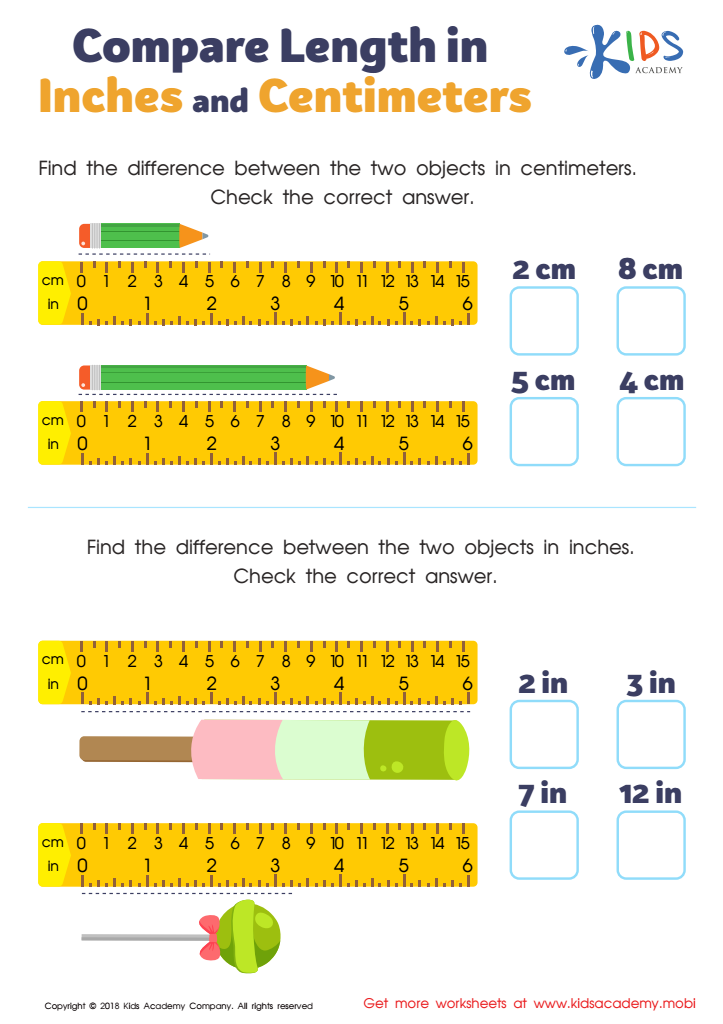
Compare Length in Inches and Centimeters Worksheet
 Assign to My Students
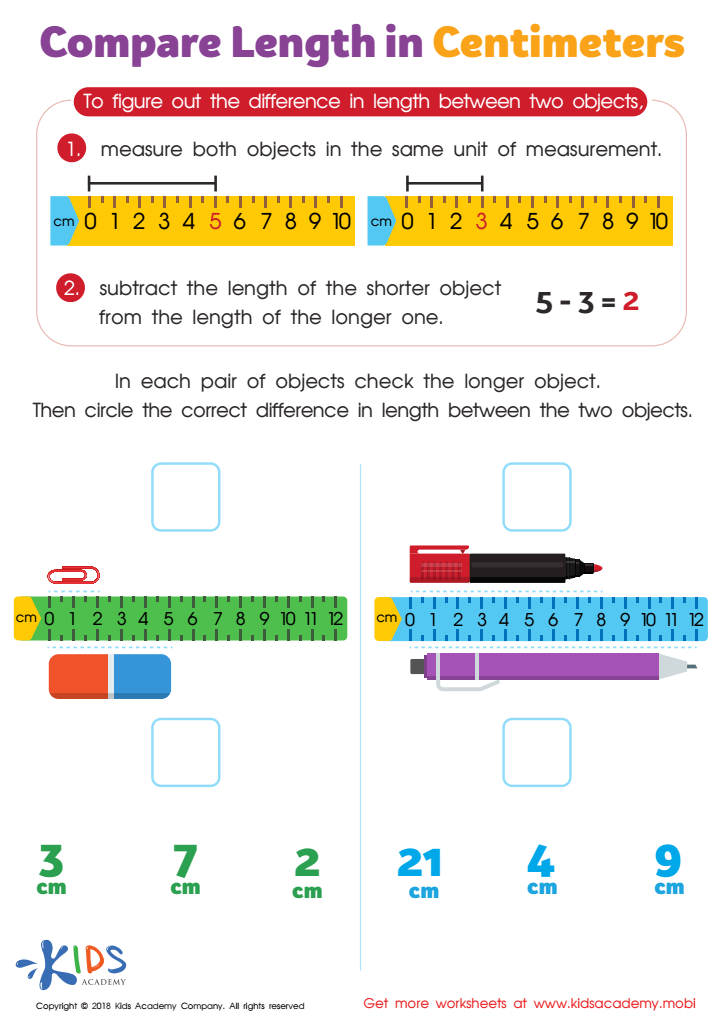
Compare Length in Centimeters Worksheet
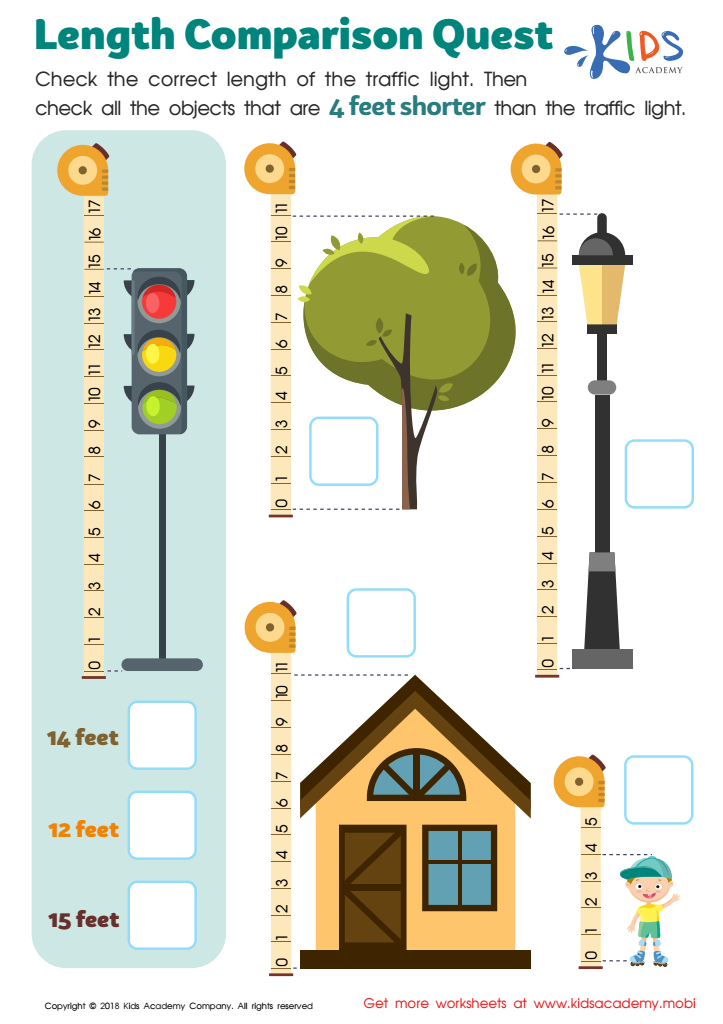
Length Comparison Quest Worksheet
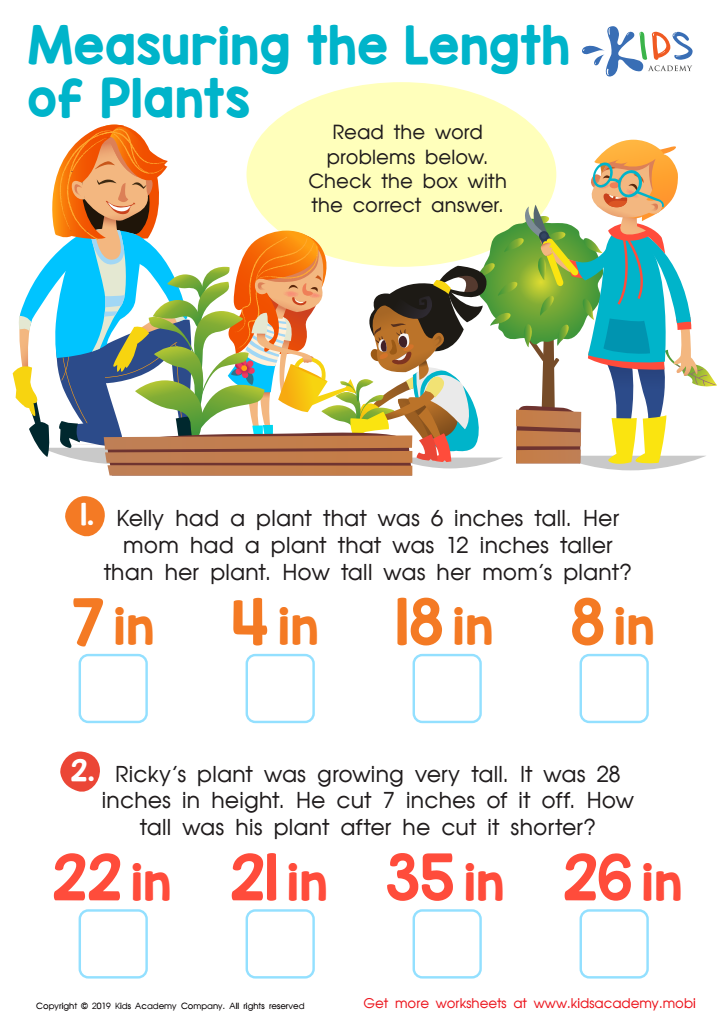
Measuring the Length of Plants Worksheet







Comparing lengths and understanding numbers is vital for children aged 5 to 8, as it lays the foundation for their mathematical skills. At this developmental stage, children are naturally curious and eager to explore the world around them. Introducing concepts of length comparison helps them make sense of their environment and fosters critical thinking.
Parents and teachers should care about this foundational learning because it aids in developing essential cognitive skills. By learning to compare lengths, children begin to enhance their measurement skills, which are crucial in later math applications such as addition, subtraction, and even geometry. Understanding concepts like "longer" or "shorter" fosters spatial awareness and helps children gain confidence in their reasoning abilities.
Additionally, engaging in length comparisons can be interactive and playful, promoting cooperative learning. Activities such as measuring objects around the house or classroom lead to meaningful discussions, encouraging language development and communication skills.
Moreover, early exposure to these concepts cultivates a positive attitude towards math, making children more willing to embrace mathematical challenges in the future. Overall, comparing lengths is not just a math skill; it is a key component of holistic development that encourages exploration, curiosity, and effective problem-solving abilities.








