Data interpretation Numbers Worksheets for Ages 5-8
5 filtered results
-
From - To
Explore our engaging Data Interpretation Numbers Worksheets designed for children ages 5-8! These worksheets are crafted to help young learners develop essential skills in interpreting data through fun activities. Kids will work with charts, graphs, and pictograms, making math concepts relatable and enjoyable. Each worksheet encourages critical thinking and enhances basic math skills, setting a strong foundation for future learning. Perfect for classroom use or at-home practice, our materials make learning about data both interactive and accessible. Dive into the world of numbers and support your child's mathematical journey with our comprehensive, kid-friendly worksheets today!
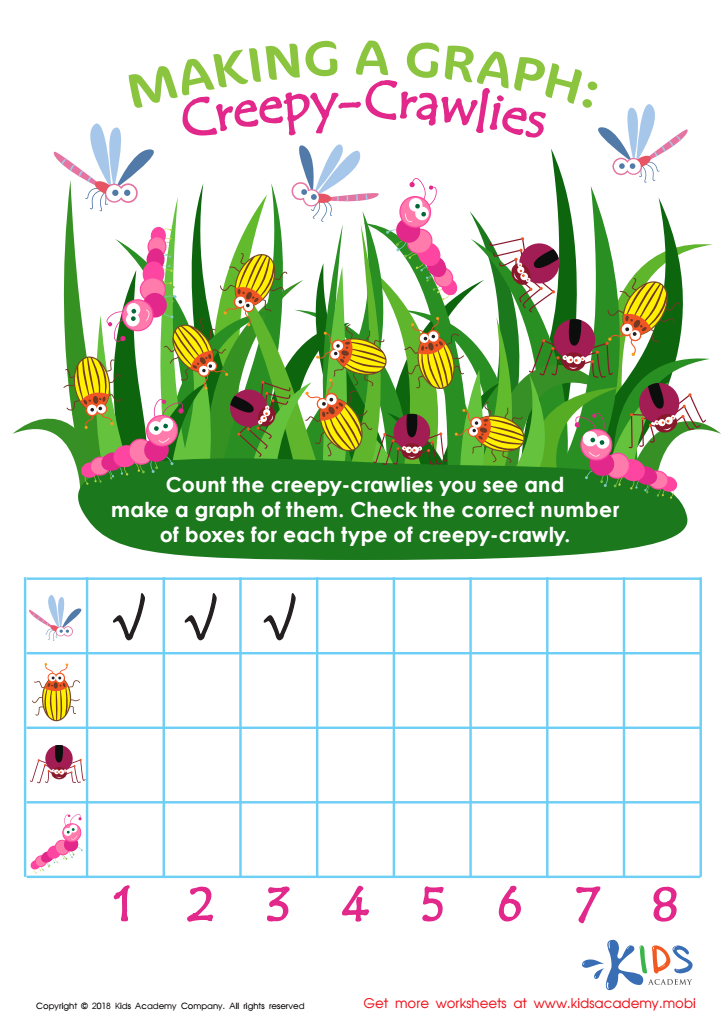
Making a Graph: Creepy Crawlies Worksheet
 Assign to My Students
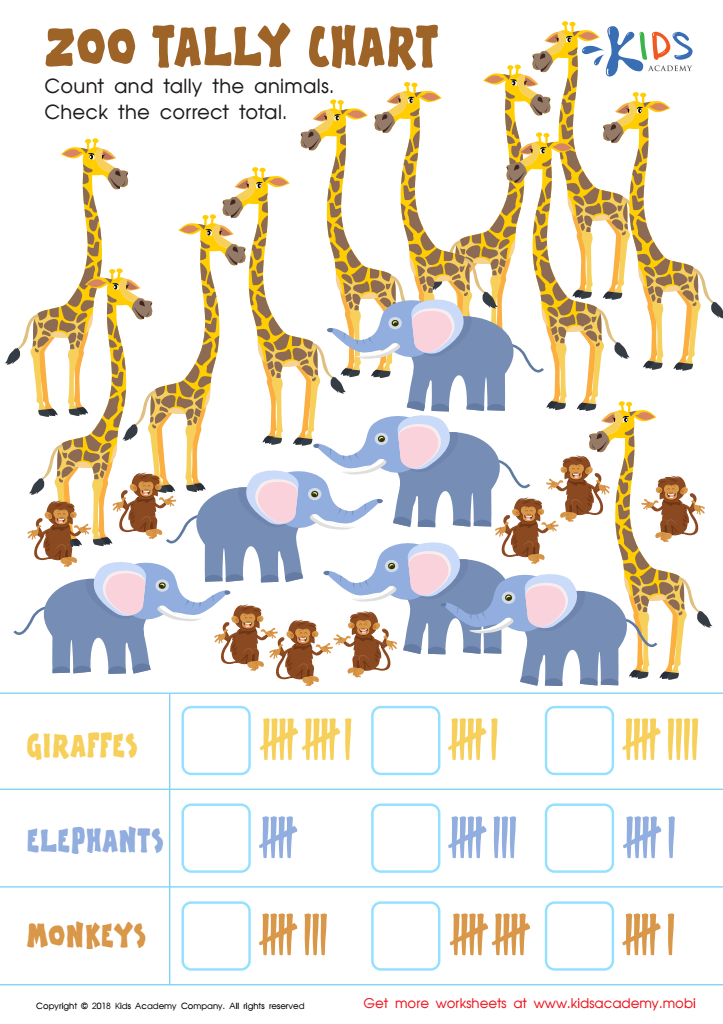
Zoo Tally Chart Worksheet
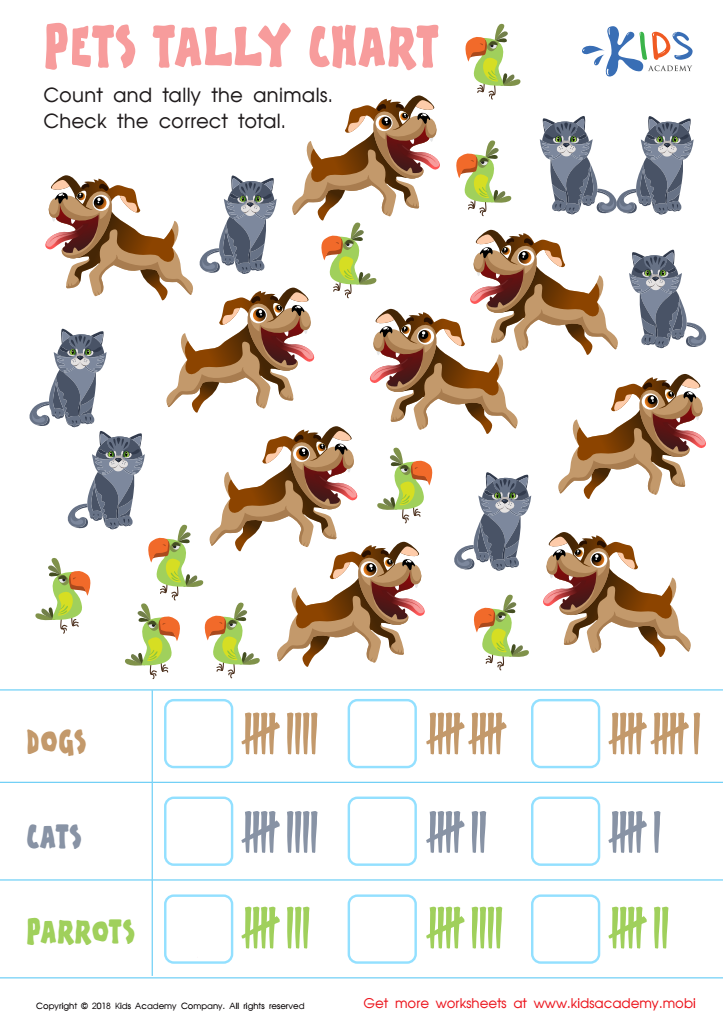
Pets Tally Chart Worksheet
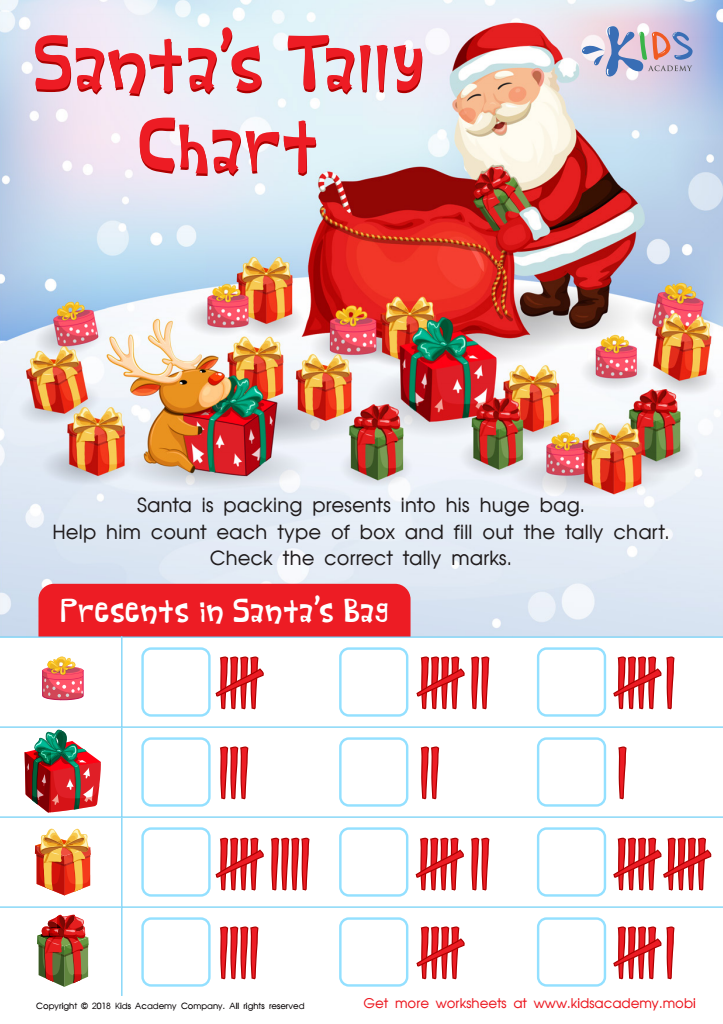
Santa Tally Chart Worksheet
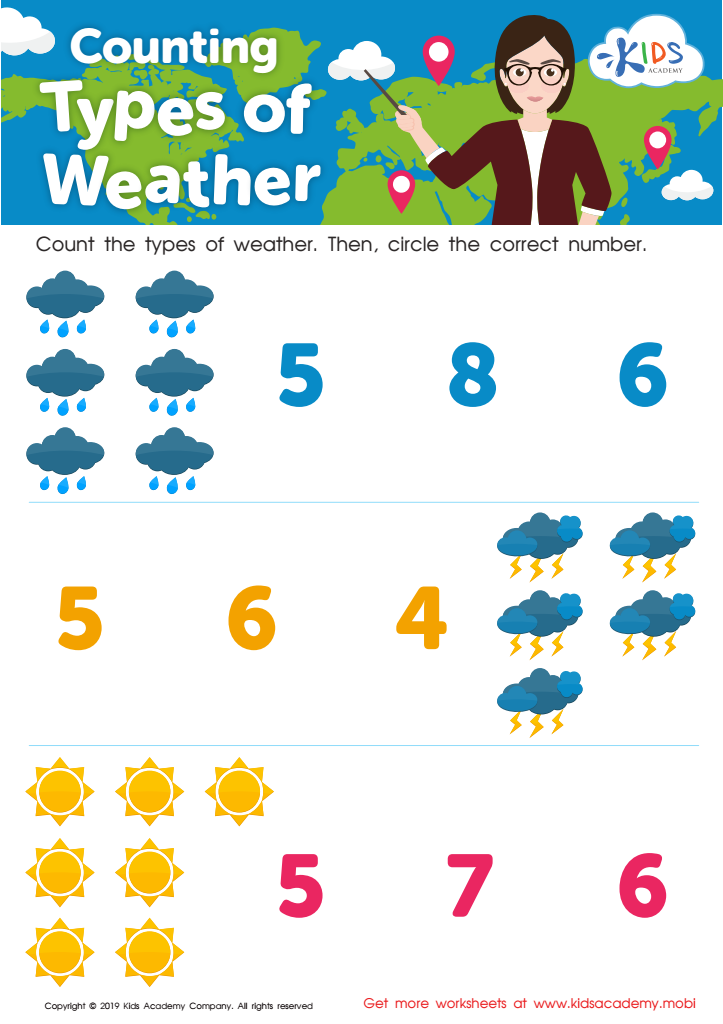
Counting Types of Weather Worksheet








Data interpretation plays a crucial role in early childhood education, especially for children aged 5-8. At this age, kids are developing essential math skills, and understanding data helps them make sense of the world around them. Parents and teachers should care about teaching data interpretation because it empowers children to collect, analyze, and draw conclusions from information, fostering critical thinking and problem-solving skills.
Learning to interpret numbers also introduces children to concepts like trends, patterns, and relationships, which are foundational for advanced math and science understanding. It encourages curiosity, as children begin to ask questions about the data they see, sparking an interest in exploration and discovery.
Moreover, familiarizing young learners with numbers in real-life contexts—such as reading charts, graphs, and tables—enhances their ability to convey information effectively. It builds essential skills in communication as they learn to express their findings to others. In an increasingly data-driven world, early proficiency in these areas sets the foundation for lifelong learning and adaptability.
Investing time in data interpretation not only benefits children's academic performance but also equips them with critical life skills, preparing them for future challenges in an information-rich society.








