Fraction Addition Numbers Worksheets for Ages 5-8
3 filtered results
-
From - To
Unlock the magic of math for young learners with our "Fraction Addition Numbers Worksheets for Ages 5-8". Tailored to engage and educate, these printable worksheets make learning fraction addition fun and interactive. Designed specifically for children aged 5-8, each activity helps develop number sense, problem-solving skills, and basic arithmetic proficiency. Perfect for classroom or at-home practice, these worksheets provide step-by-step guides and visual aids to foster a solid understanding of fractions. Empower your child to build confidence in math with our expertly crafted resources. Download today and start the journey to mastering fractions!
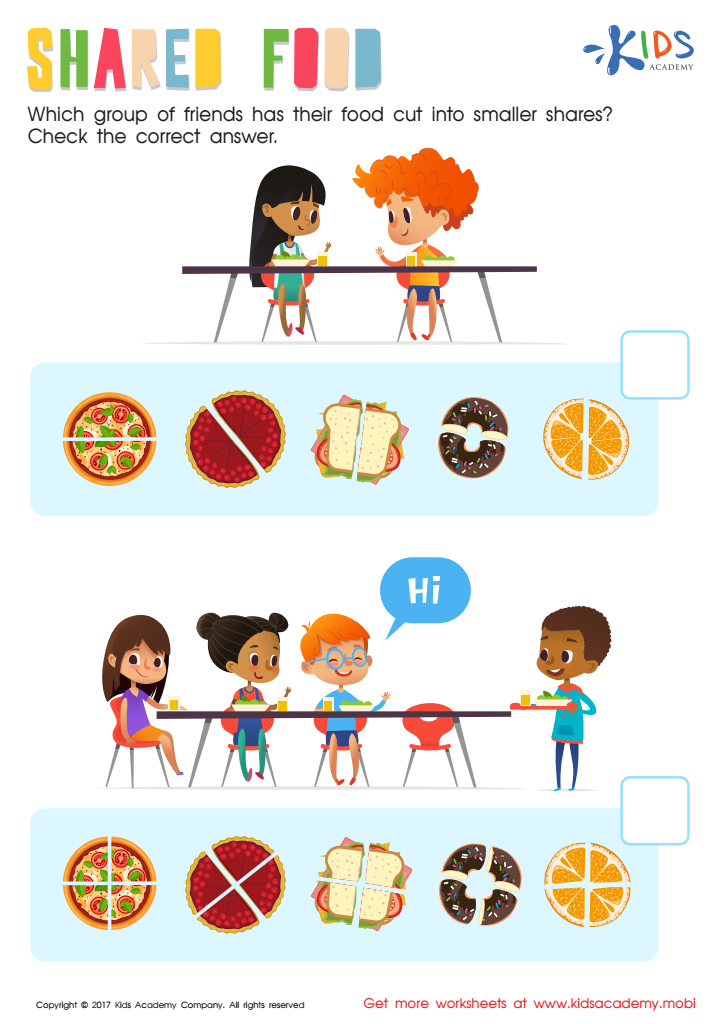
Shared Food Worksheet
 Assign to My Students
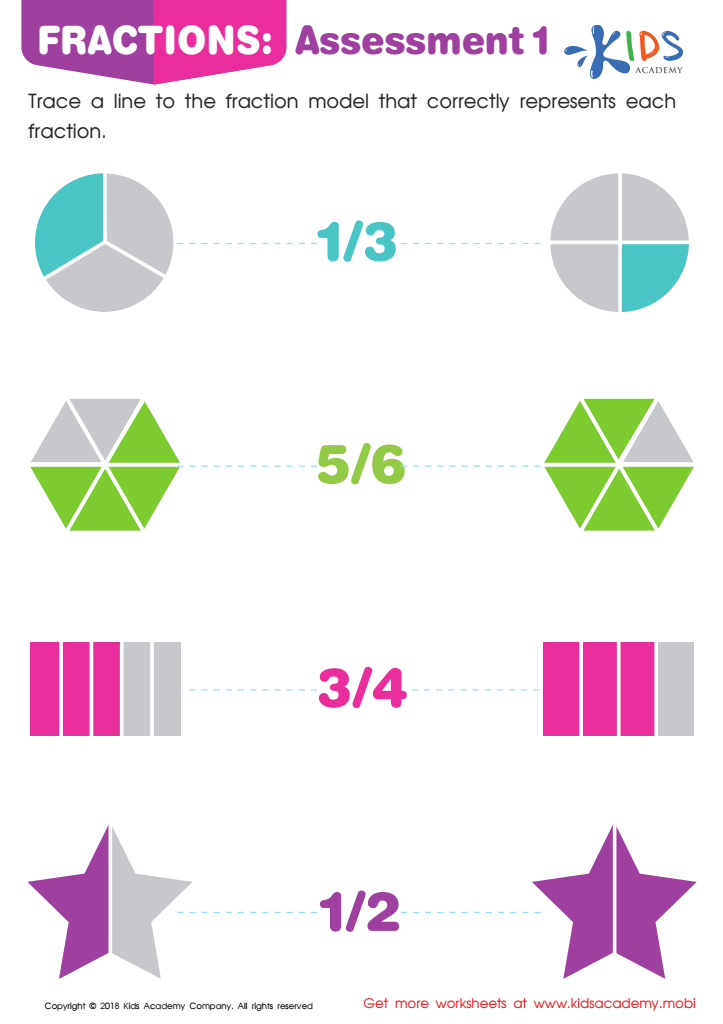
Fractions: Assessment 1 Worksheet
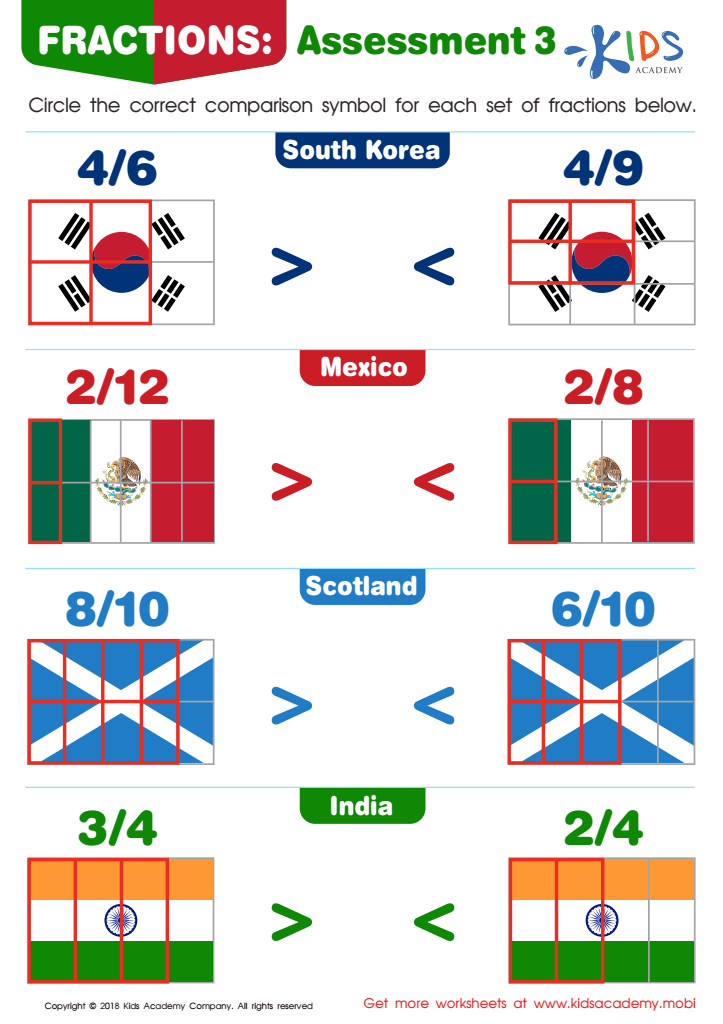
Fractions: Assessment 3 Worksheet







Introducing fraction addition to children ages 5-8 establishes foundational math skills essential for future academic success. At this early age, children are highly receptive to new concepts and developing their ability to understand and manipulate numbers. Learning fractions not only strengthens their arithmetic skills but also enhances their problem-solving and critical thinking abilities.
Fraction addition helps children comprehend the parts-to-whole relationship, which is a concept that extends beyond mathematics into daily life experiences such as cooking, dividing items equally among friends, or understanding time. Gaining proficiency in these basic math skills boosts children's confidence and fosters a positive attitude toward continuing to learn math.
Moreover, introducing fractions early prepares students for advanced mathematical concepts they will encounter in higher grades, such as algebra, geometry, and data analysis. Learning fractions involves visualization, pattern recognition, and comparison skills, which are fundamental to scientific and technological understanding.
Equipping children with the ability to add fractions increases their numerical fluency and sharpens their cognitive development. Teachers and parents play a crucial role in guiding and supporting children through fun, interactive, and engaging activities that build a solid arithmetic foundation. This early investment will significantly influence their academic trajectory and everyday practical life skills.








