
Matching skills Numbers Worksheets for Ages 5-8
7 filtered results
Difficulty Level
Grade
Age
-
From - To
Subject
Activity
Standards
Enhance your child's numerical proficiency with our "Matching Skills Numbers Worksheets" designed specifically for ages 5-8. These engaging and educational worksheets target the development of critical math skills including number recognition, counting, and matching. Each sheet offers a variety of fun activities that encourage your young learner to identify, associate, and connect numbers effectively. These printables are perfect for building a solid arithmetic foundation and making learning enjoyable through colorful, interactive exercises. Ideal for homeschooling or supplemental practice, our worksheets ensure your child grasps essential number concepts while having a blast.
Favorites
With answer key
Interactive
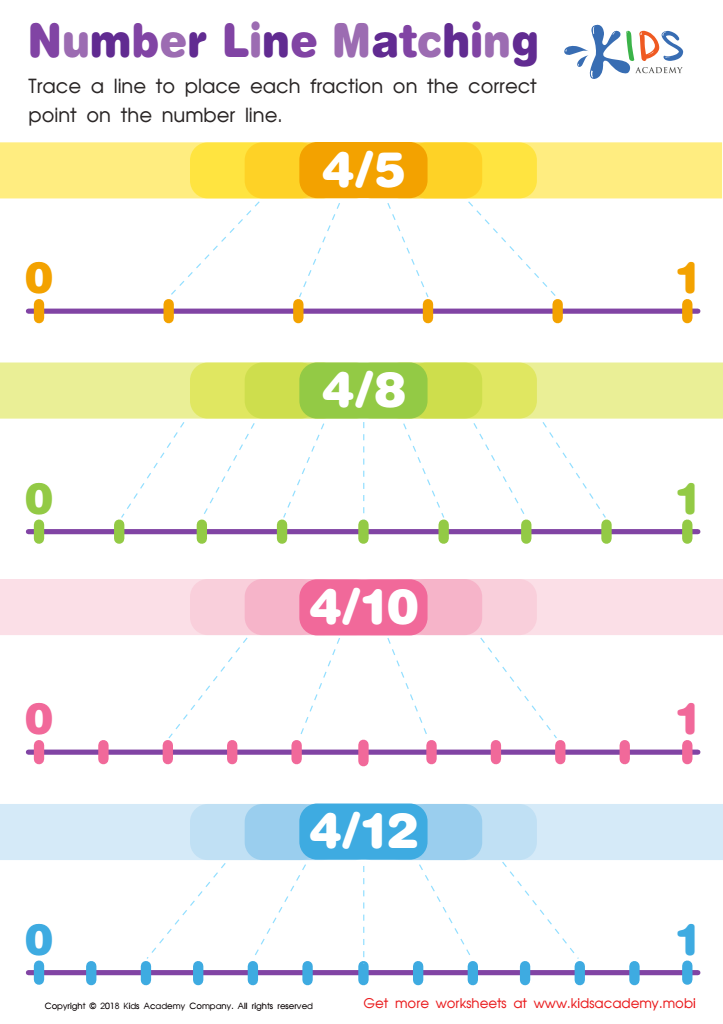
Number Line Matching Worksheet
Math can be fun! Have your child count points on the number line, then identify and trace fractions above it. It's a great way for them to learn and have some fun!
 Assign to My Students
Number Line Matching Worksheet
Worksheet
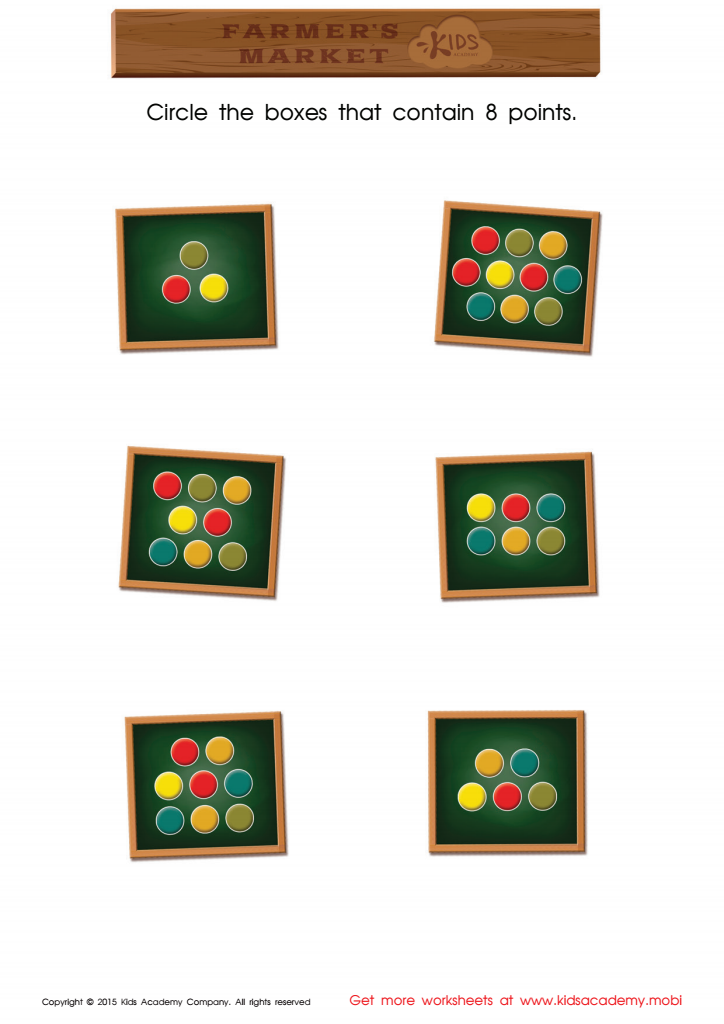
Count and Match Points 8 Math Worksheet
This free PDF helps children develop their number skills by counting the points in the boxes. Each box contains a total of 9 points, making it a fun and colorful activity. Parents can encourage their young ones by guiding them if they need help counting. By the end of the worksheet, children should have a better understanding of numbers.
Count and Match Points 8 Math Worksheet
Worksheet
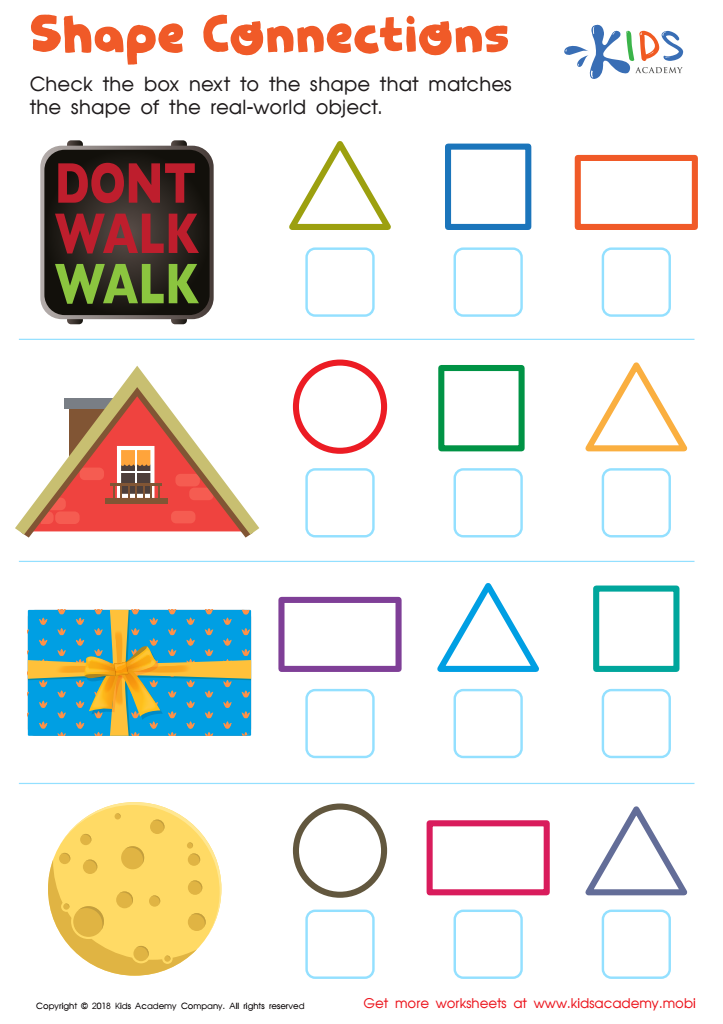
Shape Connections Worksheet
Geometric shapes are all around us and this fun worksheet brings it to life. Kids will match real-world pictures with the corresponding basic shapes, connecting how math is used in various aspects of daily life. A great way to reinforce these concepts!
Shape Connections Worksheet
Worksheet
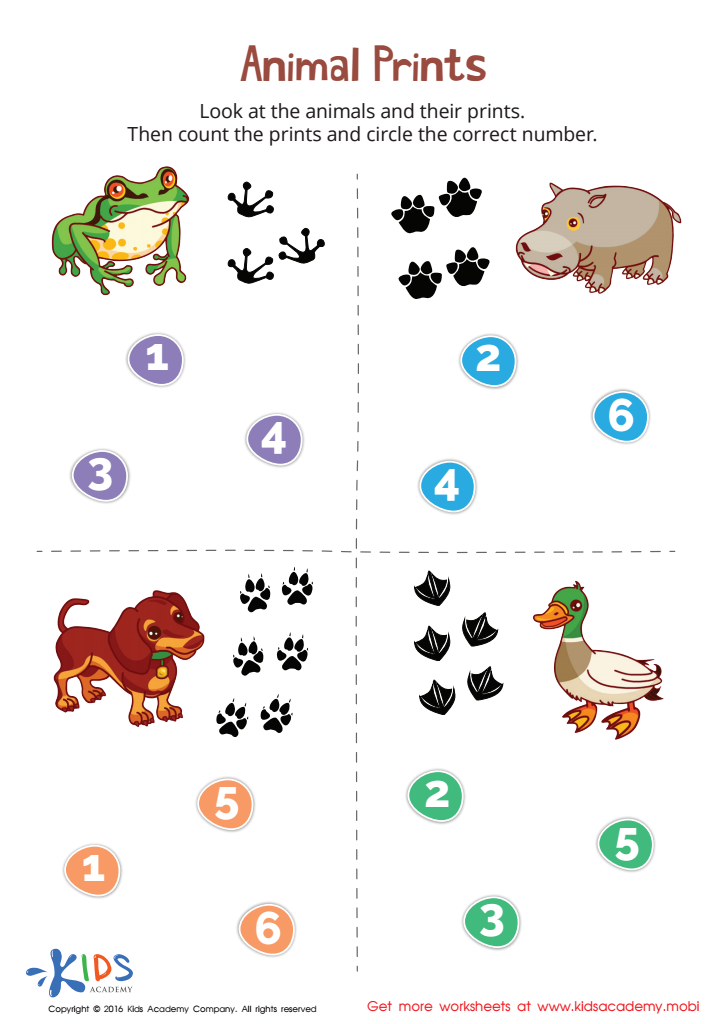
Animal Prints Match-Up Worksheet
Help your little learner build early math skills with this fun animal paw prints worksheet. With it, they'll count, recognize numbers, and learn about the animals that make the paw prints. Talk to them about the prints and ask them to count. They'll love exploring and learning about the different animals, all while sharpening essential math skills!
Animal Prints Match-Up Worksheet
Worksheet
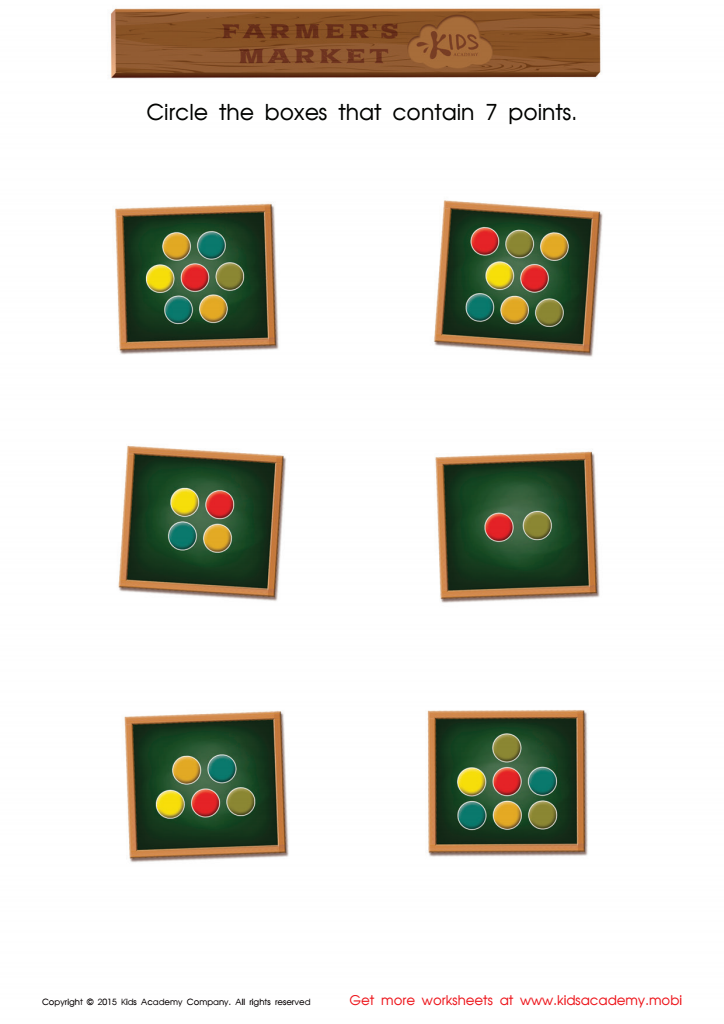
Count and Match Points 7 Math Worksheet
Help your child count and recognize similar numbers by using this fun, colorful worksheet. Guide them to count the dots in each box, then circle those with a total of 7. It's a great way for your child to see how different arrangements lead to the same number.
Count and Match Points 7 Math Worksheet
Worksheet
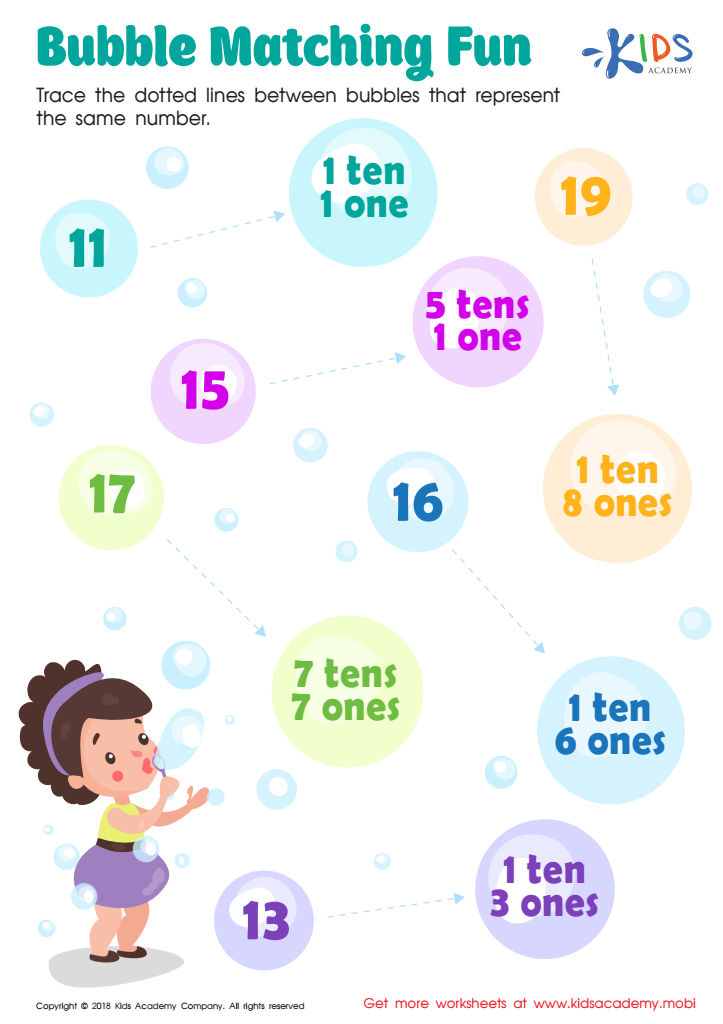
Bubble Matching Fun Worksheet
Try this fun worksheet to stimulate your young one's learning! Test their number matching skills by having them trace the dotted lines between bubbles representing the same numbers. Look through the exercise with your child and watch their understanding of how two numbers can add up to the same value grow!
Bubble Matching Fun Worksheet
Worksheet
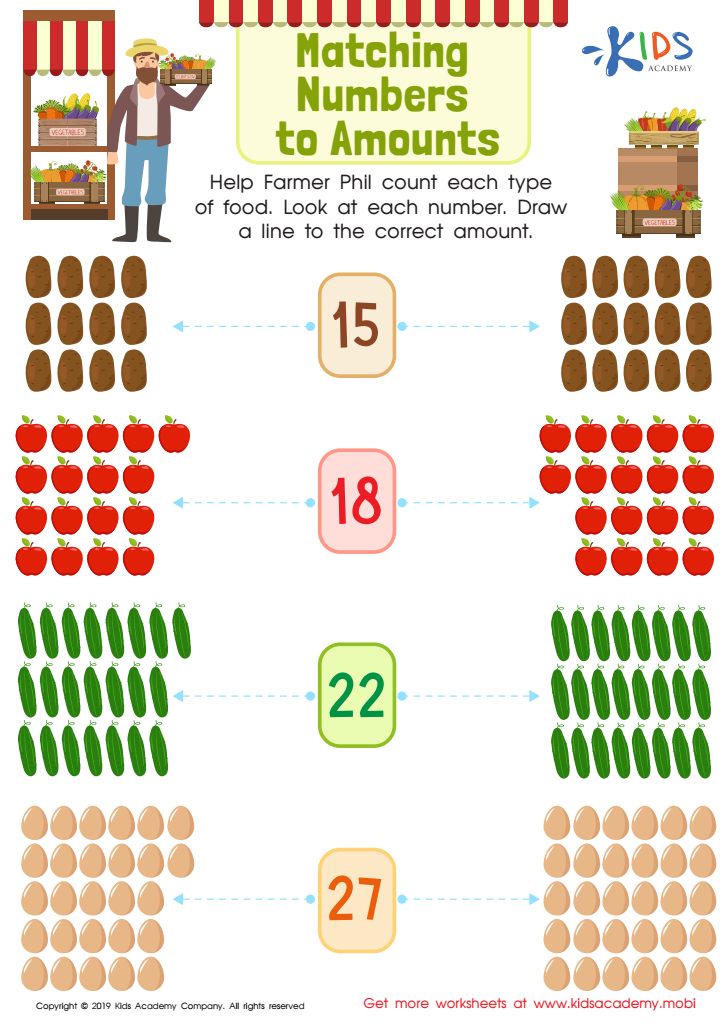
Matching Numbers to Amounts Worksheet
Farmer Phil needs your kid's help! Ensure they know the basics of math such as counting, adding and subtracting. Before beginning, help your child identify and count the different foods in the picture. Then, draw a line to the correct amount.
Matching Numbers to Amounts Worksheet
Worksheet
Join Kids Academy for Free
Who is primarily going to use this learning content?








Matching skills in the realm of numbers are crucial for children ages 5-8. Firstly, these formative years are critical for cognitive development, and matching activities enhance their numerical understanding and memory. When kids match numbers with sets, they sharpen their counting and one-to-one correspondence skills, foundational for more advanced mathematical concepts like addition and subtraction.
Secondly, matching numbers helps improve a child's ability to recognize numerical patterns and relationships. This early exposure to patterns fosters logical thinking and problem-solving abilities, essential skills both in mathematics and in everyday decision-making.
Additionally, engaging in matching activities supports fine motor skills and spatial awareness, as children often interact with physical objects or digital tools during these exercises. Enhanced fine motor skills benefit handwriting and other manual tasks, while spatial awareness is valuable for geometry and science.
Lastly, through these activities, kids also develop concentration and patience. Learning happens best in an environment full of encouragement and fun. It’s important that parents and teachers include these engaging exercises to instill a positive attitude toward learning from an early age. Hence, parents and teachers should prioritize number matching in early education to build a strong, comprehensive foundation for lifelong learning and problem-solving.








