Problem-Solving Skills Numbers Worksheets for Ages 5-8 - Page 3
52 filtered results
-
From - To
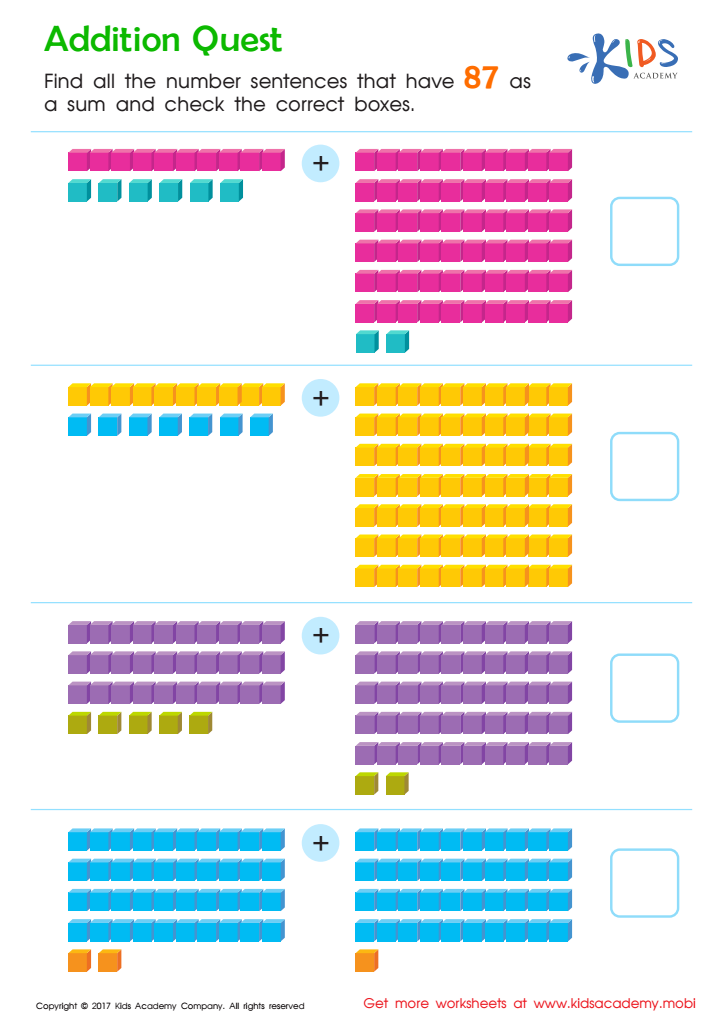
Addition Quest Worksheet: Part 1
 Assign to My Students
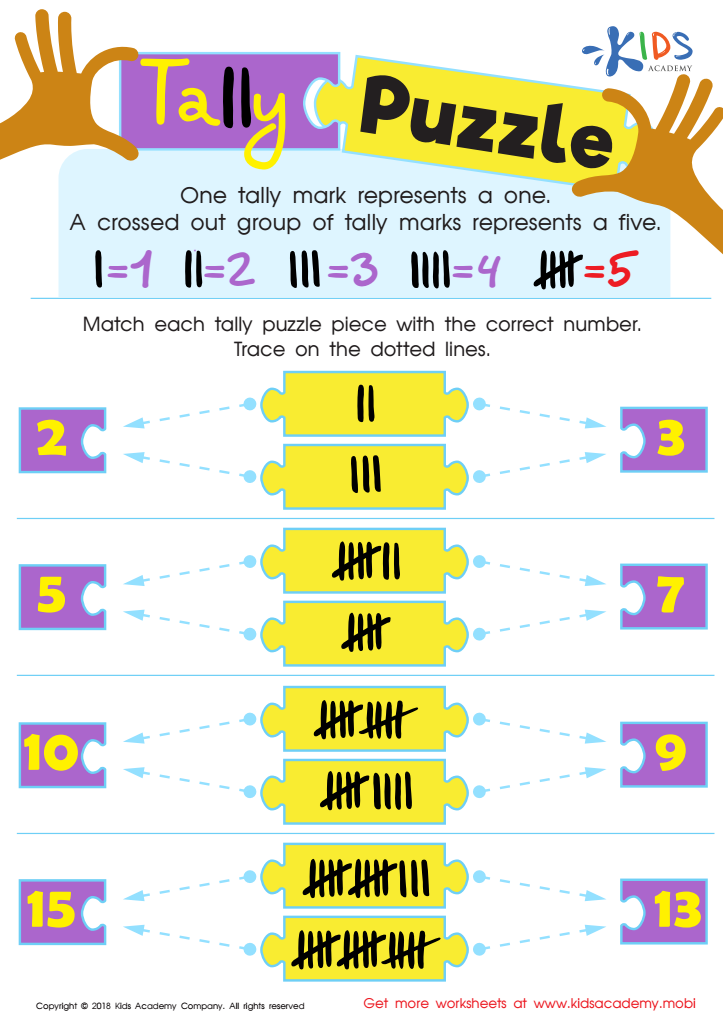
Tally Puzzle Worksheet

Haystack Steps Worksheet

Enrichment: Firefighter Ladders Worksheet








Parents and teachers should prioritize problem-solving skills that incorporate numbers for children aged 5-8 because these skills are fundamental to cognitive and academic development. At this critical age, children are honing their ability to understand and apply numerical concepts, which are crucial for their success in math and other subjects. Developing problem-solving skills with numbers enhances logical thinking and nurtures a child's ability to analyze and tackle challenges systematically.
Engaging with numerical problem-solving tasks helps children build a strong mathematical foundation, preparing them for more complex concepts encountered in later grades. It encourages perseverance and boosts confidence, as children learn to approach problems step-by-step and discover that incorrect answers are opportunities for learning, not dead ends.
Moreover, problem-solving skills are not limited to academics; they are essential for daily life. Understanding numbers aids in making sense of the world, from telling time to handling money, and presenting schedules. Early numerical problem-solving experience also cultivates critical thinking, creativity, and decision-making abilities, skills that are invaluable in personal and future professional contexts.
In summary, fostering problem-solving skills with numbers in young children equips them with important tools for academic success and everyday efficiency, laying the groundwork for a lifetime of learning and practical competency.








