Comparing objects Math Worksheets for Ages 5-8
8 filtered results
-
From - To
Discover our engaging "Comparing Objects Math Worksheets" designed for children aged 5-8! These interactive worksheets help young learners develop essential math skills by comparing different objects based on size, weight, and other characteristics. Fun illustrations and hands-on activities make learning enjoyable, ensuring children not only grasp key concepts but also build confidence in their math abilities. Perfect for homeschooling, classroom use, or extra practice at home, our resources foster critical thinking and analytical skills. Encourage your child's love for math with these creative worksheets that transform learning into a delightful adventure. Start comparing and elevating their math journey today!
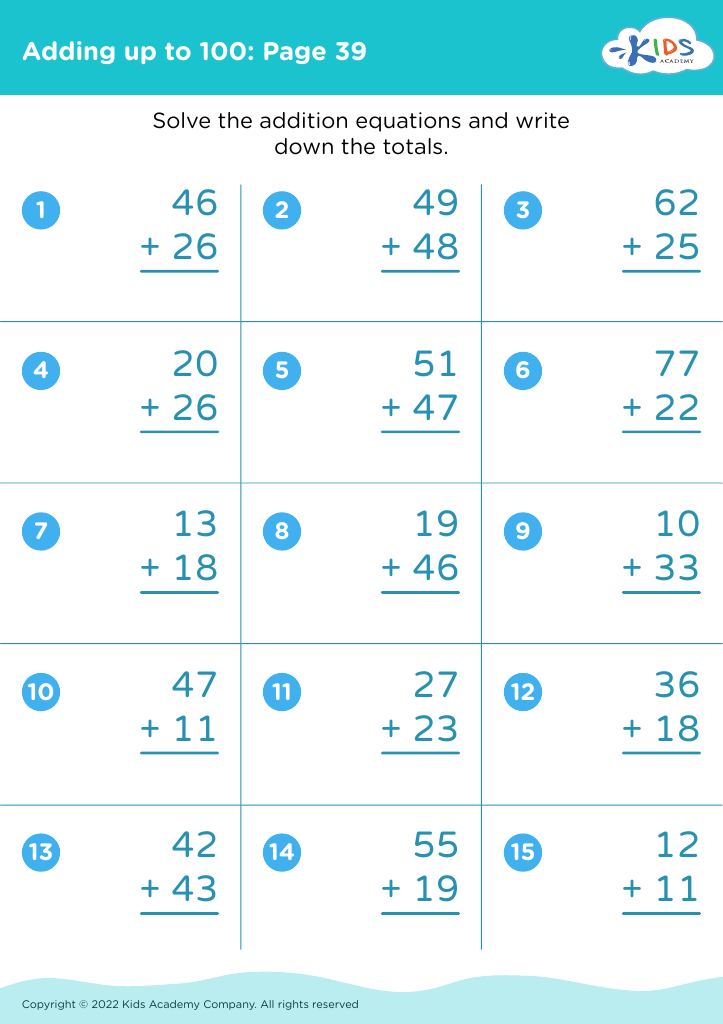
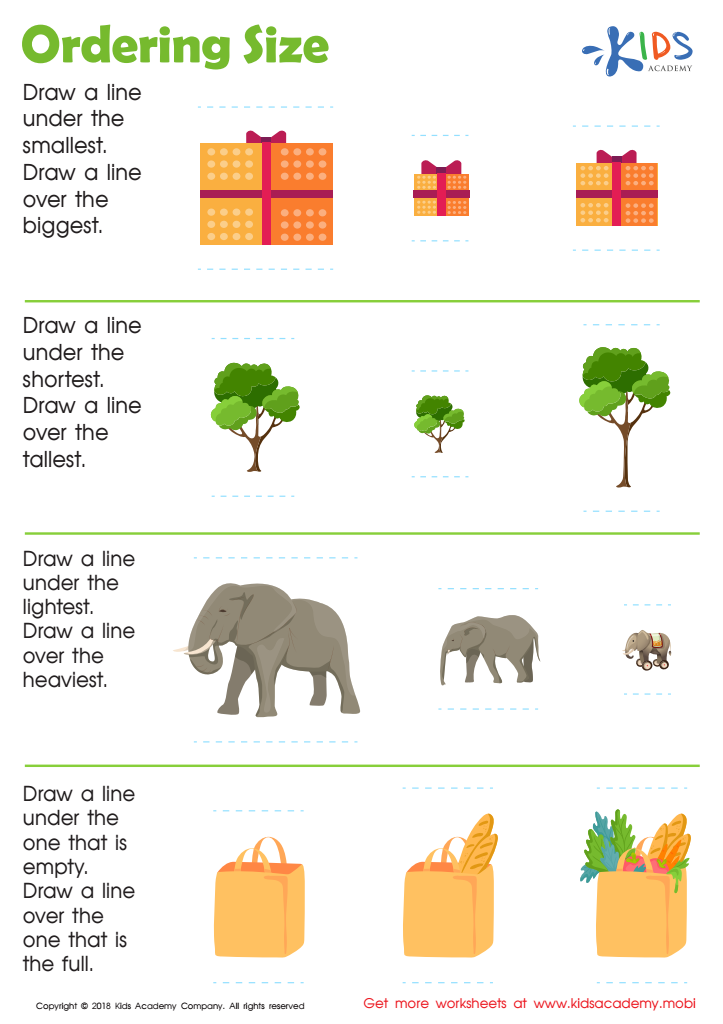
Ordering Size Worksheet
 Assign to My Students
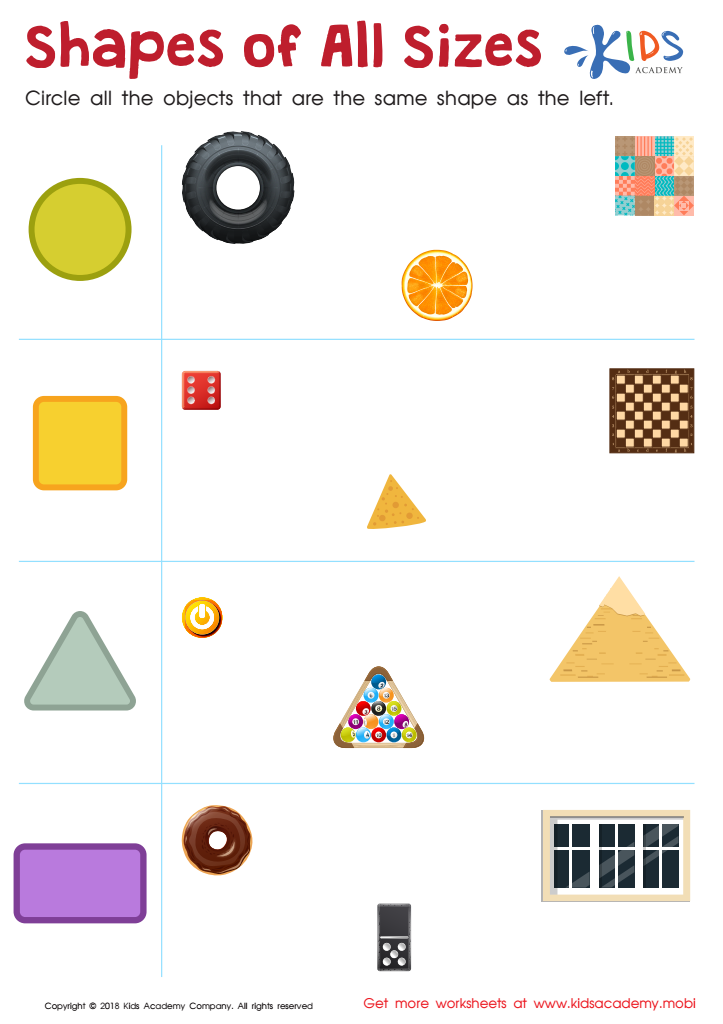
Shapes of All Sizes Worksheet
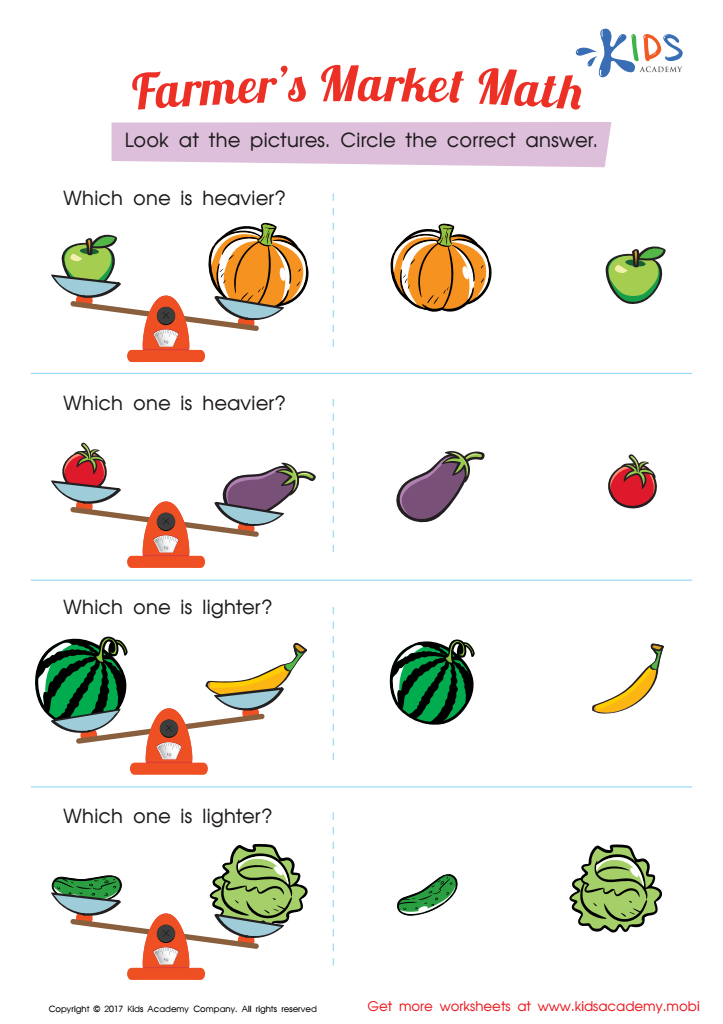
Which One Is Heavier Worksheet
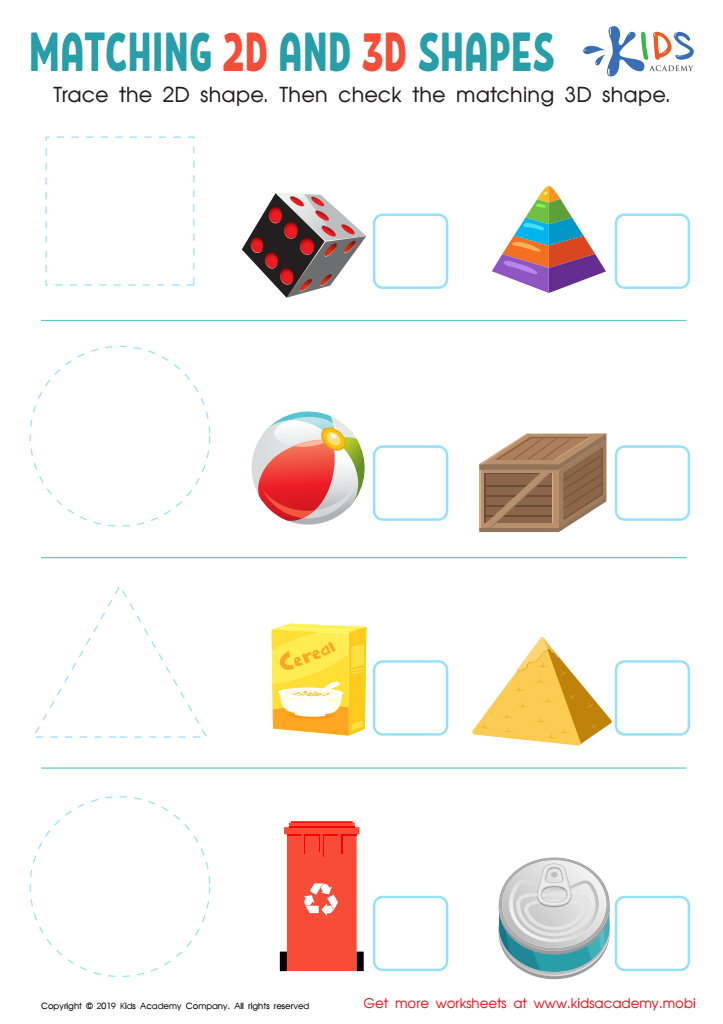
Matching 2D and 3D Shapes Worksheet
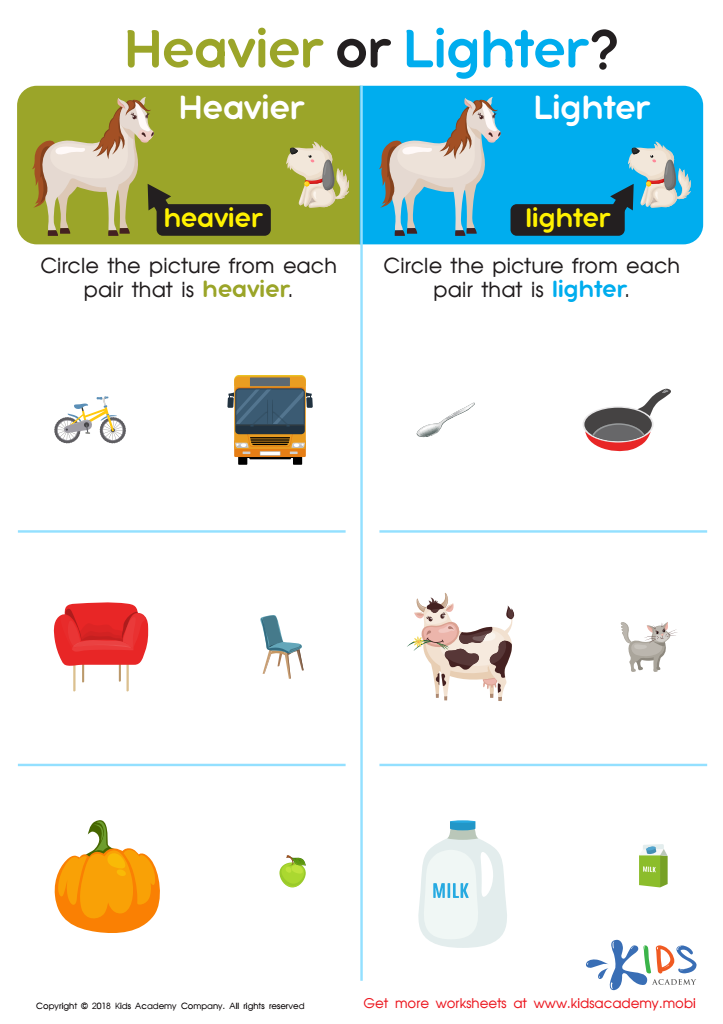
Heavier or Lighter? Worksheet
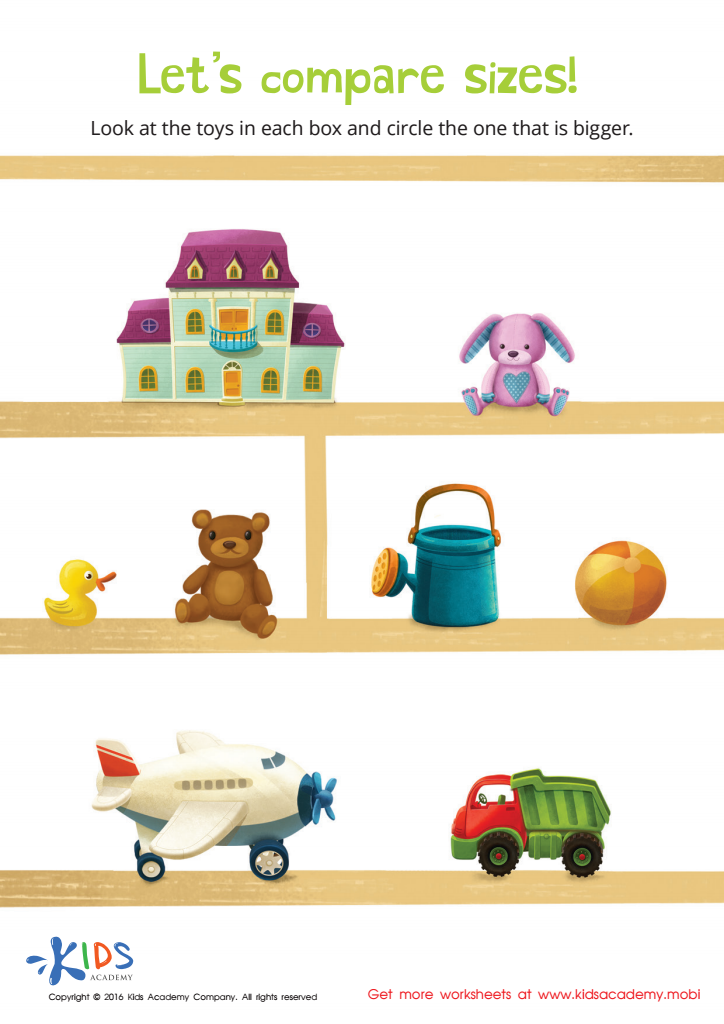
Classifying by Size Sorting Worksheet






.jpg)

Comparing objects is a fundamental aspect of early mathematics, particularly for children aged 5-8. Understanding this concept fosters critical analytical skills that are crucial in both math and everyday life. When children compare objects, they engage in discussions about size, weight, shape, and volume, which enhances their observational skills and vocabulary.
This practice also promotes logical reasoning and helps children develop the ability to make decisions based on comparisons. For example, when they identify which object is longer or heavier, they learn to think critically about attributes and categorization—key skills that form the foundation for complex math concepts in the future.
Furthermore, comparing objects aids in number sense and lays the groundwork for learning addition and subtraction. Children begin to understand concepts such as "more than," "less than," and "equal," which are vital when working with numbers.
For parents and teachers, incorporating object comparison into everyday activities can create a fun and engaging learning environment. This encourages children to explore their surroundings and boosts their confidence in math, making the subject more enjoyable and less intimidating as they transition into higher-level math skills. Ultimately, fostering these early comparisons cultivates curiosity and a love for learning that lasts a lifetime.








