Discover fun and engaging fractions worksheets designed for kids aged 5-8 to enhance their understanding of fractions! Our worksheets feature colorful, kid-friendly graphics that make learning about halves, thirds, and quarters enjoyable. Children can practice identifying, comparing, and creating fractions through various activities, developing their math skills in an interactive way. Using visual aids and practical exercises, these printable worksheets transform abstract fraction concepts into easily graspable lessons. Perfect for parents and teachers alike, these resources support early learners in building a solid mathematical foundation. Unlock your child’s potential with our expertly crafted fraction worksheets!

Check out this FREE Trial Lesson on Math for age 5-8!

A

Favorites
With answer key
Interactive
  • 5-8
  • Understand fractions
  • Math
Shared Food Worksheet

Shared Food Worksheet

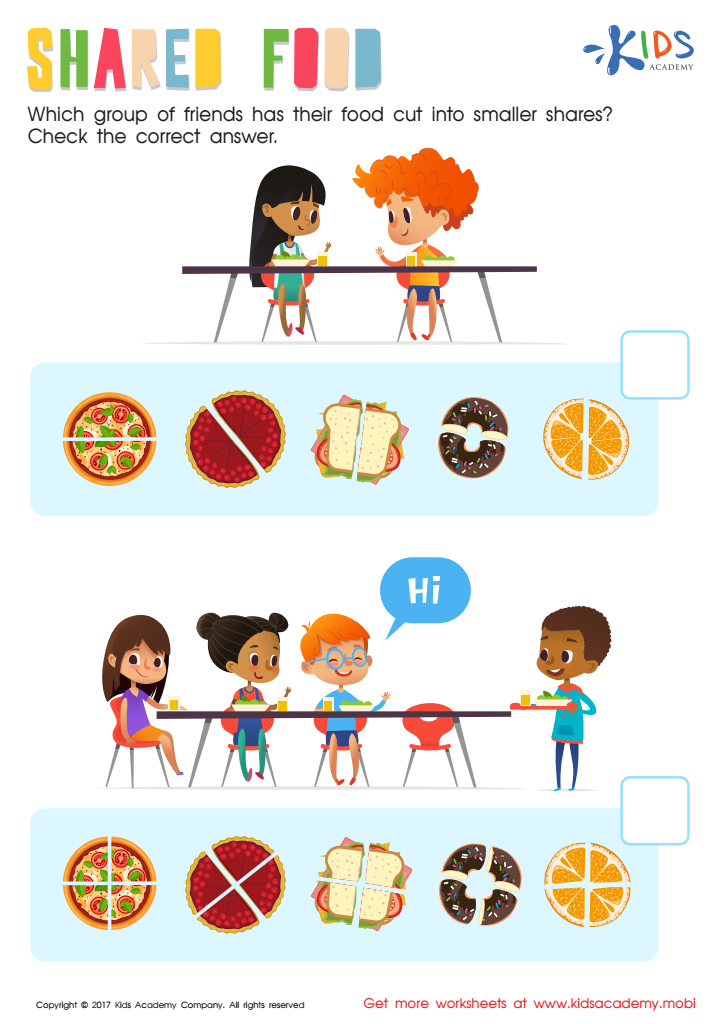
In this worksheet, kids learn about sharing and cutting shapes into equal parts. There are two groups of friends: one with two, the other with four. Ask your child which group has their food cut into smaller shares, and help them find the right answer.
Shared Food Worksheet
Worksheet
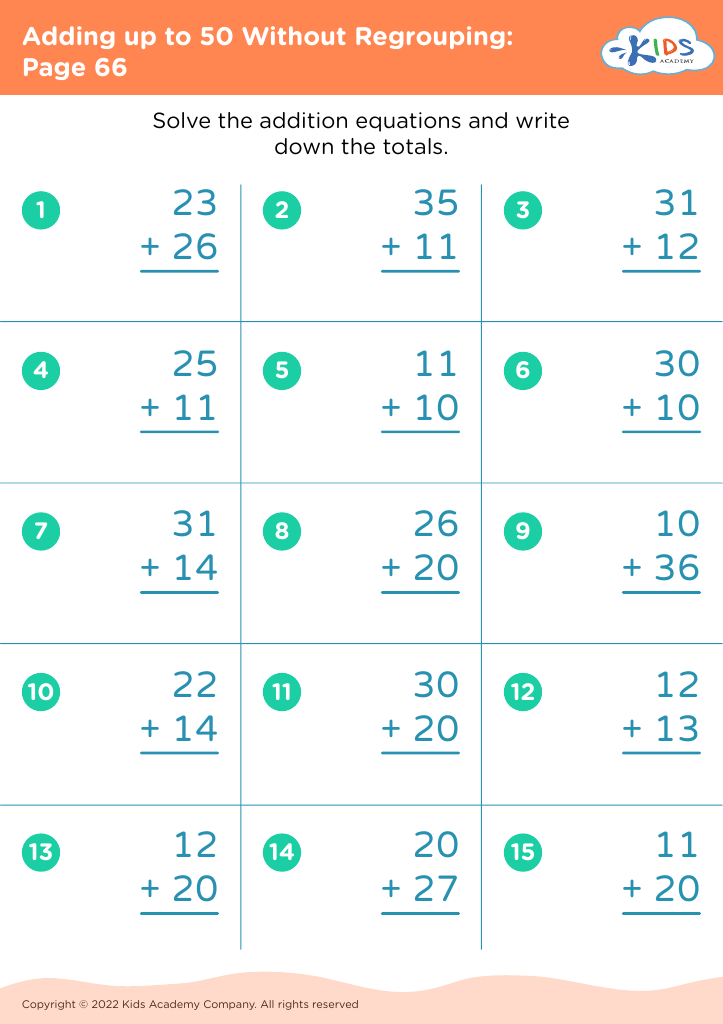
Adding up to 50 Without Regrouping: Page 66
Worksheet
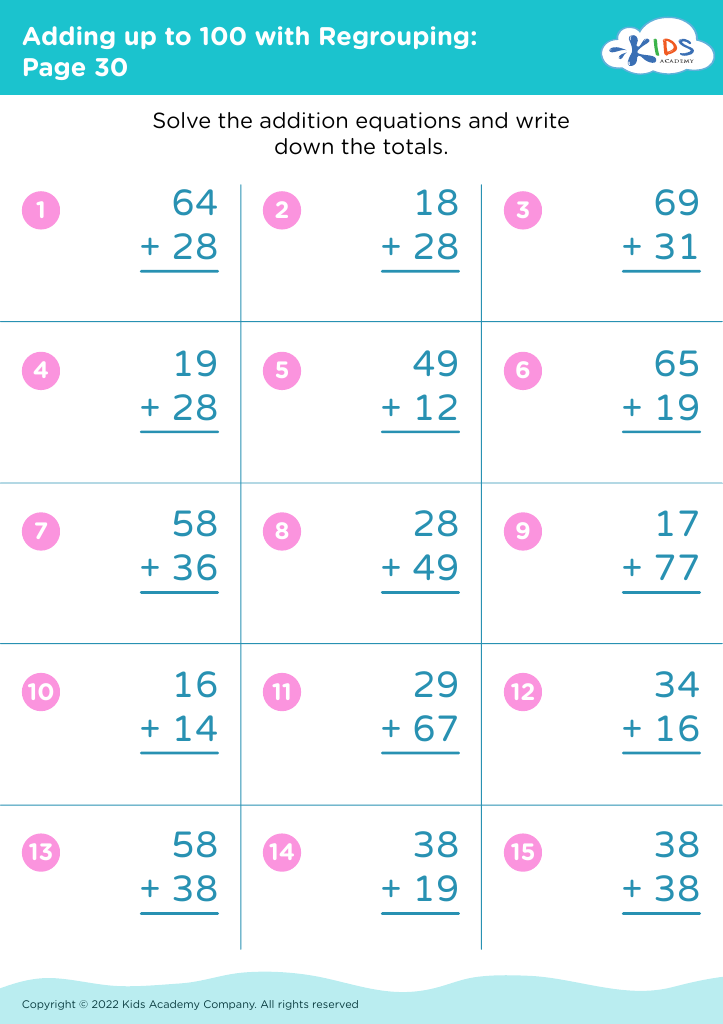
Adding up to 100 with Regrouping: Page 30
Worksheet
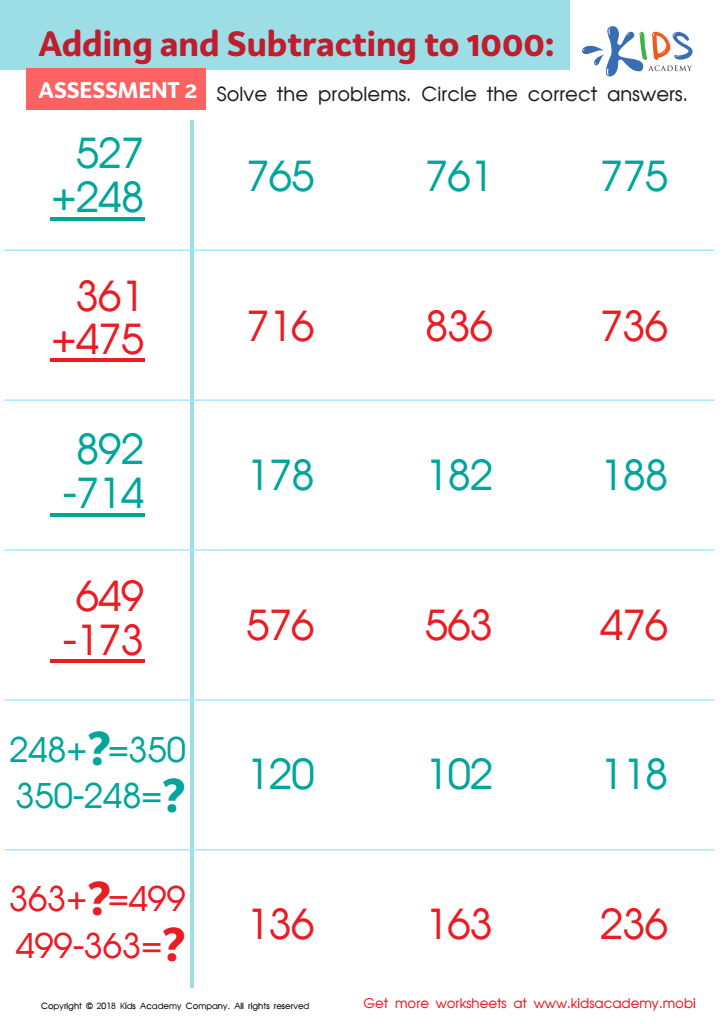
Adding and Subtracting to 1 Worksheet: Assessment 2
Adding and Subtracting to 1 Worksheet: Assessment 2
Test your child's addition and subtraction of 3-digit numbers with this assessment worksheet! They'll practice regrouping and pre-algebra skills to show their expertise. Have them work through the page and circle their answers, then see how many they got right to check their understanding and progress.
Adding and Subtracting to 1 Worksheet: Assessment 2
Worksheet
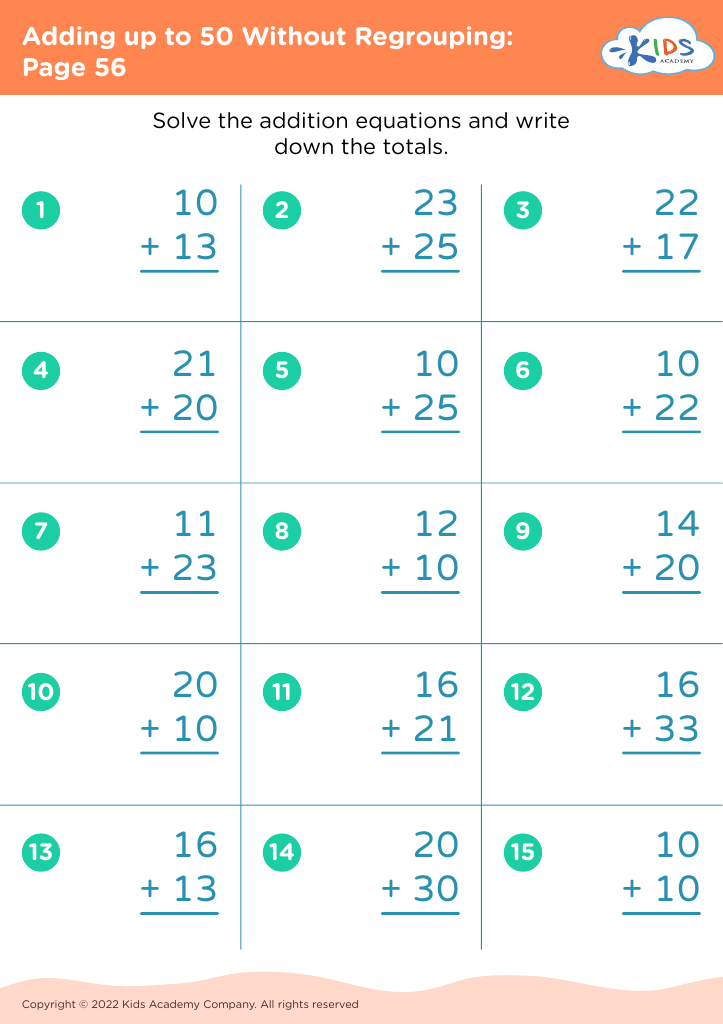
Adding up to 50 Without Regrouping: Page 56
Worksheet
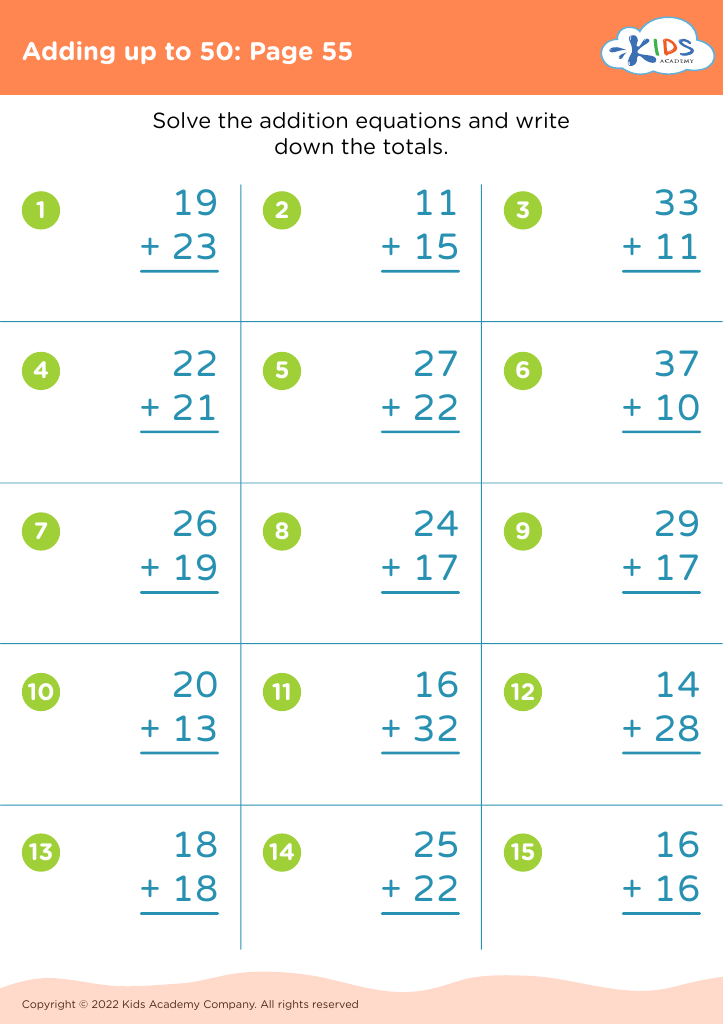
Adding up to 50: Page 55

Adding up to 50: Page 55

Adding up to 50: Page 55
Worksheet
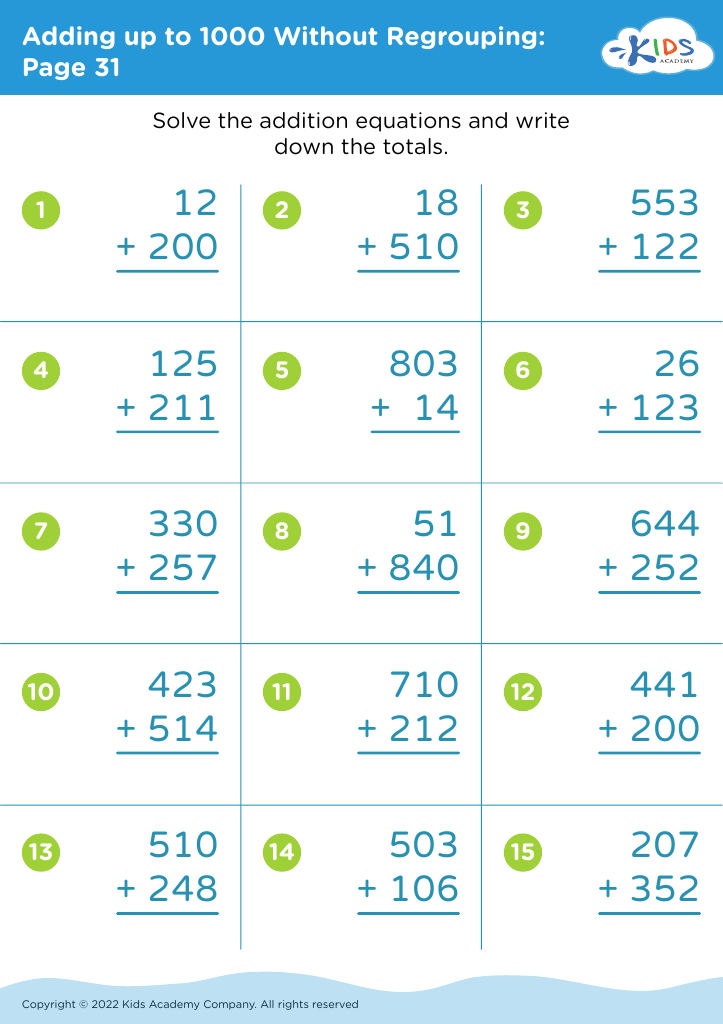
Adding up to 1000 Without Regrouping: Page 31
Worksheet
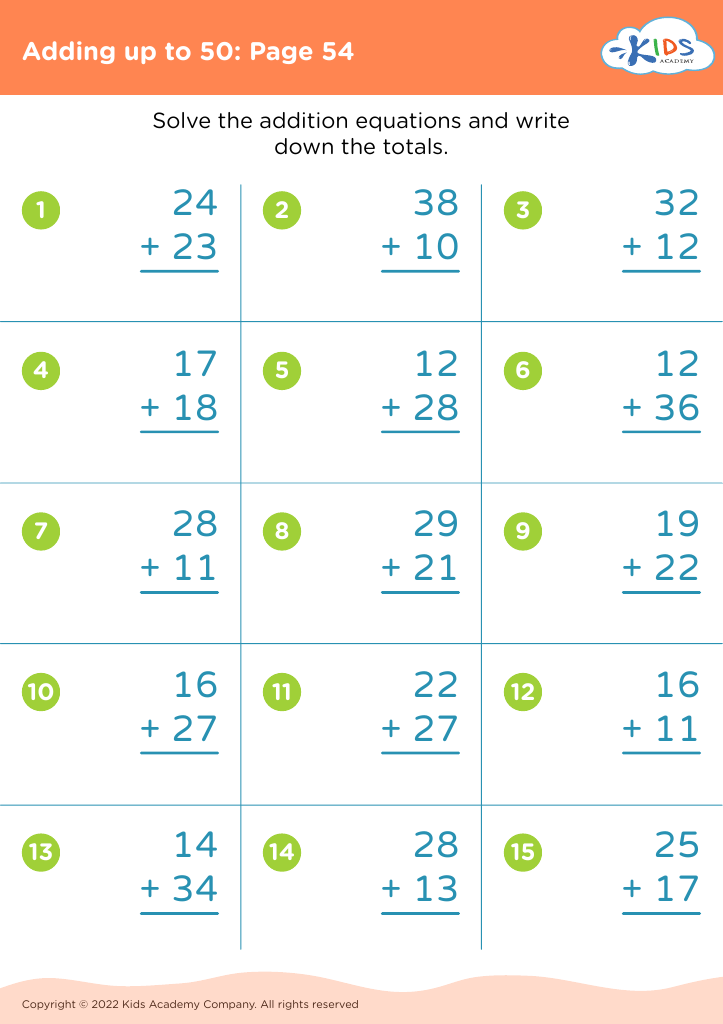
Adding up to 50: Page 54

Adding up to 50: Page 54

Adding up to 50: Page 54
Worksheet
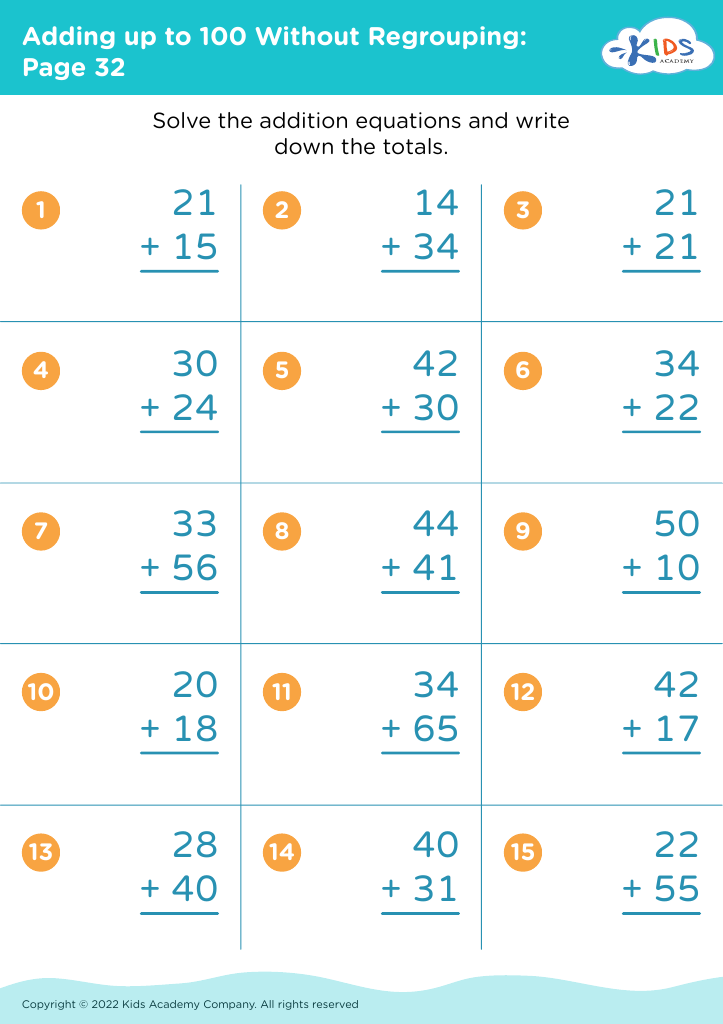
Adding up to 100 Without Regrouping: Page 32
Worksheet
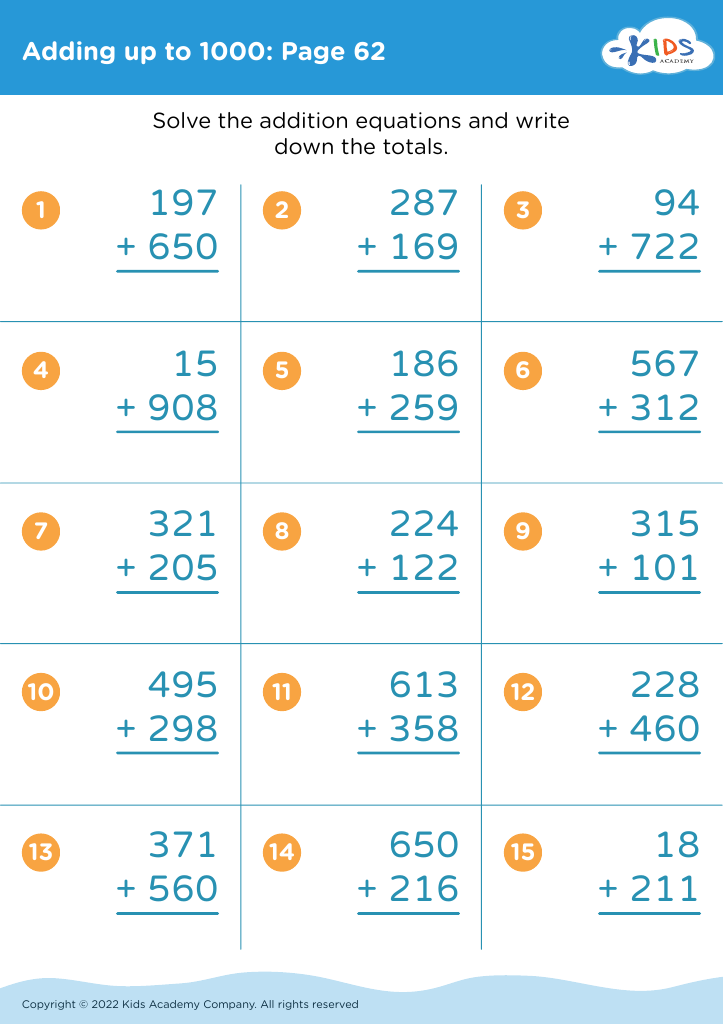
Adding up to 1000: Page 62

Adding up to 1000: Page 62

Adding up to 1000: Page 62
Worksheet
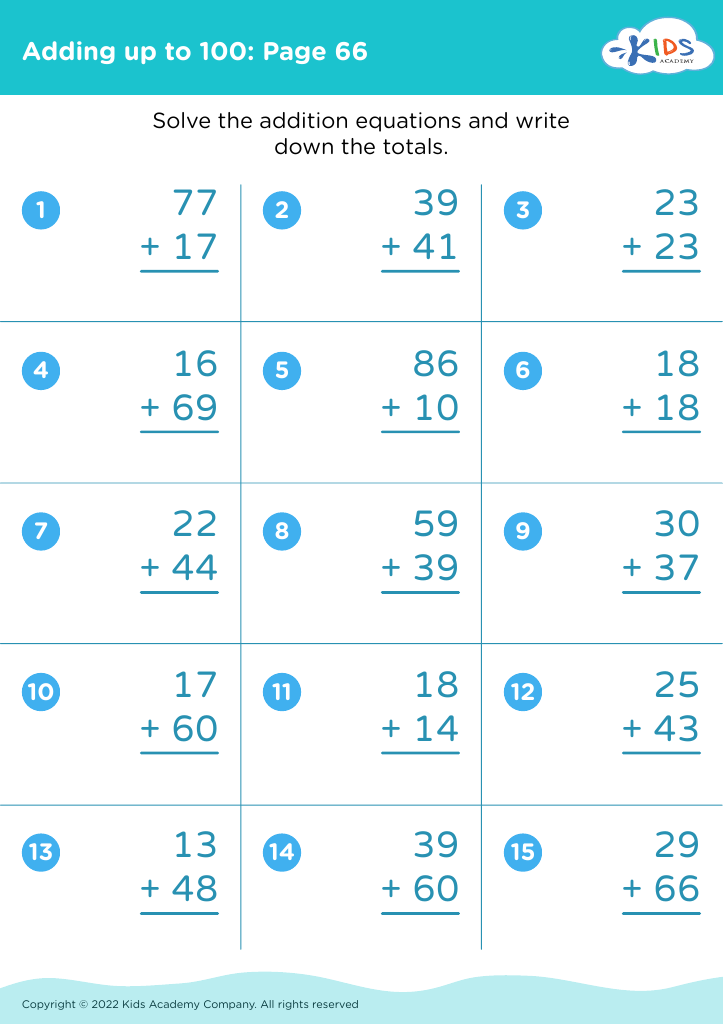
Adding up to 100: Page 66

Adding up to 100: Page 66

Adding up to 100: Page 66
Worksheet
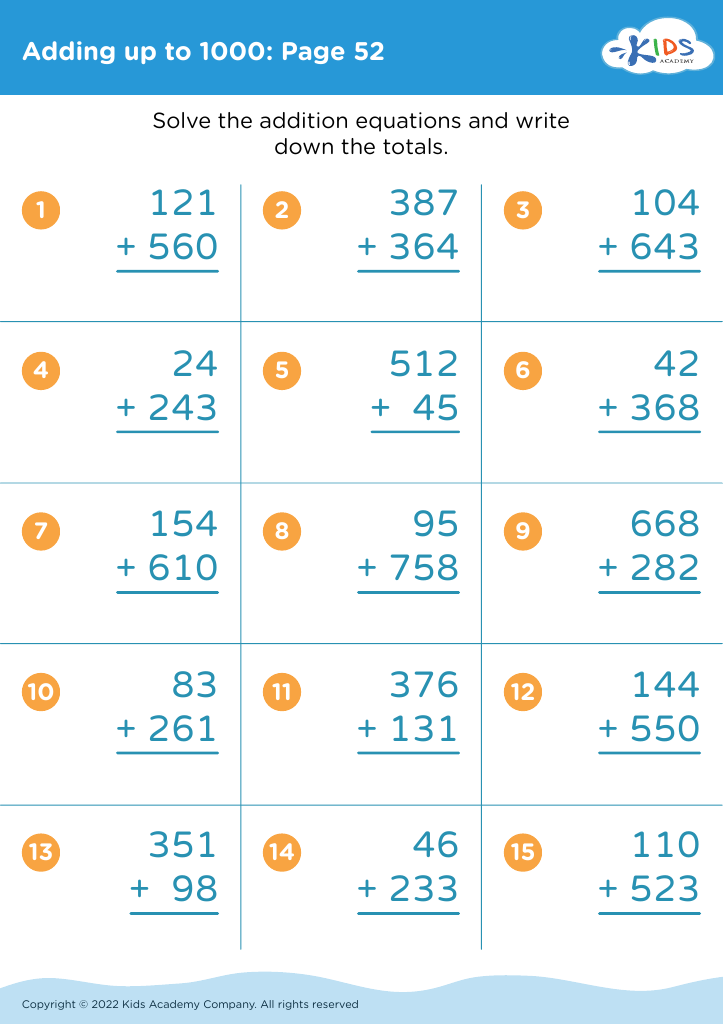
Adding up to 1000: Page 52

Adding up to 1000: Page 52

Adding up to 1000: Page 52
Worksheet
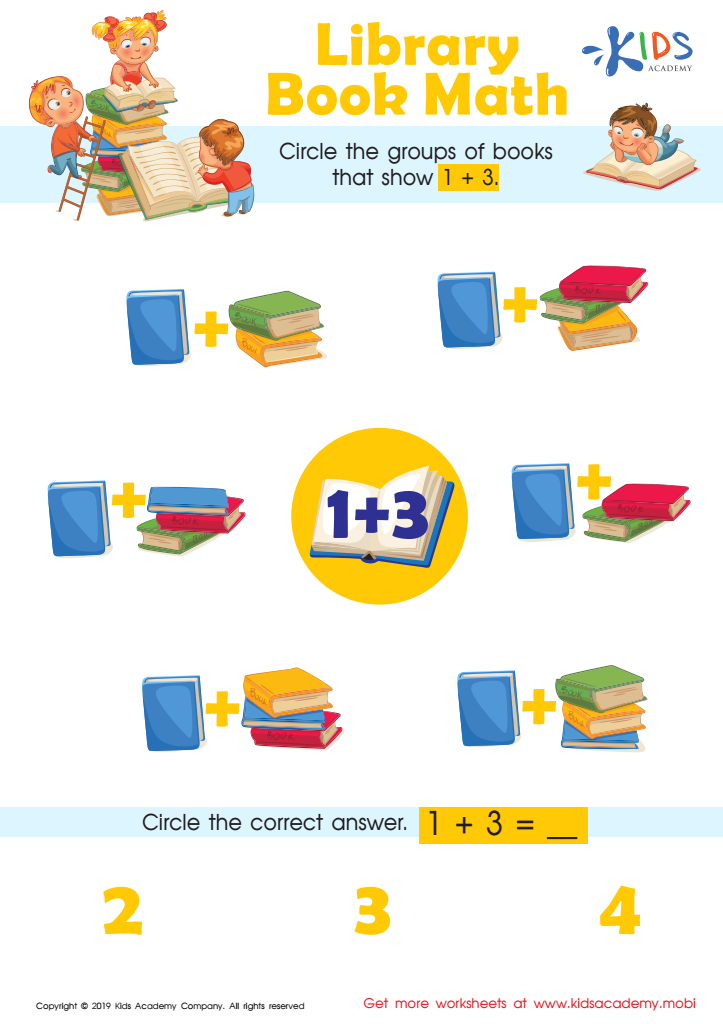
Library Book Math Worksheet
Library Book Math Worksheet
=4. It's essential for your child's growth to know how to count and add. Help them by giving simple tasks and encouraging them. This worksheet is a great tool to use. Ask your kids to name the objects in the picture and help them circle the groups of books that show 1+3=4.
Library Book Math Worksheet
Worksheet
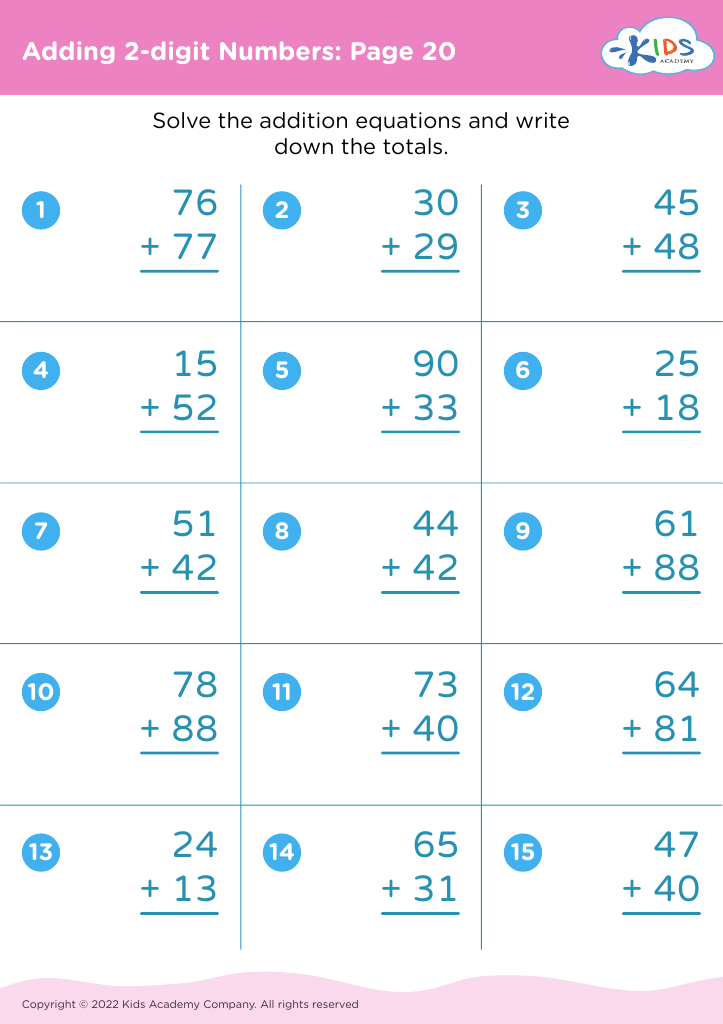
Adding 2-digit Numbers: Page 20

Adding 2-digit Numbers: Page 20

Adding 2-digit Numbers: Page 20
Worksheet
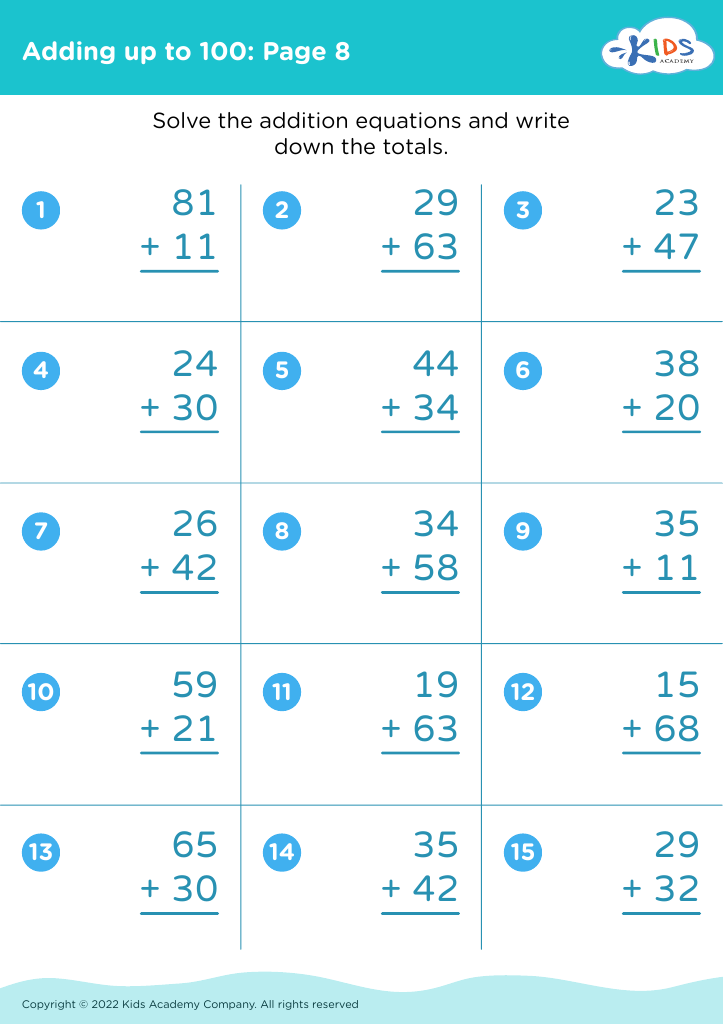
Adding up to 100: Page 8

Adding up to 100: Page 8

Adding up to 100: Page 8
Worksheet
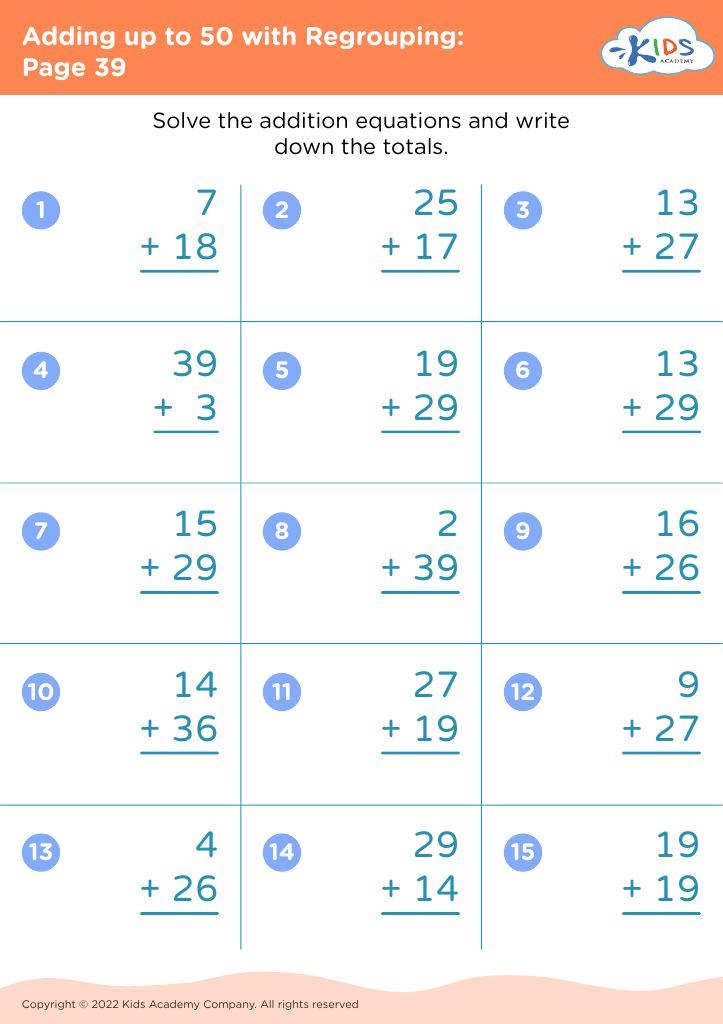
Adding up to 50 with Regrouping: Page 39
Worksheet
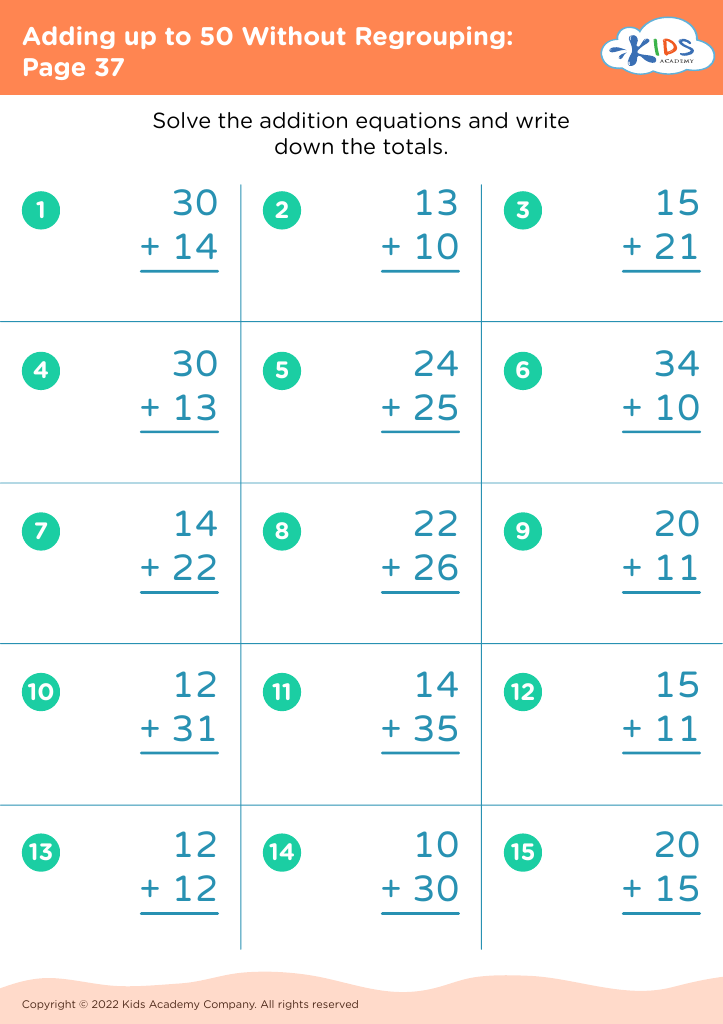
Adding up to 50 Without Regrouping: Page 37
Worksheet
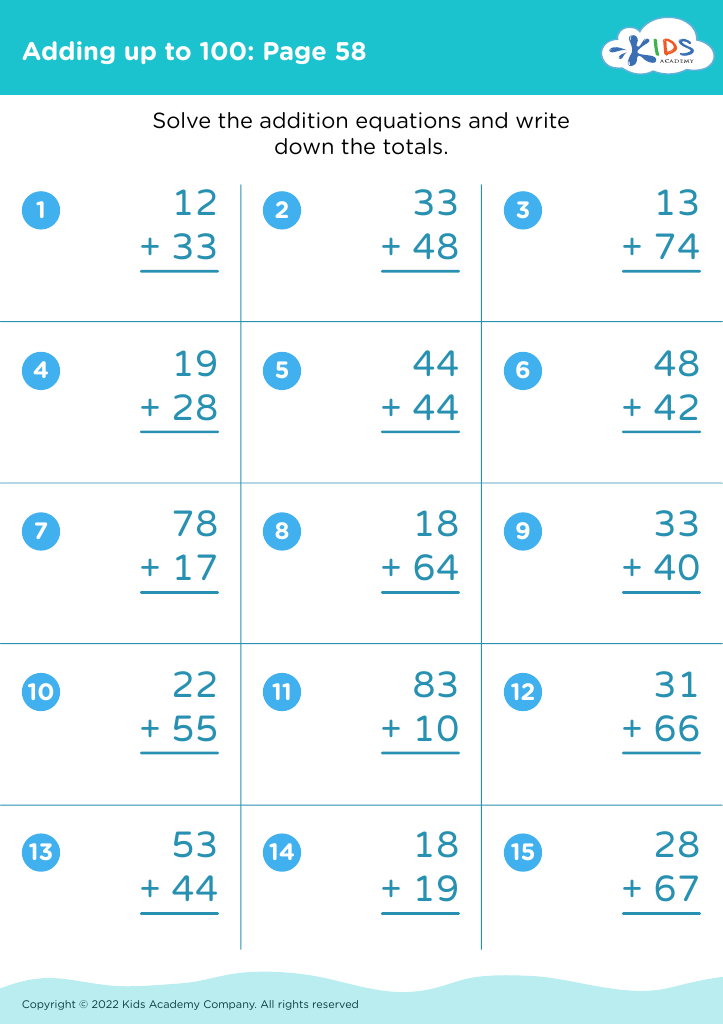
Adding up to 100: Page 58

Adding up to 100: Page 58

Adding up to 100: Page 58
Worksheet
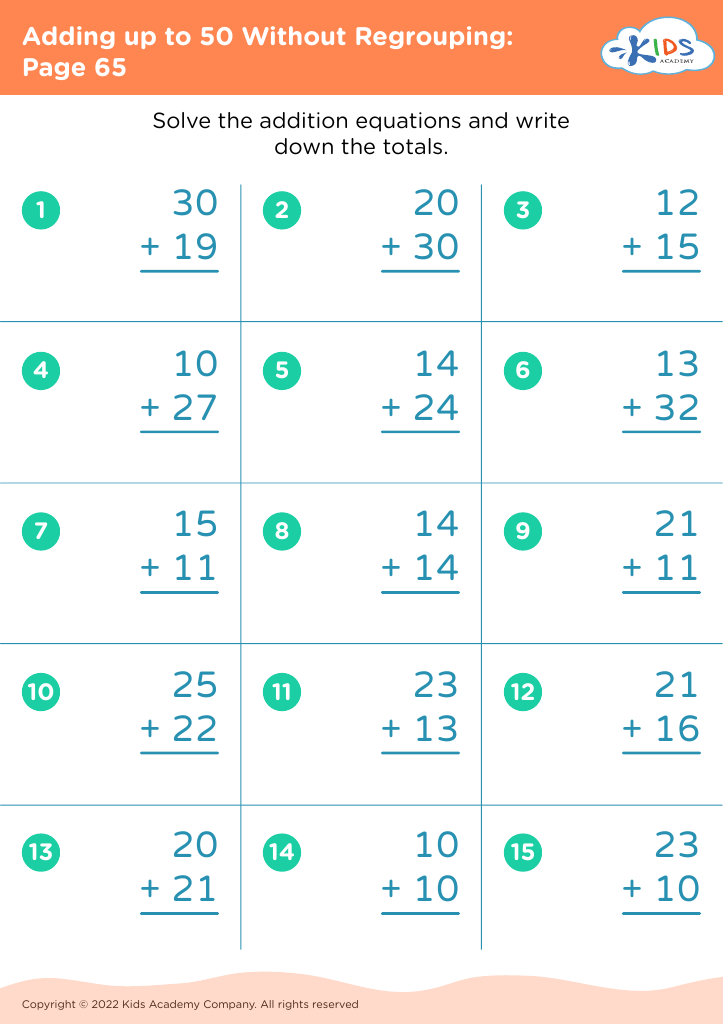
Adding up to 50 Without Regrouping: Page 65
Worksheet
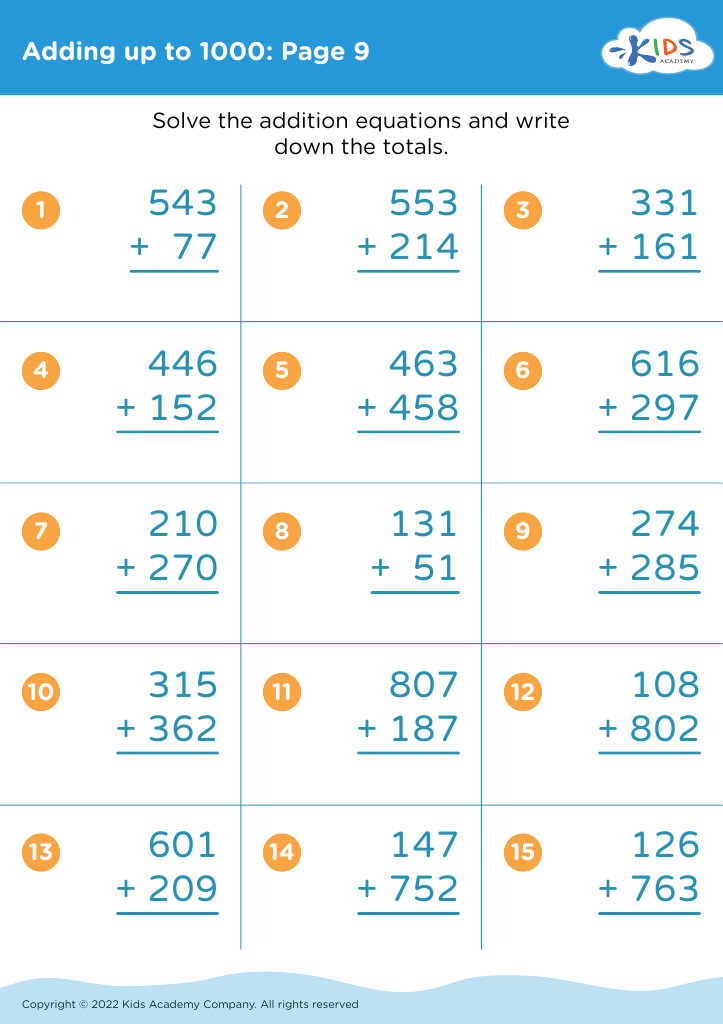
Adding up to 1000: Page 9

Adding up to 1000: Page 9

Adding up to 1000: Page 9
Worksheet
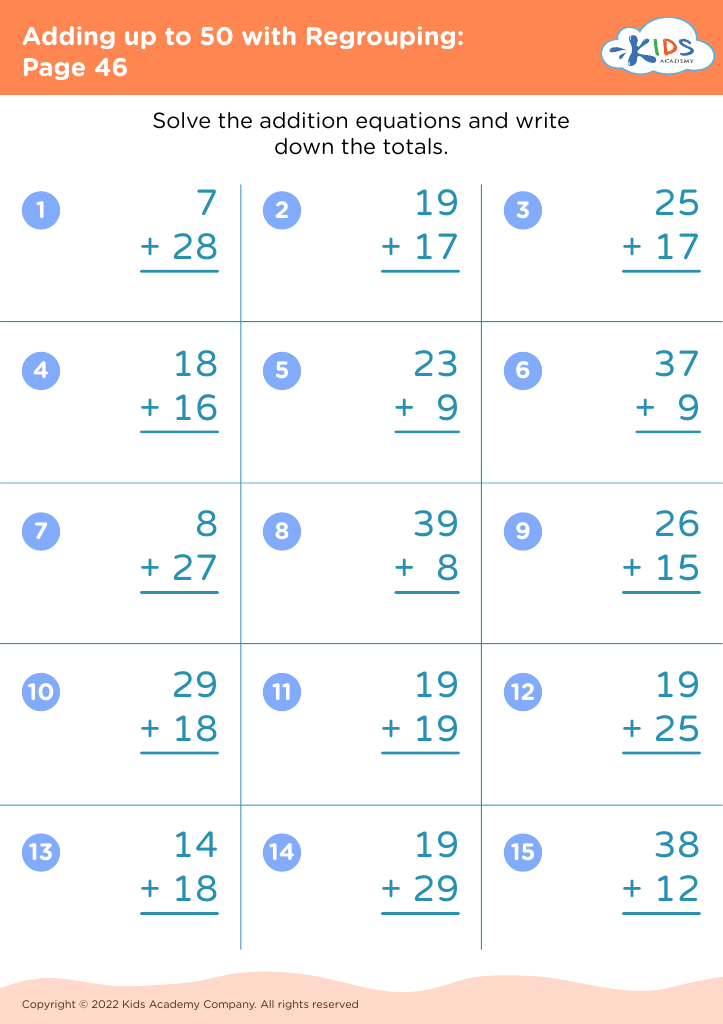
Adding up to 50 with Regrouping: Page 46
Worksheet
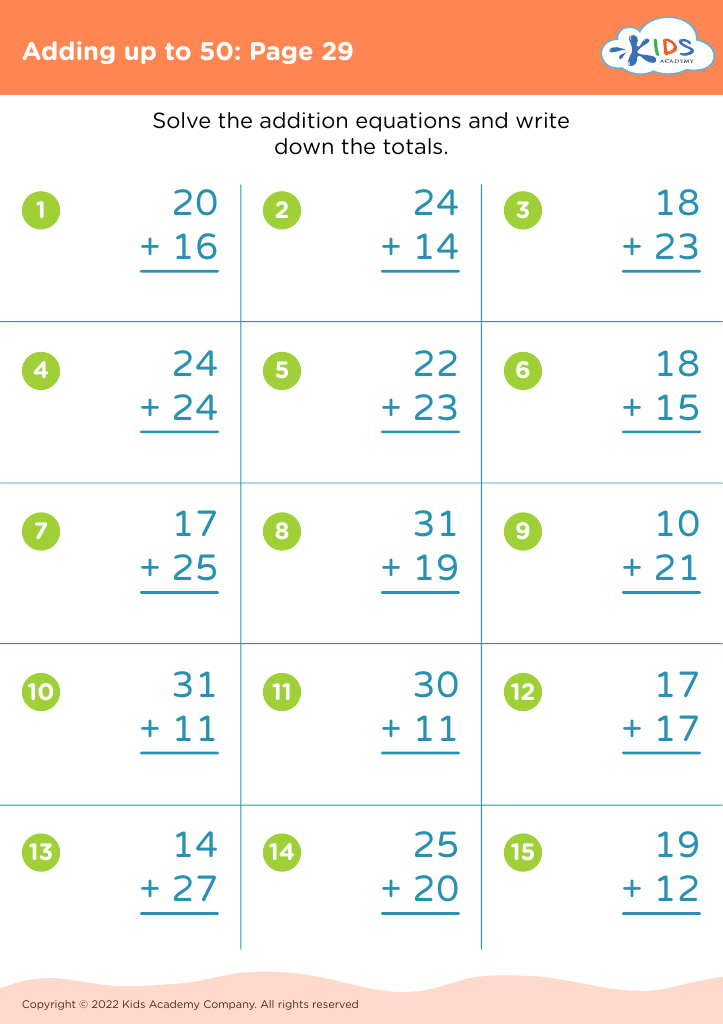
Adding up to 50: Page 29

Adding up to 50: Page 29

Adding up to 50: Page 29
Worksheet


Understanding fractions at an early age, particularly from ages 5-8, lays a crucial foundation for mathematical literacy and problem-solving skills essential throughout life. At this developmental stage, children's cognitive abilities are expanding rapidly, and introducing fractions helps enhance their number sense, a core aspect of numeracy.

Fractions teach children about parts of a whole, which is fundamental for many real-life situations—dividing a pizza among friends, understanding measurements in cooking, and even determining the time. These practical applications make fractions relevant, reinforcing that math is not just abstract but a tool for daily life.

Moreover, learning fractions encourages logical thinking and the ability to visualize and solve problems in steps. This critical thinking skillset transfers to other academic subjects and to decision-making processes in general.

Early mastery of fractions also builds confidence. Children who grasp these concepts early are more likely to approach future mathematical challenges with a positive attitude, reducing math anxiety and fostering a growth mindset.

In summary, parents and teachers focusing on fractions for children aged 5-8 help develop essential mathematical understanding, making math meaningful and useful, while also supporting the growth of critical thinking and confidence that will benefit children in various facets of life.