Vocabulary Building Matching Worksheets for Ages 5-8
6 filtered results
-
From - To
Enhance your child's vocabulary with our engaging Vocabulary Building Matching Worksheets designed for ages 5-8! These interactive worksheets provide a fun and effective way for young learners to connect words with their meanings and usage. By matching words to pictures, definitions, or synonyms, children develop crucial language skills while enjoying the learning process. Each worksheet encourages independent thinking and reinforces comprehension, making vocabulary practice both exciting and educational. Perfect for home or classroom use, our resources cater to various learning styles, ensuring that every child can thrive. Download and inspire your child’s love for words today!
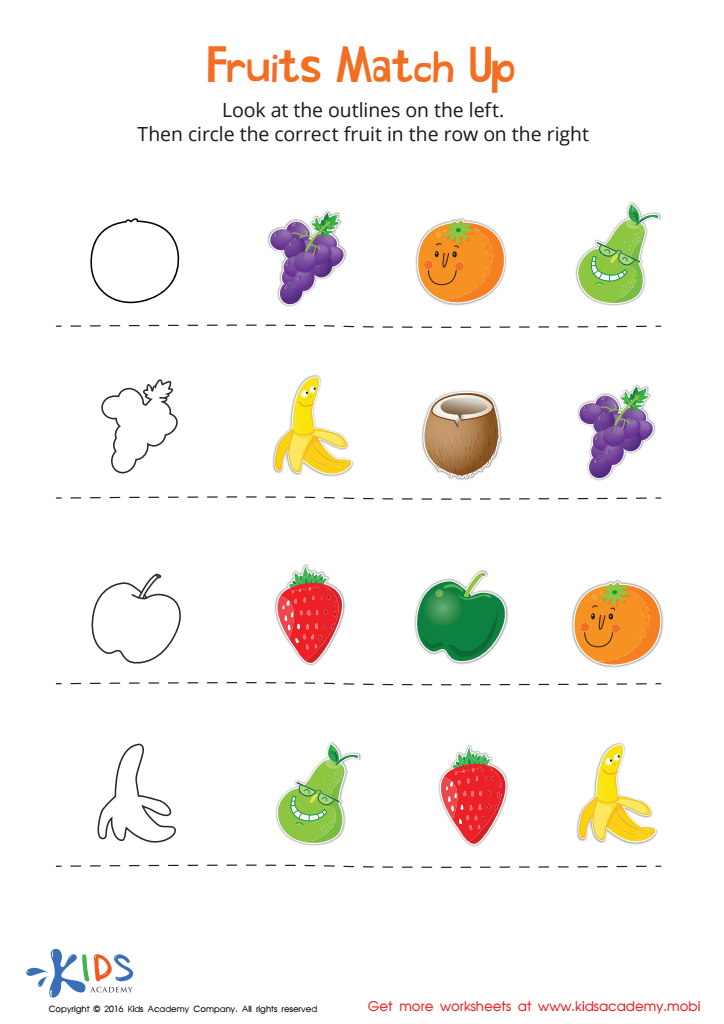
Fruits Match Up Worksheet
 Assign to My Students
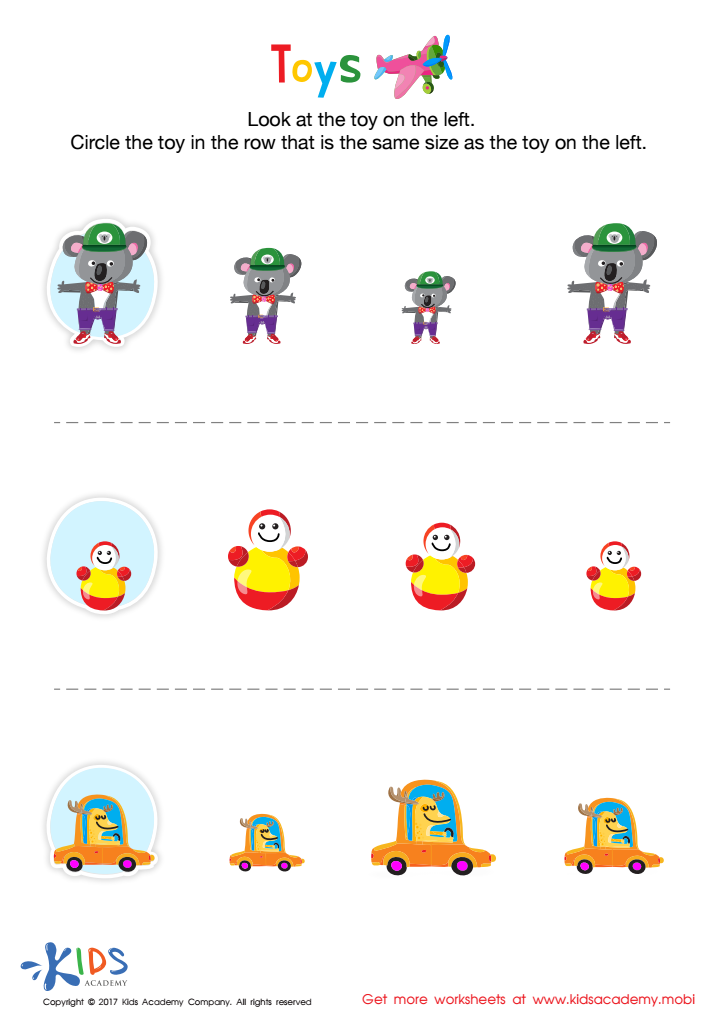
Matching: Classifying Toys by Size Worksheet
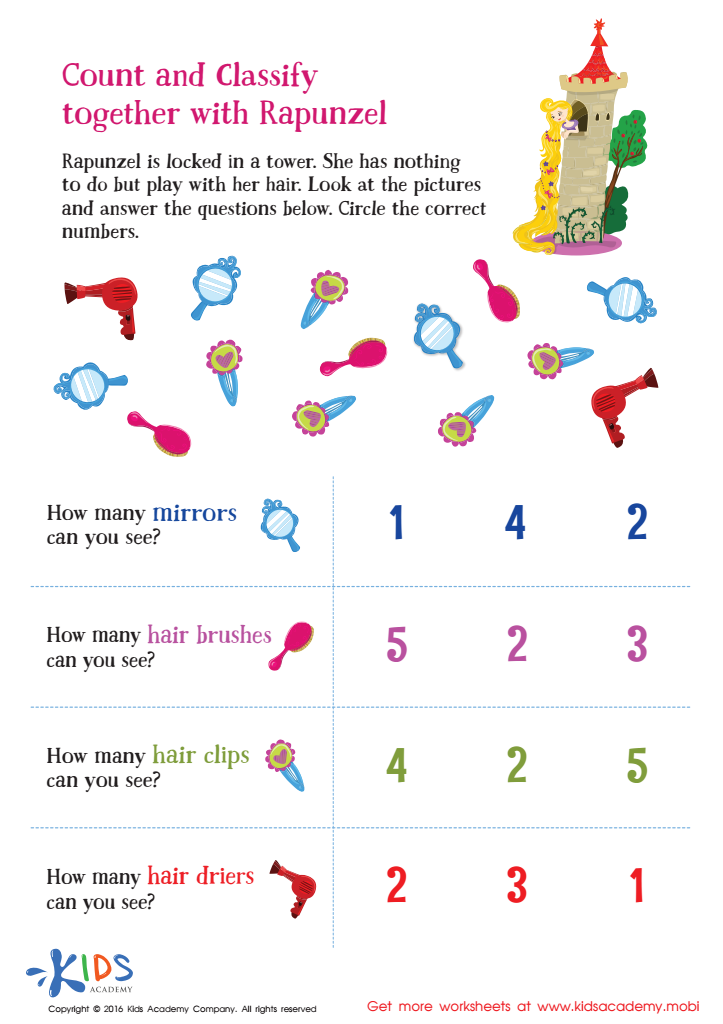
Fairy Tale Worksheet: Count and Classify with Rapunzel
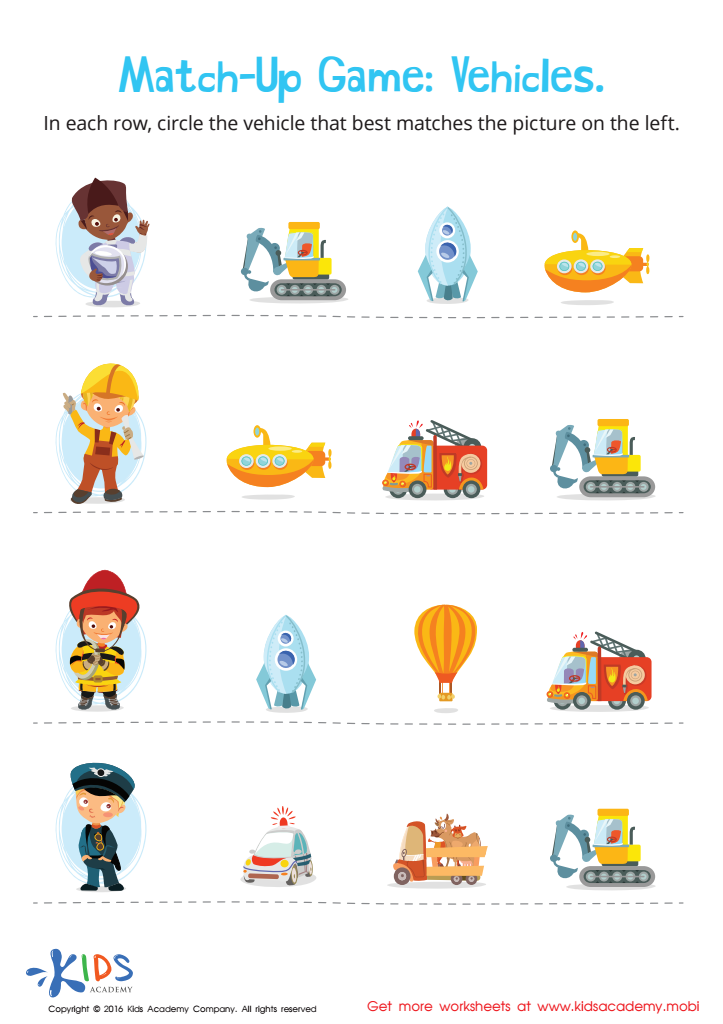
Vehicles Worksheet
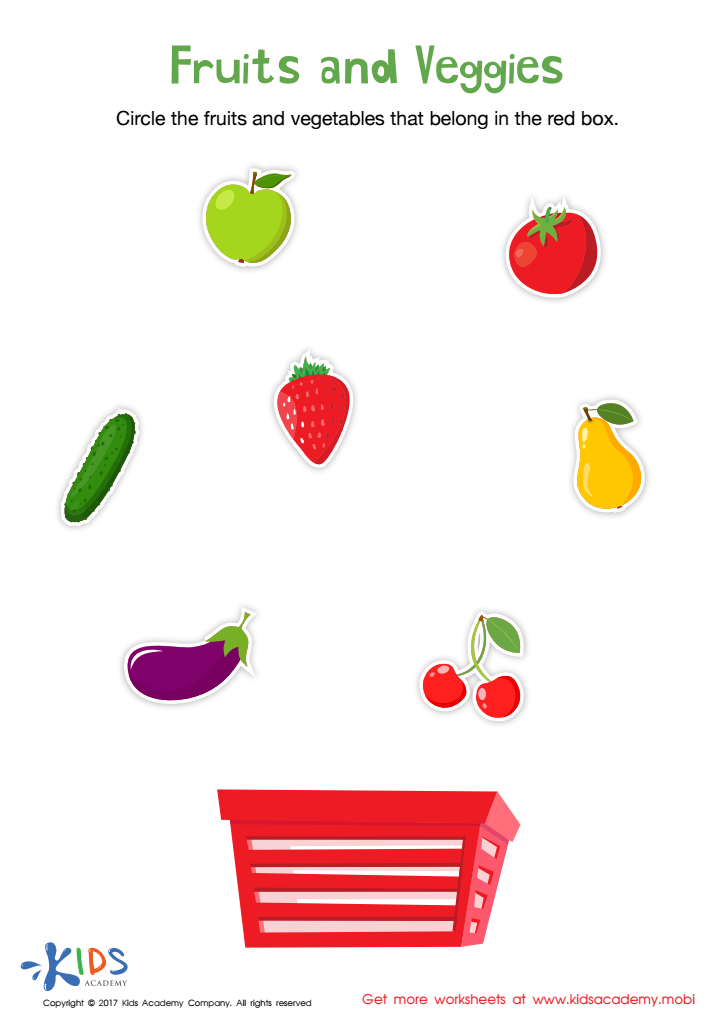
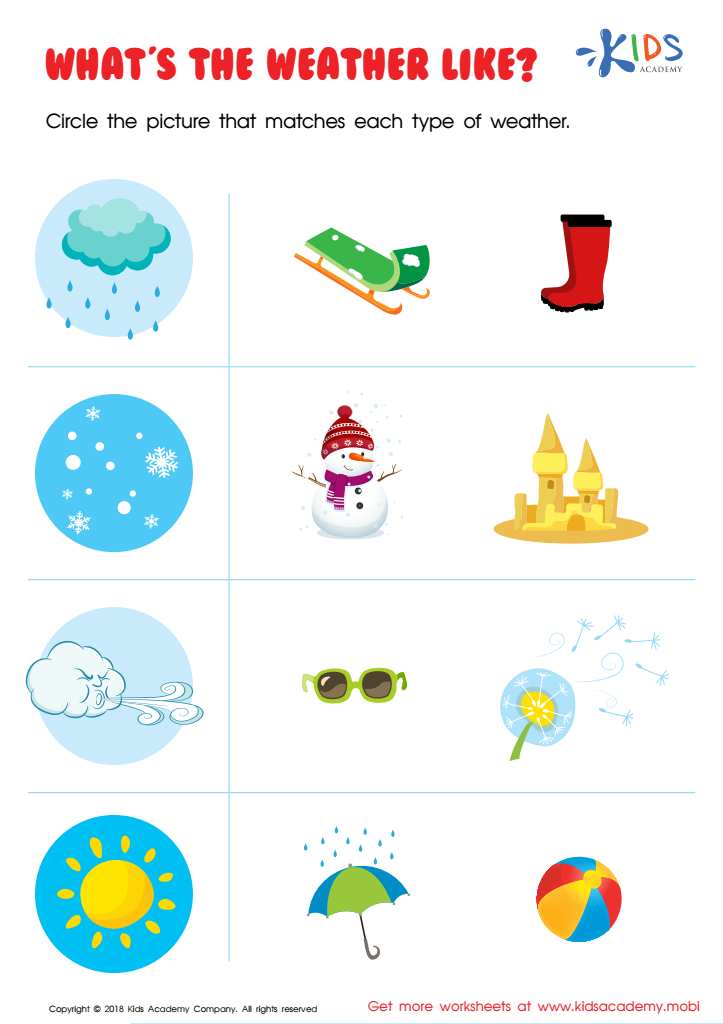
What's the Weather Like? Worksheet








Vocabulary building is a crucial aspect of early literacy development for children aged 5-8. During this critical period, children are absorbing language skills at an astonishing rate, setting the foundation for future learning. Vocabulary Building Matching is an engaging way to enhance this process, offering interactive experiences that make learning fun and effective.
Parents and teachers should care about this skill because a rich vocabulary is linked to better reading comprehension and writing abilities. When children can easily recognize and use a larger array of words, they are better equipped to express their thoughts, understand complex concepts, and engage in more meaningful conversations. This not only boosts their academic performance but also fosters confidence and communication skills that are vital in social settings.
Moreover, vocabulary building is inclusive, catering to diverse learning styles through various multi-sensory approaches, including visual, auditory, and kinesthetic activities. This allows children to grasp language in ways that resonate with them, making learning more effective. By incorporating Vocabulary Building Matching into early education, parents and teachers play an essential role in preparing children for future academic challenges and helping them become articulate individuals poised for success.








