Number comprehension Subtraction Worksheets for Ages 5-8
11 filtered results
-
From - To
Explore our engaging Number Comprehension Subtraction Worksheets designed specifically for children aged 5-8! These printable activities help young learners grasp essential subtraction concepts through fun, interactive exercises. Each worksheet focuses on developing number sense, aiding children in understanding how to subtract through visual aids and practical examples. With a blend of colorful graphics and straightforward instructions, your child will build confidence in their math skills while enjoying the learning process. Ideal for both classroom and home practice, these worksheets create a solid foundation for future mathematical success. Start enhancing your child's subtraction abilities today!
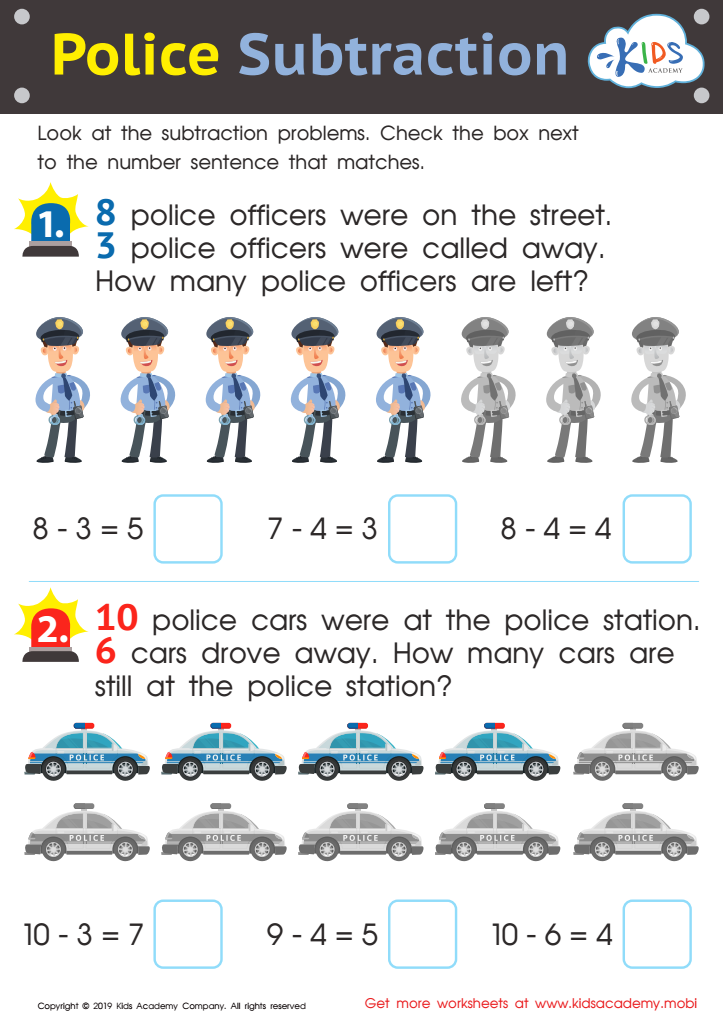
Police Subtraction Worksheet
 Assign to My Students
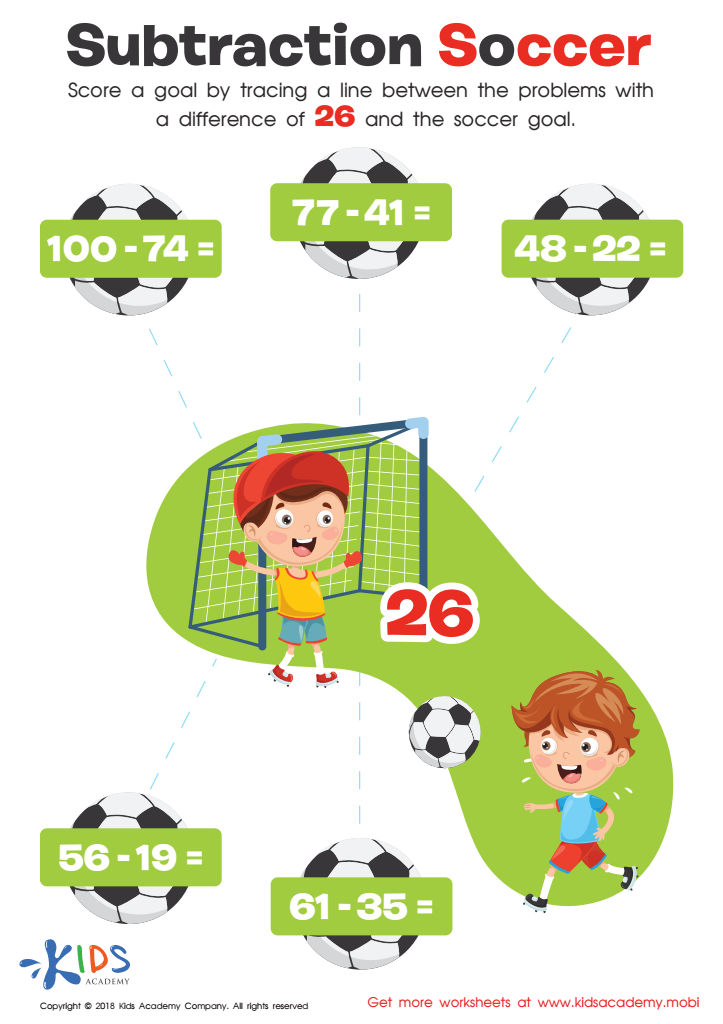
Subtraction Soccer Worksheet
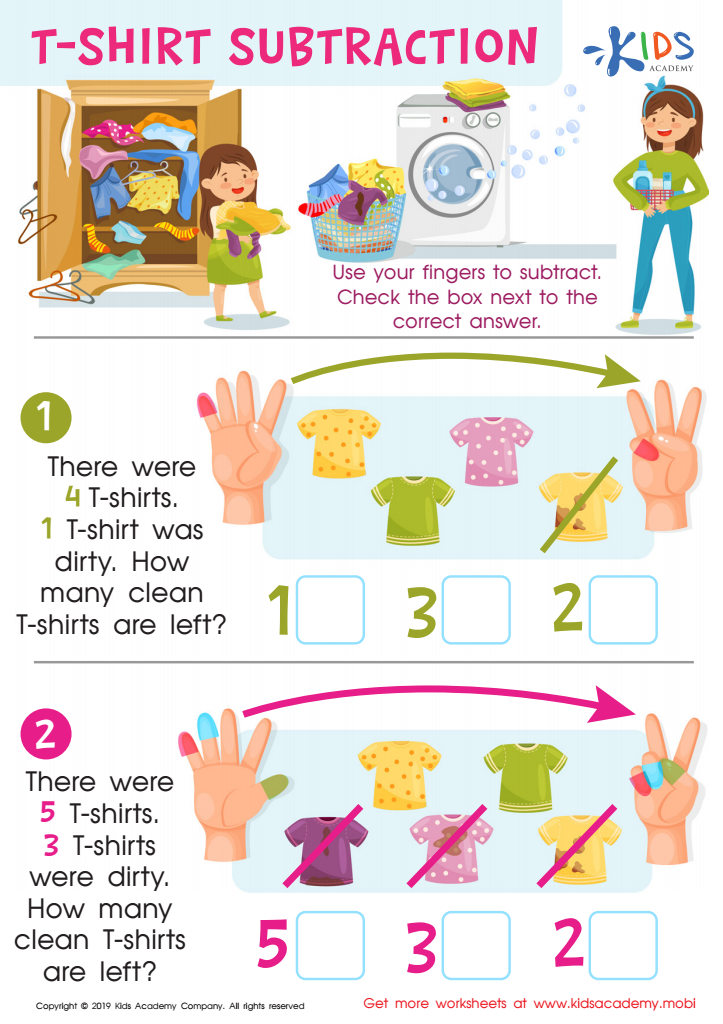
T-shirt Subtraction Worksheet
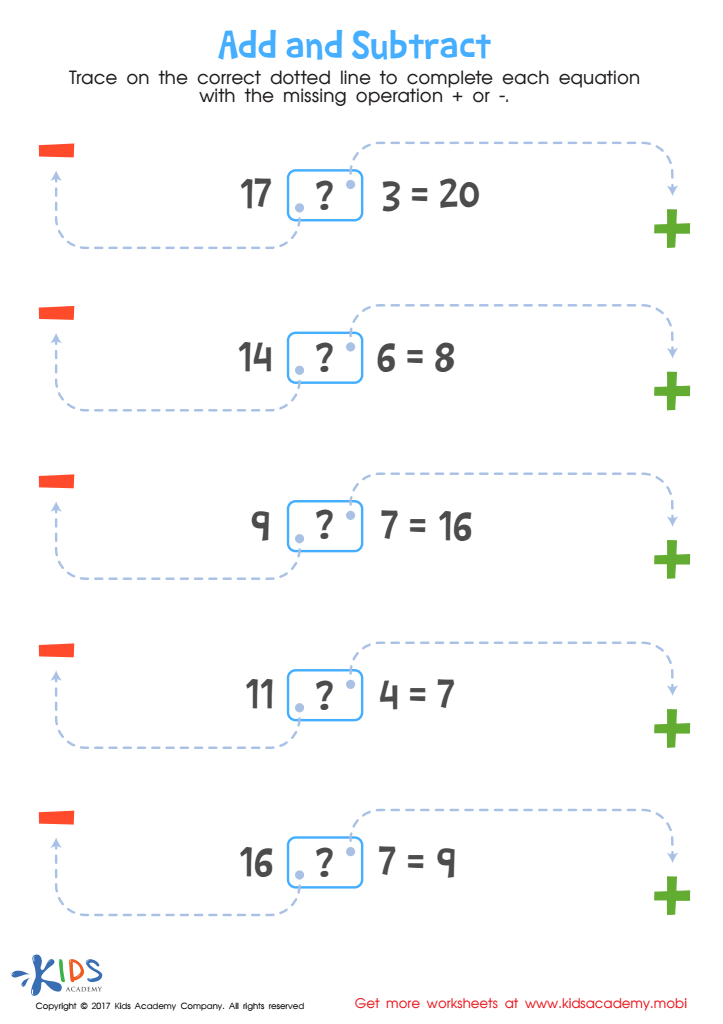
Add and Subtract Worksheet
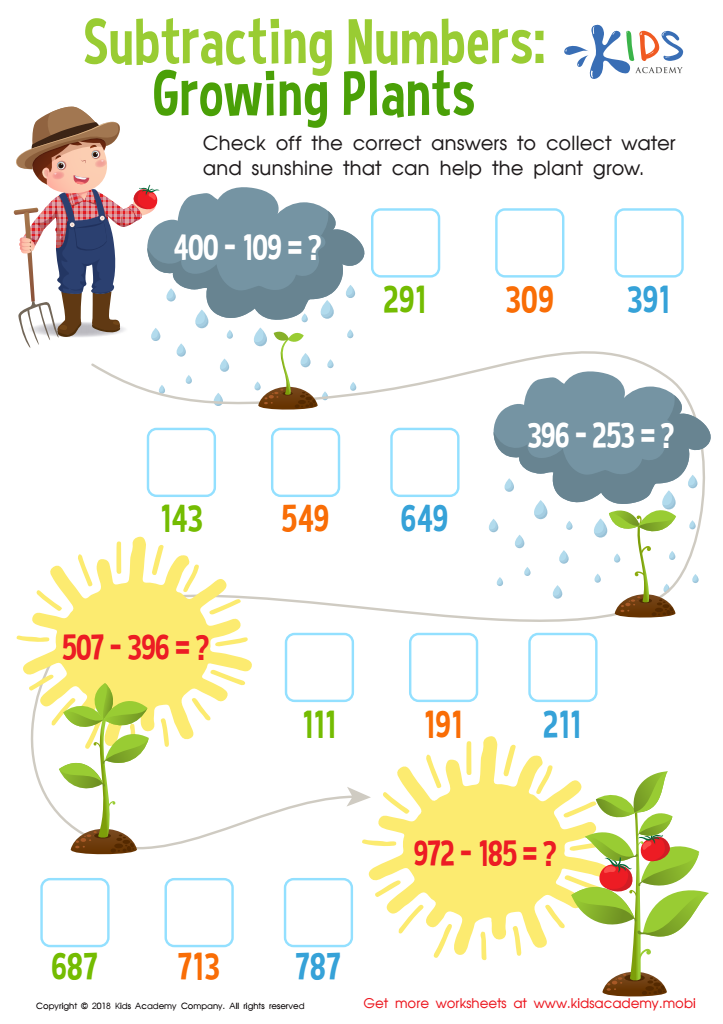
Subtracting Numbers: Growing Plants Worksheet
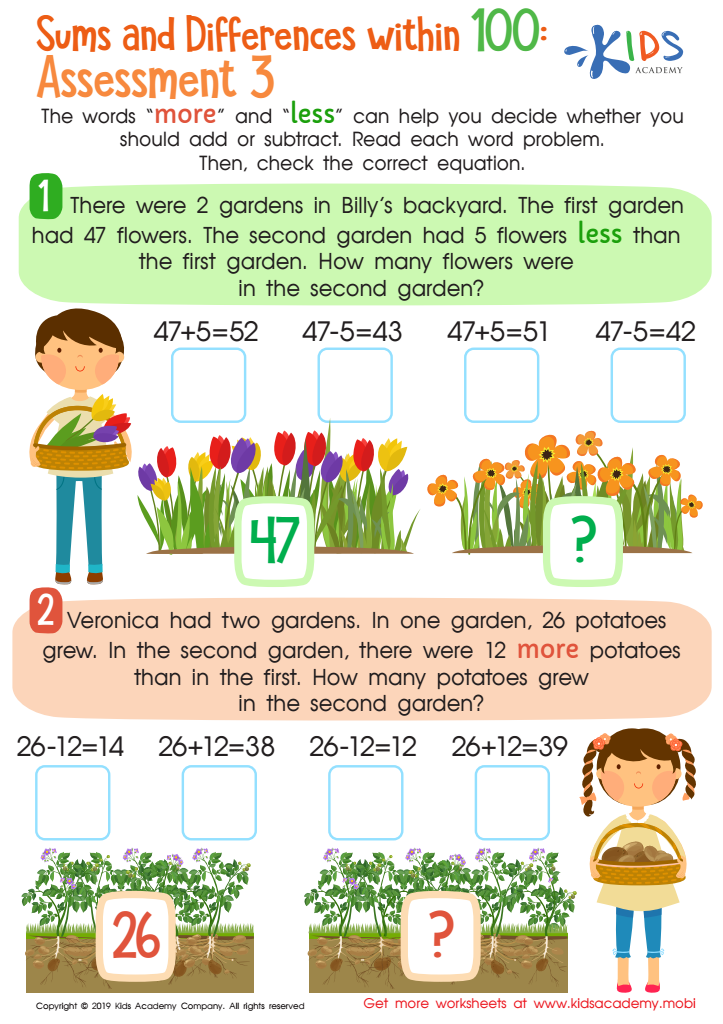
Sums and Differences Within 1 - Assessment 1 Worksheet
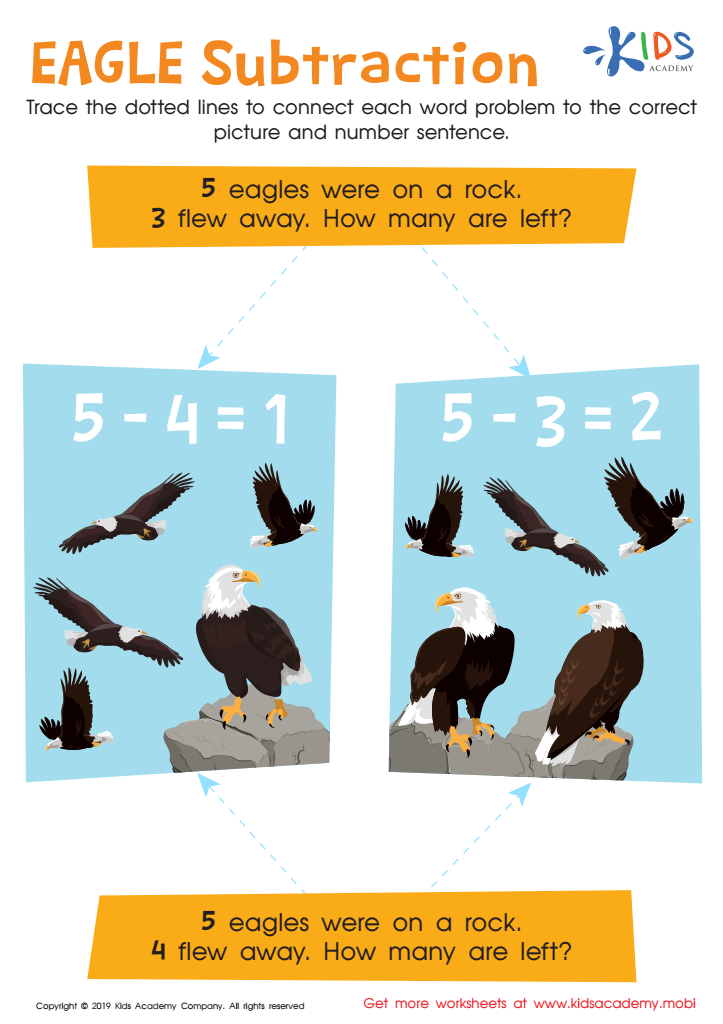
Eagle Subtraction Worksheet
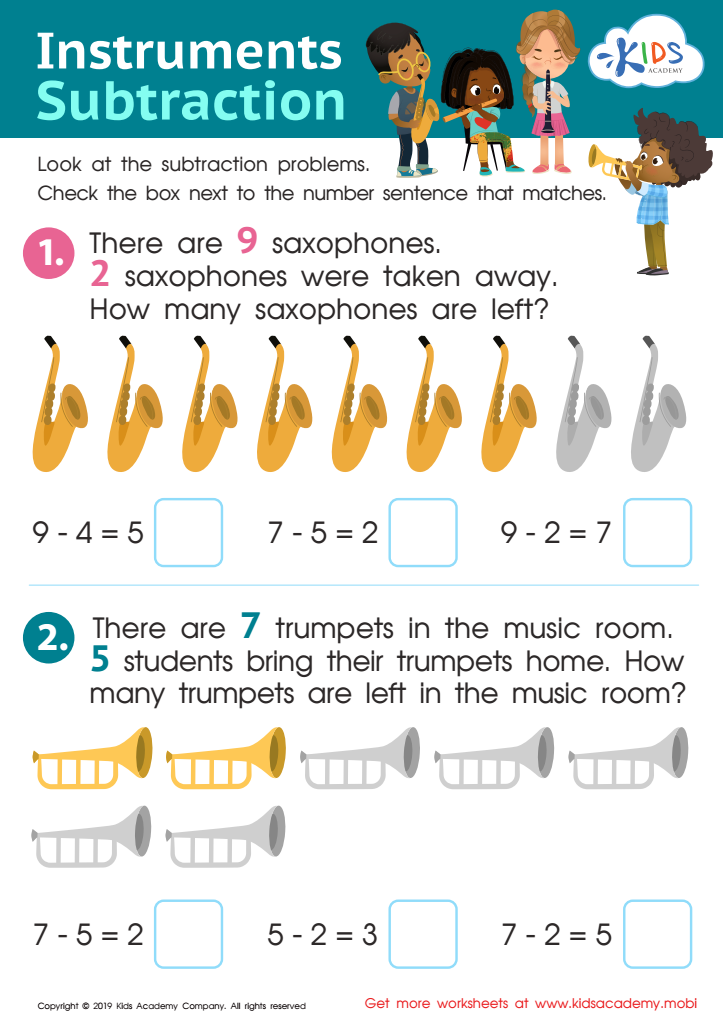
Instrument Subtraction Worksheet
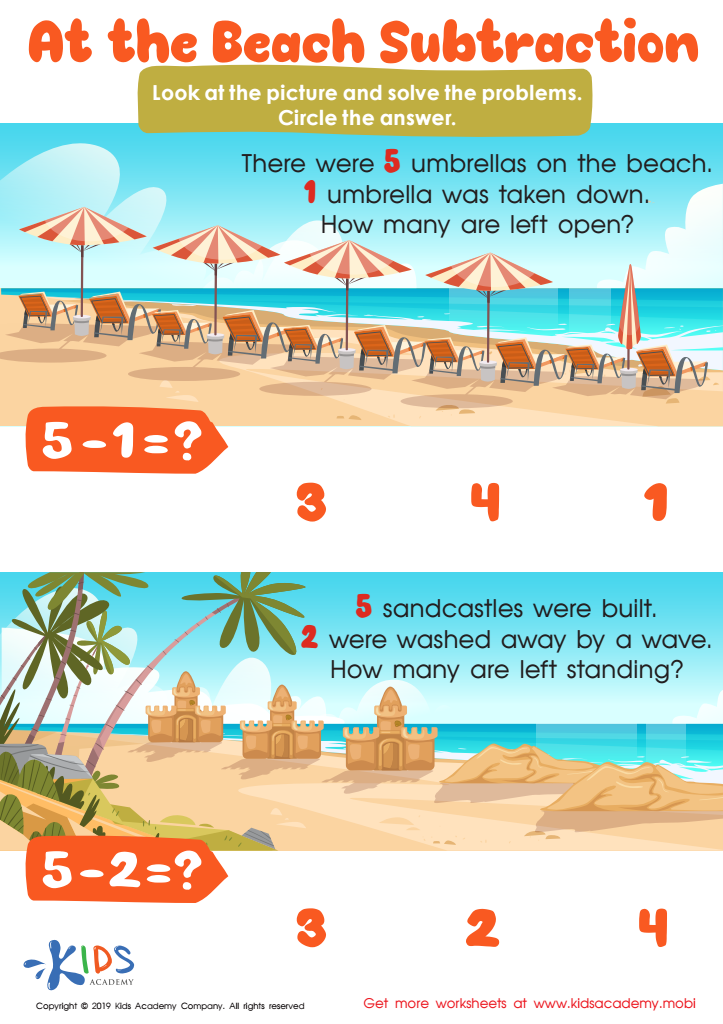
At the Beach Subtraction Worksheet
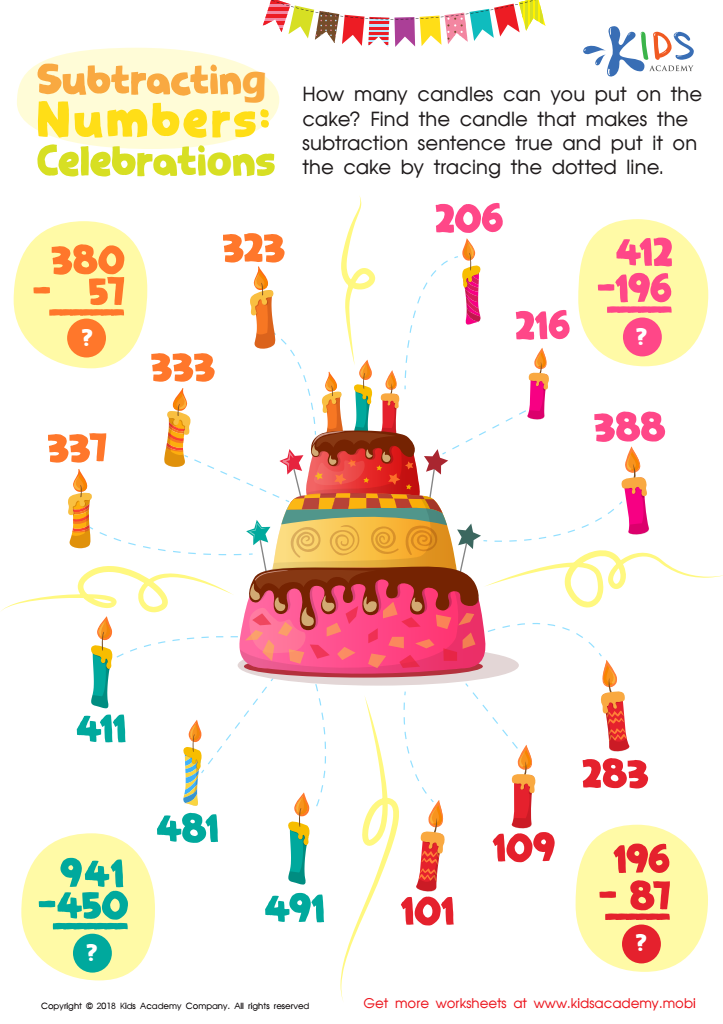
Subtracting Numbers: Celebrations Worksheet
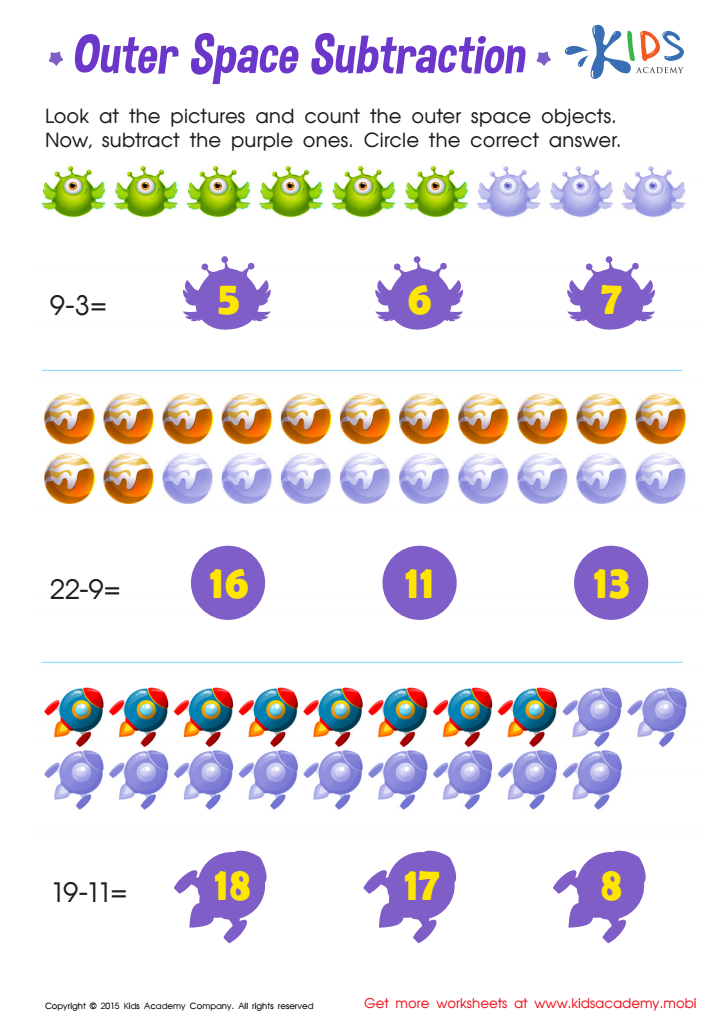
Outer Space Substraction Worksheet








Number comprehension, especially in subtraction, is crucial for children aged 5-8 as it lays the foundation for their mathematical understanding and overall cognitive development. During these formative years, children learn how to manipulate numbers, which enhances critical thinking and problem-solving skills. A strong grasp of subtraction facilitates more advanced mathematical concepts, such as addition, multiplication, and division, and prepares them for real-life situations involving finances, time management, and more.
Moreover, understanding subtraction promotes confidence in young learners. When parents and teachers actively engage in teaching subtraction through fun activities and approaches, children develop a positive attitude towards mathematics. They learn to view challenges as opportunities for learning rather than sources of frustration. Additionally, the emotional and social aspects of team activities can strengthen peer relationships through cooperative learning.
Further, monitoring children’s subtraction skills can aid in identifying learning difficulties early on, allowing for prompt intervention. This helps prevent longstanding struggles with math as they advance through school. Therefore, both parents and teachers play a vital role in nurturing a child's mathematical comprehension, ensuring they are well-rounded learners equipped for future academic success and everyday problem-solving.








