Time Worksheets for Ages 5-8 - Page 2
25 filtered results
-
From - To
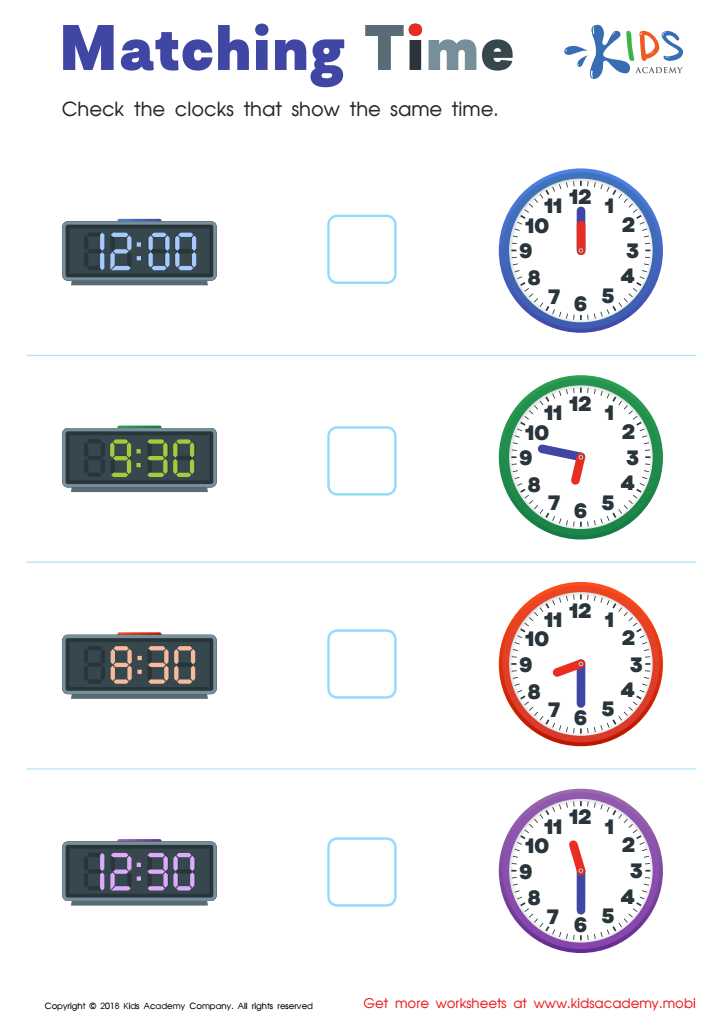
Matching Time Worksheet
 Assign to My Students








Understanding and managing time are crucial skills for young children aged 5-8, and parents and teachers play a vital role in fostering these abilities. At this early stage, children are developing their sense of routine and structure, which are essential for their overall cognitive and social development. Learning to read clocks, understanding the concept of time - such as hours, minutes, and seconds - and recognizing schedules help children organize their day and build a strong foundation for time management skills.
For parents, instilling a sense of time helps create a balanced home environment, promoting consistency in daily activities like meals, homework, and bedtime. This predictability reduces anxiety and enhances a child’s ability to adapt to new situations independently.
Teachers also benefit from incorporating time management into the classroom. Structured lesson plans and time-related activities improve attention, transition between tasks smoothly, and increase productivity. Furthermore, classroom punctuality fosters respect for schedules, aiding their preparedness for future academic and extracurricular commitments.
In essence, nurturing an awareness of time in children aged 5-8 empowers them to succeed academically, boosts their confidence, and supports emotional regulation. Both parents and teachers are key to shaping these habits, which are fundamental in navigating their daily lives effectively now and in the future.








