Handwriting Skills Tracing Numbers Worksheets for Ages 5-8
3 filtered results
-
From - To
Enhance your child's handwriting skills with our engaging Tracing Numbers Worksheets designed specifically for ages 5-8. These worksheets provide a fun and interactive way for young learners to practice writing numbers confidently. By tracing dotted lines, children will improve their fine motor skills and develop proper letter formation while gaining familiarity with number concepts. Our resources are crafted to support early math skills as well, making learning a holistic experience. With a variety of activities, children will stay motivated and eager to practice. Download these printable worksheets today and set your child on the path to handwriting mastery!
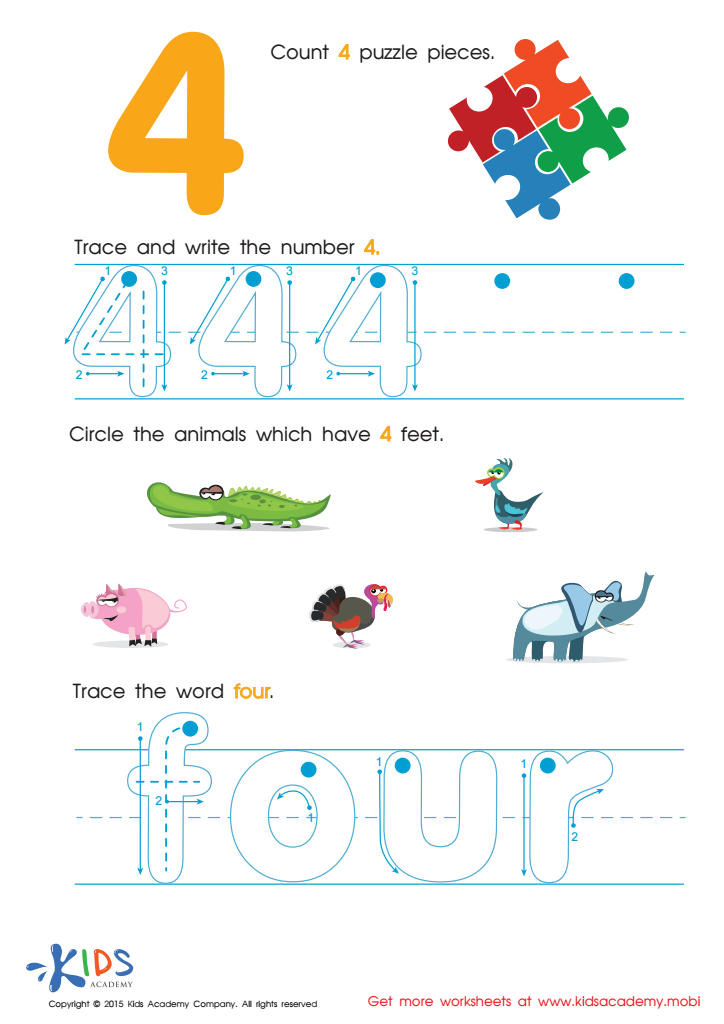
Teaching Children to Write Number 4 Worksheet
 Assign to My Students
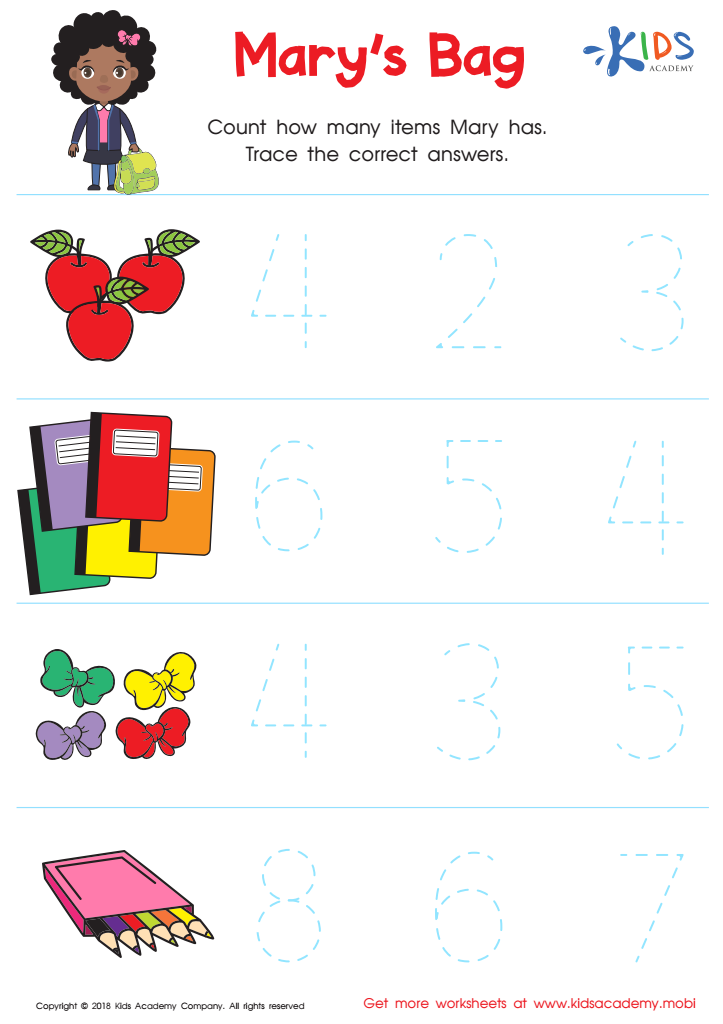
Kindergarten Number Tracing: Mary's Bag Worksheet
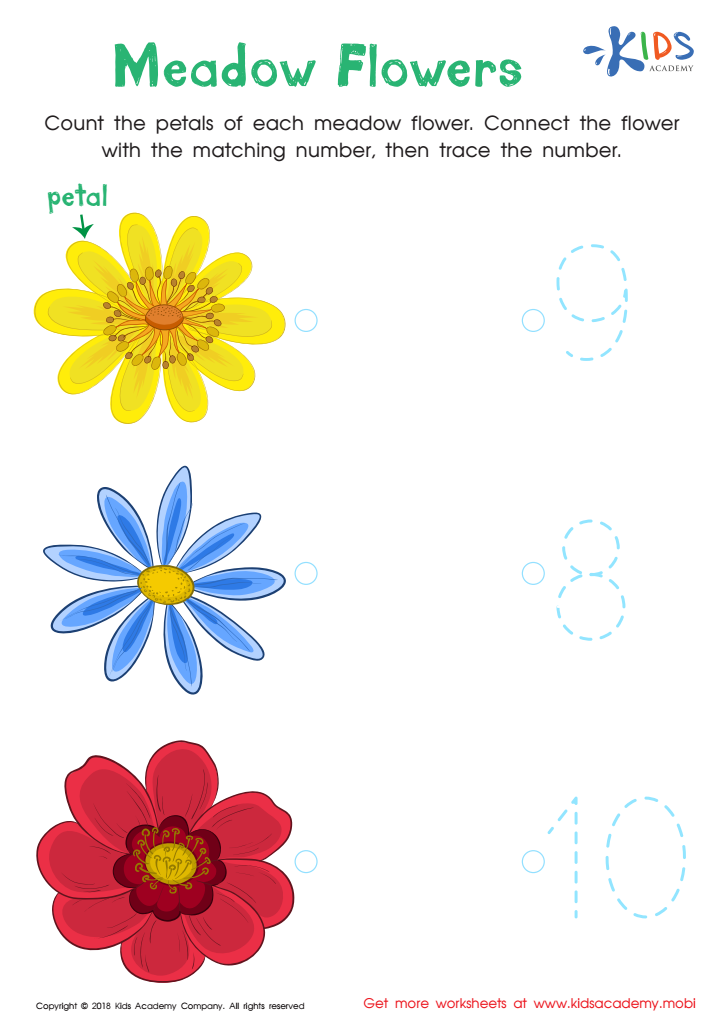
Kindergarten Number Tracing: Medow Flowers Worksheet








Handwriting skills, particularly tracing numbers, are crucial for children aged 5-8 as they lay a strong foundation for both academic success and cognitive development. First, developing fine motor skills through tracing helps strengthen hand muscles, which are essential for writing, drawing, and other self-care tasks. For this age group, engaging in activities like tracing numbers enhances coordination and dexterity, preparing them for more complex skills later on.
Moreover, handwriting is closely linked to literacy. Mastering number formation supports number recognition and understanding, which are important not just for mathematics but also for future problem-solving skills. Children learn to associate numeric symbols with their values while fine-tuning their focus and attention.
Additionally, handwriting fosters organizational and planning skills. When children trace numbers, they learn the sequence and structure, which can aid in cognitive processing and thinking skills.
Lastly, tracing activities can be a bonding experience for parents and teachers to engage with children, encouraging positive attitudes toward learning. As educators and caregivers, prioritizing handwriting skills is vital, as it equips children with necessary tools for their academic journey and promotes their overall development, ensuring they become confident learners in the classroom and beyond.








