
Character analysis Reading Worksheets for Ages 5-8
6 filtered results
Difficulty Level
Grade
Age
-
From - To
Subject
Activity
Standards
Discover our vibrant Character Analysis Reading Worksheets for Ages 5-8 designed to spark young readers' imaginations! These engaging worksheets enhance comprehension and critical thinking by guiding children through the process of analyzing characters in their favorite stories. Each activity encourages kids to delve deeper into traits, motivations, and actions, fostering a love for reading and a deeper understanding of narratives. With colorful visuals and interactive tasks, our printables provide an enjoyable and educational experience, perfect for home or classroom use. Start nurturing your child's analytical skills and watch their reading abilities flourish!
Favorites
With answer key
Interactive
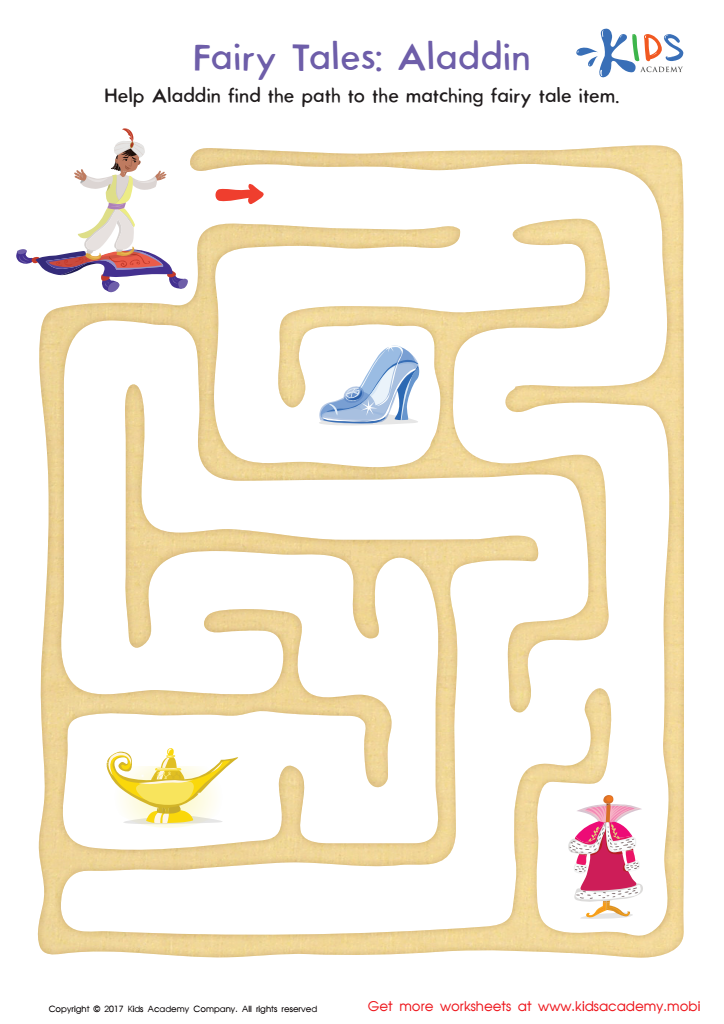
Fairy Tales Aladdin Printable
Test your child's reading recall with this challenge: the Aladdin maze worksheet! Guide your learner to identify objects linked to the story, then ask them to retell it afterwards. Hone those memory skills while having fun!
 Assign to My Students
Fairy Tales Aladdin Printable
Worksheet
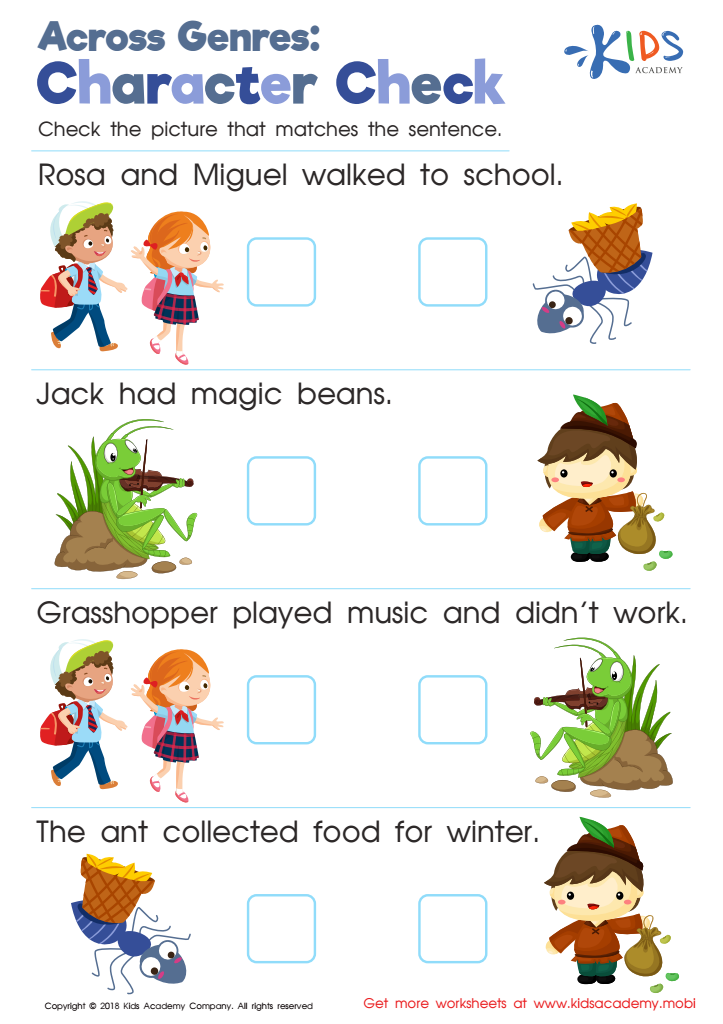
Across Genres: Character Check Worksheet
Read the sentences to your kids, then have them match the pictures to them. Ask them to look at the pictures and help them check which one goes with the sentence. The aim is to see how well they can do this exercise. (80 words)
Across Genres: Character Check Worksheet
Worksheet
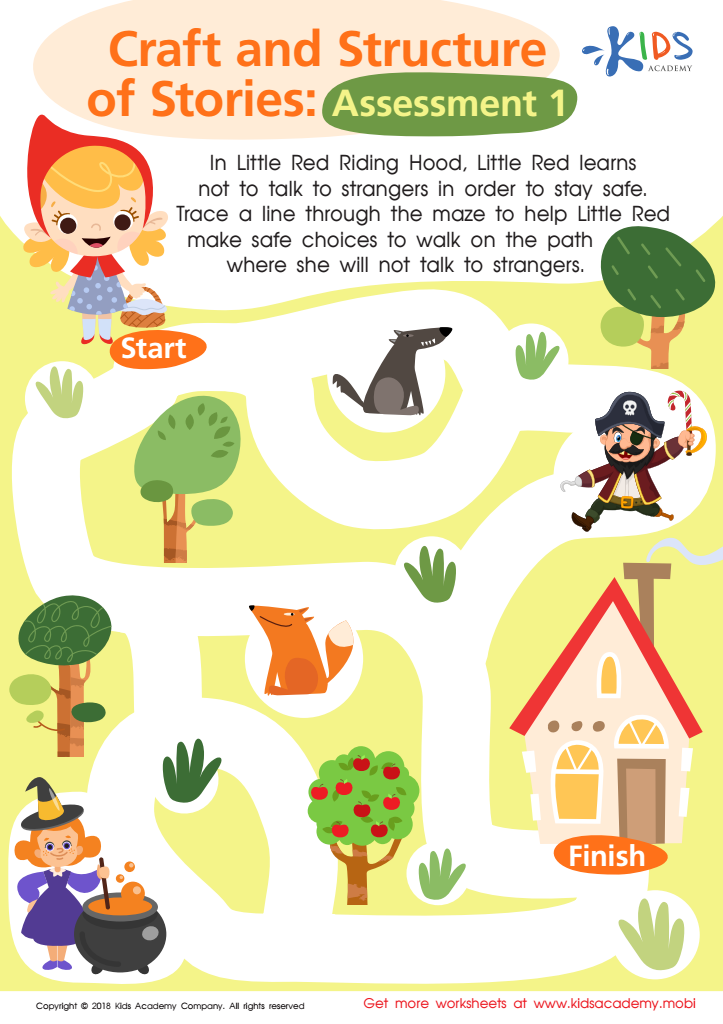
Craft and Structure of Stories: Assessment 1 Worksheet
Turn Little Red Riding Hood into a maze to review author's craft and characterization. Kids must lead her through the woods, avoiding strangers. Give them the main theme of not talking to strangers and watch as they draw a path to her grandmother's house. Fun and educational!
Craft and Structure of Stories: Assessment 1 Worksheet
Worksheet
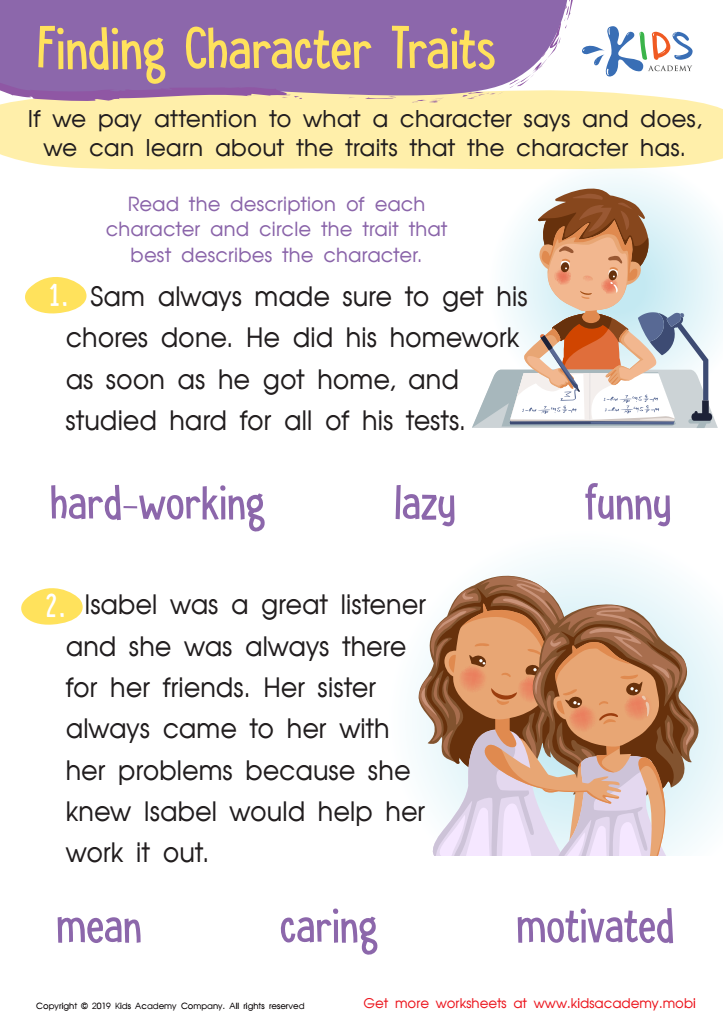
Finding Character Traits Worksheet
Before you start, make sure your kids know the difference between a character trait and a feeling. Traits are part of a character's entire personality and can be inferred from what they say and do in a story. Read the character descriptions on the worksheet and help your kids circle the best trait for each.
Finding Character Traits Worksheet
Worksheet
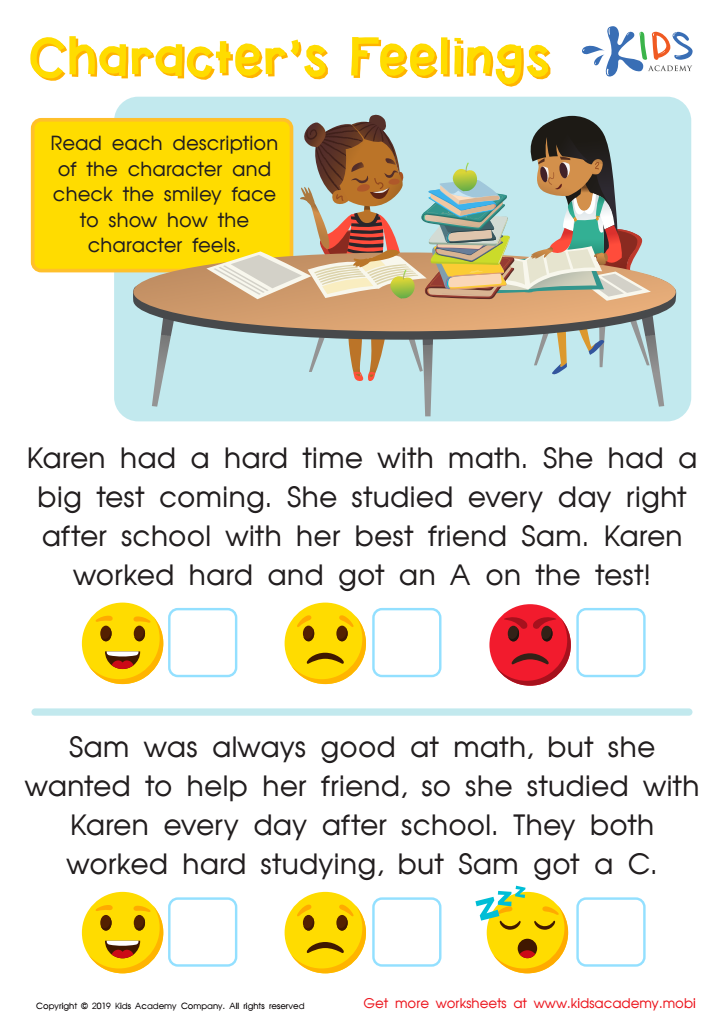
Character’s Feelings Worksheet
To help your child with reading and writing, encourage them to read simple texts and comprehension passages. This will help them learn new words, build their grammar and practice their reading skills. Go through a worksheet together, read the character descriptions then ask your child to pick the smiley face which shows how the character feels.
Character’s Feelings Worksheet
Worksheet
Join Kids Academy for Free
Who is primarily going to use this learning content?







Character analysis is a fundamental aspect of reading comprehension that parents and teachers should prioritize for children aged 5-8. At this developmental stage, young readers are beginning to transition from learning to read to reading to learn. By focusing on character analysis, children develop critical thinking skills that extend beyond the text.
Firstly, character analysis instills empathy. Discussing characters' emotions, motivations, and reactions helps children understand different perspectives and relate to others, fostering emotional intelligence. This foundational skill can enhance their social interactions both inside and outside the classroom.
Secondly, it enhances comprehension and retention. By diving deeper into a character's traits and actions, children make connections and predictions that drive their engagement and understanding. For instance, if a child considers why a character acts a certain way, they are more likely to remember the storyline and its nuances.
Additionally, character analysis encourages vocabulary development and language skills. Explaining and describing traits, feelings, and actions require children to use and understand more complex vocabulary, which broadens their language skills.
In summary, focusing on character analysis not only enriches children's reading experience but also equips them with essential life skills such as empathy, critical thinking, and improved language abilities, laying the groundwork for lifelong learning and personal growth.








