Character recognition Reading Worksheets for Ages 5-8
4 filtered results
-
From - To
Discover our engaging Character Recognition Reading Worksheets for Ages 5-8! Tailored to enhance early reading skills, our worksheets promote recognition of letters and characters in a fun and interactive way. Perfect for young learners, these worksheets help build a solid foundation in reading by focusing on identifying and understanding characters, fostering improved comprehension and fluency. Through vivid illustrations and exciting exercises, children remain captivated while they practice essential skills. Ideal for home and classroom use, our worksheets make learning enjoyable and effective. Explore our collection to inspire a rewarding reading journey for your child!
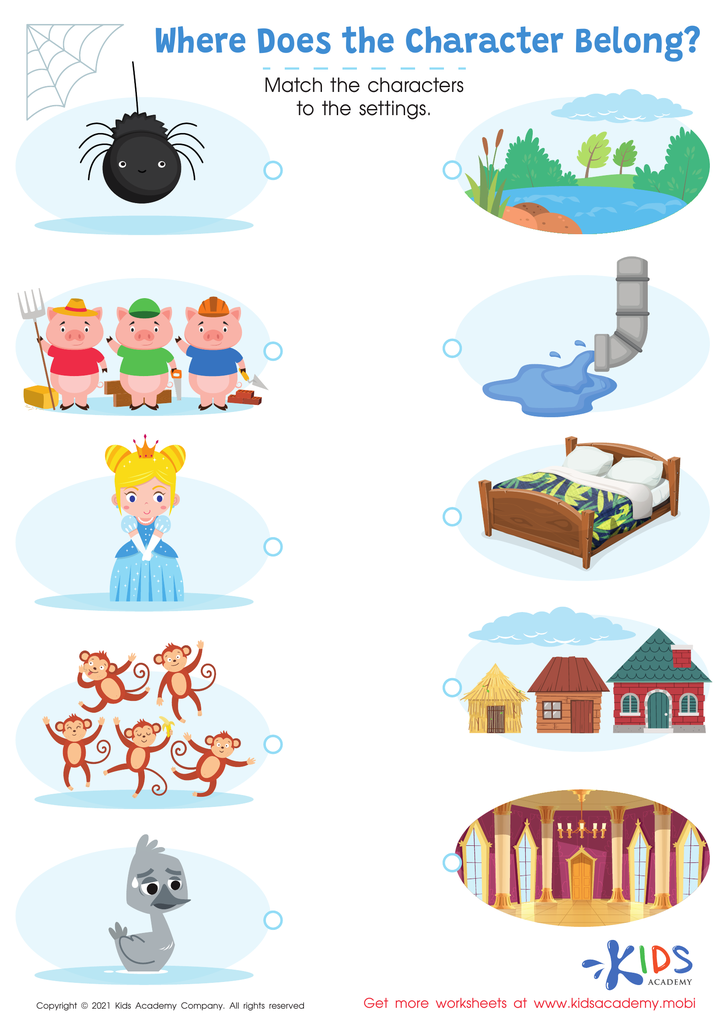
Where Does the Character Belong? Worksheet
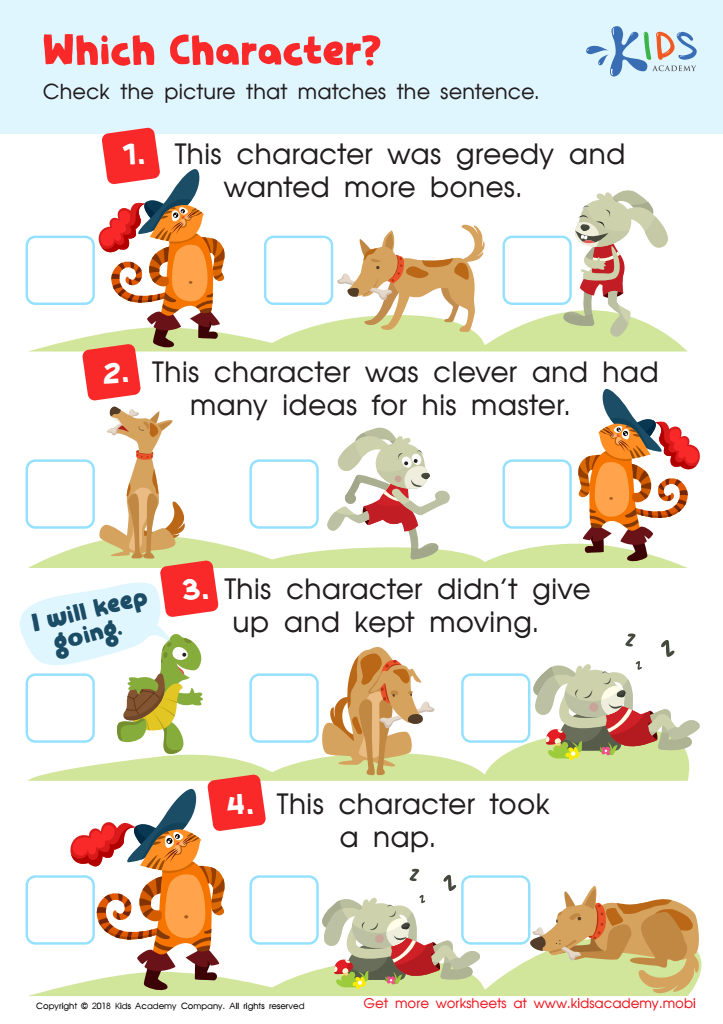
Which Character Worksheet
 Assign to My Students
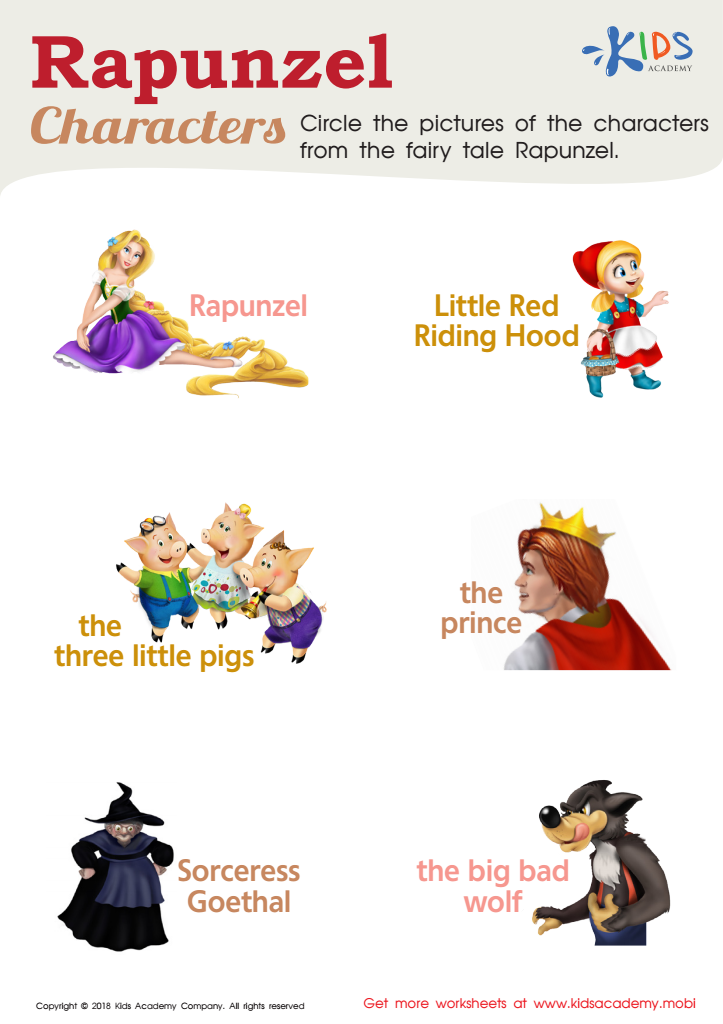
Rapunzel Characters Worksheet
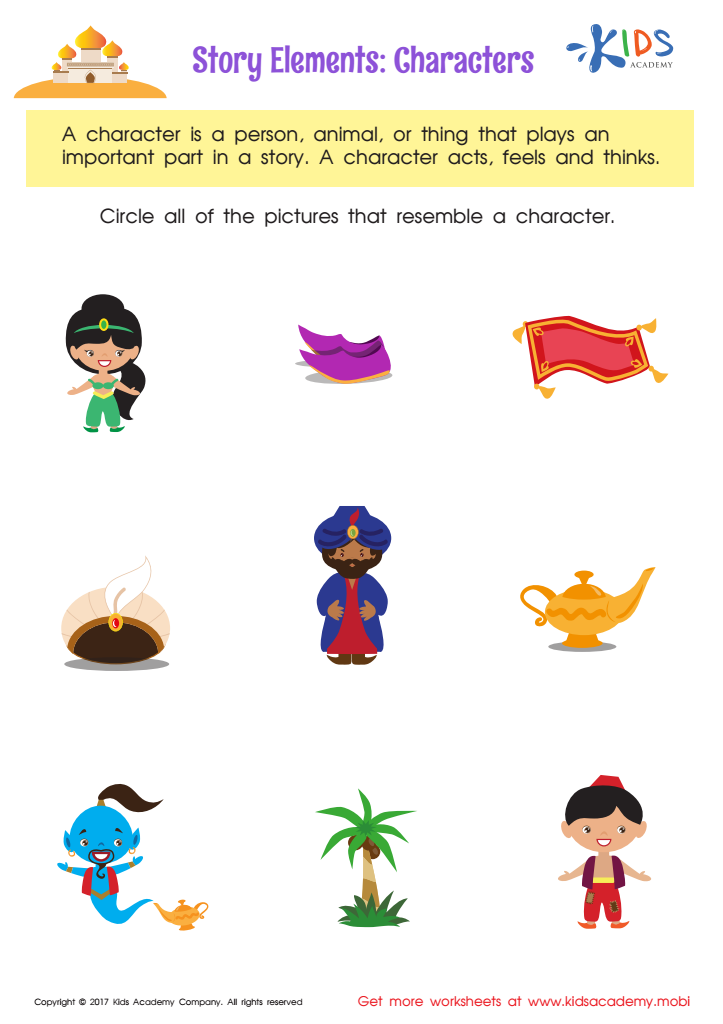
Story Elements Printable








Character recognition reading is foundational in early education for children aged 5-8, playing a crucial role in their overall cognitive development and future learning success. At this stage, children are transitioning from recognizing individual letters to understanding and interpreting entire words and sentences. Here’s why parents and teachers should prioritize character recognition reading:
-
Language Skills: Early character recognition helps children decipher words quickly, enhancing their vocabulary, comprehension, and ability to communicate effectively.
-
Reading Fluency: Recognizing characters and words effortlessly is primary to reading fluency, allowing children to read smoothly and quickly, which is crucial for understanding and enjoying texts.
-
Academic Success: Early reading skills are strong predictors of future academic achievement. Proficiency in reading underpins learning in all subjects, including math, science, and social studies.
-
Confidence & Motivation: Successfully mastering character recognition boosts children's confidence and fosters a love for reading. A positive reading experience early on tends to cultivate lifelong readers.
-
Critical Thinking: Recognizing words contributes to a child's ability to think critically. It helps them make connections, infer meaning, and engage in higher-order thinking processes.
-
Social-Emotional Development: Shared reading experiences promote bonding between parents and children, developing children's social and emotional well-being.
Ensuring strong character recognition skills lays a vital groundwork, empowering children not just for academic pursuits but also for lifelong learning and personal growth.








