Moral lesson understanding Reading Worksheets for Ages 5-8
5 filtered results
-
From - To
Discover our Moral Lesson Understanding Reading Worksheets for ages 5-8. These engaging activities are designed to instill values through captivating stories and exercises. Children will enhance their reading skills while learning important life lessons such as honesty, kindness, and perseverance. Each worksheet offers a unique narrative followed by questions that promote critical thinking and moral reasoning. Perfect for at-home practice or classroom use, our worksheets provide a fun and educational way for young learners to grasp valuable ethics and principles. Help your child or students build a strong moral foundation with our expertly crafted materials.
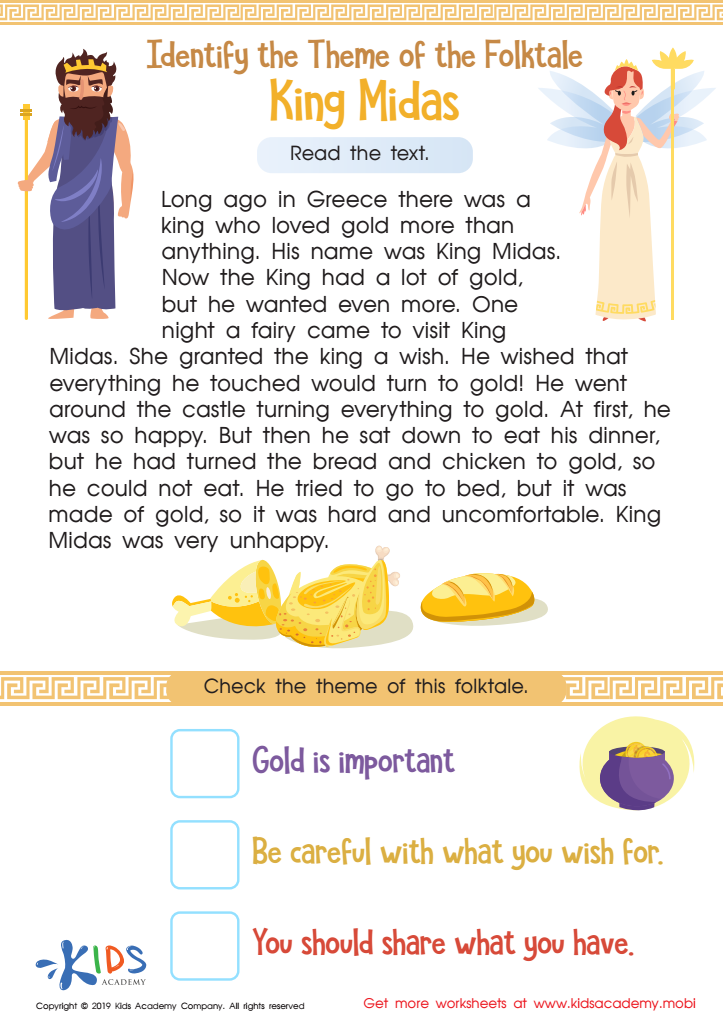
King Midas Worksheet
 Assign to My Students
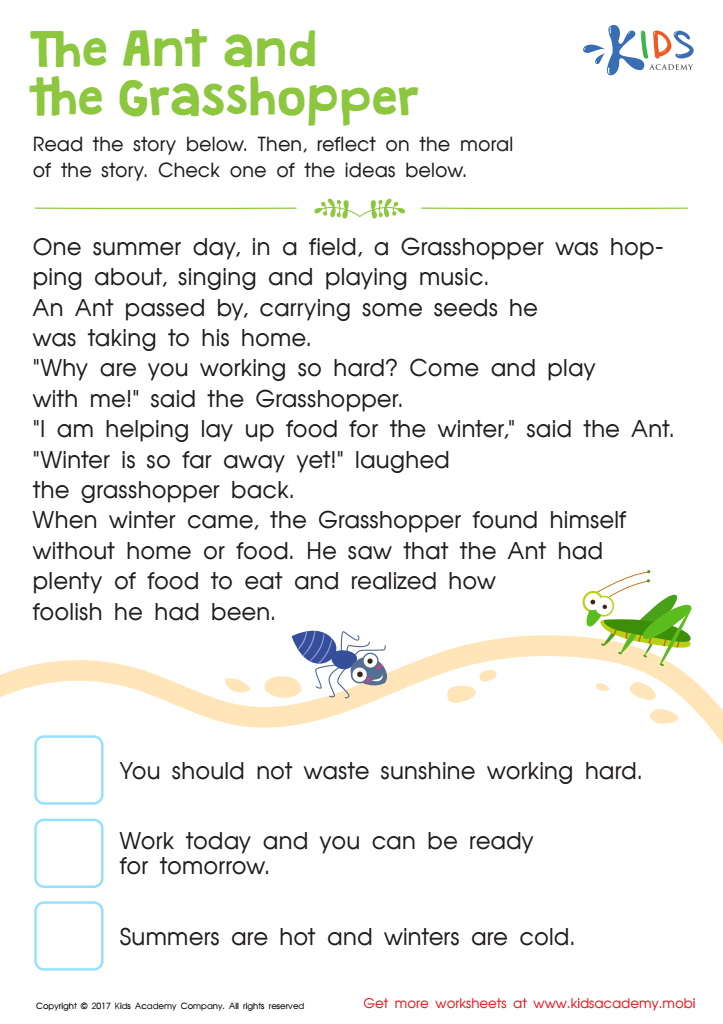
The Ant and The Grasshopper Printable
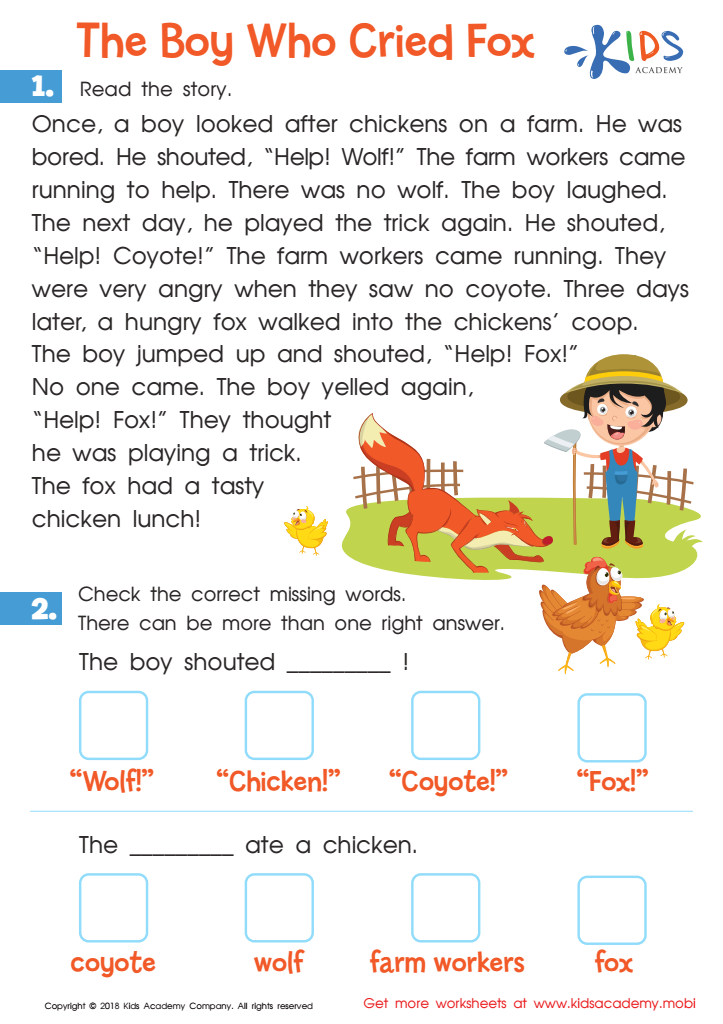
The Boy Who Cried Fox Worksheet
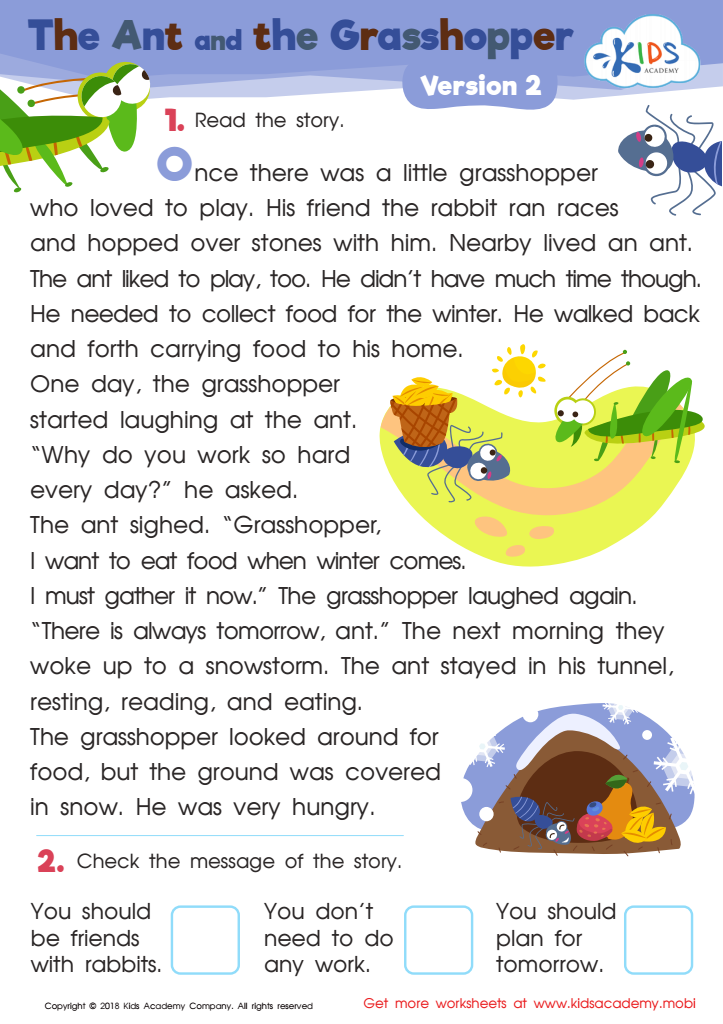
The Ant and The Grasshopper Version 2 Worksheet
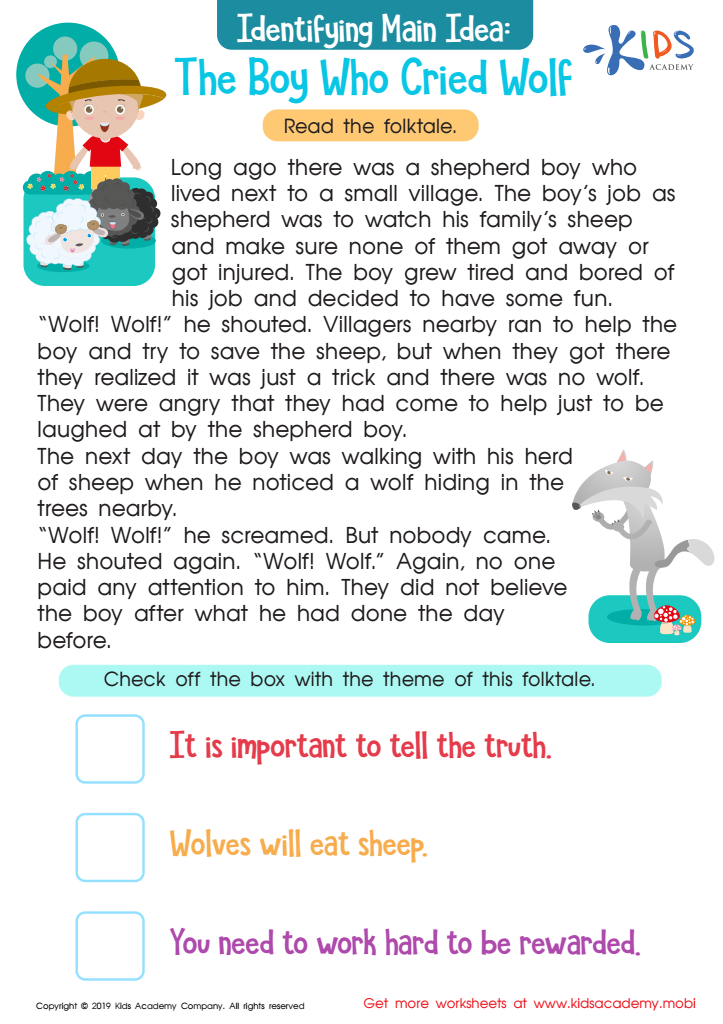
The Boy Who Cried Wolf Part 2 Worksheet








Parents and teachers play crucial roles in the developmental journey of children aged 5-8, and one of the most impactful ways they can foster growth is through reading materials that impart moral lessons. During this impressionable age, kids begin to form foundational understanding of right and wrong, empathy, kindness, and social behavior. Stories imbued with well-articulated moral lessons serve as powerful tools to illustrate these principles in a way that's accessible and engaging for young minds.
Imagine a story where kindness defeats selfishness or honesty prevails over deceit. Such narratives do more than entertain; they provide concrete examples of abstract ethical concepts. Children are more likely to remember, internalize, and emulate behaviors when they see them modeled in the context of a story. This primes them for positive social interactions and helps in the development of a strong moral compass.
Furthermore, reading together offers parents and children a valuable shared activity that strengthens emotional bonds. It creates opportunities for meaningful discussions about the choices characters make and the consequences they face, fostering critical thinking. Enhanced empathy and ethical reasoning not only enrich interpersonal relationships but also contribute to academic and life-long success.
Thus, reading stories with moral lessons isn't just valuable; it’s indispensable for the comprehensive and moral development of young children.








