Noun identification Reading Worksheets for Ages 5-8
3 filtered results
-
From - To
Enhance your child’s reading skills with our engaging Noun Identification Reading Worksheets, designed specifically for ages 5-8. These worksheets provide a fun and interactive way for young learners to recognize and differentiate nouns in various contexts, helping to strengthen their foundational language abilities. Each worksheet includes colorful illustrations and varying activities that encourage creativity and critical thinking while promoting basic grammar knowledge. Perfect for at-home practice or classroom use, our noun identification resources make learning enjoyable and effective. Empower your child with the skills they need to succeed in reading and writing today! Explore our selection and watch their understanding flourish.
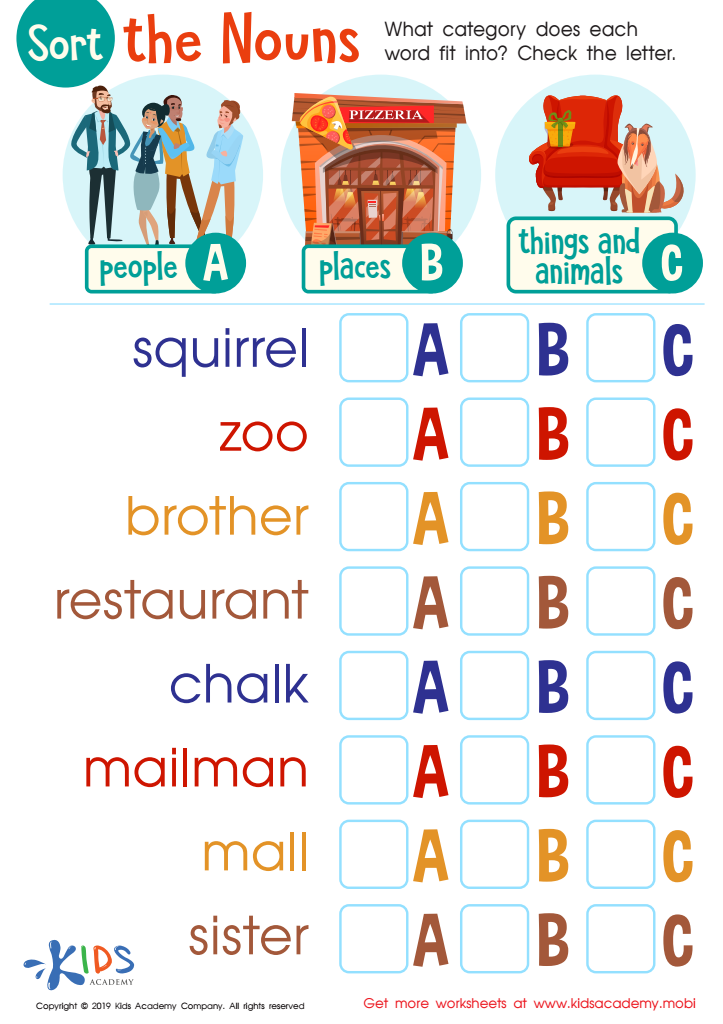
Sort the Nouns Worksheet
 Assign to My Students
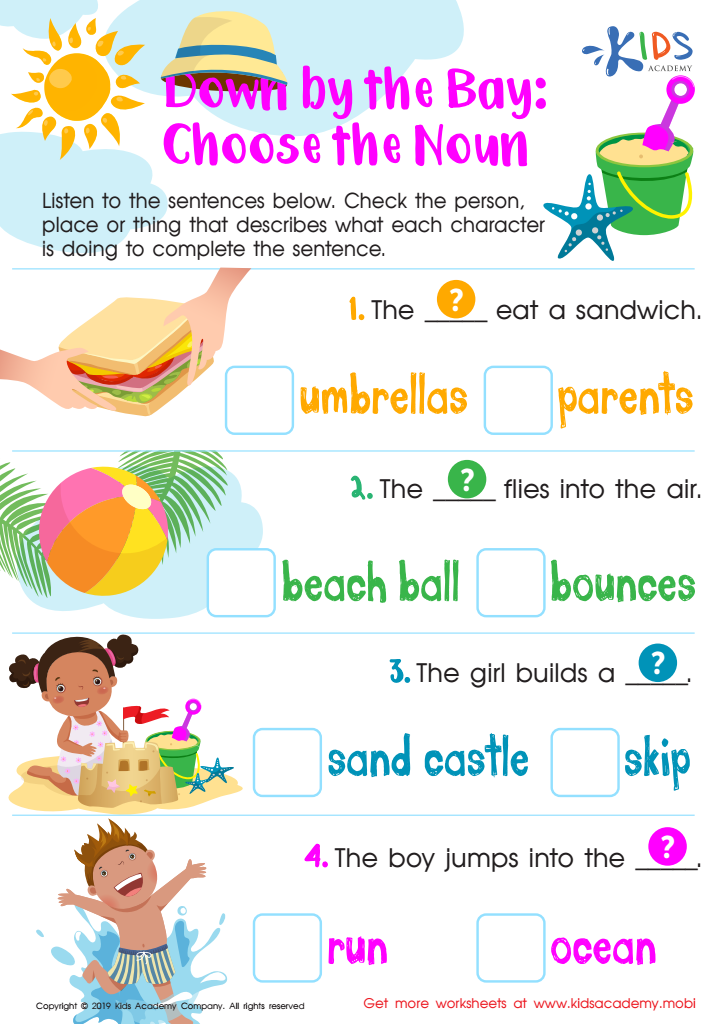
Down by the Bay: Choose the Noun Worksheet
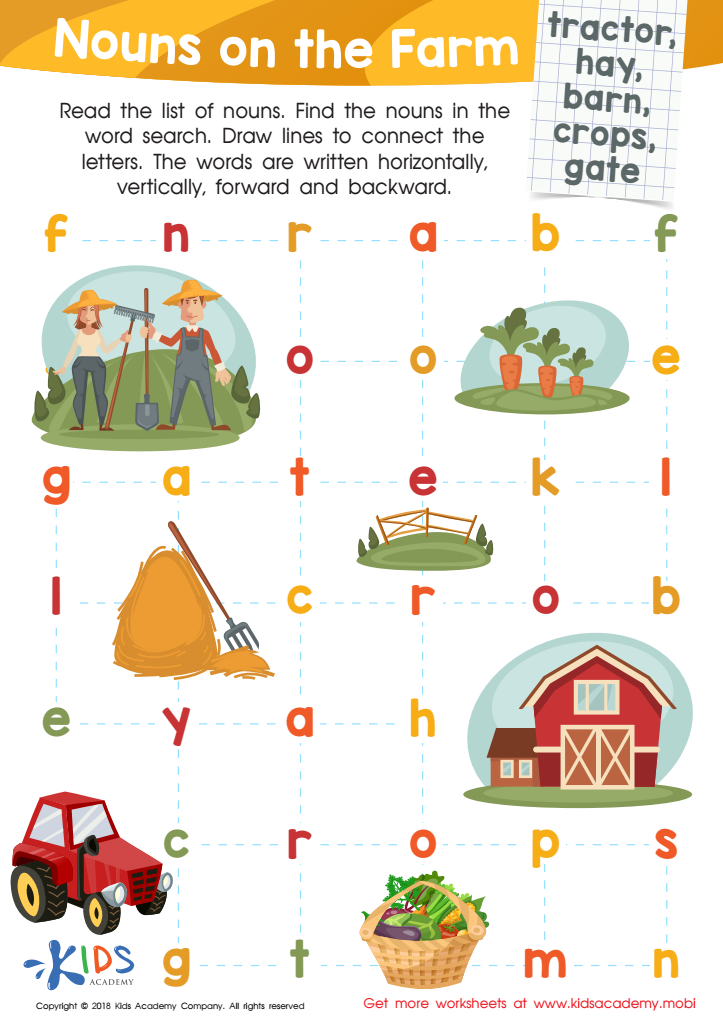
Nouns on the Farm Worksheet







Noun identification is a vital aspect of literacy development for children aged 5-8, as it lays the foundation for language comprehension and effective communication. For parents and teachers, understanding nouns helps in teaching children about the building blocks of language. Nouns, which name people, places, things, and ideas, are prevalent in everyday conversation and reading materials. By identifying nouns, children can begin to understand sentence structure and context, which enhances their reading fluency.
When children learn to identify nouns, they strengthen their vocabulary and improve their ability to express their thoughts. This is crucial in early education, as a strong vocabulary is linked to academic success. Furthermore, practices like using picture books and interactive activities make learning nuanced and engaging. By encouraging noun identification, adults also foster critical thinking skills, as students learn to categorize and differentiate between various nouns according to their meanings and usages.
Ultimately, prioritizing noun identification in early education helps children develop confidence in their reading and writing abilities, setting the stage for lifelong literacy and communication skills. For parents and teachers, recognizing this importance translates into strategies that support holistic language development.








