Rhyming skills development Reading Worksheets for Ages 5-8
3 filtered results
-
From - To
Unlock the joy of reading with our Rhyming Skills Development Worksheets, specially designed for children ages 5-8! These engaging and interactive worksheets help young learners enhance their phonemic awareness and vocabulary through fun rhyming activities. Children will enjoy identifying, matching, and creating rhymes while strengthening their critical literacy skills. Our curated resources cater to various skill levels, making it easy for parents and teachers to support every child's reading journey. Foster a love for language and boost your child’s confidence in reading with these vibrant worksheets, designed to inspire and empower young minds. Start exploring the world of rhymes today!
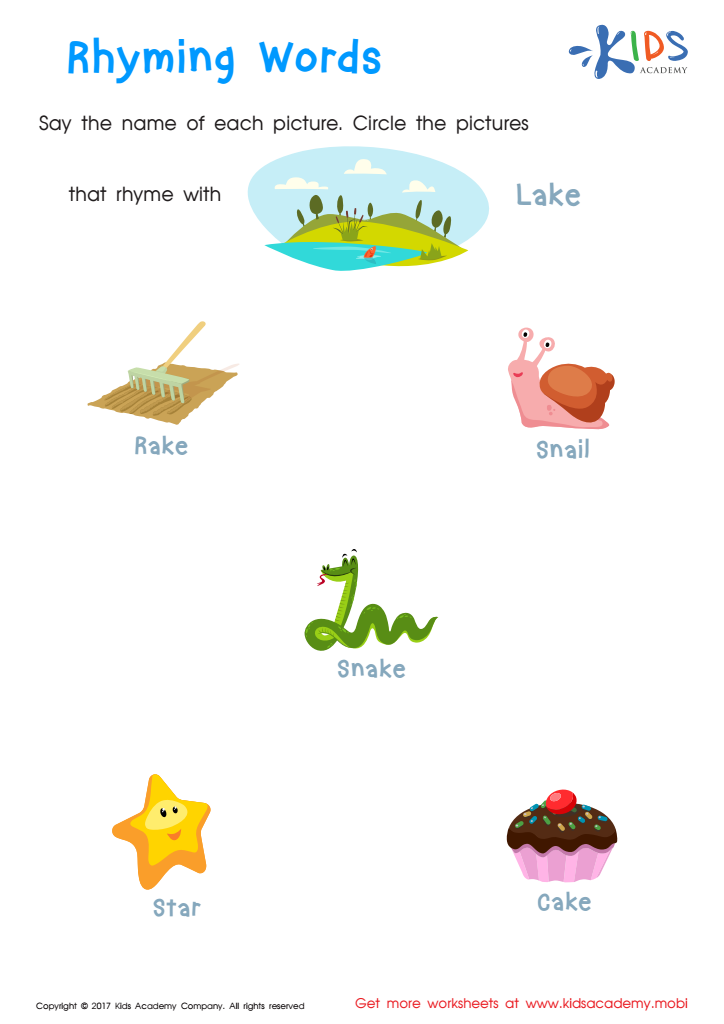
Rhyming Words Rhyming Worksheet
 Assign to My Students
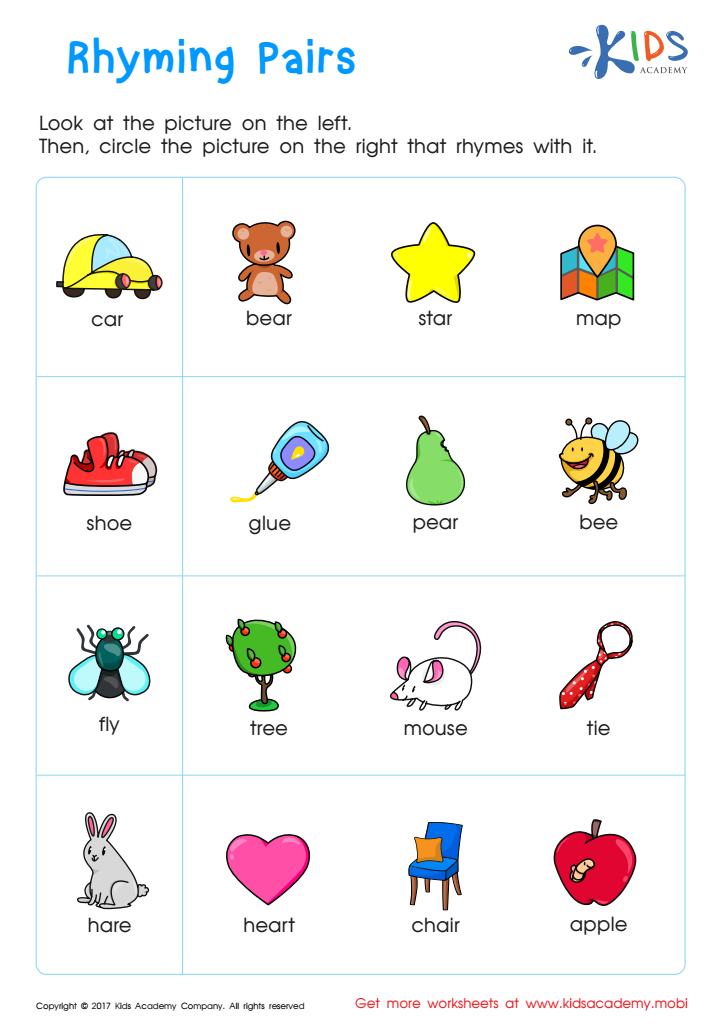
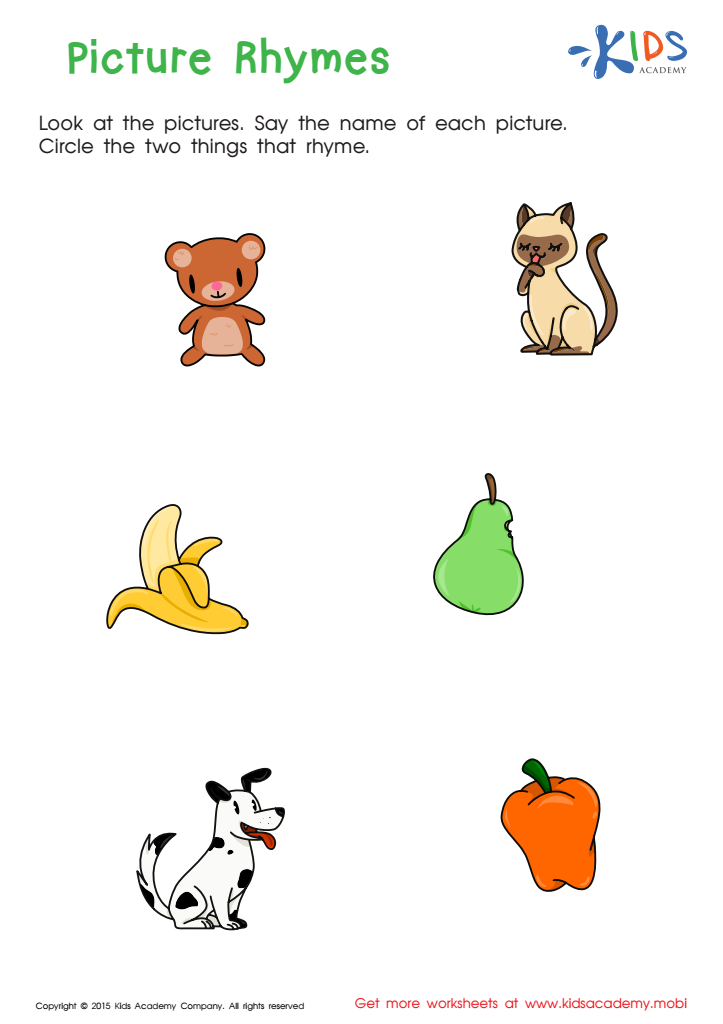
First Words: Picture Rhymes Worksheet








Rhyming skills are vital for reading development in children aged 5-8, and both parents and teachers should prioritize them for several reasons. First, rhyming enhances phonemic awareness, a critical component of early literacy. When children recognize and use rhyming patterns, they cultivate an understanding of sound structure in words, which aids in decoding and spelling as they progress in reading.
Moreover, rhyming contributes to vocabulary development. Engaging with rhymes exposes children to various words and encourages language play, which sparks curiosity and enhances word comprehension. This playful interaction not only makes learning fun but also fosters a love for reading.
Rhyming activities, such as singing songs, reciting nursery rhymes, or playing rhyming games, promote listening skills and improve memory retention, both essential for effective communication and learning. Additionally, when children participate in rhyming, they develop confidence in their verbal skills, which translates to greater academic involvement.
Lastly, rhyming supports emotional and social development, as it often involves shared activities with peers or family members, reinforcing bonds and communication. By focusing on rhyming skills, parents and teachers lay a strong foundation for children's overall literacy and lifelong learning.








