Moral understanding Reading Comprehension Worksheets for Ages 5-8
5 filtered results
-
From - To
Unlock the power of reading comprehension with our engaging Moral Understanding Worksheets designed for children ages 5-8. These worksheets focus on enhancing literacy skills while fostering an understanding of key moral themes such as empathy, kindness, and fairness. Each activity features age-appropriate stories that encourage critical thinking and discussion, helping young learners connect with ethical dilemmas and make thoughtful choices. Our resources include vibrant illustrations and interactive exercises that promote an enjoyable learning experience. Equip your child with essential comprehension skills while instilling important moral values! Explore our collection today and inspire a love for reading and learning.
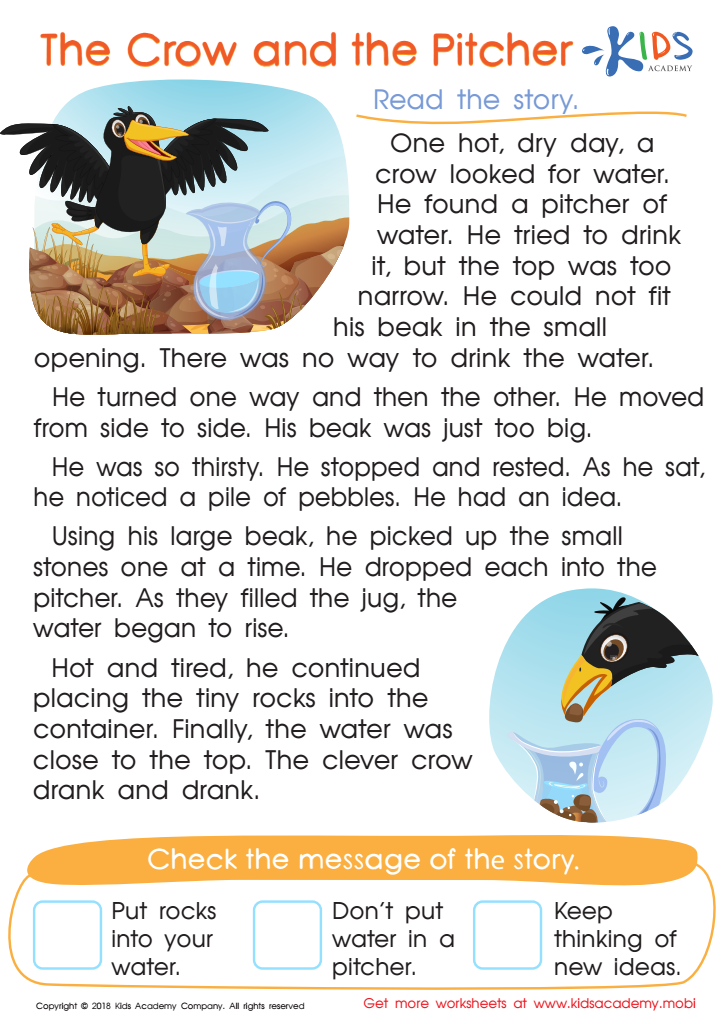
The Crow and the Pitcher Worksheet
 Assign to My Students
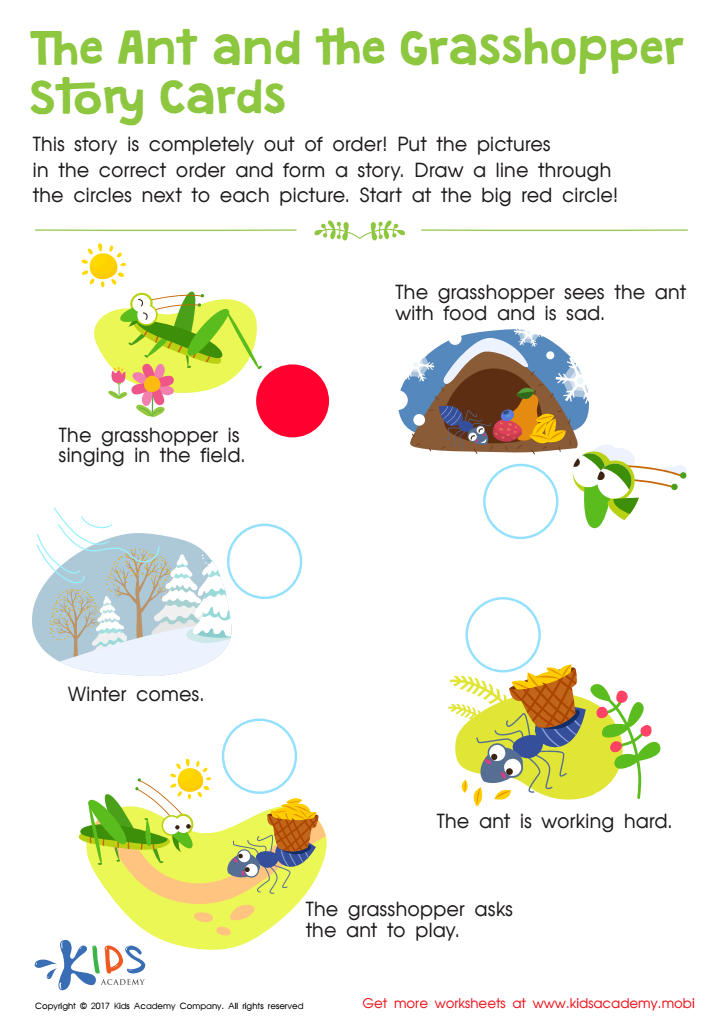
The Ant and The Grasshopper Worksheet
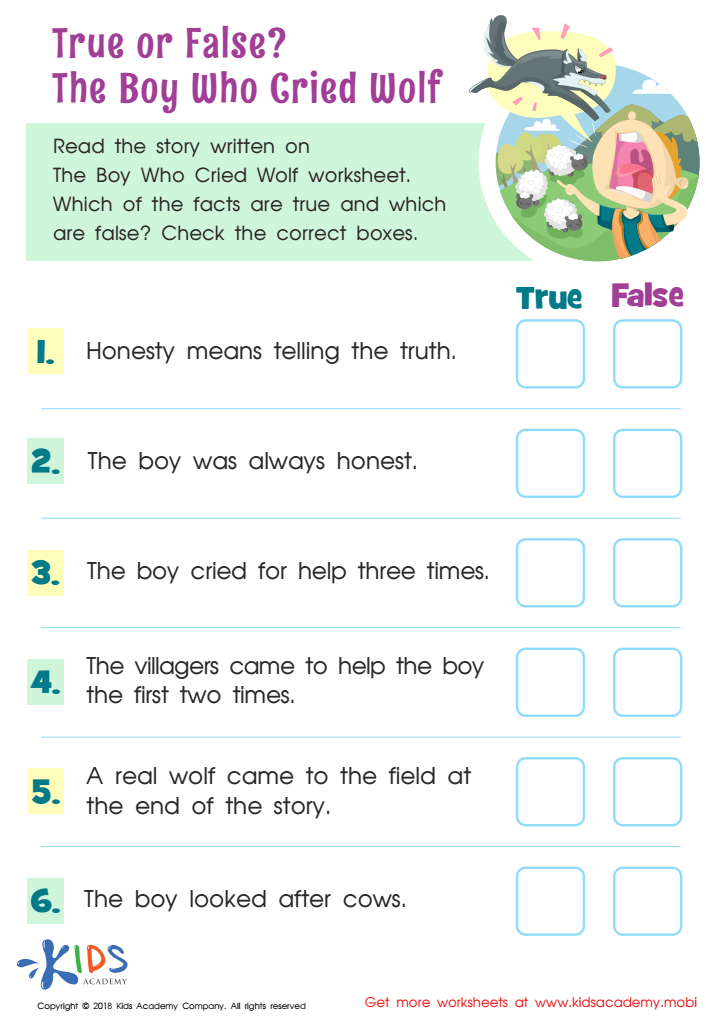
True or False? The Boy Who Cried Wolf Worksheet
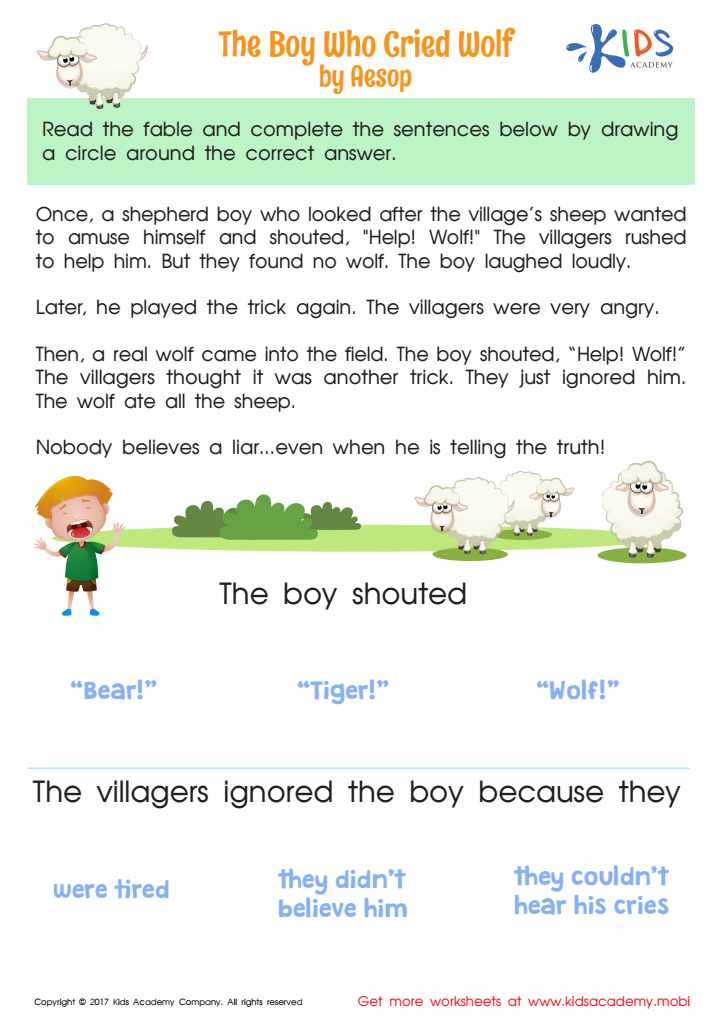
The Boy Who Cried Wolf Worksheet
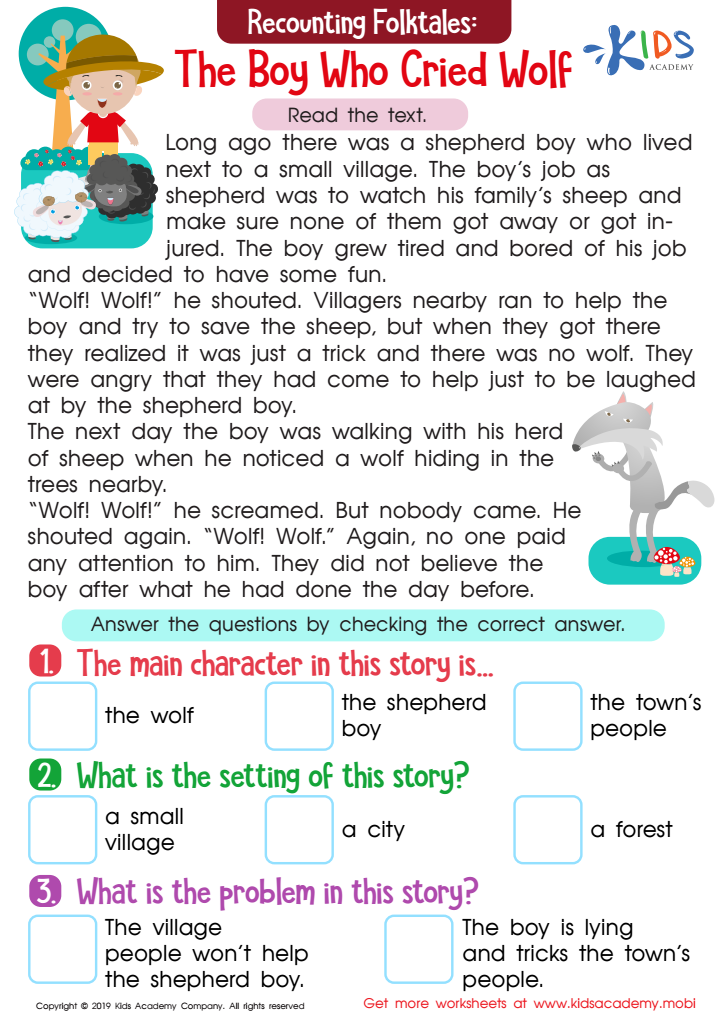
The Boy Who Cried Wolf Part 1 Worksheet


.jpg)




Moral understanding in reading comprehension is crucial for children aged 5-8 as it lays the foundation for their social and emotional development. At this stage, children not only acquire basic literacy skills but also start to understand complex concepts such as right and wrong, empathy, and ethical decision-making. Engaging stories often highlight moral dilemmas and character choices, providing a rich context for discussions about values, empathy, and social responsibility.
Parents and teachers should care about this because reading comprehension transcends mere decoding of words; it involves grasping the deeper meanings and implications of stories. By focusing on moral understanding, educators and caregivers can foster critical thinking skills, helping children draw connections between the narratives they read and real-life situations. This encourages thoughtful discussions, promotes cooperative learning, and helps develop emotional intelligence.
Moreover, instilling strong moral reasoning at this young age can lead to positive behavior and healthier relationships in the future. When children learn to recognize different perspectives and understand the consequences of actions, they grow into compassionate and responsible adults. Therefore, emphasizing moral understanding in reading comprehension is integral to nurturing not just strong readers, but also empathetic citizens who can contribute positively to society.








