Rhyme recognition Songs Worksheets for Ages 5-8
3 filtered results
-
From - To
Welcome to our Rhyme Recognition Songs Worksheets for Ages 5-8! Designed to enhance phonemic awareness, these engaging worksheets help young learners identify and create rhymes through fun song lyrics. Each worksheet encourages creativity and boosts reading skills while making learning enjoyable. Children will explore playful sound patterns, strengthening their language abilities with entertaining graphics and structured activities. Perfect for educators and parents alike, our resources promote interactive and hands-on learning. Dive into a world of rhymes and melodies as your child develops crucial literacy skills! Explore our collection and make learning to read a delightful adventure for your young ones today!
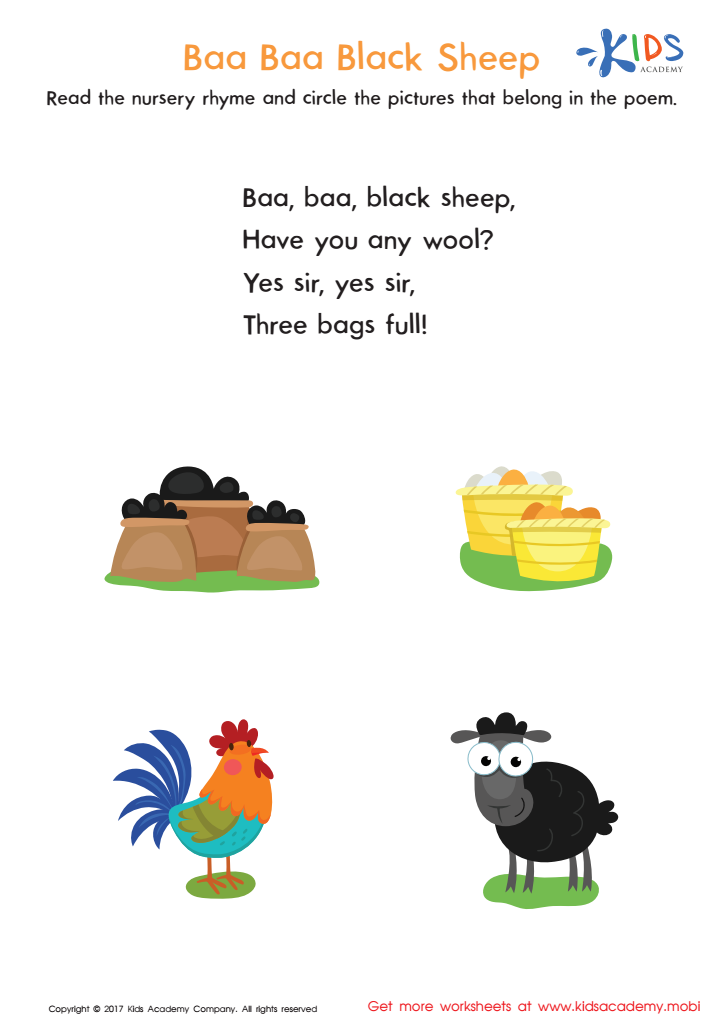
Baa Baa Black Sheep Printable
 Assign to My Students
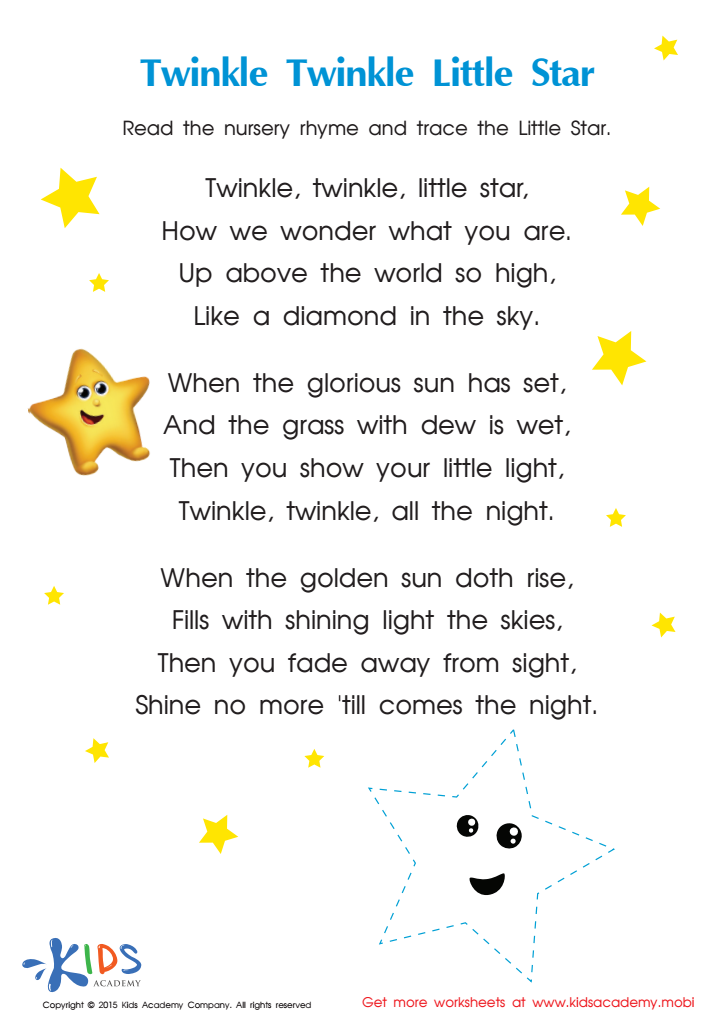
Nursery Rhymes: Twinkle Little Star Worksheet
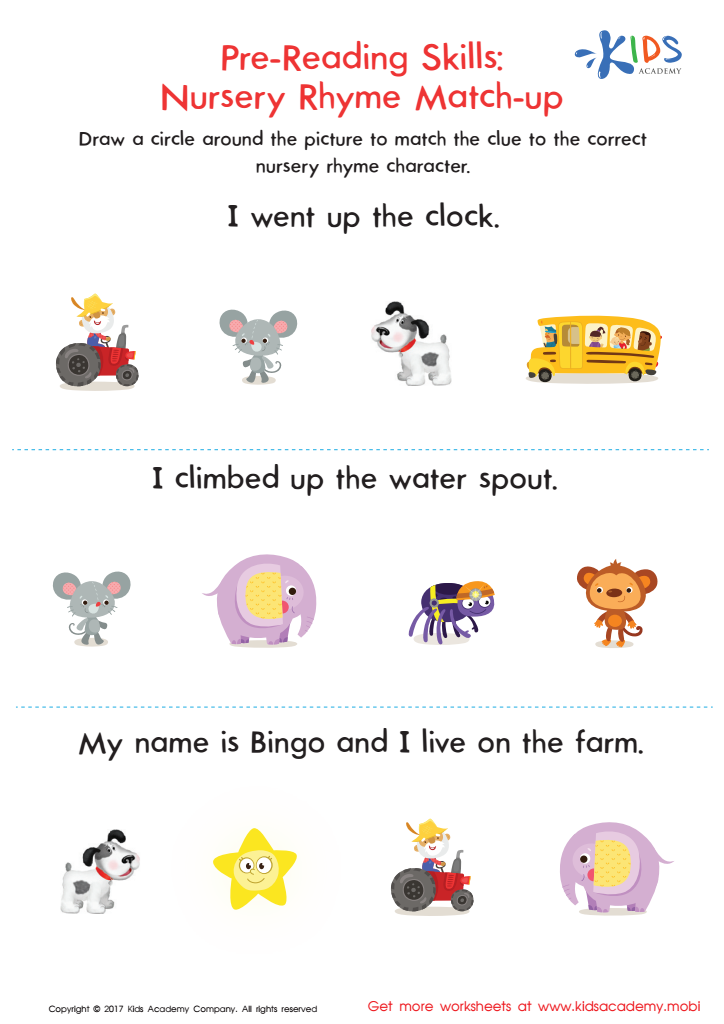
Nursery Rhyme Match–Up Worksheet







Rhyme recognition songs are an essential tool for children aged 5-8, playing a critical role in their literacy development. At this developmental stage, children begin to develop phonemic awareness, a foundational skill for reading. When children engage with rhyming songs, they sharpen their ability to identify and manipulate sounds in words. This skill enhances their reading fluency and comprehension, as rhyming helps them decode unfamiliar words.
Moreover, these songs foster language development. Rhymes enrich vocabulary and introduce new words in an enjoyable context, making it easier for children to remember and use them in conversation. They also encourage auditory discrimination—the ability to hear similarities and differences in sounds—which is vital for effective communication.
Additionally, rhyme recognition songs create an engaging and memorable learning experience. Through repetition and rhythmic patterns, children are more likely to retain phonemic concepts, making learning fun and less daunting. Socially, participating in singing and rhyming activities builds a sense of community and cooperation among peers.
Overall, parents and teachers should prioritize rhyme recognition songs as a joyful, effective way to bolster literacy skills, language development, and social interaction during these formative years.








