
Observational skills development Science Worksheets for Ages 5-8
3 filtered results
Difficulty Level
Grade
Age
-
From - To
Subject
Activity
Standards
Our "Observational Skills Development Science Worksheets for Ages 5-8" offer an engaging and educational experience for young learners. These worksheets are specifically designed to enhance children’s observational skills through fun and interactive activities. Each worksheet incorporates colorful images, puzzles, and hands-on exercises to help kids identify patterns, learn to ask questions, and make detailed observations about the world around them. Perfect for both classroom and at-home learning, our resources foster curiosity and support the development of critical thinking and analysis in the blossoming minds of young scientists. Empower your child's scientific exploration today!
Favorites
With answer key
Interactive
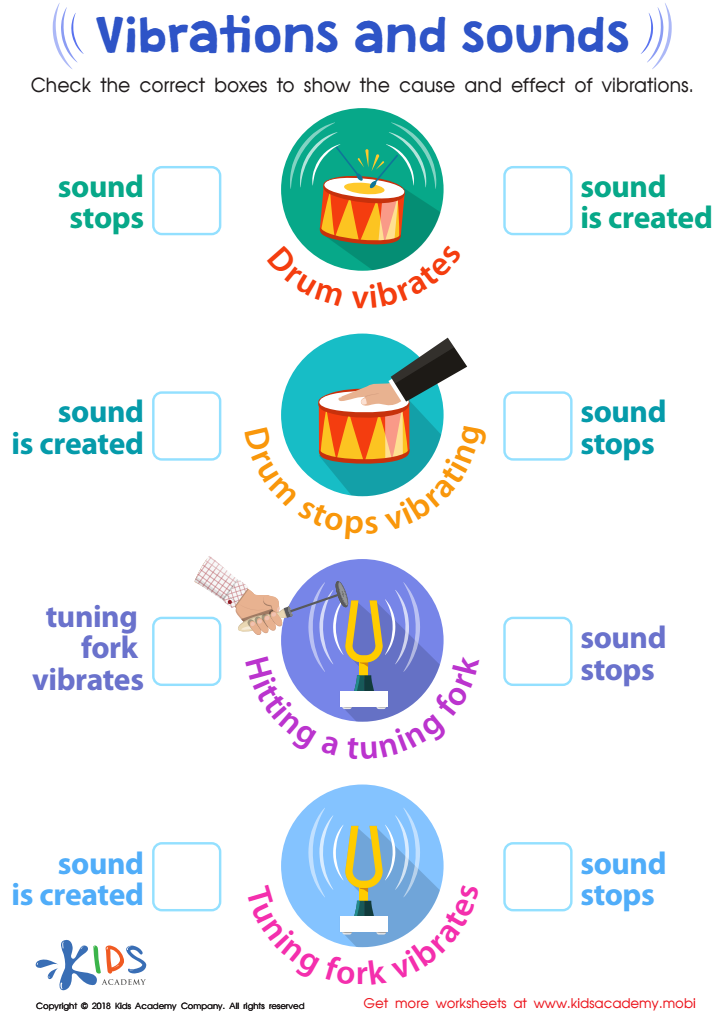
Vibrations and Sounds Worksheet
Many objects, creatures, and things make sounds. People talk, animals bark, hiss or meow, and things make sounds too. Ask your students to name others that produce sounds and why they do, such as when a drum is hit with a stick. Get them to learn about vibrations and cause/effect in this fun worksheet and check the answers.
 Assign to My Students
Vibrations and Sounds Worksheet
Worksheet
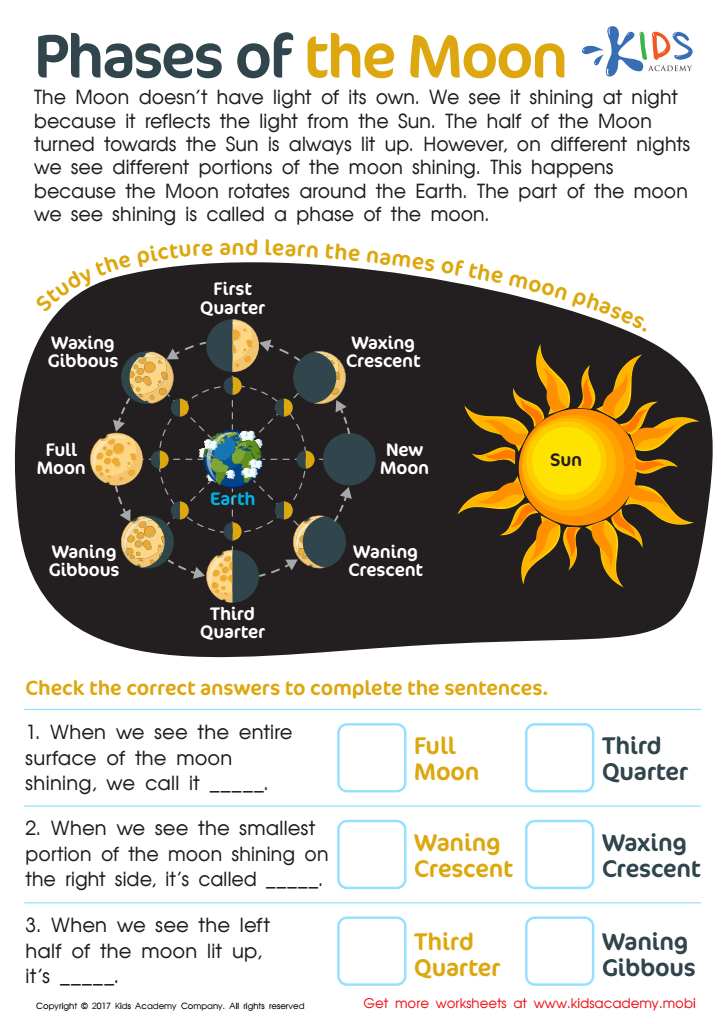
Phases of The Moon Worksheet
It'll show kids the fascinating phases and journey the moon takes around Earth. They'll be amazed to learn it's not always shining!
Phases of The Moon Worksheet
Worksheet
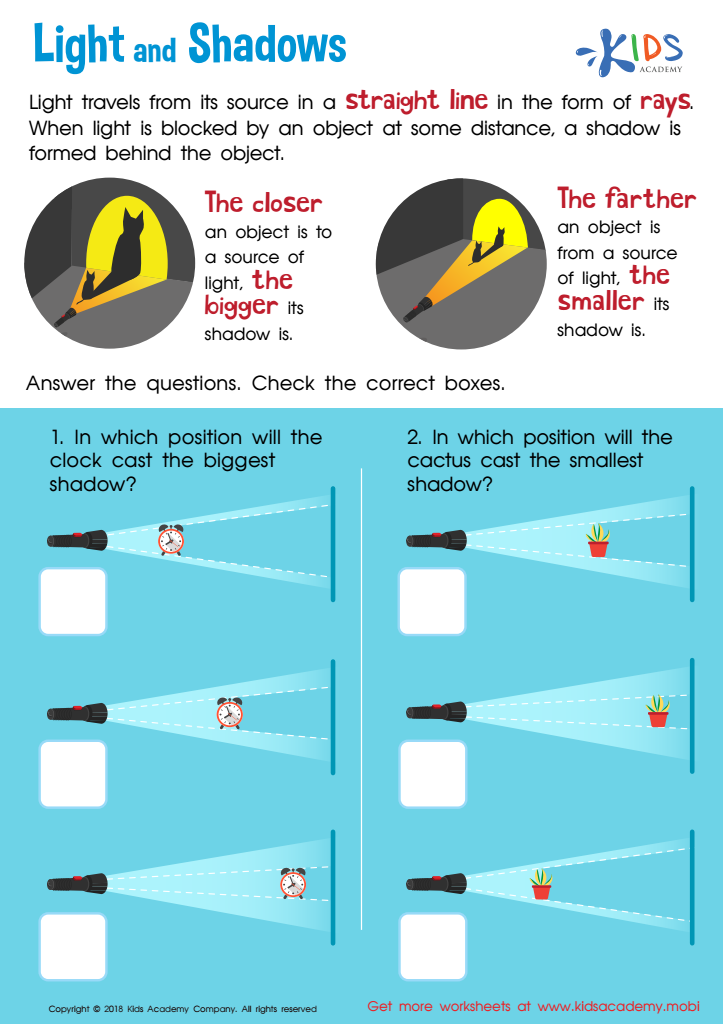
Light and Shadow Worksheet for Grade 3
Kids are often scared of shadows, but they can learn that they're not so scary! This worksheet helps grade 3 kids understand how light rays and objects create shadows, and how they can be large or small. Teach your child with this interesting worksheet!
Light and Shadow Worksheet for Grade 3
Worksheet
Learning Skills
Join Kids Academy for Free
Who is primarily going to use this learning content?







Observational skills are the foundation for scientific inquiry and critical thinking, making them particularly crucial for children aged 5-8. At this developmental stage, kids are naturally curious and eager to explore their environment. By nurturing observational skills, parents and teachers can harness this curiosity to build a strong basis for future learning.
Firstly, developing observation skills helps children become more detail-oriented. They learn to notice patterns, differences, and similarities, enhancing their cognitive abilities and problem-solving skills. These skills are not confined to science alone but are transferable to everyday life, benefitting subjects like math, reading, and social studies.
Secondly, observational skills foster a keen sense of curiosity and a love for learning. When children engage in activities that require careful observation, they learn to formulate questions and seek answers, thus laying the groundwork for scientific thinking. This early engagement makes abstract scientific concepts more accessible and relatable.
Lastly, fostering observational skills can boost a child's confidence. Successfully identifying patterns or making connections provides a sense of achievement, motivating them to delve deeper into learning experiences. As educators or parents, encouraging this development means supporting a child's ability to inquire, argue with evidence, and think critically, all essential components for academic and personal growth.
Investing time in cultivating observational skills sets the stage for lifelong learning and curiosity, essential elements for becoming thoughtful and informed citizens.







