Sorting skills Science Worksheets for Ages 5-8
3 filtered results
-
From - To
Enhance your child's sorting skills with our engaging Science worksheets designed for ages 5-8! These thoughtfully crafted activities introduce young learners to the fundamentals of classification and categorization, promoting critical thinking and observational skills. Our worksheets feature vibrant illustrations and interactive tasks that make learning fun and effective. Kids will explore various sorting methods, whether by color, shape, or size, while also integrating essential scientific concepts. Ideal for classroom settings or at-home practice, these worksheets are an excellent resource for parents and educators seeking to foster a love for science and enhance cognitive development. Start sorting and learning today!
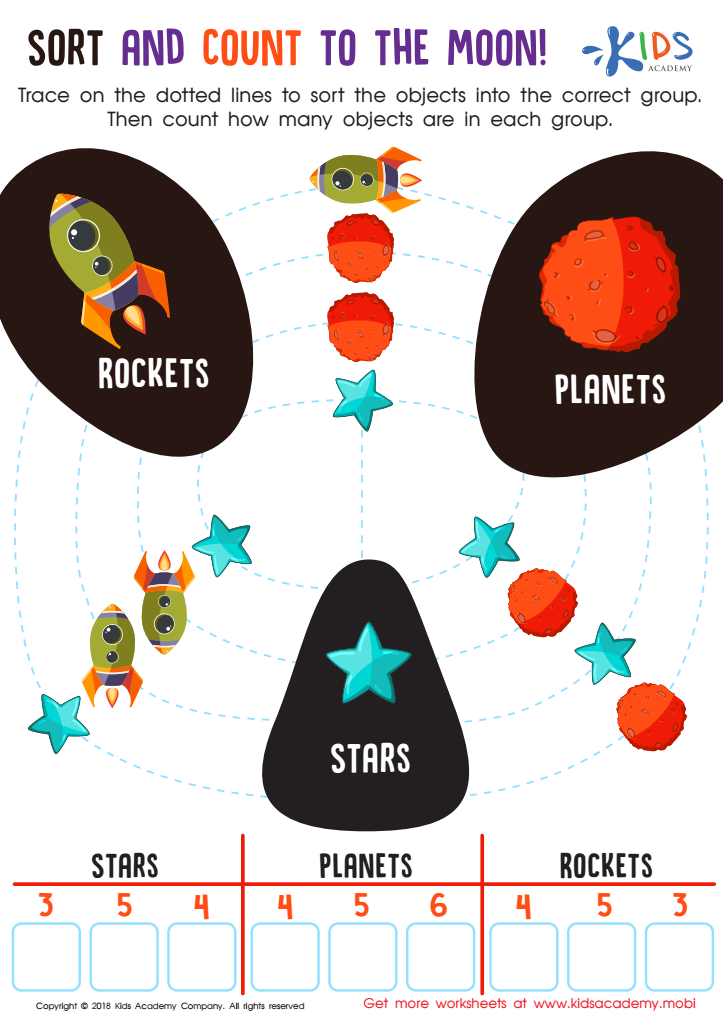
Sort and Count to the Moon Worksheet
 Assign to My Students
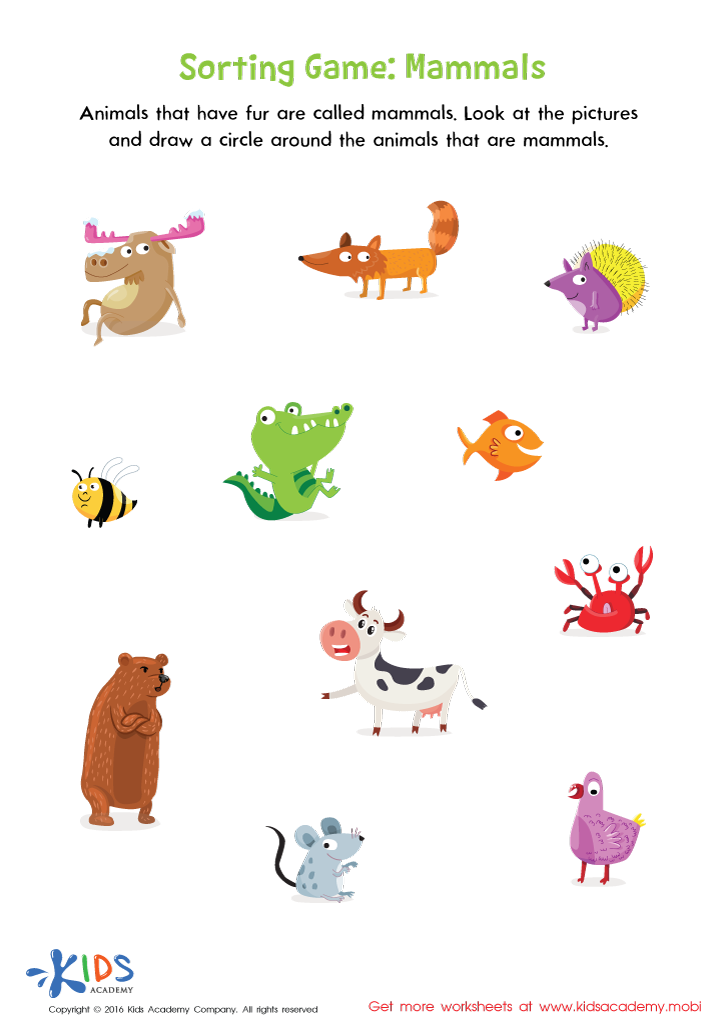
Mammals Sorting Worksheet
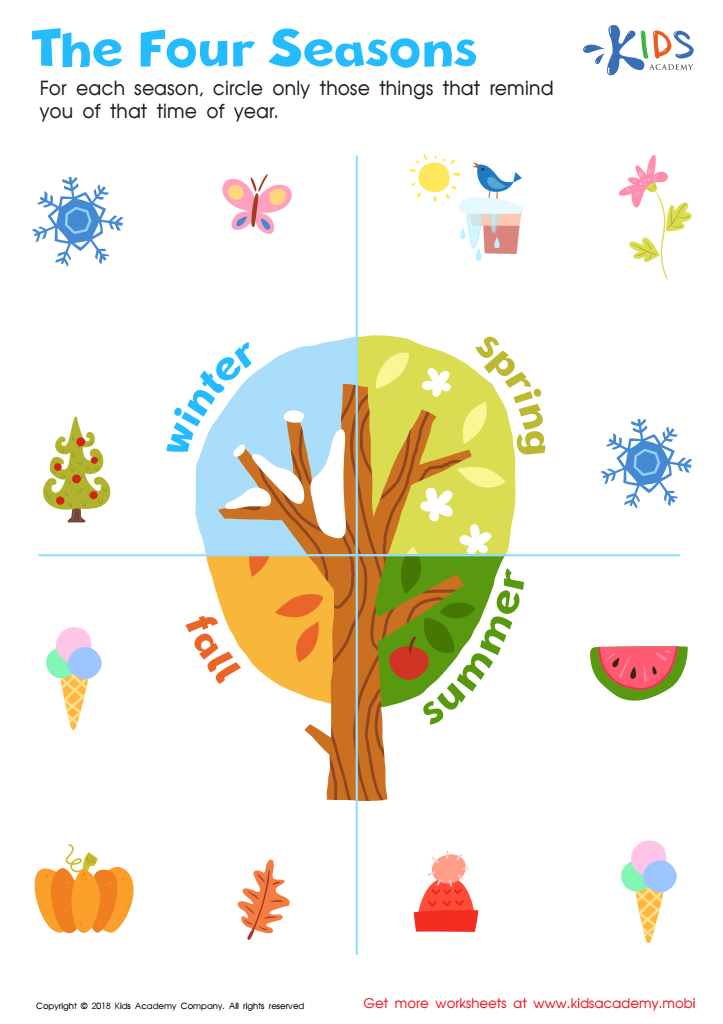
The Four Seasons Worksheet







Sorting skills are fundamental in the early educational development of children, particularly for ages 5-8. At this stage, children are experiencing rapid cognitive growth, and sorting activities can significantly enhance their critical thinking and problem-solving abilities. Sorting tasks teach children to categorize objects based on attributes like size, shape, color, or other characteristics, which encourages them to analyze and make connections in their environment.
These skills promote cognitive organization and improve memory by helping children understand relationships and differences among various items. Moreover, sorting encourages early mathematical concepts such as classification, comparison, and patterns, which are essential for future math success.
From a scientific perspective, sorting skills foster inquiry-based learning; kids learn to hypothesize and observe through experimentation. Developing sorting skills also lays the groundwork for later skills in science, such as classification in biology or organizing data in experiments.
Parents and teachers should care about fostering these skills as they contribute to overall academic preparedness, enhance fine motor skills through hands-on activities, and build confidence in children’s abilities. By embedding sorting activities into everyday life or curricula, caregivers help children develop cognitive abilities that are crucial not just in academics but also in daily decision-making and social interactions.







