
Understanding forces Science Worksheets for Ages 5-8
6 filtered results
Difficulty Level
Grade
Age
-
From - To
Subject
Activity
Standards
Dive into the fascinating world of forces with our engaging "Understanding Forces Science Worksheets" designed for children ages 5-8! These worksheets offer fun, interactive activities that help young learners explore key concepts such as push, pull, gravity, and friction through colorful illustrations and simple explanations. Our carefully crafted exercises encourage critical thinking and observation skills while making science accessible and enjoyable. Ideal for classroom use or at-home learning, these worksheets promote curiosity and hands-on learning. Let's inspire young minds to discover the wonders of forces in the world around them! Visit our page now to access these valuable educational resources!
Favorites
With answer key
Interactive
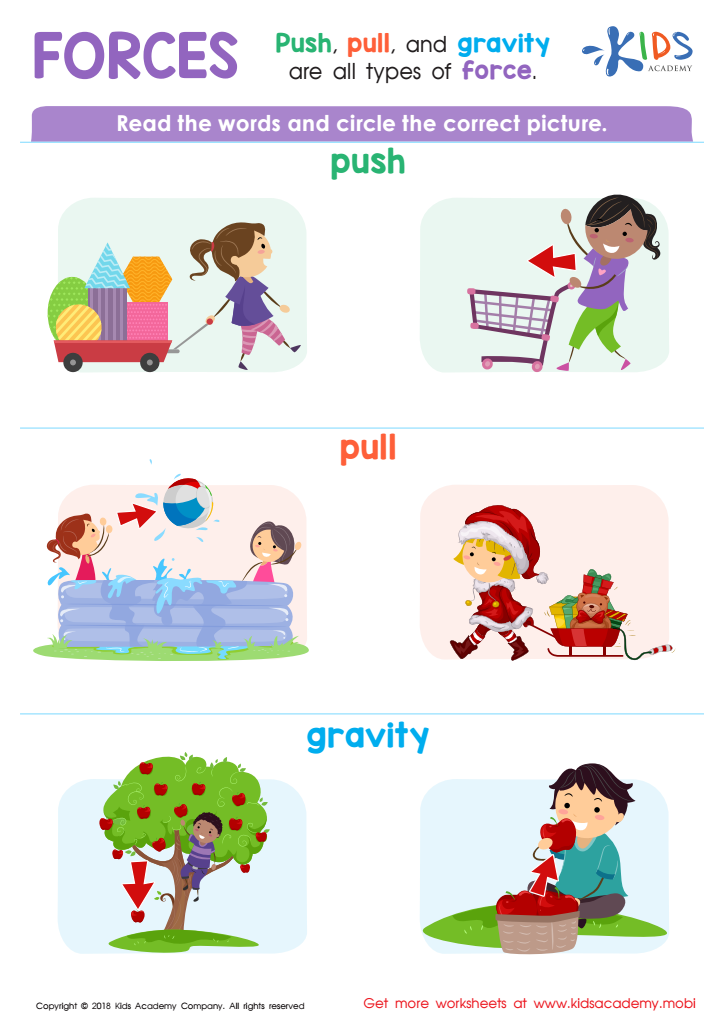
Forces Worksheet
Teach your child about forces! Ask them to identify which of six pictures shows push, pull or gravity. Read the words beside each picture and have them circle the correct one. It's a great way to learn about forces; push, pull and gravity!
 Assign to My Students
Forces Worksheet
Worksheet
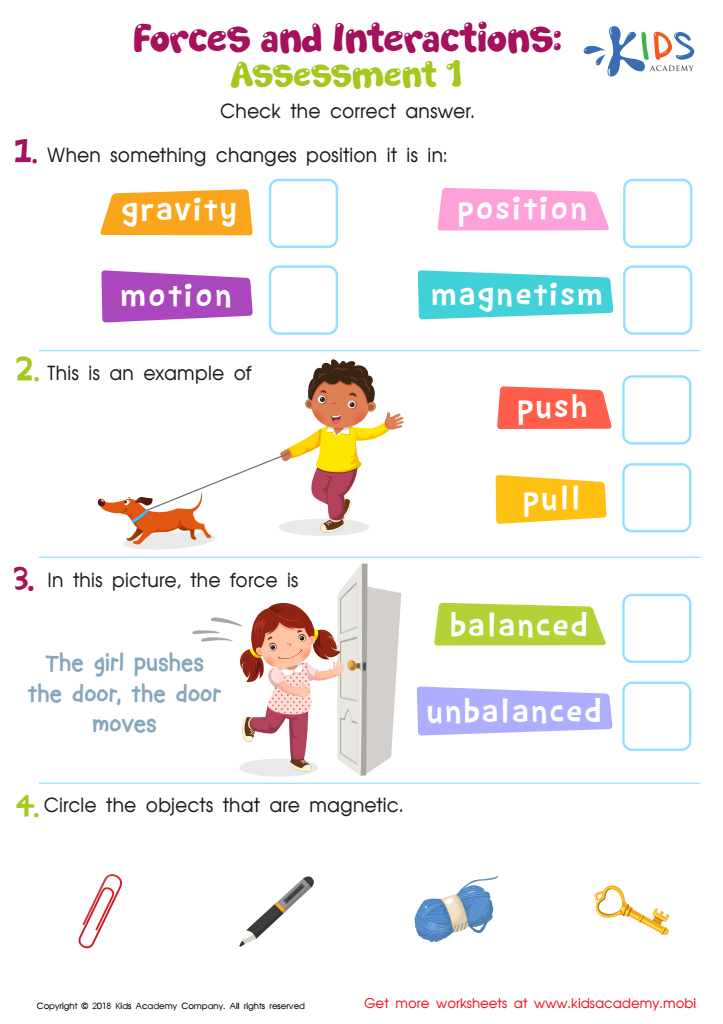
Forces and Interactions Printable
Test your child's physics know-how with this vibrant forces and interactions printable worksheet! Kids can assess their understanding of the different types of forces while they complete it. Read each example and check the boxes to show what they know!
Forces and Interactions Printable
Worksheet
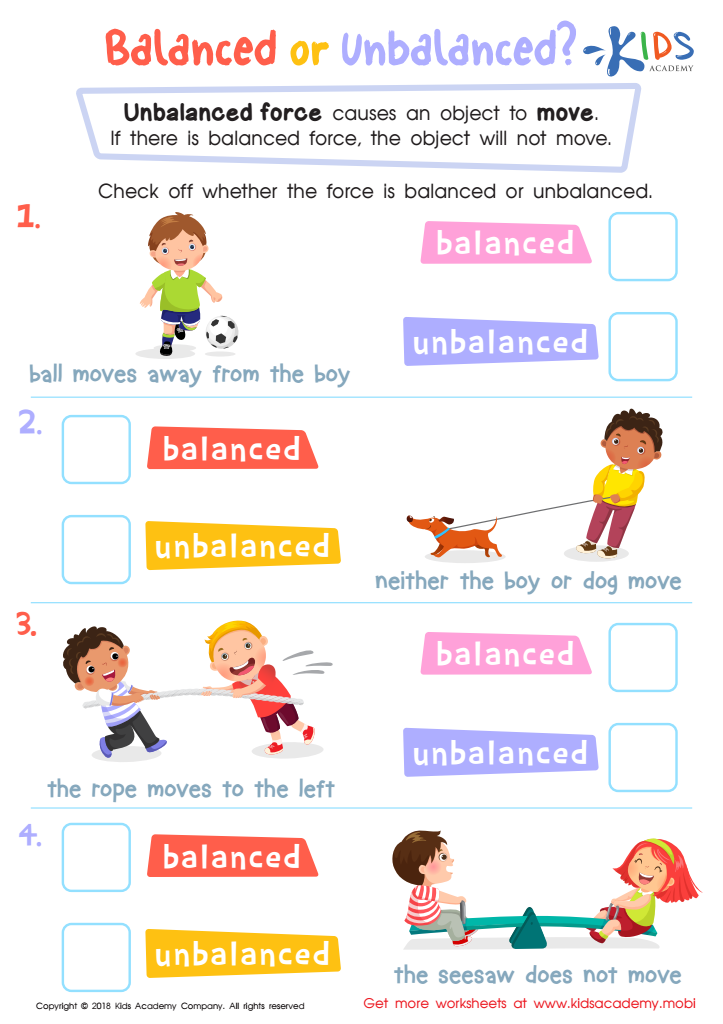
Balanced or Unbalanced Science Worksheet
Check out the kids on the worksheet. Is the force equal or unbalanced? This science worksheet helps little learners evaluate forces and understand physics - in a fun way! Have them explore the forces behind movement and see the results!
Balanced or Unbalanced Science Worksheet
Worksheet
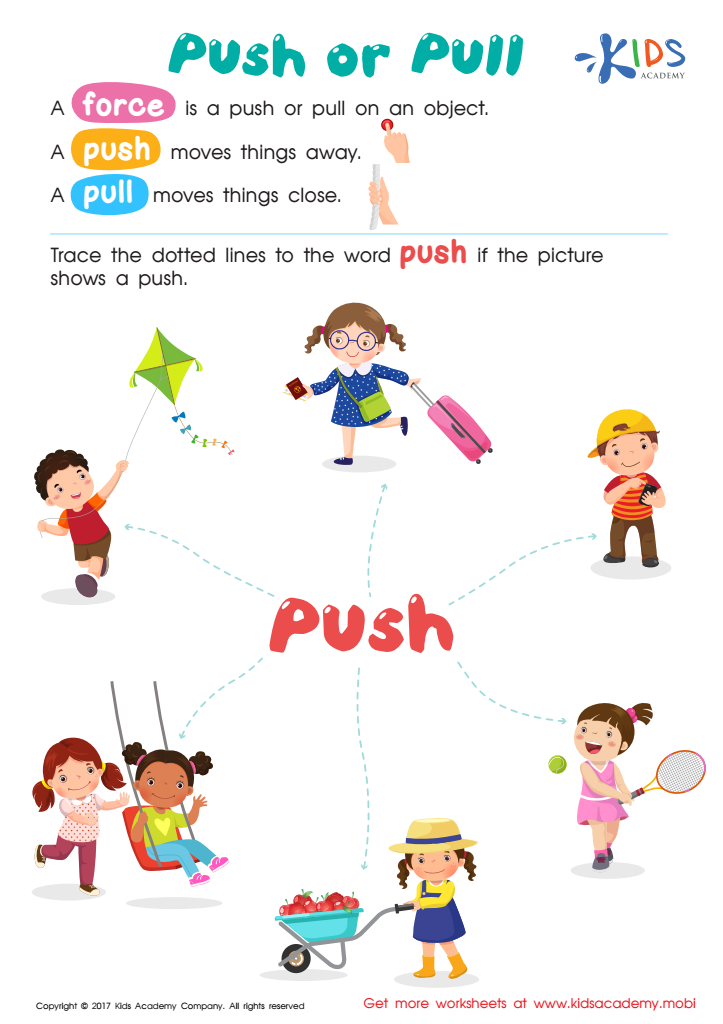
Push or Pull Worksheet
and which involve pulling! With this fun worksheet, your child will learn about force and its simple application in everyday activities. Get them started with Push or Pull! (80 words)
Push or Pull Worksheet
Worksheet
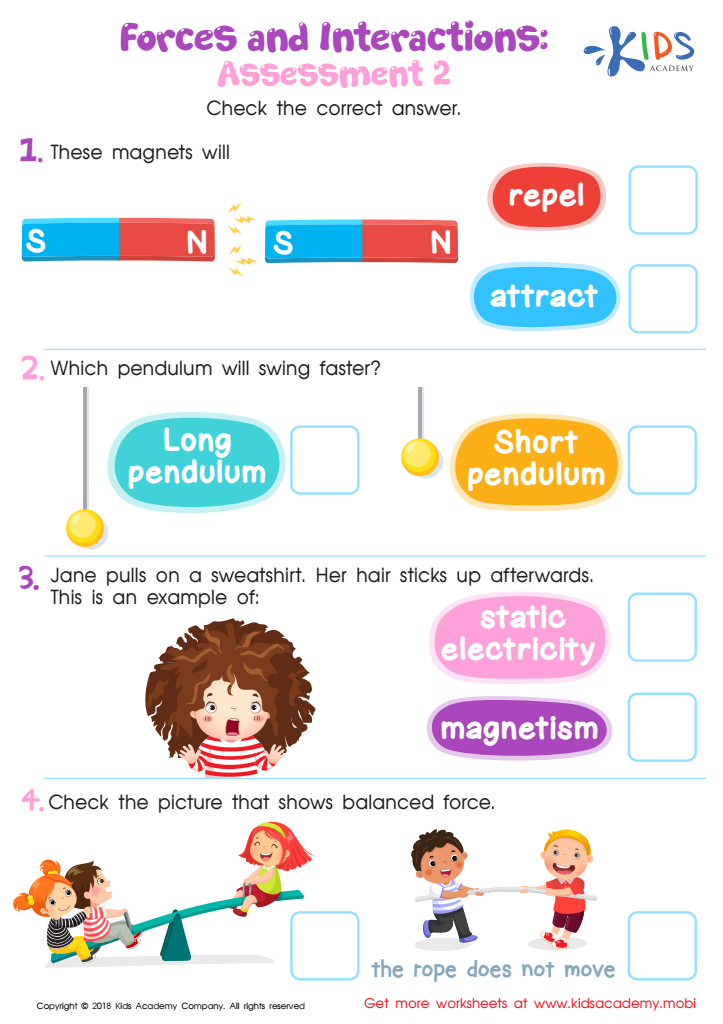
Forces and Interactions Worksheet For 3rd Grade
Review forces and interactions with your 3rd grader! This worksheet helps them recall key concepts like static, magnetic attraction, and pull. Repetition through similar illustrations from previous worksheets aids comprehension of the topic before moving on to other fun physics topics.
Forces and Interactions Worksheet For 3rd Grade
Worksheet
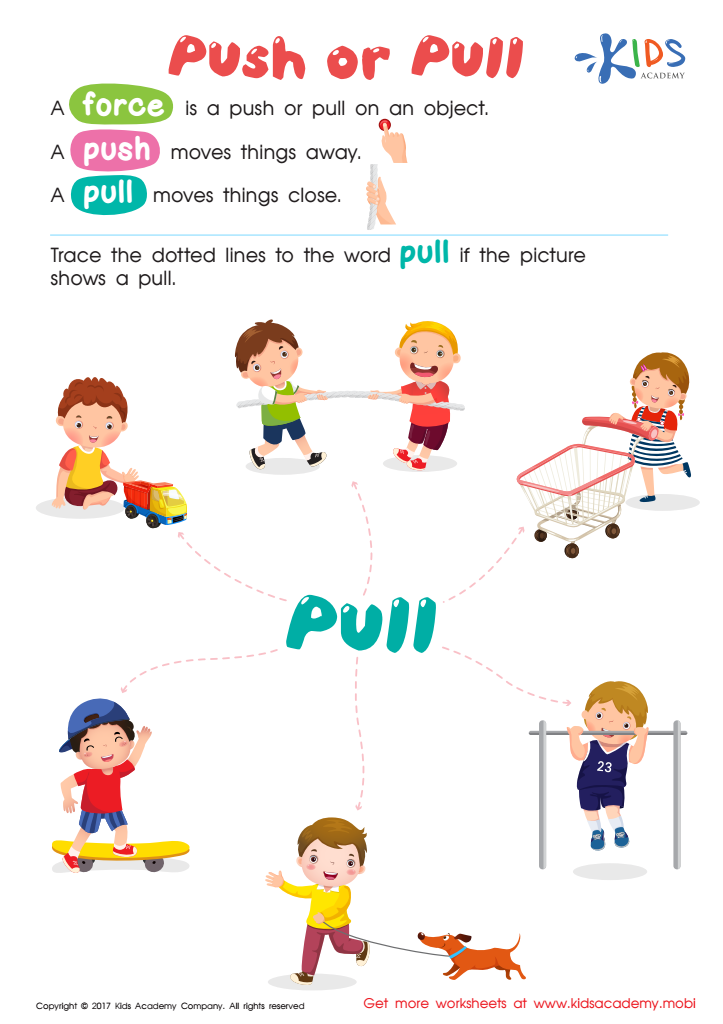
Pull or Push Worksheet
With this fun worksheet, they'll explore physics by sorting objects into categories according to their mode of motion. It's a great way to get them interested in science.
Pull or Push Worksheet
Worksheet
Join Kids Academy for Free
Who is primarily going to use this learning content?






Understanding forces is essential for children ages 5-8 as it lays the groundwork for critical thinking and scientific literacy. At this age, children's natural curiosity drives them to explore the world around them. By introducing concepts of forces—such as push, pull, gravity, and friction—they gain a fundamental understanding of how and why things move. This knowledge promotes inquiry-based learning, encouraging kids to ask questions, make predictions, and test their ideas through simple experiments.
Moreover, comprehending forces supports cognitive development. It enhances problem-solving skills and imagination as children experiment with various materials and scenarios, leading to deeper learning. Engaging in forces science also aids in developing fine motor skills and coordination; activities that involve pushing or pulling objects allow children to apply their understanding in a tangible way.
In addition, knowledge about forces fosters a sense of wonder about the physical world while integrating concepts from math and engineering. Teachers and parents play a pivotal role in facilitating these experiences, from interactive STEM projects to scientific discussions. By making science relatable and fun, they inspire a lifelong love of learning in children, setting a strong foundation for their future academic endeavors. Ultimately, instilling these principles helps children grow into informed and curious individuals.







