Understanding life cycles Science Worksheets for Ages 5-8
8 filtered results
-
From - To
Explore the fascinating world of life cycles with our engaging Science Worksheets designed for ages 5-8! Tailored to nurture curiosity and comprehension, these worksheets enable young learners to discover the stages of development in various organisms, including plants, insects, and animals. Interactive activities and colorful visuals make learning enjoyable while reinforcing critical thinking and observation skills. Encourage interactive discussions and hands-on experiences in the classroom or at home. Ideal for educators and parents alike, our worksheets are perfect for enhancing scientific understanding and ensuring foundational knowledge in life sciences. Dive into the wonders of life cycles and inspire future scientists today!
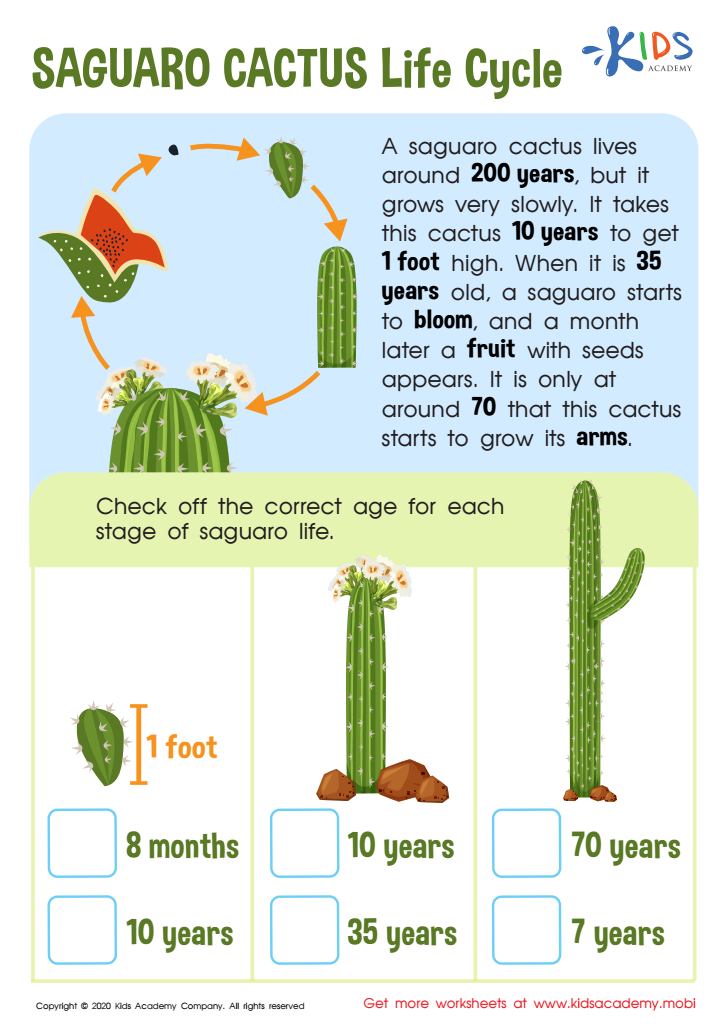
Saguaro Cactus Life Cycle Worksheet
 Assign to My Students
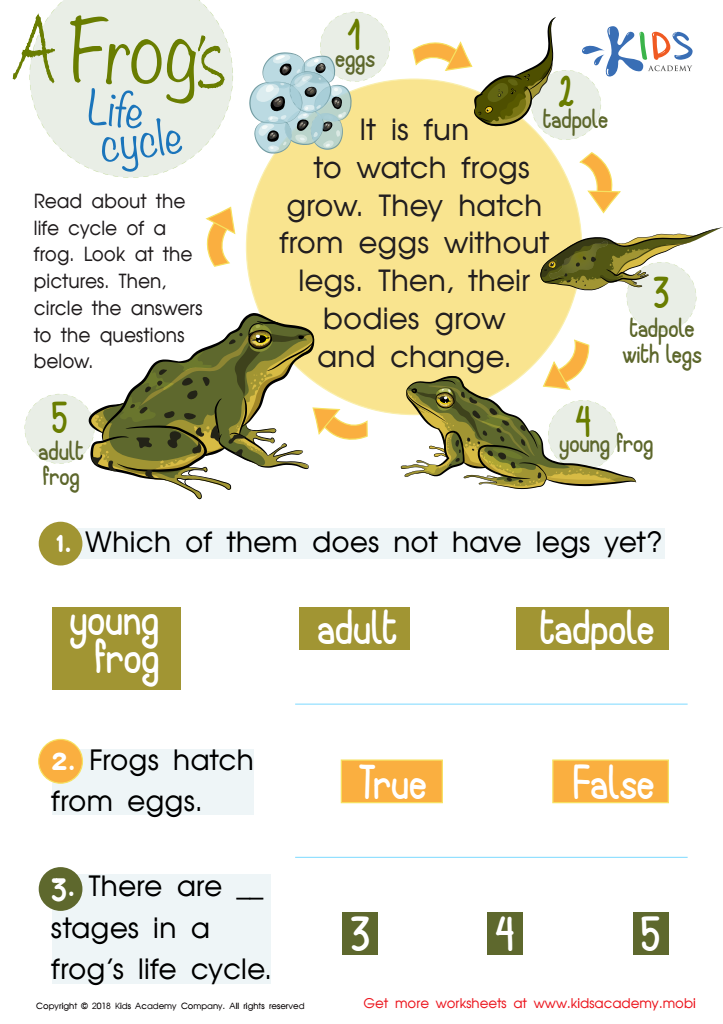
A Frog’s Life Cycle Worksheet
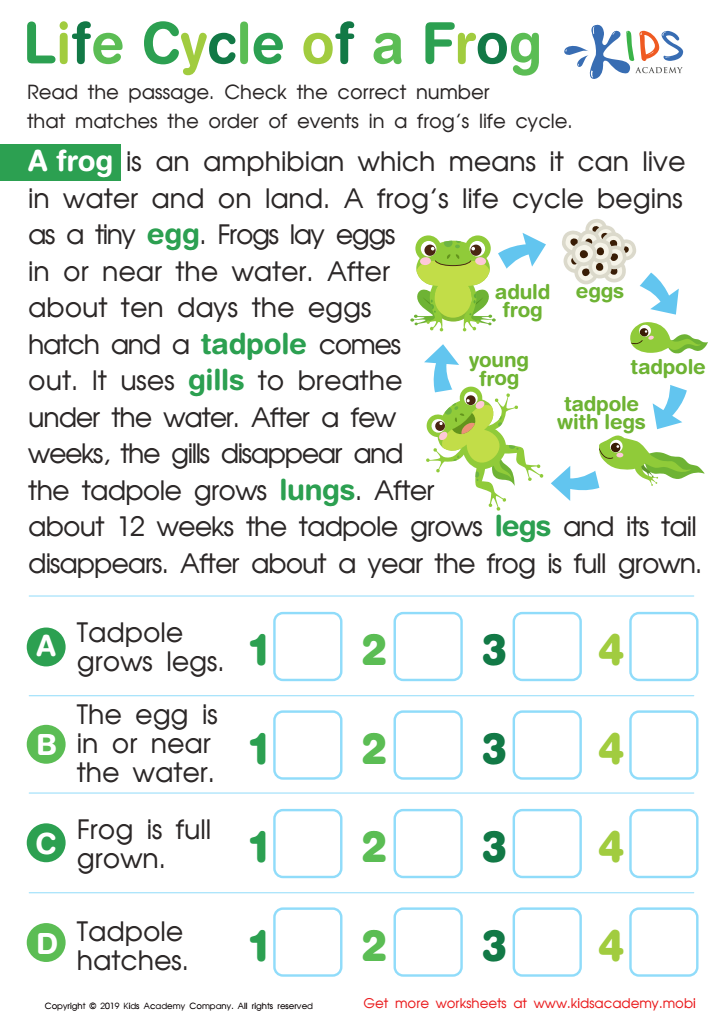
Life Cycle of a Frog Worksheet
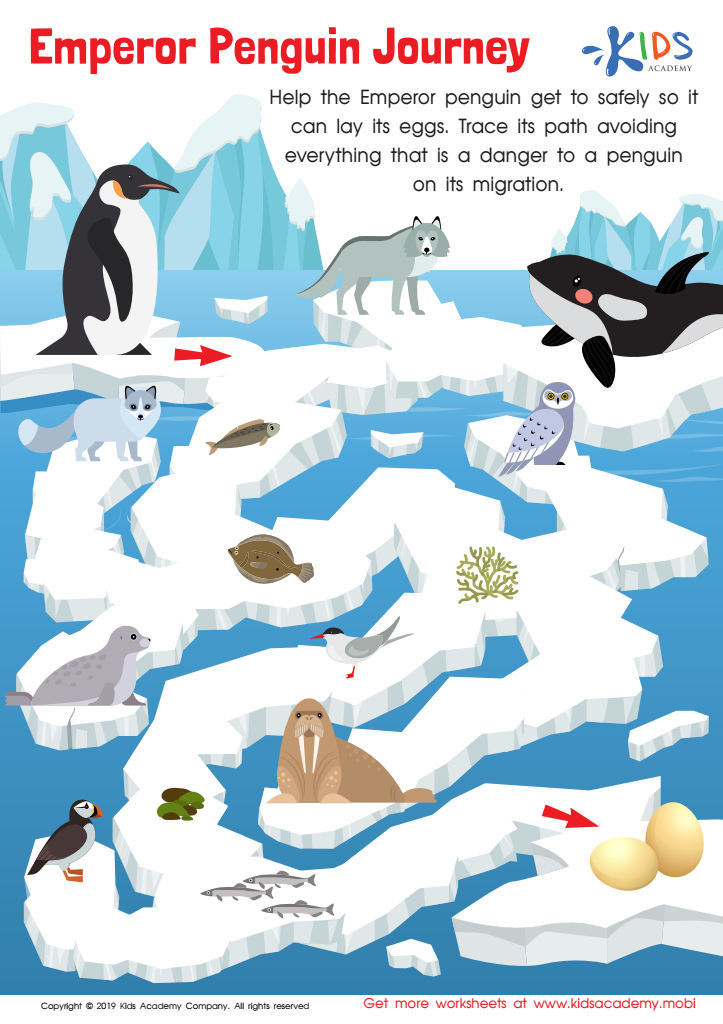
Emperor Penguin Journey Worksheet
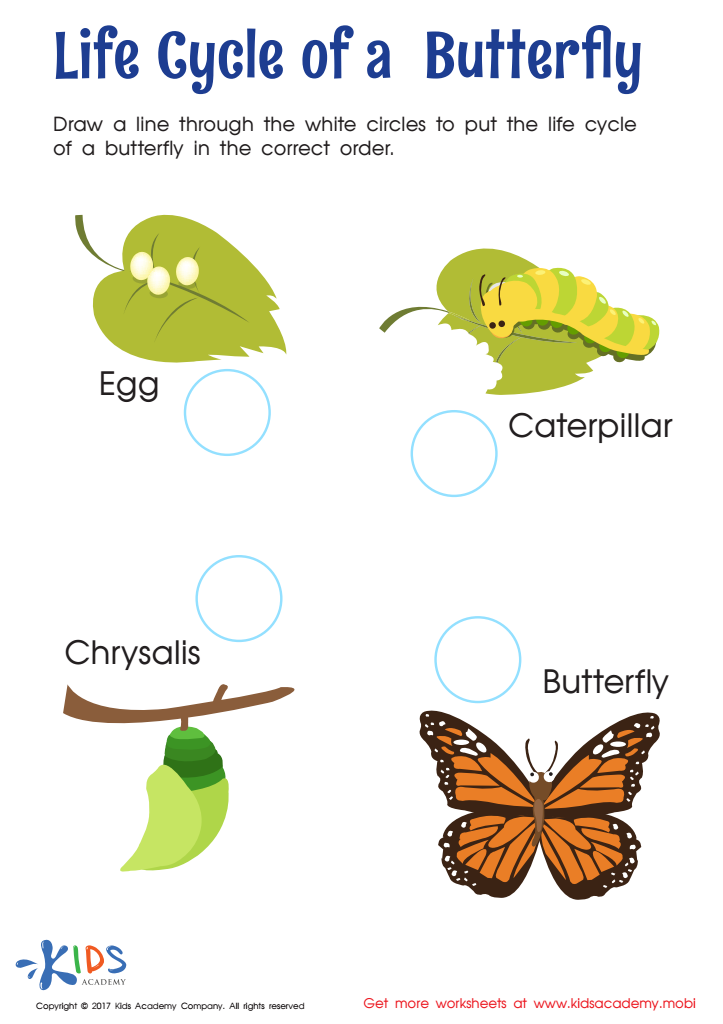
Life Cycle of Butterfly Worksheet
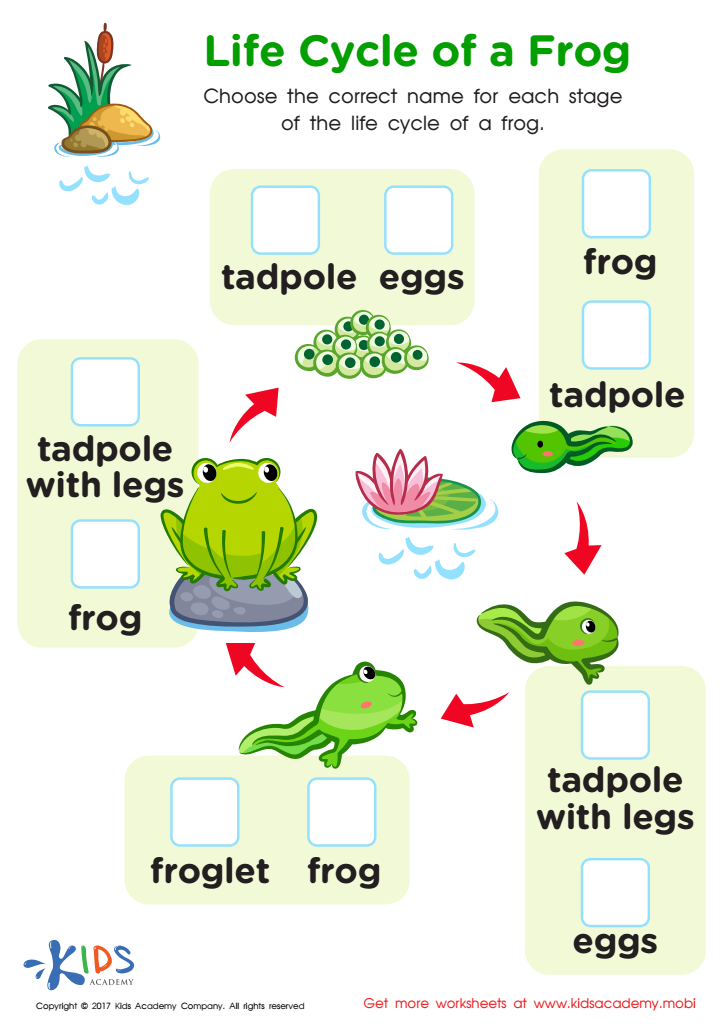
Life Cycle Frog Printable
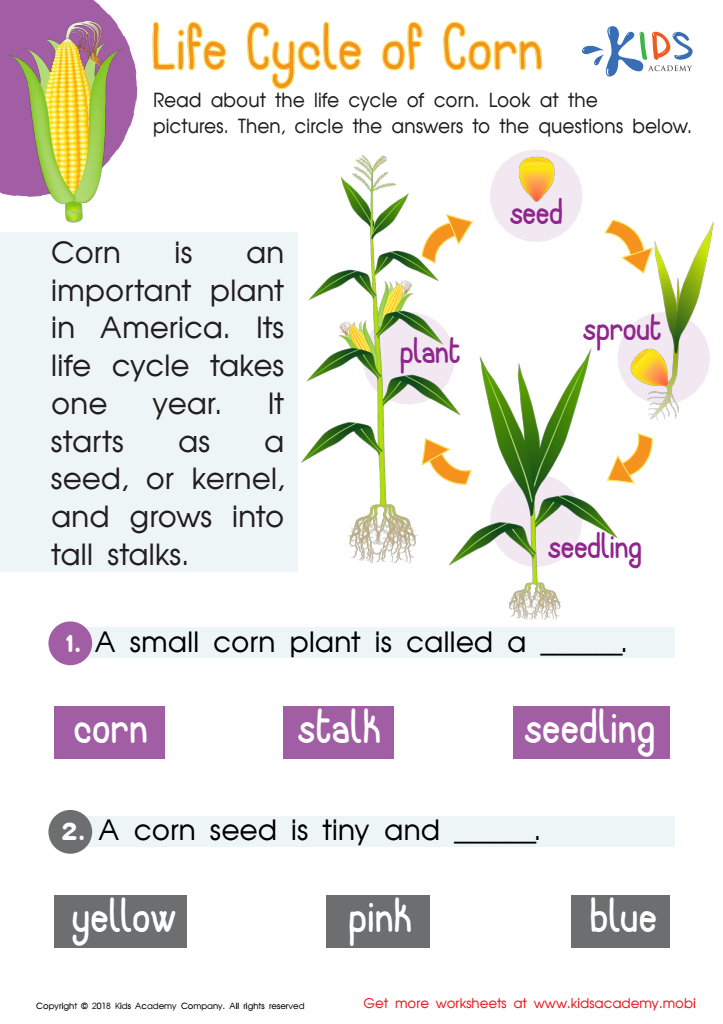
Life Cycle of Corn Worksheet
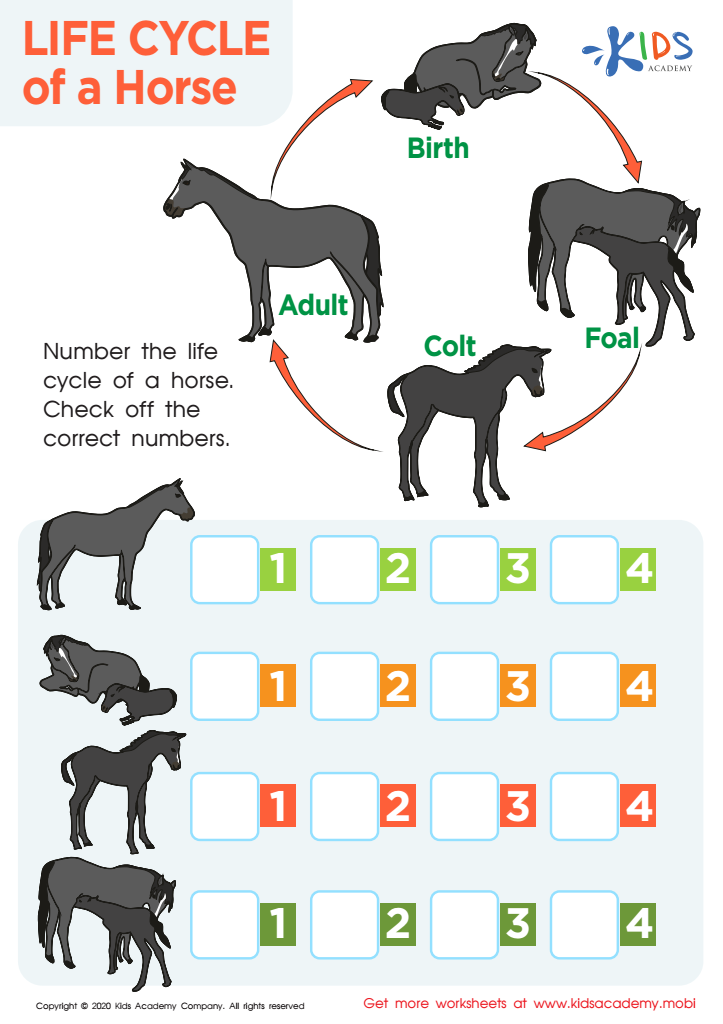
Life Cycle of a Horse Worksheet





.jpg)

Understanding life cycles is crucial for children ages 5-8 as it lays the foundation for their scientific literacy and nurtures their curiosity about the natural world. Teaching about life cycles helps children grasp essential concepts such as growth, change, and reproduction, which are fundamental to all living organisms. By exploring how plants and animals develop over time, they learn to appreciate the interconnectedness of life.
For parents and teachers, fostering this understanding encourages observation and inquiry. Children may study the life cycle of a butterfly, from egg to caterpillar to chrysalis and finally to a butterfly. This firsthand observation cultivates critical thinking skills as children ask questions, make predictions, and draw conclusions.
Moreover, understanding biological processes promotes environmental awareness. Encouraging respect for nature helps children recognize the importance of ecosystems, conservation, and biodiversity at an early age.
Additionally, engaging with life cycles can enhance literacy and numeracy skills through storytelling, sequencing, and data collection. Overall, a deep understanding of life cycles enriches children's academic experience, supports their emotional development by nurturing empathy towards living beings, and sets a strong foundation for future science learning.







