Understanding magnetism Science Worksheets for Ages 5-8
4 filtered results
-
From - To
Explore the fascinating world of magnetism with our "Understanding Magnetism Science Worksheets" designed for children ages 5-8. These engaging and interactive worksheets introduce young learners to the basics of magnetism, including concepts like attraction and repulsion, magnetic poles, and everyday magnetic applications. Through fun activities and colorful illustrations, kids will develop critical thinking skills while enhancing their understanding of scientific principles. Perfect for classroom or home use, our worksheets support STEM education and inspire curiosity about the natural world. Unleash your child's potential in science and watch their imagination soar with our captivating magnetism resources!
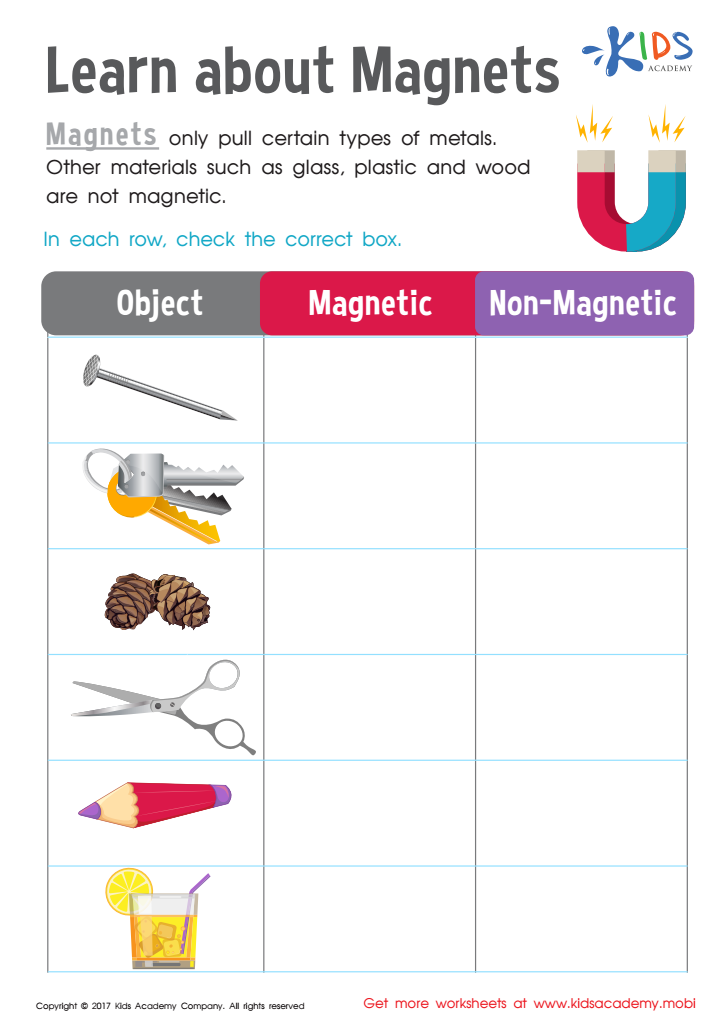
Magnetic Or Not Worksheet
 Assign to My Students
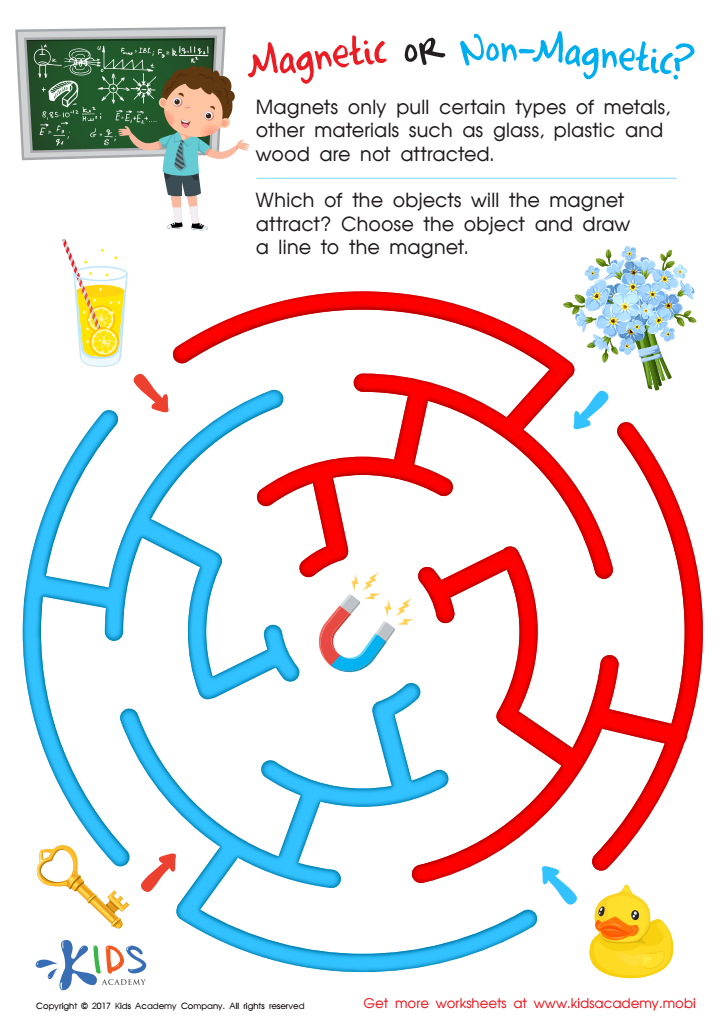
Magnetic or Non–Magnetic Worksheet
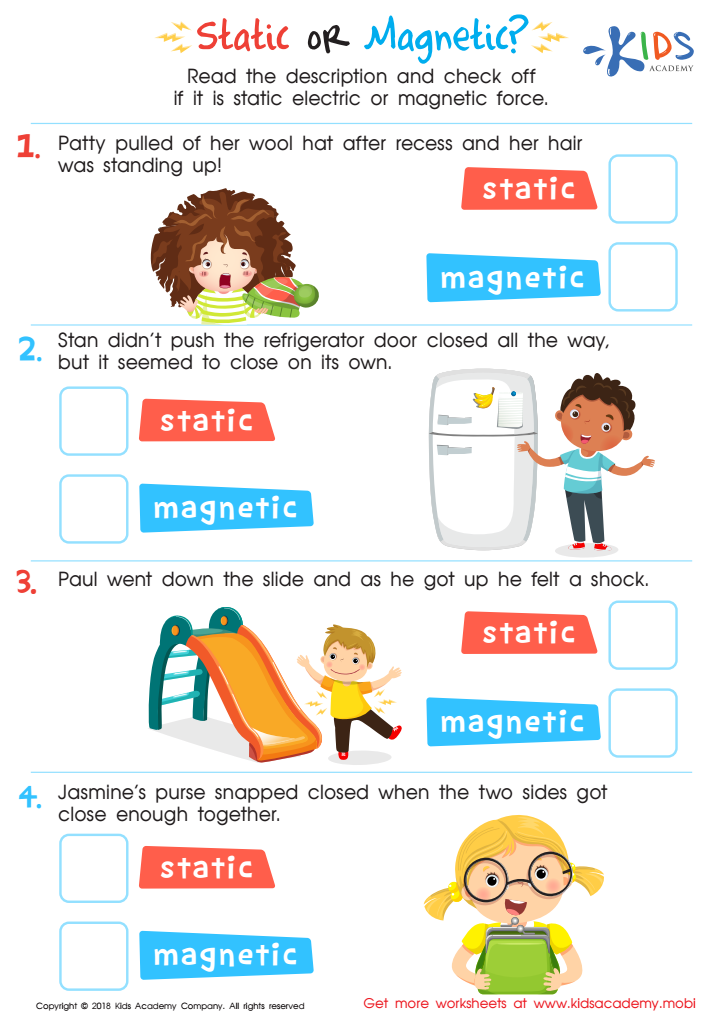
Static or Magnetic Printable Worksheet
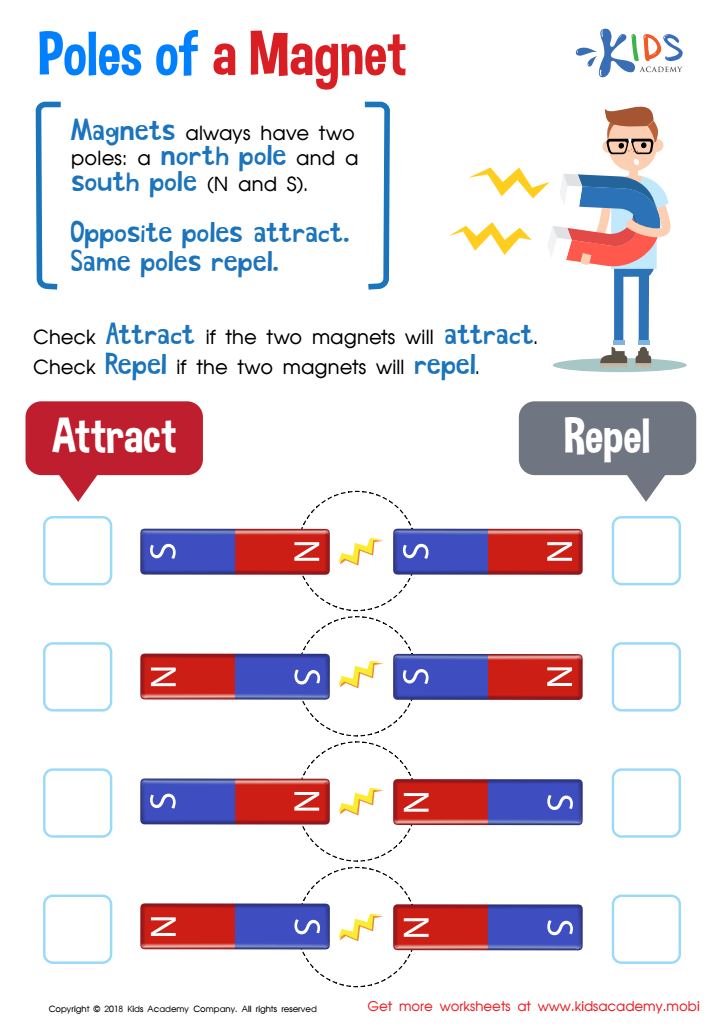
Magnet Poles Attract or Repel Worksheet







Understanding magnetism is essential for children aged 5-8 as it forms the foundation for important scientific concepts and encourages curiosity about the natural world. At this stage, children are naturally inquisitive, eager to explore and engage with their environments. Introducing magnetism through hands-on activities, such as using magnets to experiment or create simple machines, fosters critical thinking and problem-solving skills.
Moreover, learning about magnetism helps young learners grasp fundamental principles of physics, connecting concepts like forces and motion in a tangible manner. As they investigate how magnets attract or repel objects, children cultivate a sense of exploration and develop a lifelong love for science.
From a broader perspective, understanding magnetism also plays a role in literacy and language development. Discussions about scientific phenomena enhance vocabulary and communication skills, enabling children to articulate their observations clearly. For parents and teachers, nurturing this knowledge allows them to model a positive relationship with science, showing that learning can be fun and dynamic. Encouraging early engagement with scientific concepts like magnetism not only empowers children academically but also inspires future innovators and critical thinkers. Thus, it's crucial to integrate magnetism into learning experiences for young children.







