Understanding matter Science Worksheets for Ages 5-8
3 filtered results
-
From - To
Explore our engaging "Understanding Matter Science Worksheets" designed specifically for children ages 5-8! These interactive resources make learning about matter fun and accessible, helping young learners grasp fundamental concepts such as solids, liquids, and gases. With hands-on activities and age-appropriate visuals, children will develop critical thinking skills while exploring the properties and states of matter. Perfect for classroom use or home learning, these worksheets encourage curiosity and foster a love for science. Dive into the fascinating world of matter and enhance your child’s science knowledge today with our carefully crafted worksheets! Visit us now for a closer look.
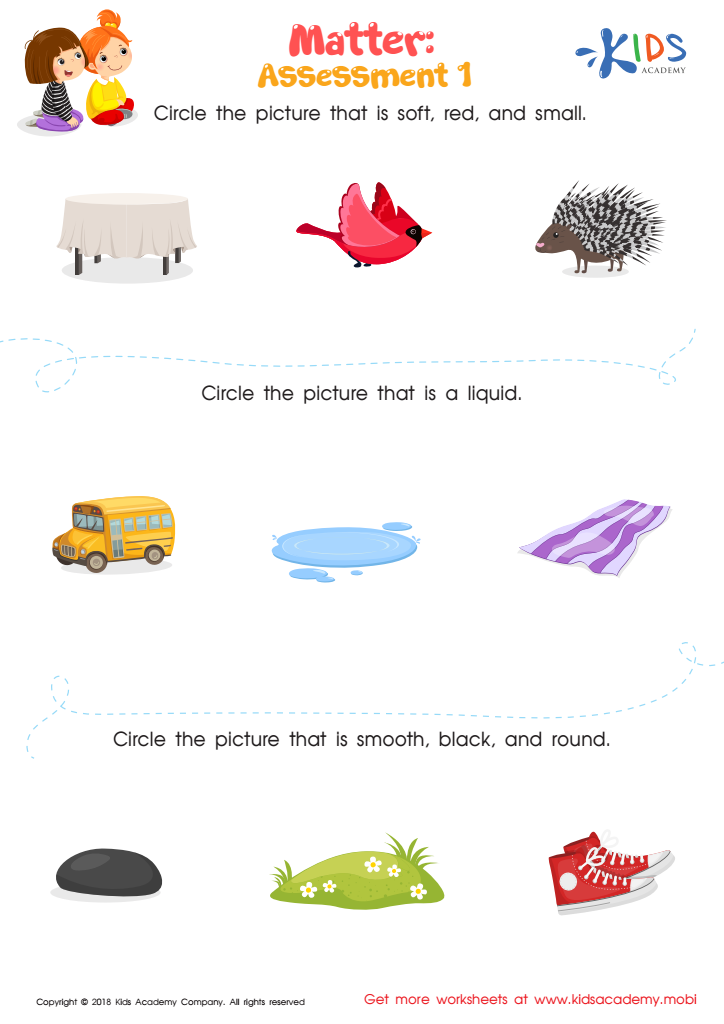
Matter: Assessment 1 Worksheet
 Assign to My Students
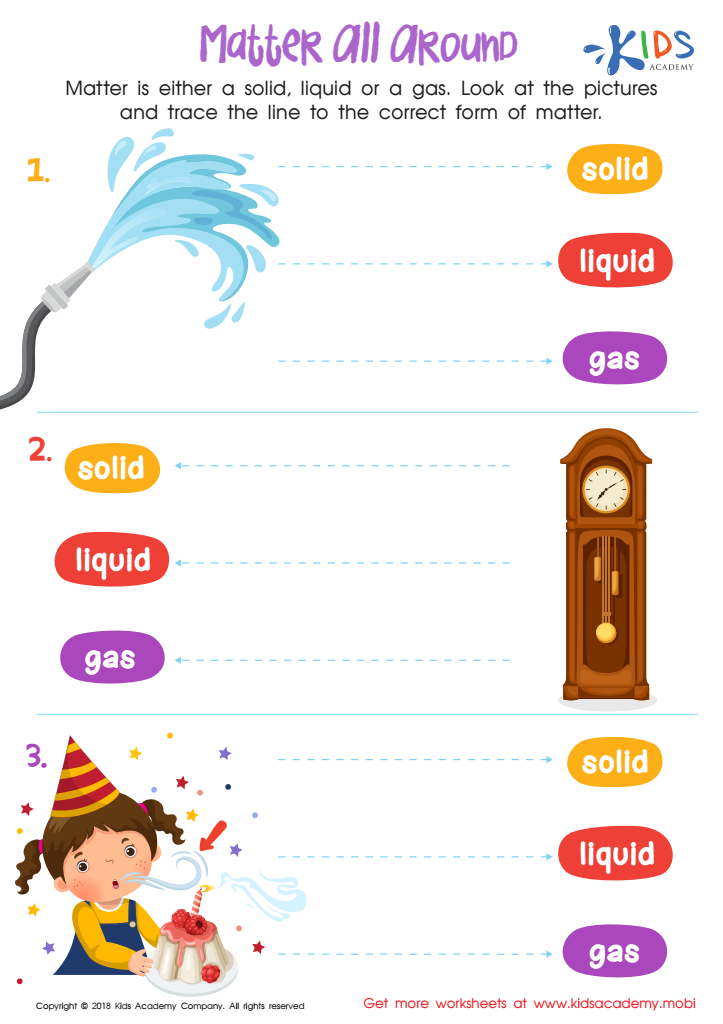
Matter all Around Worksheet
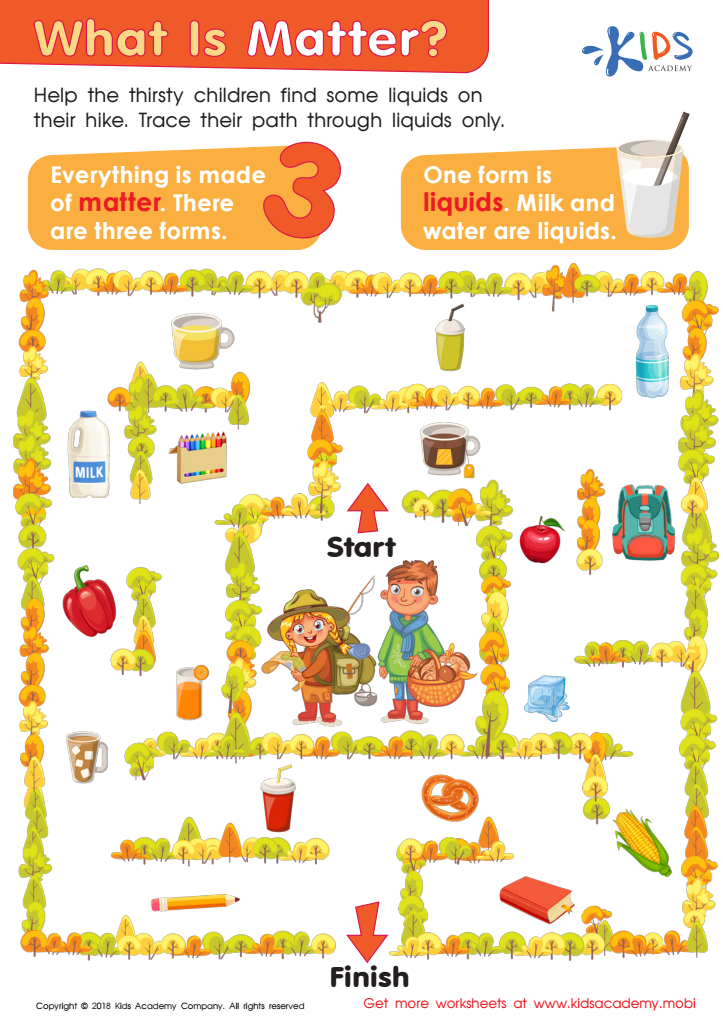
What Is Matter? Worksheet








Understanding matter is a fundamental aspect of science that is crucial for young learners aged 5-8. At this stage, children are naturally curious about their world, and learning about matter—what it is, its properties, and its states (solid, liquid, gas)—helps nurture that curiosity. Knowledge of matter provides the foundation for scientific thinking and reasoning, enabling children to ask questions, conduct simple experiments, and make observations.
For parents and teachers, fostering an understanding of matter enhances children's cognitive development. Engaging with science encourages critical thinking and problem-solving skills, vital for their future academic success. Additionally, it connects seamlessly with real-world experiences, allowing children to explore concepts through everyday situations—such as cooking, playing with toys, or observing weather changes.
Moreover, early science education promotes a positive relationship with learning. Children who are encouraged to explore and inquire about the material world develop a lifelong love for science. As they grasp these essential concepts, they become more confident and enthusiastic learners, laying the groundwork for future educational endeavors. Ultimately, understanding matter empowers children, helping them become inquisitive thinkers and informed individuals in our increasingly scientific world.







