
Understanding moon phases Science Worksheets for Ages 5-8
3 filtered results
Difficulty Level
Grade
Age
-
From - To
Subject
Activity
Standards
Discover our engaging "Understanding Moon Phases Science Worksheets" designed specifically for ages 5-8! These interactive worksheets are perfect for young learners to explore the fascinating world of the moon and its different phases. Children will enjoy hands-on activities, including identifying moon phases, coloring diagrams, and answering fun questions that spark their curiosity about astronomy. Our resources are aligned with early science standards, promoting critical thinking and a love for learning. These worksheets make teaching about the moon enjoyable and accessible, encouraging kids to observe the night sky and gain a deeper understanding of this celestial body. Get started today!
Favorites
With answer key
Interactive
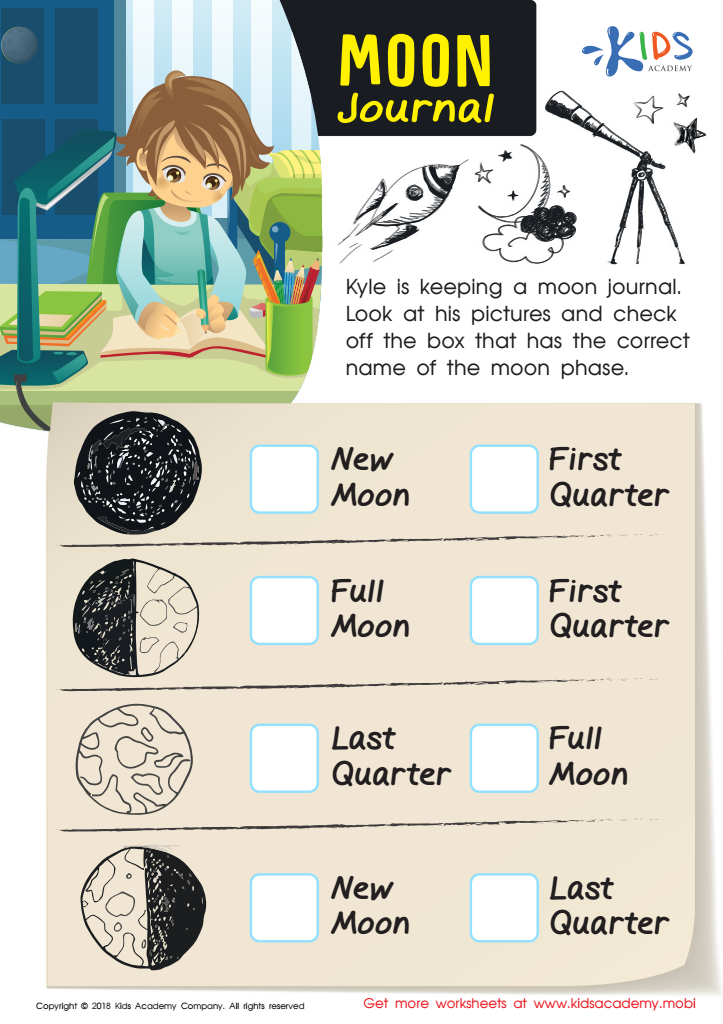
Moon Journal Worksheet
Observe the moon and its 8 phases with your child by downloading this free PDF worksheet from Kids Academy! Review the moon phases with them then help them label Kyle's moon journal. Select the right moon phase for each picture to complete the page!
 Assign to My Students
Moon Journal Worksheet
Worksheet
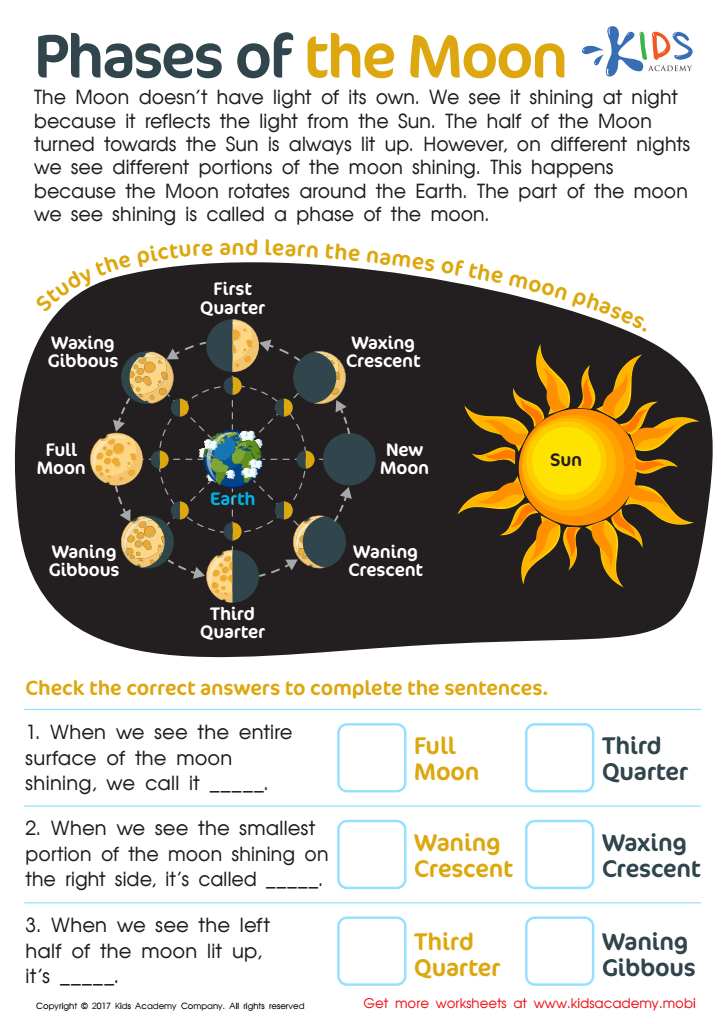
Phases of The Moon Worksheet
It'll show kids the fascinating phases and journey the moon takes around Earth. They'll be amazed to learn it's not always shining!
Phases of The Moon Worksheet
Worksheet
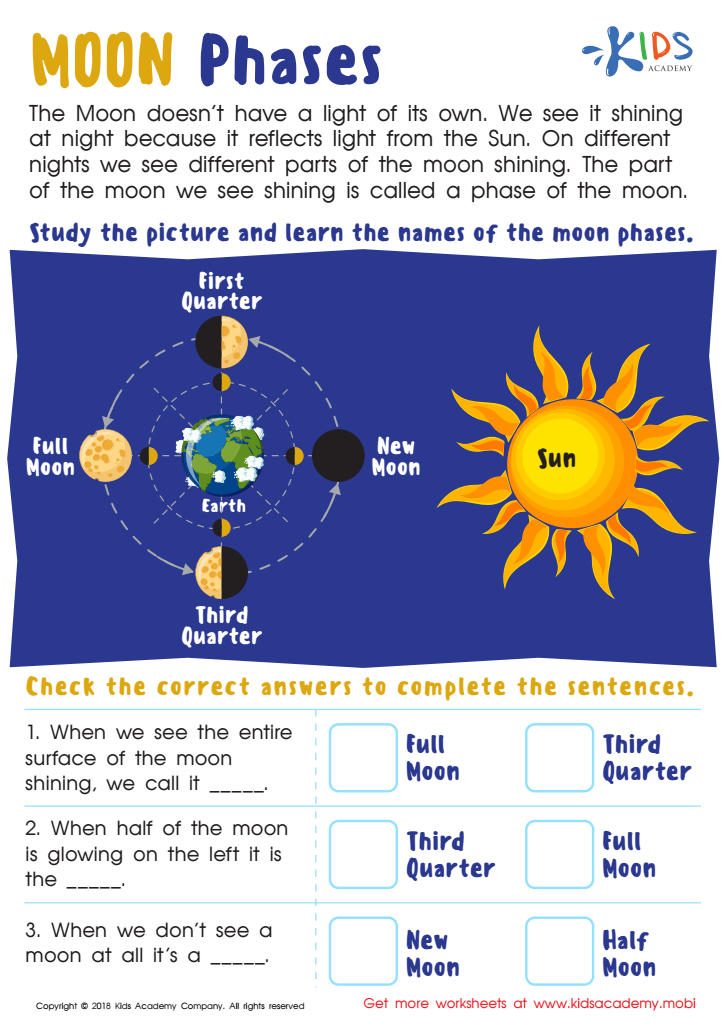
Moon Phases Worksheet
Gaze up at the night sky and the moon's appearance may change from night to night. Encourage your child to learn more about the sun, the moon, and space with this science worksheet. Have them read the text then study the picture. Finally, read the sentences and check the answers to identify the moon's phases.
Moon Phases Worksheet
Worksheet
Join Kids Academy for Free
Who is primarily going to use this learning content?






Understanding moon phases is essential for children aged 5-8, and parents and teachers should prioritize this learning for several reasons. First, it fosters a sense of curiosity about the natural world. The moon is a constant presence in our skies, and learning about its phases promotes scientific inquiry, encouraging young learners to ask questions and seek answers about their environment.
Second, understanding moon phases helps children grasp fundamental scientific concepts like cycles, gravity, and natural phenomena. It establishes a foundation for critical thinking and an understanding of astronomy, which can be invaluable in a child’s broader education.
Additionally, integrating moon phase study into early education supports cross-disciplinary learning. Activities could include art projects that incorporate lunar phases, storytelling, and even math through tracking changes over time. Such cross-curricular lessons make learning more engaging and relatable.
Finally, learning about the moon can have emotional and social benefits. Families can enjoy shared experiences like moon-gazing or building dioramas, fostering bonding and communication. By engaging children with the moon's mysteries, parents and teachers nourish a lifelong love for science and the wonders of the universe, laying the groundwork for knowledgeable and curious future generations.







