Analytical skills Plants and Animals Worksheets for Ages 5-8
5 filtered results
-
From - To
Enhance your child's analytical skills with our engaging Plants and Animals Worksheets, designed for ages 5-8. These worksheets provide a fun and interactive way for young learners to explore the fascinating world of nature. Through a variety of activities, children will analyze information about different plant and animal species, develop critical thinking abilities, and improve their comprehension skills. Our resources encourage curiosity and hands-on learning, making science enjoyable and accessible. Each worksheet is tailored to support budding scientists as they connect with living organisms and their environments. Explore our collection today and watch your child grow into a confident thinker!
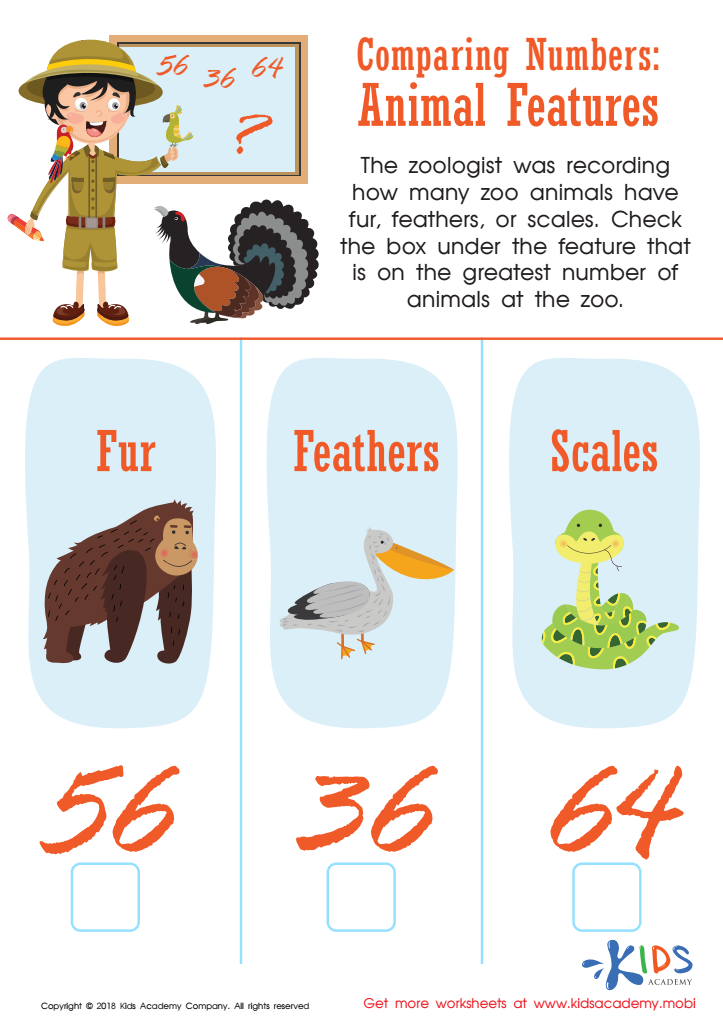
Animal Features Worksheet
 Assign to My Students











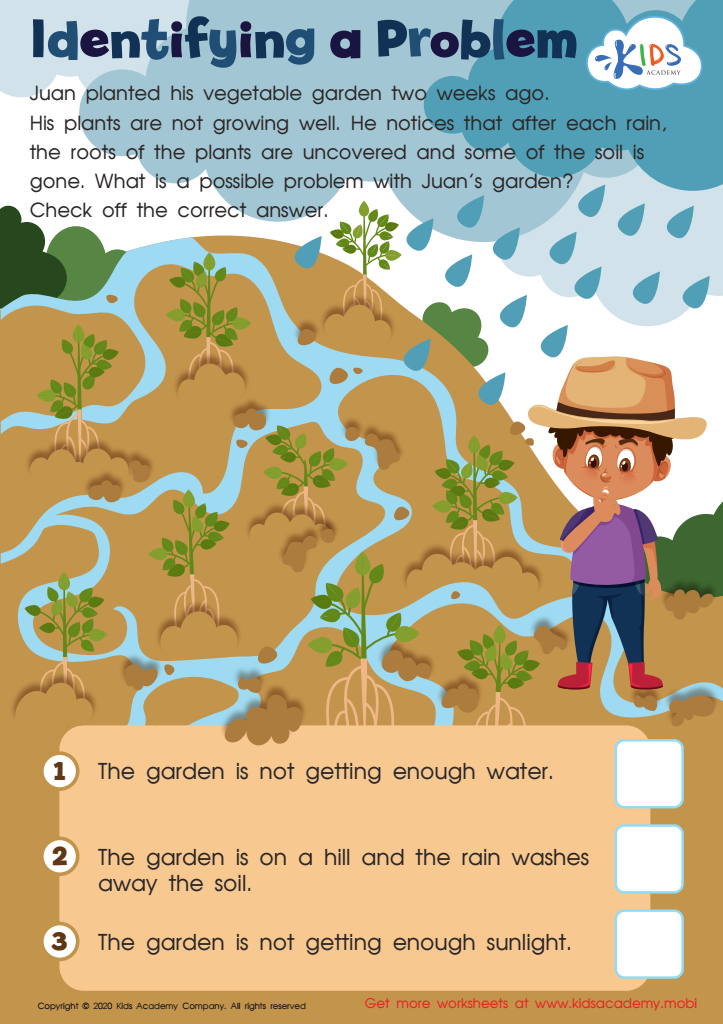
Identifying a Problem Worksheet
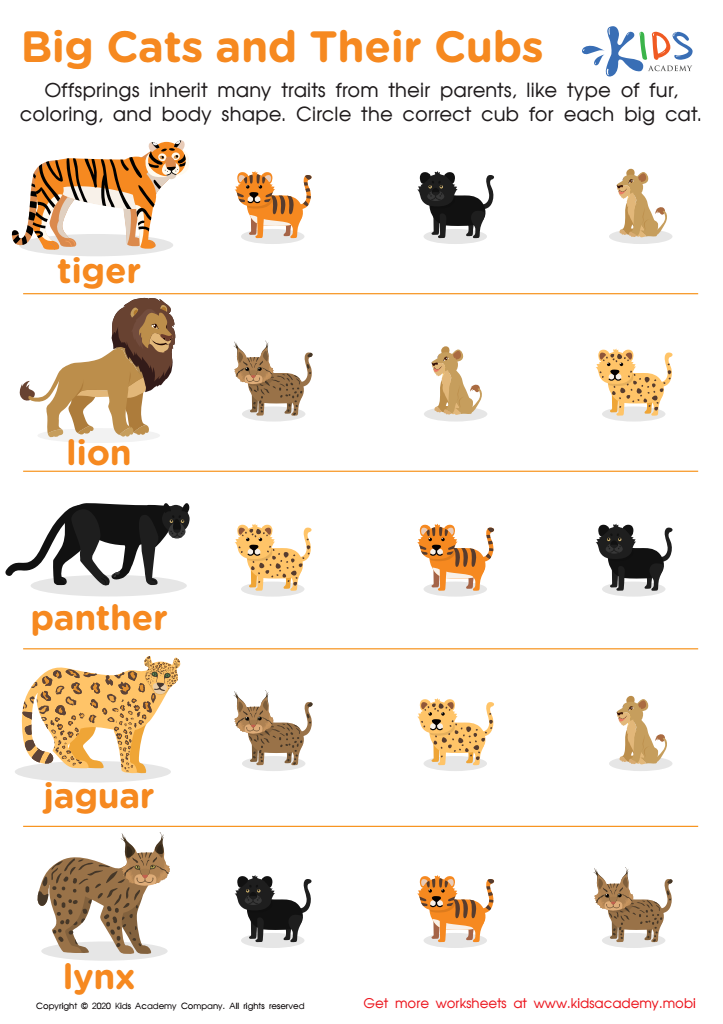
Big Cats and Their Cubs Worksheet
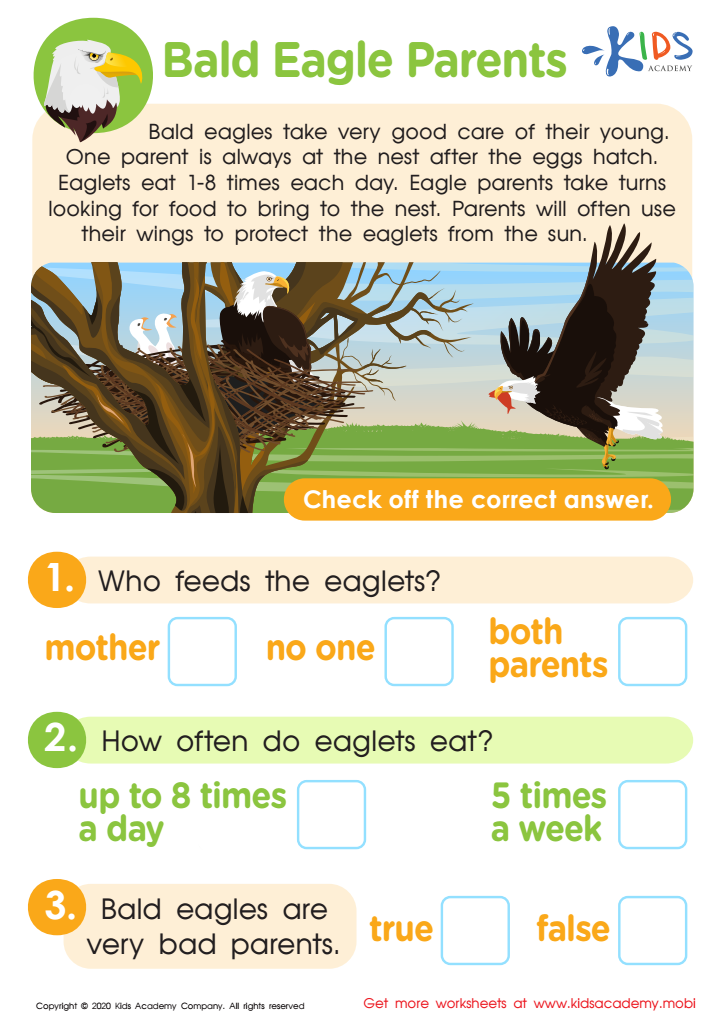
Bald Eagle Parents Worksheet
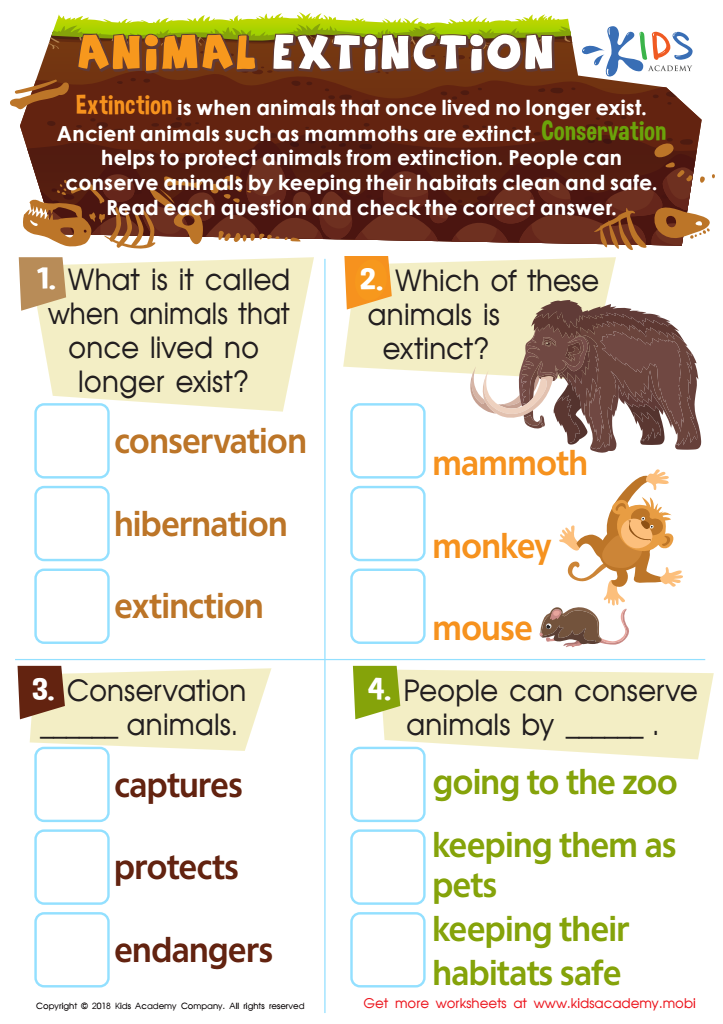
Animal Extinction Worksheet








Analytical skills are crucial for young learners, particularly when exploring complex topics like plants and animals. For ages 5-8, these foundational skills pave the way for critical thinking and problem-solving. When children engage with the natural world, they learn to observe, ask questions, and draw conclusions—skills central to analytical thinking.
Understanding plants and animals enhances children's curiosity about their environment. By analyzing various species, they learn to categorize, compare, and understand the relationships within ecosystems, fostering a deeper appreciation for biodiversity. This knowledge can inspire environmental stewardship from a young age.
Furthermore, engaging with nature boosts cognitive development. Activities like observing plant growth or animal behavior encourage students to form hypotheses and investigate outcomes. As they learn to make predictions and gather evidence, they develop their reasoning capabilities.
Parents and teachers play a pivotal role in this learning process. By fostering an environment that nurtures inquiry and exploration, they help children build essential analytical skills. These skills, in turn, contribute to academic success across subjects, ultimately preparing young learners for future challenges in a rapidly changing world. Investing time in understanding plants and animals not only enriches children's lives but also empowers them to become aware and informed global citizens.








