Observation skills Plants and Animals Worksheets for Ages 5-8
3 filtered results
-
From - To
Enhance your child's curiosity with our "Observation Skills Plants and Animals Worksheets for Ages 5-8." Designed by education experts, these worksheets stimulate young minds through engaging activities focused on plants and animals. Each worksheet encourages kids to observe, inquire, and document their discoveries, bolstering essential scientific skills. With colorful illustrations and guided prompts, children will happily dive into learning while developing critical thinking and keen observation abilities. Ideal for both classroom and at-home learning, these worksheets provide a fun, interactive way to explore the natural world and foster a lifelong love for science. Unlock your child's potential today!
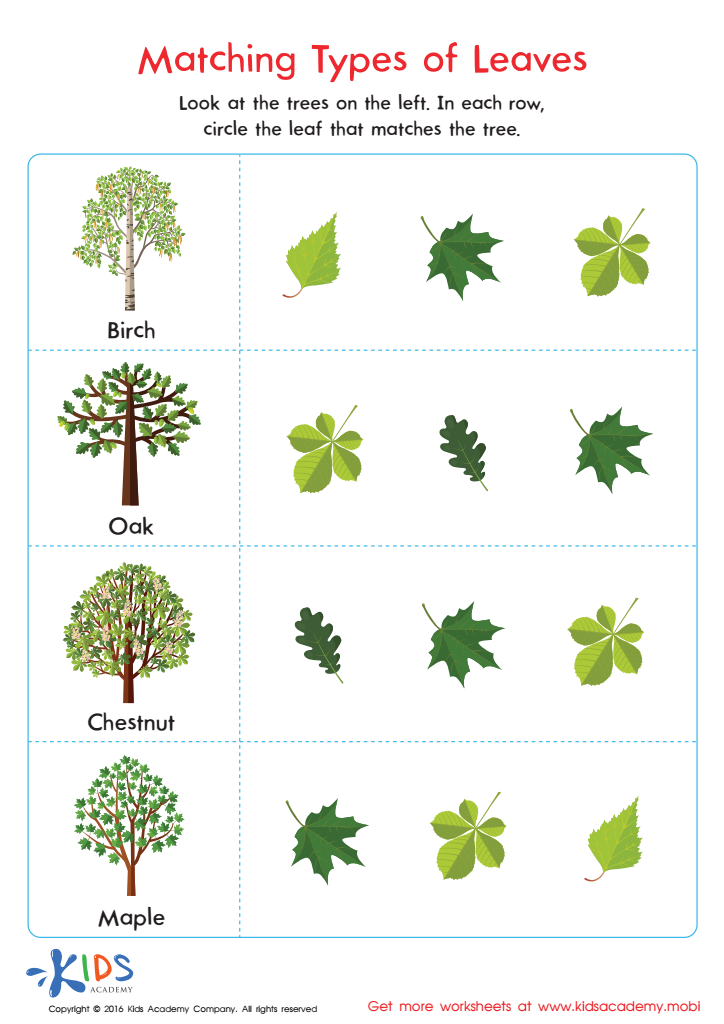
Matching Types of Leaves Printable
 Assign to My Students











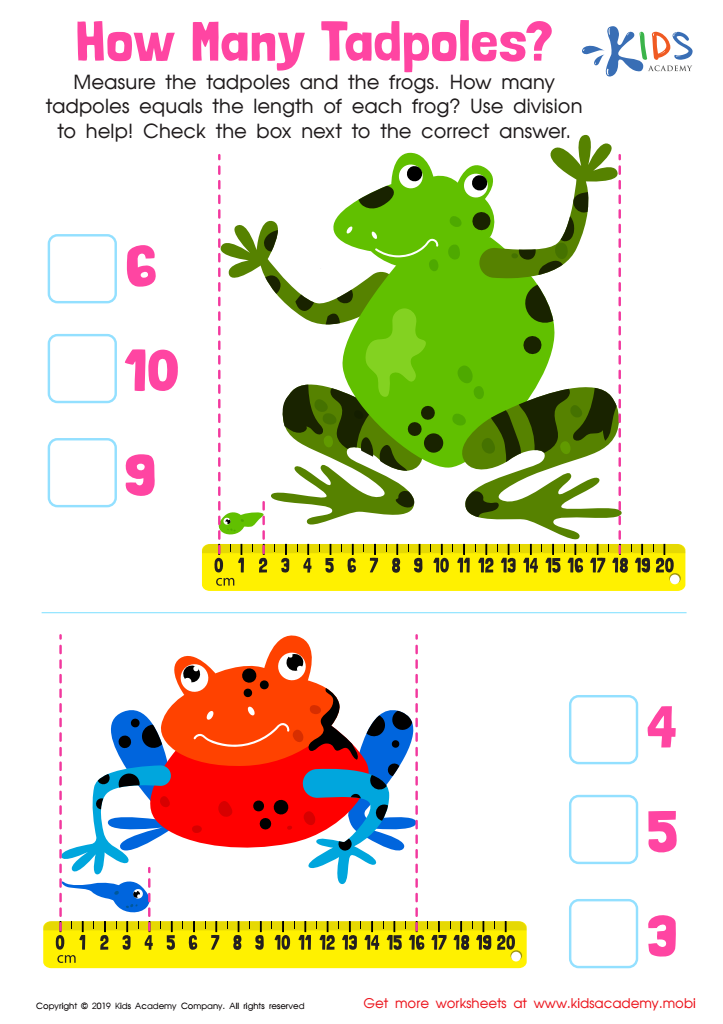
How Many Tadpoles Worksheet
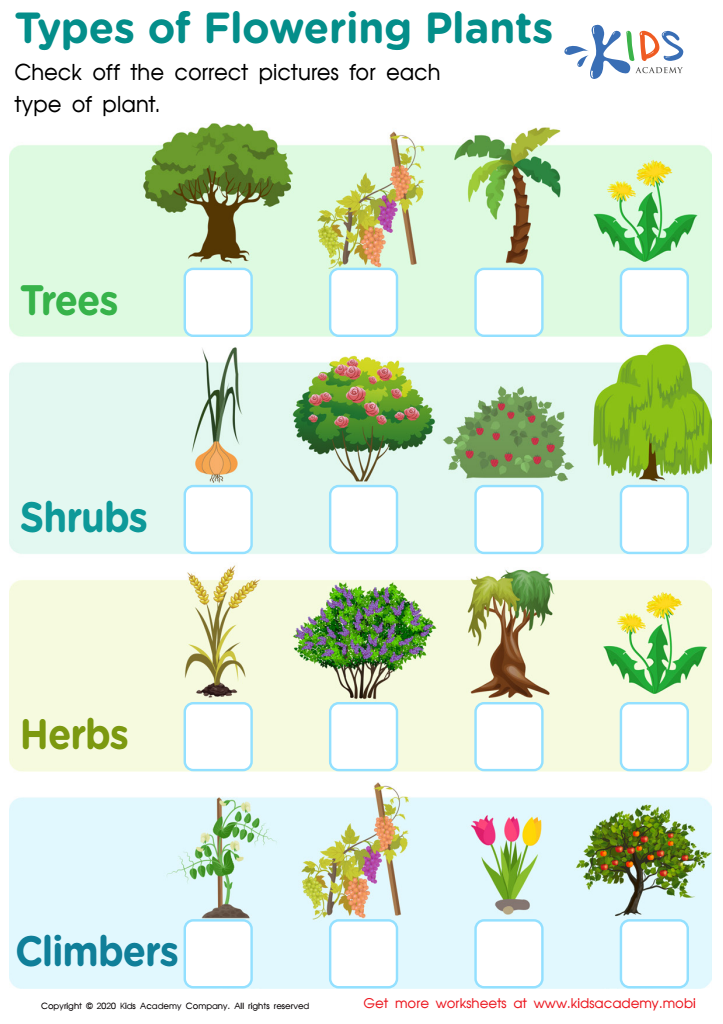
Types of Flowering Plants Worksheet








Developing observation skills in children aged 5-8 is crucial for their cognitive growth and awareness of the world around them, especially concerning plants and animals. At this formative stage, children are naturally curious, and their ability to notice details helps them better understand and connect with their environment. By enhancing observation skills, kids learn to pay close attention, which is the foundation of scientific thinking and problem-solving abilities.
When children observe plants, they notice aspects like color, shape, texture, and growth patterns. This engagement not only fosters an appreciation for nature but also enhances their vocabulary, as they learn new terms and concepts. Similarly, observing animals teaches them about diversity in behaviors, habitats, and needs of different species. These observations help develop empathy, as children recognize the living needs of plants and animals, and learn about the importance of environmental conservation.
Moreover, honing these skills can improve children's focus and patience. Teachers and parents who emphasize observation can encourage children to document their findings through drawings, journals, or storytelling, thereby integrating creative expression with scientific inquiry. This early cultivation of observation lays a strong groundwork for lifelong learning, fostering inquisitive minds keen to explore and protect their natural world.








