Historical Knowledge Social Studies Worksheets for Ages 5-8 - Page 2
26 filtered results
-
From - To
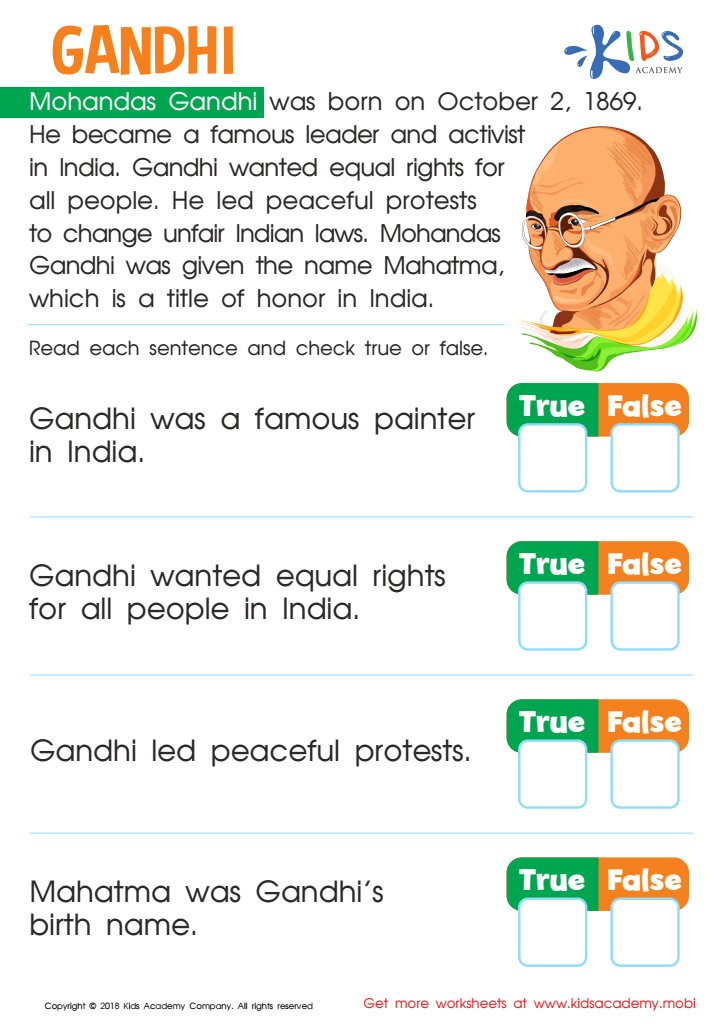
Gandhi Worksheet
 Assign to My Students
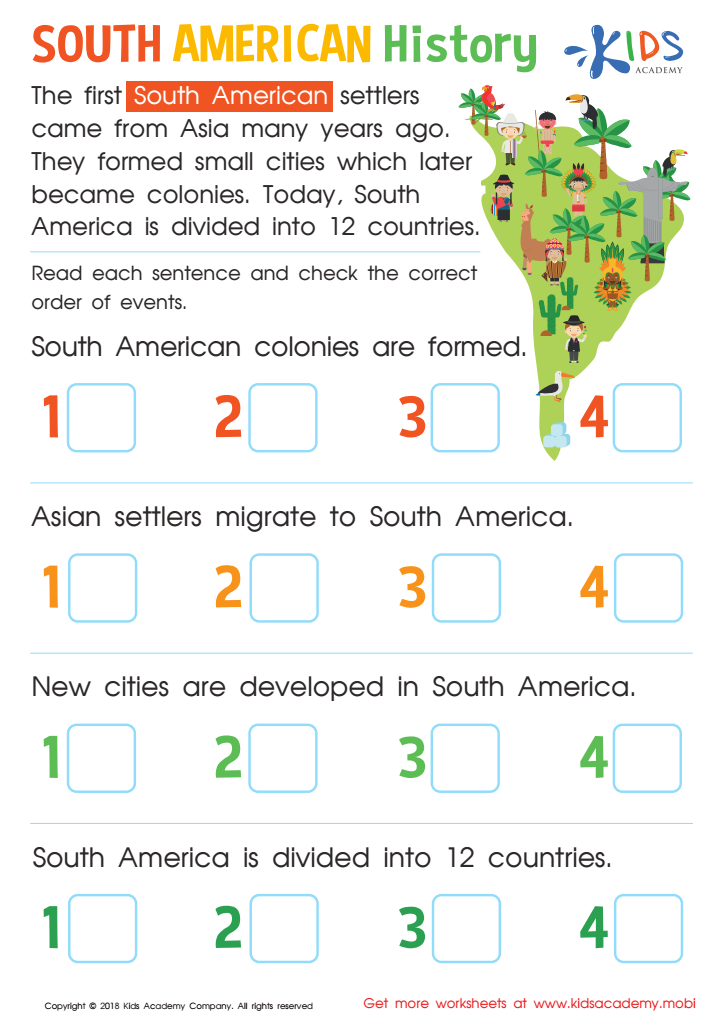
South American History Worksheet








Parents and teachers should prioritize historical knowledge in social studies for children aged 5-8 as it lays a crucial foundation for their understanding of themselves and the world. Early exposure to history fosters a sense of identity and belonging, helping children comprehend their cultural backgrounds and family traditions. This understanding nurtures empathy, as children learn about diverse perspectives and experiences, promoting respect for others.
At this age, children are naturally curious, making it an ideal time to introduce them to important historical events, figures, and concepts. Engaging young learners in stories of the past encourages critical thinking and sparks their imaginations. It empowers them to ask questions and explore connections between historical events and their own lives.
Moreover, teaching history early helps cultivate informed citizens. By learning about historical events, children are better equipped to understand current social issues and participate thoughtfully in their communities. Encouraging discussions about the past also enhances their communication skills.
In summary, prioritizing historical knowledge in social studies equips young children with the tools to understand their world, build empathy, foster critical thinking, and ultimately prepare them for active and informed citizenship in the future.








