Understanding timelines Social Studies Worksheets for Ages 5-8
5 filtered results
-
From - To
Explore our engaging "Understanding Timelines" Social Studies worksheets designed for children aged 5-8. These activities help young learners grasp the concept of time by visualizing events in sequence. With vibrant illustrations and relatable examples, students will enjoy tracing personal, historical, and future events, enhancing their comprehension of chronological order. These worksheets not only build foundational skills in history and social studies but also foster critical thinking and storytelling abilities. Perfect for classroom use or home practice, our resources ensure that children can link significant occurrences across time, making learning both fun and educational. Start your timeline journey today!
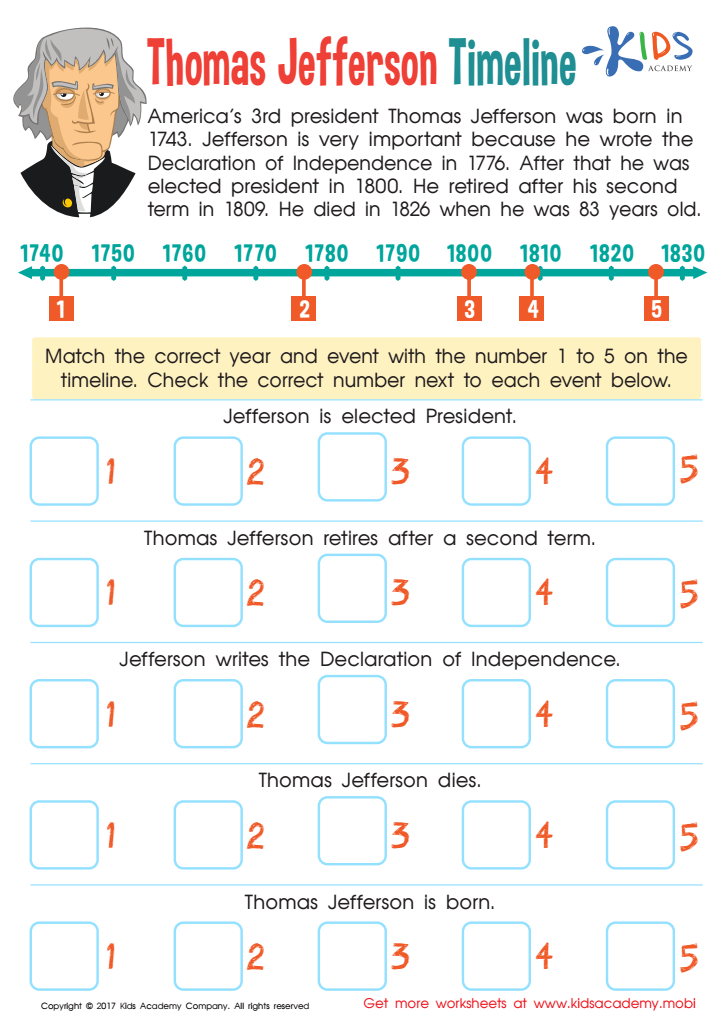
Thomas Jefferson Timeline Worksheet
 Assign to My Students
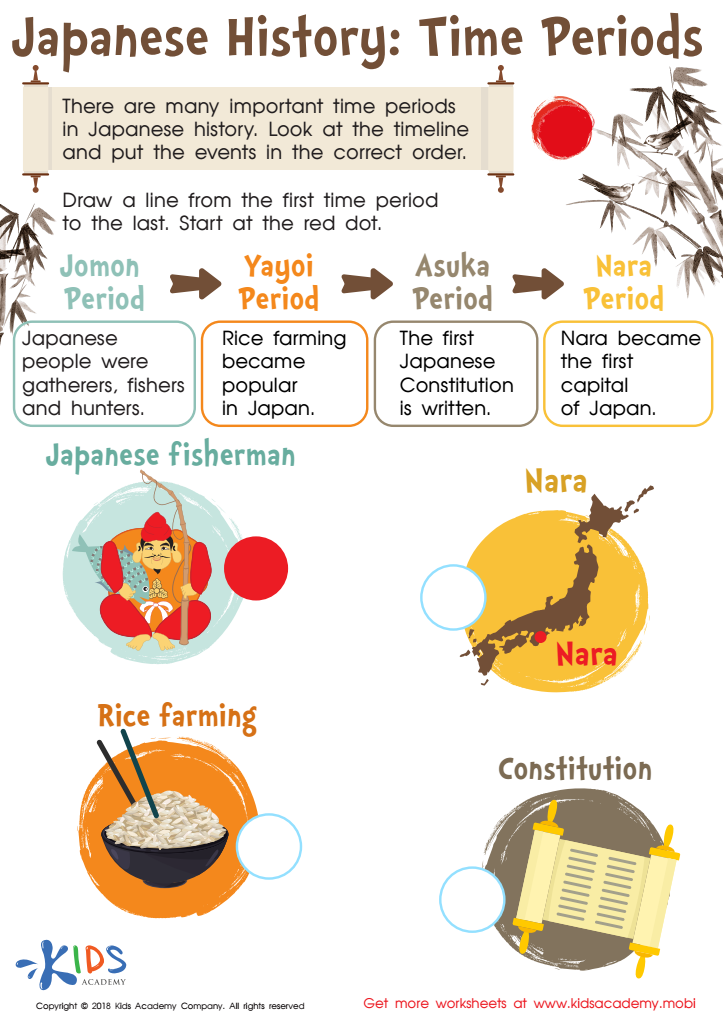
Japanese History: Time Periods Worksheet
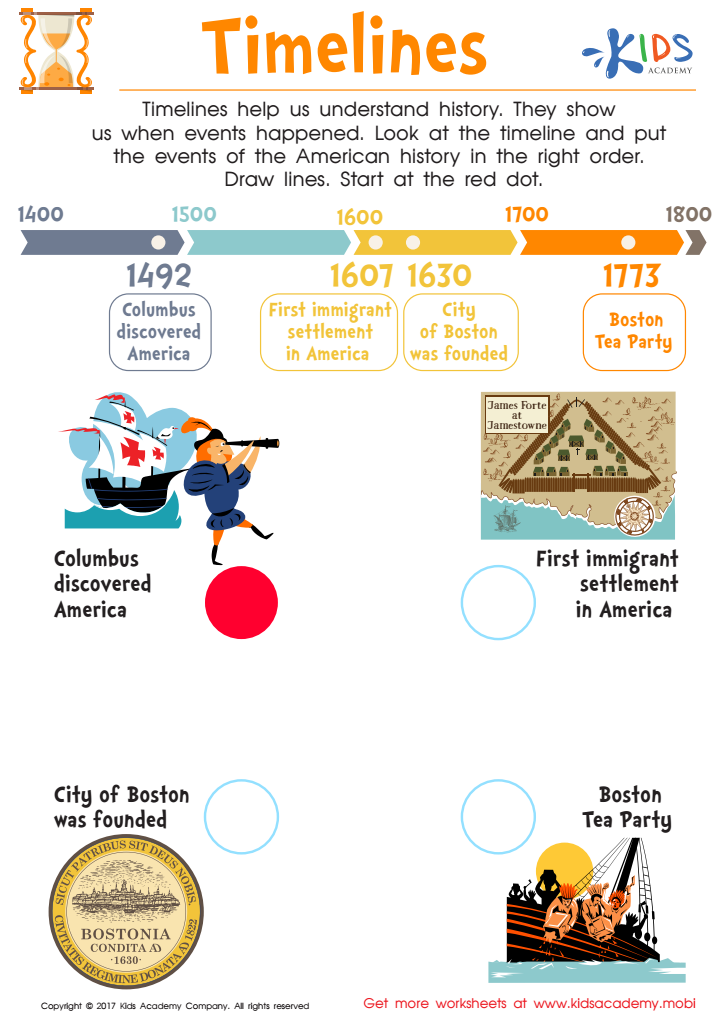
American History Timeline Worksheet
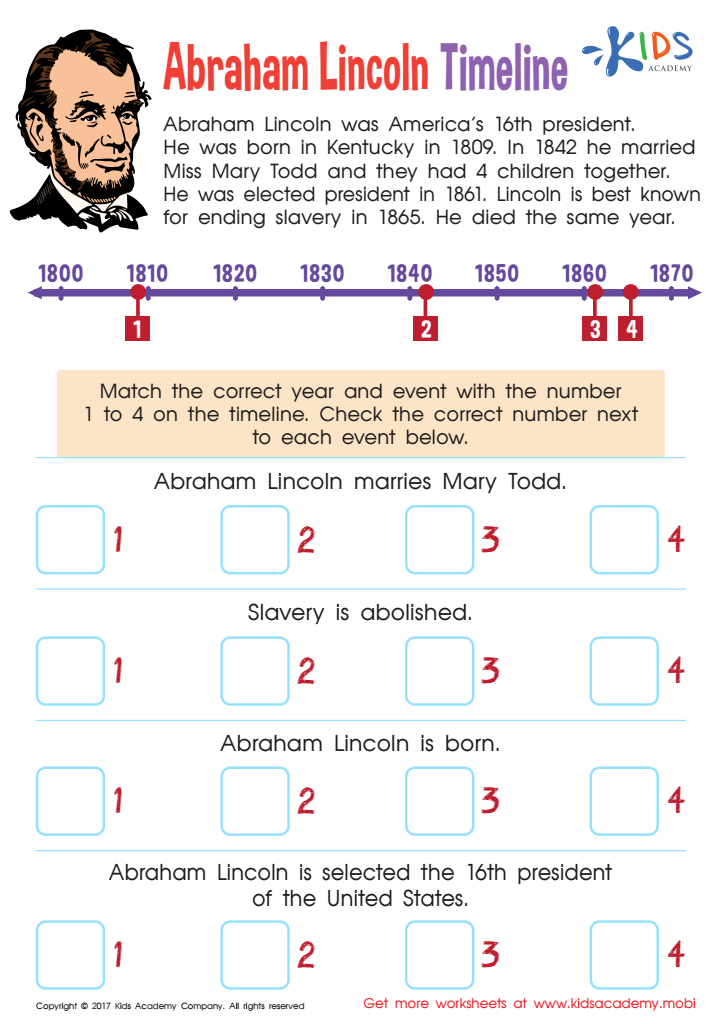
Abraham Lincoln Timeline Worksheet
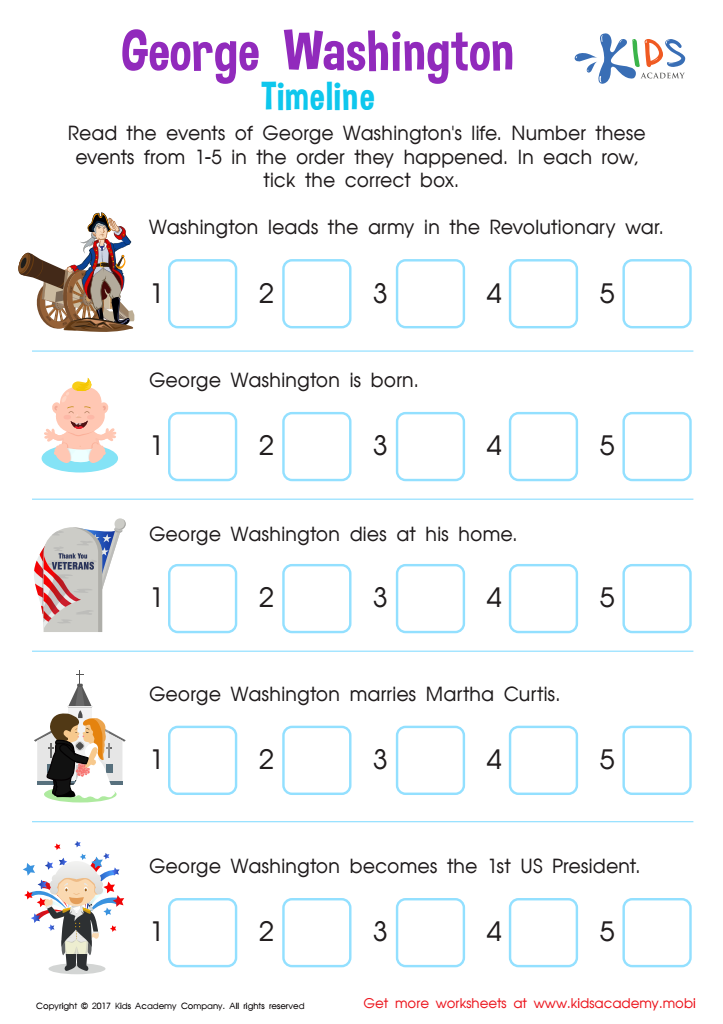
George Washington Timeline Worksheet



.jpg)


Understanding timelines is crucial for children ages 5-8 as it lays the foundation for their ability to grasp historical context, cause and effect, and the sequence of events. For parents and teachers, timelines are an engaging tool that can simplify complex information, making history accessible and relatable to young learners. By visualizing events along a timeline, children can better understand how different moments in time connect, allowing them to grasp concepts like change, continuity, and the passage of time.
Furthermore, teaching timelines encourages critical thinking and analytical skills. When children learn to place events in chronological order, they start to recognize patterns and trends, helping them make sense of the world around them. This foundational skill promotes engagement in social studies, fostering curiosity about their history and cultural heritage.
Additionally, creating timelines as a classroom or home activity can transform learning into a hands-on experience. Involving children in this interactive process can enhance retention of information and build their confidence. Ultimately, understanding timelines empowers children to become informed global citizens, as they learn to appreciate the significance of past events in shaping the present and future. Parents and teachers must recognize this important educational tool to enrich children's learning experiences.








