
Improving spelling skills Writing Worksheets for Ages 5-8
6 filtered results
Difficulty Level
Grade
Age
-
From - To
Subject
Activity
Standards
Discover our "Improving Spelling Skills Writing Worksheets" designed specifically for children ages 5-8. These engaging, fun, and educational worksheets help young learners enhance their spelling abilities through various activities such as tracing, word searches, and fill-in-the-blanks. By focusing on commonly used words and phonics, our worksheets build a strong spelling foundation, encouraging confidence in young writers. Perfect for teachers and parents, these printable resources are easy to integrate into daily learning routines, ensuring continuous progress. Start boosting your child's spelling skills today with our expertly crafted worksheets at Kids Academy!
Favorites
With answer key
Interactive
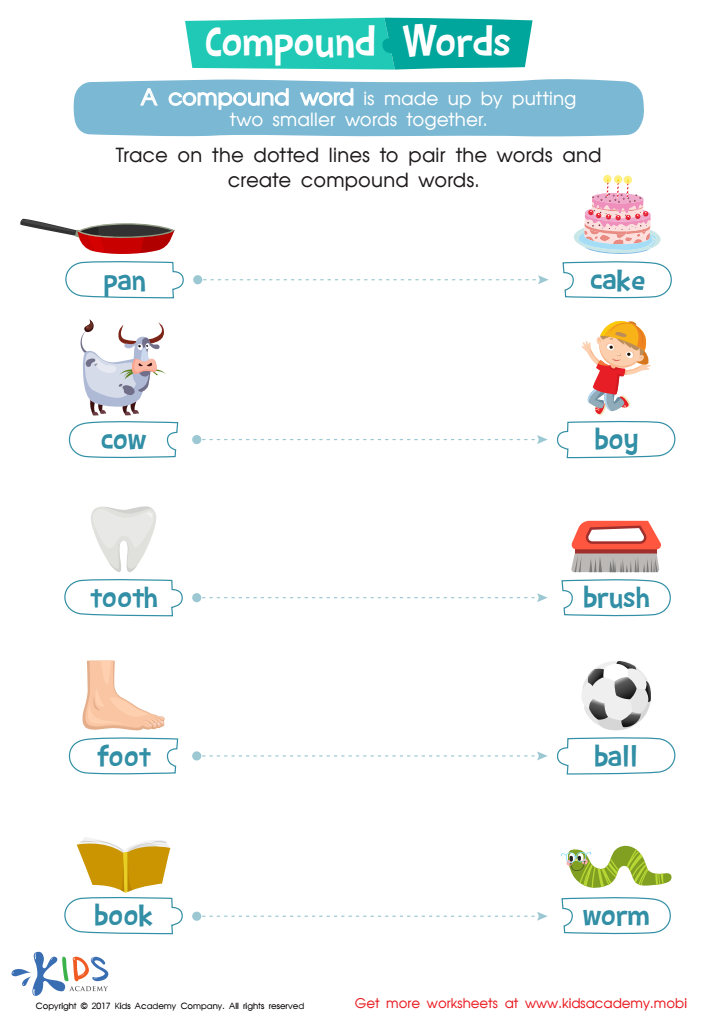
Compound Words Word Structure Worksheet
Studying compound words is a great way to improve reading and writing skills! Try this fun worksheet: Compound Words – trace the lines to make new words! It's an easy and enjoyable way to get better at English.
 Assign to My Students
Compound Words Word Structure Worksheet
Worksheet
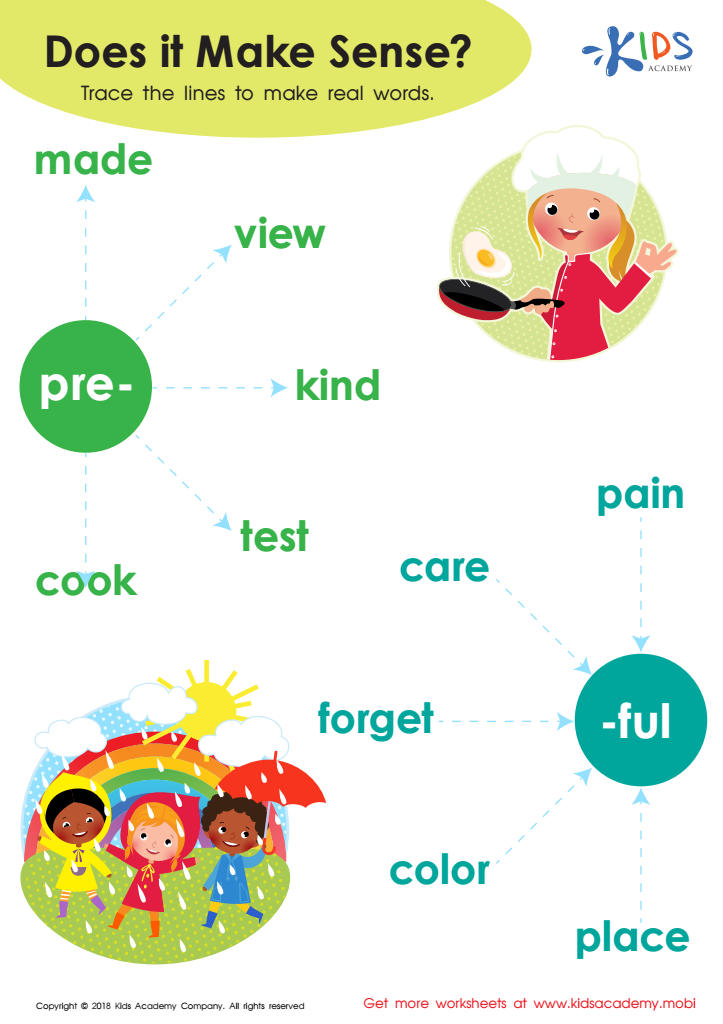
Prefix pre– and Suffix ful– Worksheet
Can't preforget something! This worksheet helps kids learn how to attach prefixes and suffixes to root words, forming new words that make sense. With this activity, they'll evaluate how the root words change when adding the prefix or suffix.
Prefix pre– and Suffix ful– Worksheet
Worksheet
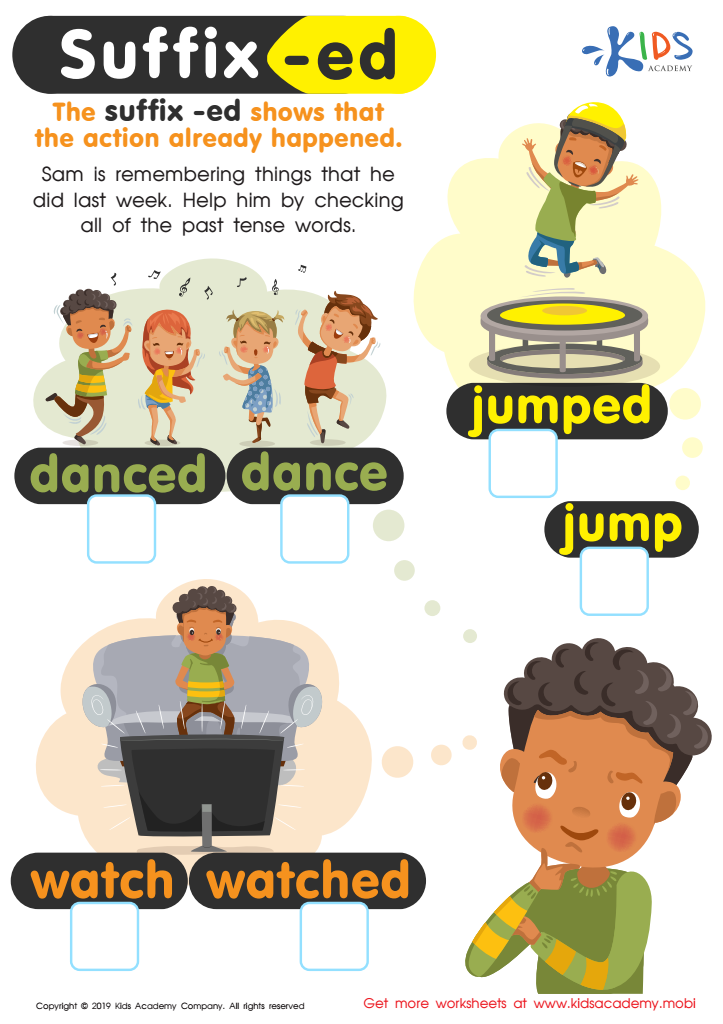
Suffix-ed Worksheet
Ask your kids if they know what suffixes are, and explain they are words added to the end of another word which changes the meaning. This worksheet focuses on the suffix -ed which shows something already happened. Help the kid in the picture find the past tense words.
Suffix-ed Worksheet
Worksheet
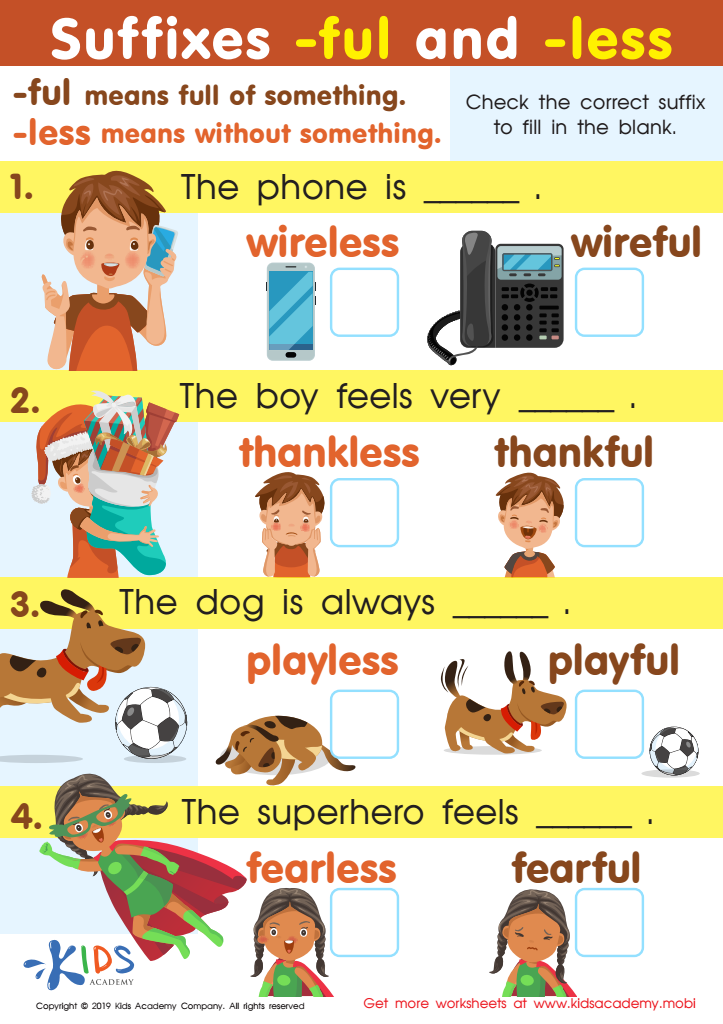
Suffixes –ful and –less Worksheet
Before you start this worksheet, make sure your kids know about suffixes. Explain that they're added to the end of words to change their meaning. In the worksheet, kids will learn about the suffixes –ful and –less. Look at the sentences in the picture with them, and help them to choose the right one for each blank.
Suffixes –ful and –less Worksheet
Worksheet
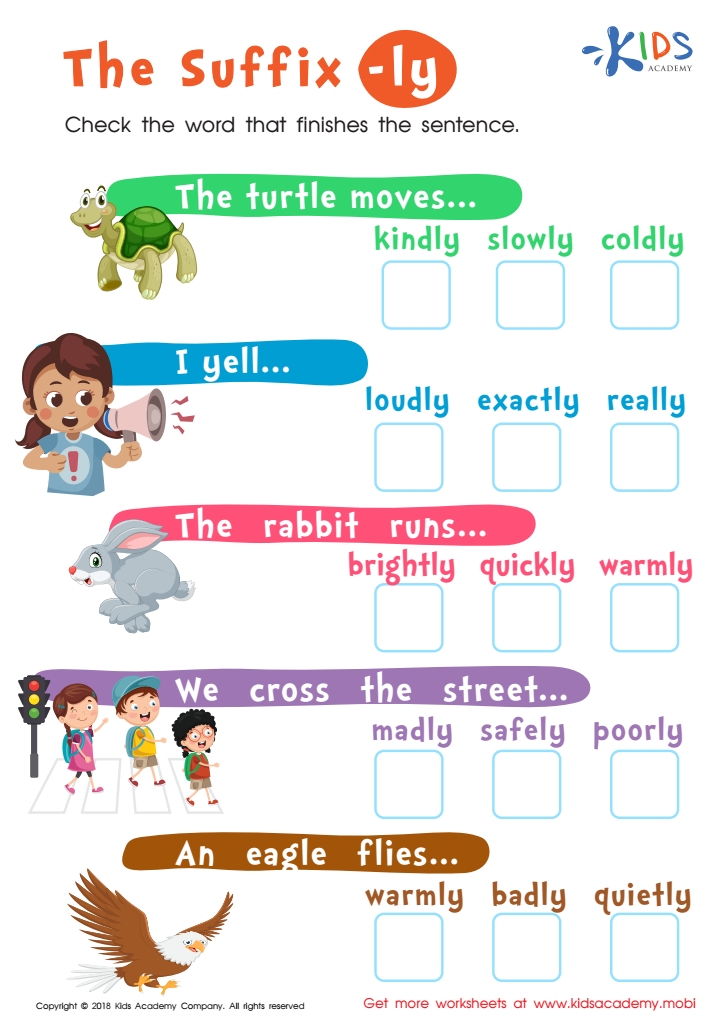
The Suffix -Ly Worksheet
Suffixes change the meaning of words: the -ly suffix usually describes how an action is done (e.g. slowly, quickly, loudly). Help your child understand this and then check out the fun worksheet. Ask them to identify the animals and people in the pictures, then read the sentences out loud and have them check the ones that finish the sentence.
The Suffix -Ly Worksheet
Worksheet
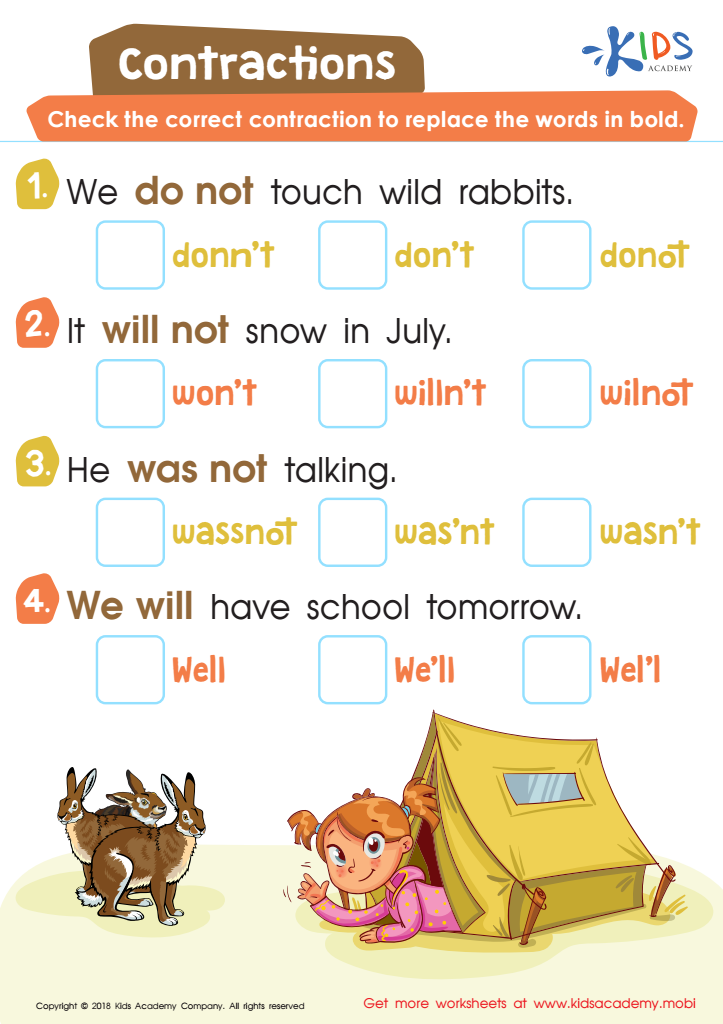
Contractions Worksheet
Contractions are popular in English and make writing/reading easier. For example: I'm, they're, she's. Ask your students to give more examples. Then, read the sentences in this worksheet and help them check the correct contraction to replace the words in bold.
Contractions Worksheet
Worksheet
Join Kids Academy for Free
Who is primarily going to use this learning content?







Improving spelling skills for children aged 5-8 is fundamentally important for several reasons. First and foremost, strong spelling abilities form the foundation for comprehensive literacy. When children know how to spell accurately, they are more confident and proficient in reading and writing. Early literacy skills set the stage for future academic success and lifelong learning.
Proper spelling also enhances communication skills. When children can spell words correctly, they are more able to express themselves clearly and effectively. This ability boosts their overall academic confidence, promoting a positive attitude toward school and learning.
Spelling practice supports cognitive development as well. It enhances memory, promotes pattern recognition, and helps children decode new words more easily. These cognitive skills are not just confined to English but are transferable across subjects, aiding in overall intellectual growth.
Moreover, good spelling helps in developing attention to detail and careful observation. Spelling errors often occur when children rush or neglect to check their work, so focusing on accuracy teaches them the value of precision and patience.
For parents and teachers, fostering good spelling skills offers a direct pathway to supporting children’s communication, academic, and social development. Prioritizing spelling at an early age equips children with essential tools that yield benefits far beyond the classroom.








