Punctuation understanding Writing Worksheets for Ages 5-8
5 filtered results
-
From - To
Boost your young learner's writing skills with our engaging Punctuation Understanding Writing Worksheets designed for ages 5-8. These interactive sheets help children master the basics of punctuation, including periods, commas, question marks, and exclamation points. Each worksheet is crafted to blend fun activities with educational value, ensuring that your child not only learns but also enjoys the process. Through hands-on practice, kids will improve their sentence structure, clarity, and overall communication abilities. Perfect for early grade classrooms or at-home learning, our worksheets make punctuation straightforward and enjoyable for young minds. Start your child's writing journey today!
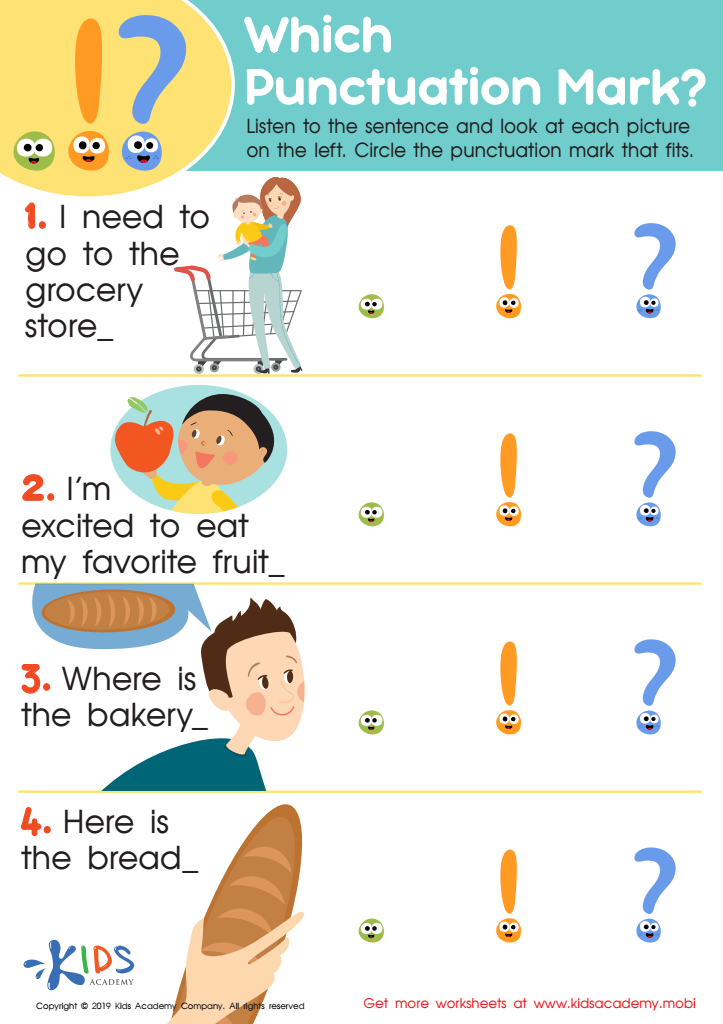
Which Punctuation Mark Worksheet
 Assign to My Students
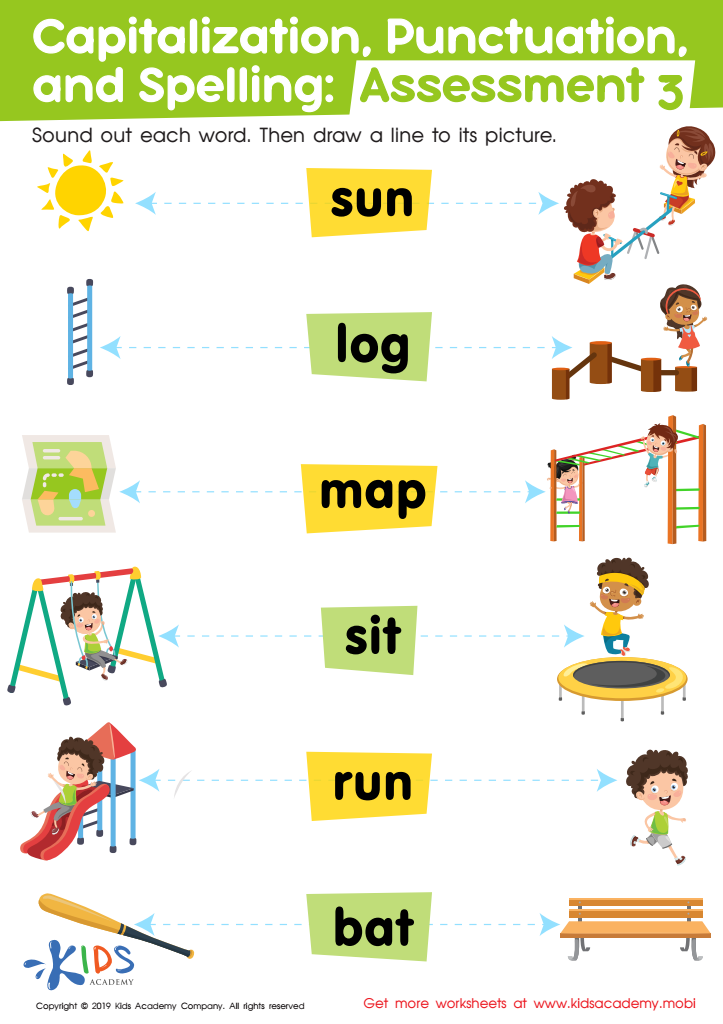
Capitalization. Punctuation. Spelling. Assessment 3 Worksheet
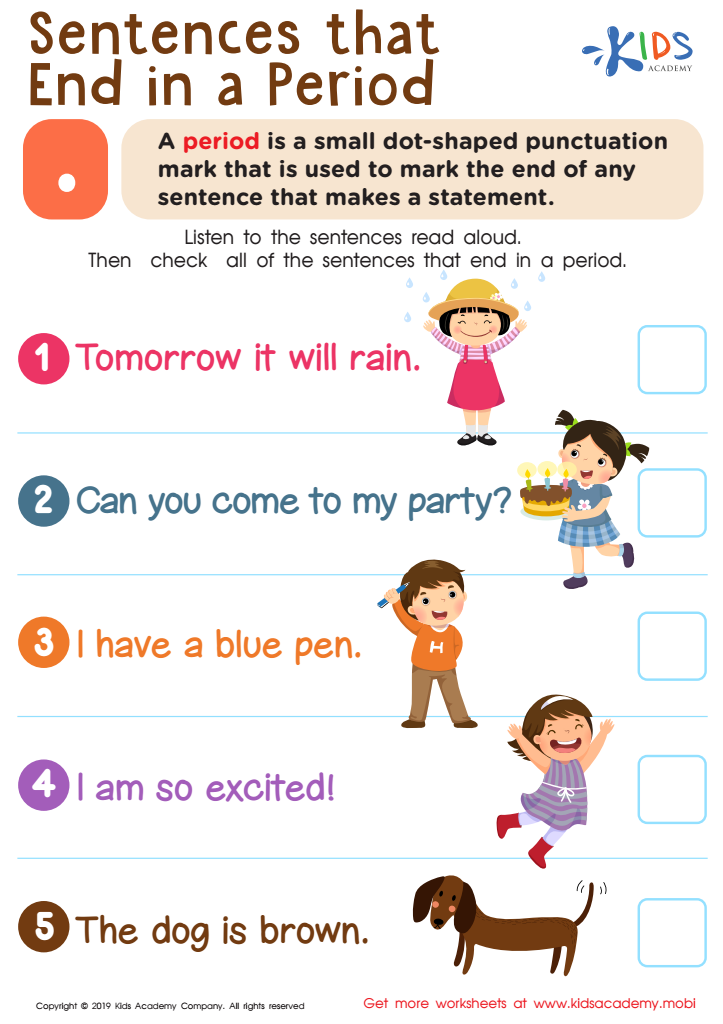
Sentences That End in a Period Worksheet
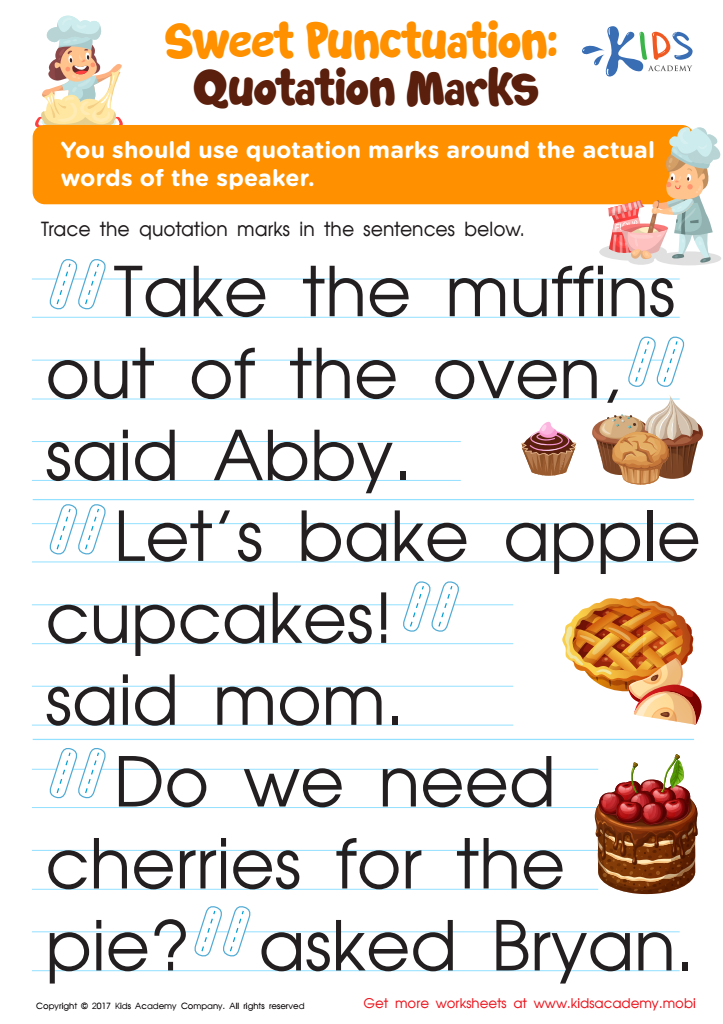
Commas and Quotation Marks Worksheet
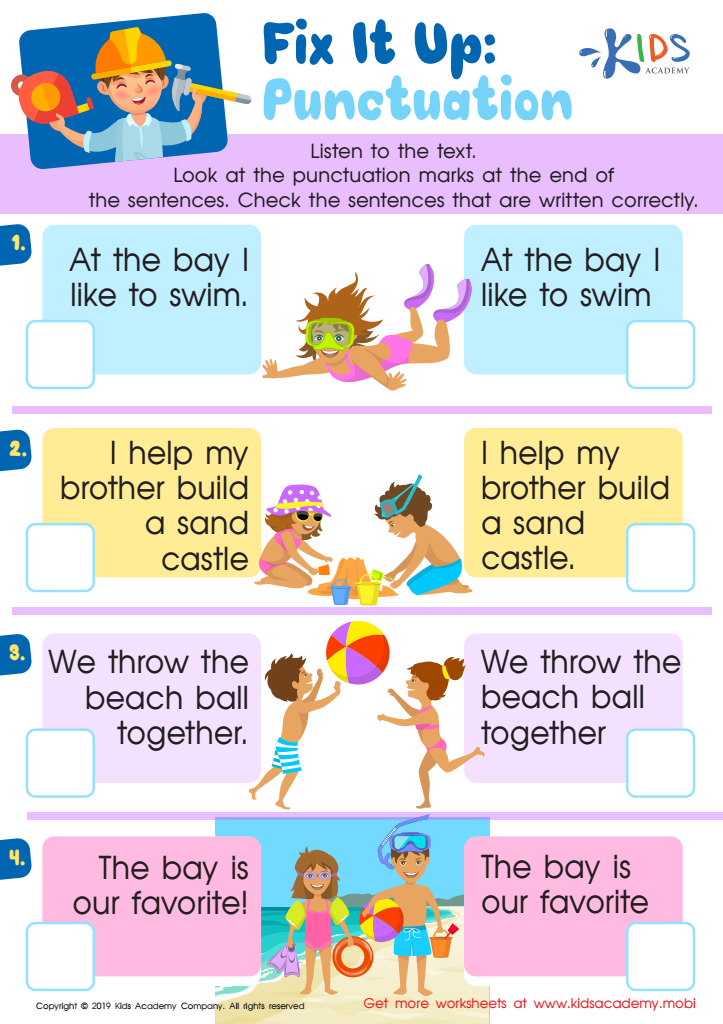
Fix Punctuation Worksheet







Punctuation understanding is crucial for young children, especially for those ages 5-8, as it forms the foundation for effective communication and literacy skills. At this developmental stage, children are beginning to write and express their thoughts in written form. Knowing how to use punctuation marks like commas, periods, and question marks helps them convey their messages clearly and understandably.
For parents and teachers, fostering good punctuation skills early on can significantly impact a child's academic success. Proper punctuation aids in reading comprehension by structuring sentences in a way that makes them easier to understand. Additionally, children who master punctuation are better equipped to tackle more complex writing tasks as they progress in school.
Early punctuation skills also promote listening and speaking abilities. When children learn how punctuation works, they better understand pauses and intonation in spoken language. This, in turn, can enhance their oral communication skills and boost their confidence in both personal interactions and academic settings.
Overall, encouraging children to develop strong punctuation and writing skills equips them with vital tools for lifelong learning. Parents and teachers play a critical role in this developmental stage, providing the support and resources children need to become effective communicators.








