
Sentence structure understanding Writing Worksheets for Ages 5-8
4 filtered results
Difficulty Level
Grade
Age
-
From - To
Subject
Activity
Standards
Enhance your child's writing skills with our engaging sentence structure understanding worksheets, designed specifically for ages 5-8. These interactive resources help young learners grasp essential concepts of sentence construction, including subjects, verbs, and proper punctuation. Our worksheets offer a variety of activities that encourage creativity while reinforcing grammar fundamentals. Perfect for both classroom use and at-home learning, these printable worksheets make writing fun and engaging. Foster your child's confidence in expressing their thoughts clearly and effectively. Get started today and watch your young writer flourish as they explore the building blocks of effective communication!
Favorites
With answer key
Interactive
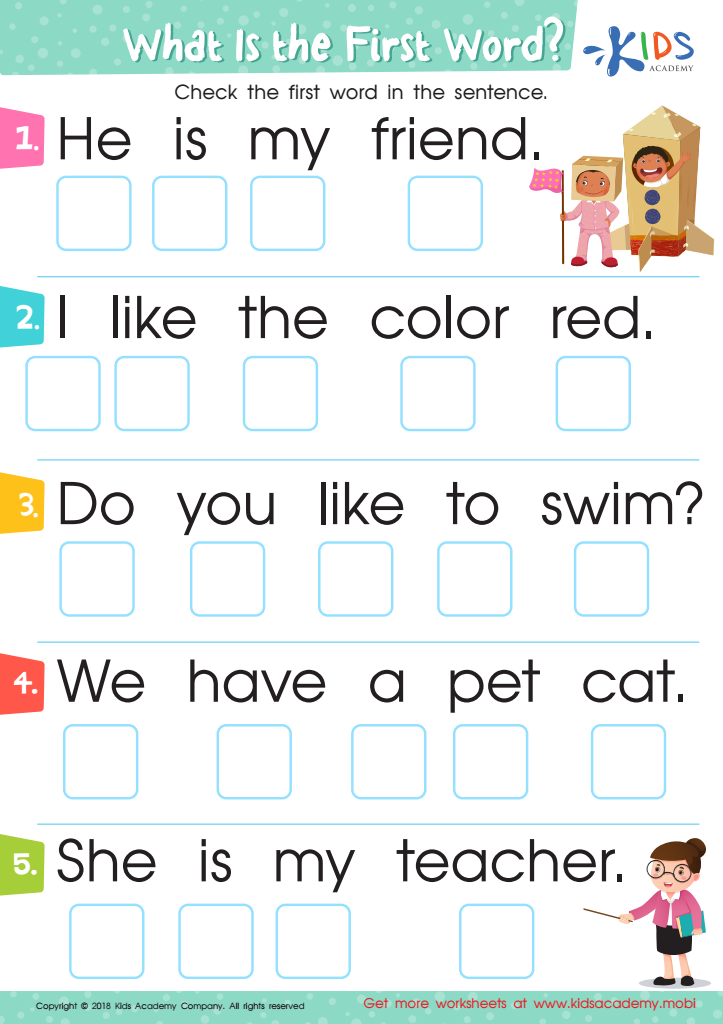
What is the First Word? Worksheet
Help your students test their sentence-reading skills with this printout! After teaching the alphabet, have them identify and write the first word in each sentence. With this exercise, they'll gain reading proficiency and be better prepared to write their own sentences.
What is the First Word? Worksheet
Worksheet
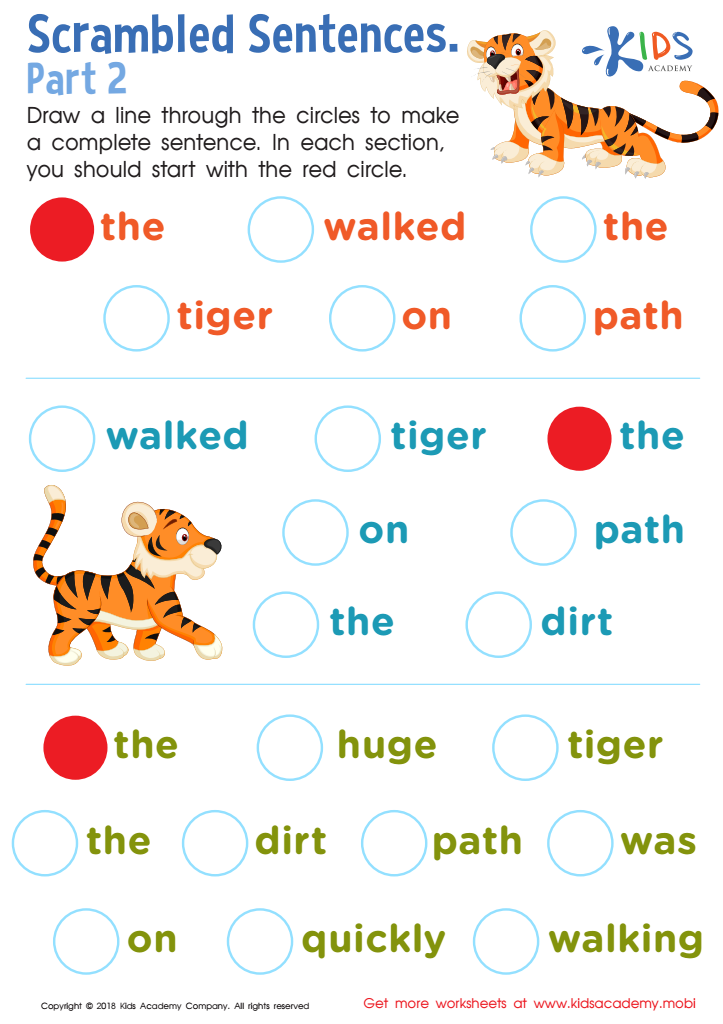
Scrambled Sentences Part 2 Worksheet
This printable worksheet helps kids construct simple, correct sentences. Introduce them to making sentences if they're new to it. Have them draw a line through the circles to form a sentence, starting with the red circle. After completing this exercise, they'll be able to craft short sentences with confidence.
Scrambled Sentences Part 2 Worksheet
Worksheet
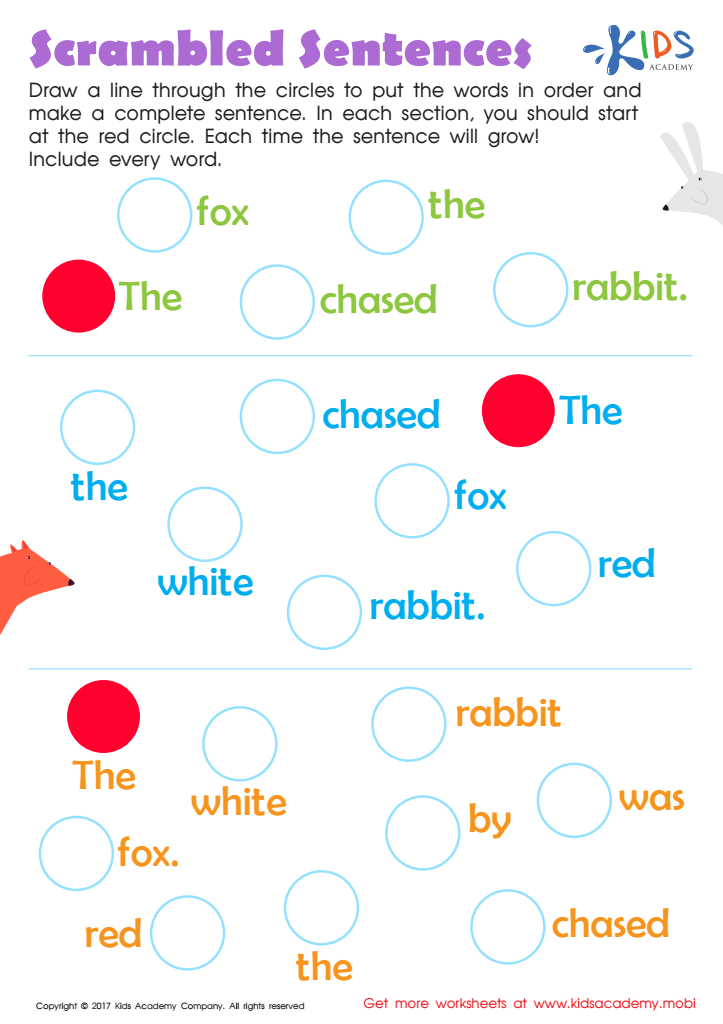
Scrambled Sentences Worksheet
Kids will have fun with the scrambled sentences worksheet: draw lines to make complete sentences. As the sentence grows, they'll learn sentence structure and word order. Easy instructions included!
Scrambled Sentences Worksheet
Worksheet
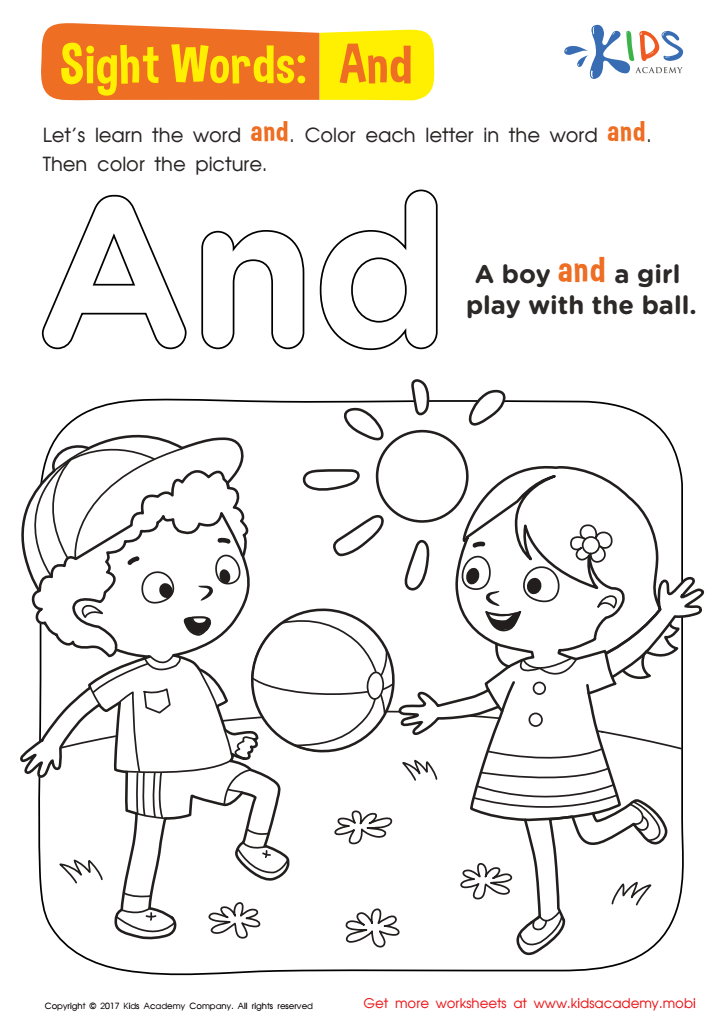
And Worksheet Sight Words Worksheet
Help your child get a jumpstart on reading with sight words! Print out this fun worksheet and get your child to read the sentence. Point out the word "and", then color the word and enjoy the rest of the scene! It's a great way to introduce sight words and get their early reading skills going!
Download (PDF)
 Assign to My Students
Assign to My Students
And Worksheet Sight Words Worksheet
Worksheet
Join Kids Academy for Free
Who is primarily going to use this learning content?








Understanding sentence structure is fundamental for children aged 5-8 as it lays the groundwork for effective communication. During these early years, children are developing their language skills and beginning to express their thoughts in writing. A solid grasp of sentence structure helps them understand how to construct complete thoughts, which boosts their confidence and creativity.
Parents and teachers should care about this because proper sentence structure enhances readability and comprehension. Children who learn how to form correct sentences can convey their ideas more clearly, leading to better responses from peers and educators. This skill is crucial not only for academic success but also for social interactions, where clear communication fosters stronger relationships.
Furthermore, practicing sentence structure helps children develop critical thinking skills, as they learn to analyze how words work together to create meaning. It lays the foundation for further language arts skills, including grammar, spelling, and punctuation, all essential for later academic success.
Incorporating sentence structure lessons into daily learning activities makes the process engaging and fun. Whether through storytelling, interactive games, or writing exercises, encouraging children to explore sentence formation is vital at this stage, ultimately better preparing them for future academic challenges.








