Text analysis Worksheets for Ages 5-9
4 filtered results
-
From - To
Discover our engaging Text Analysis Worksheets for kids ages 5-9! Designed to enhance learning skills, these worksheets help young learners develop comprehension, vocabulary, and critical thinking. Packed with fun activities, they analyze stories, identify main ideas, and understand characters, fostering a love for reading. Ideal for classrooms and home learning, our worksheets are perfect for early reading enthusiasts. Boost your child's confidence and literacy with Kids Academy’s top-rated printables.
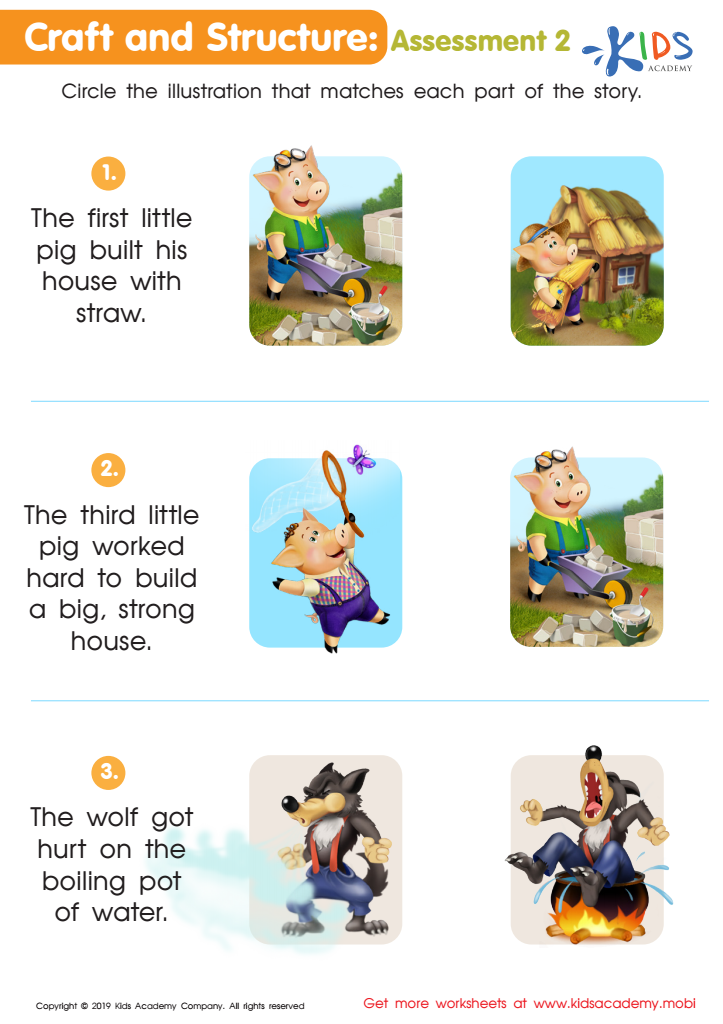
Craft and Structure: Assessment 2 Worksheet 2
 Assign to My Students
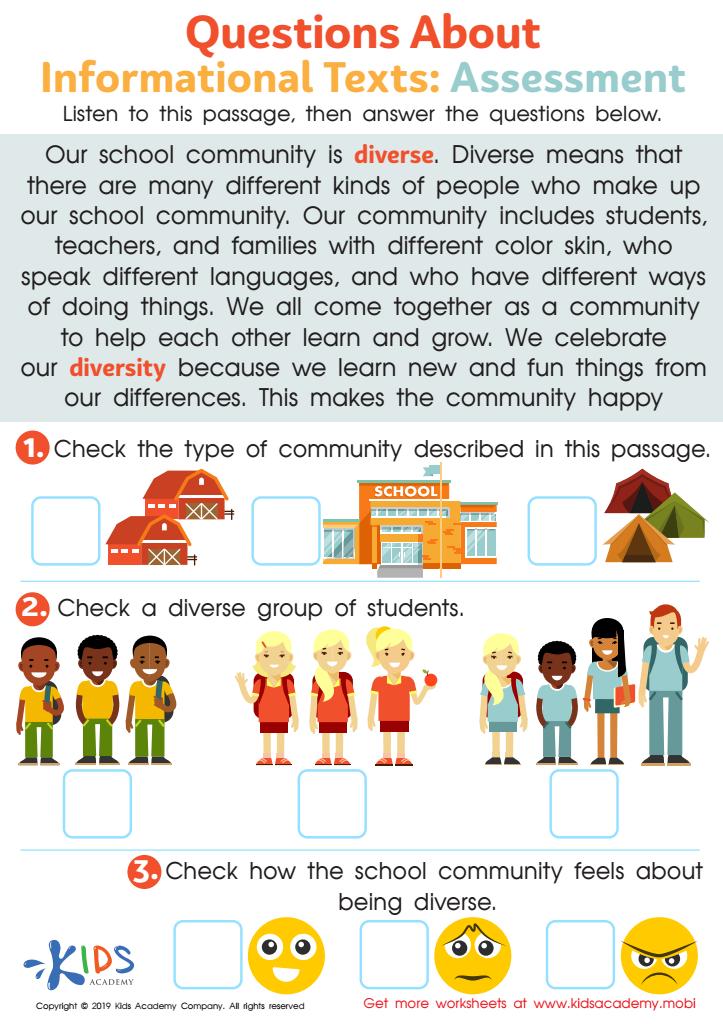
Questions About Informational Texts: Assessment 1 Worksheet
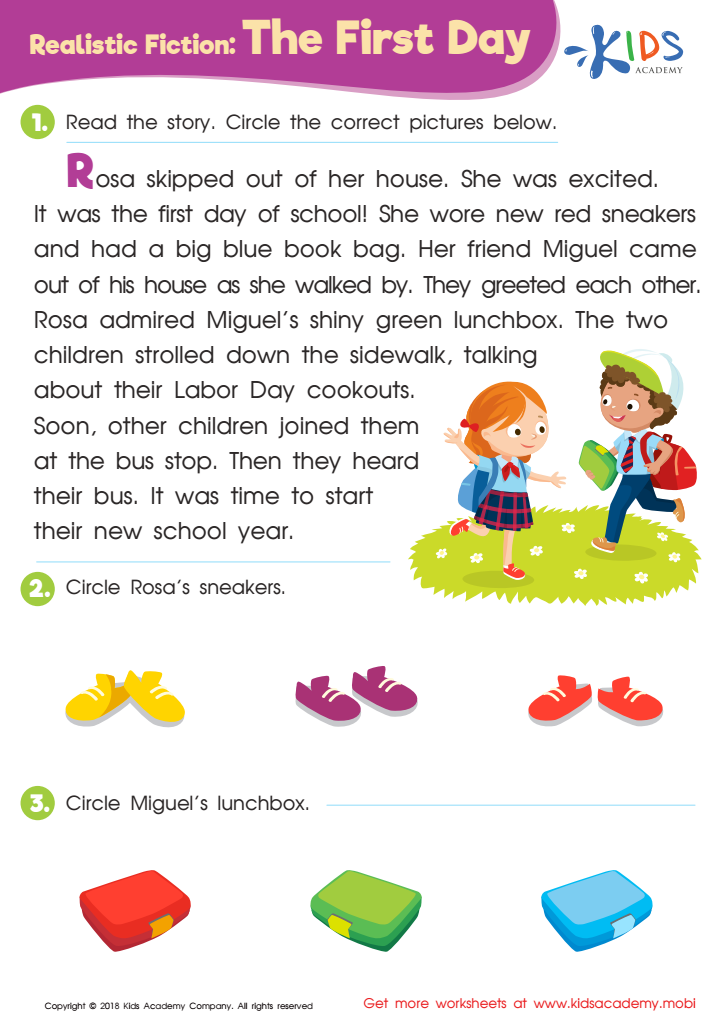
Realistic Fiction: The First Day Worksheet
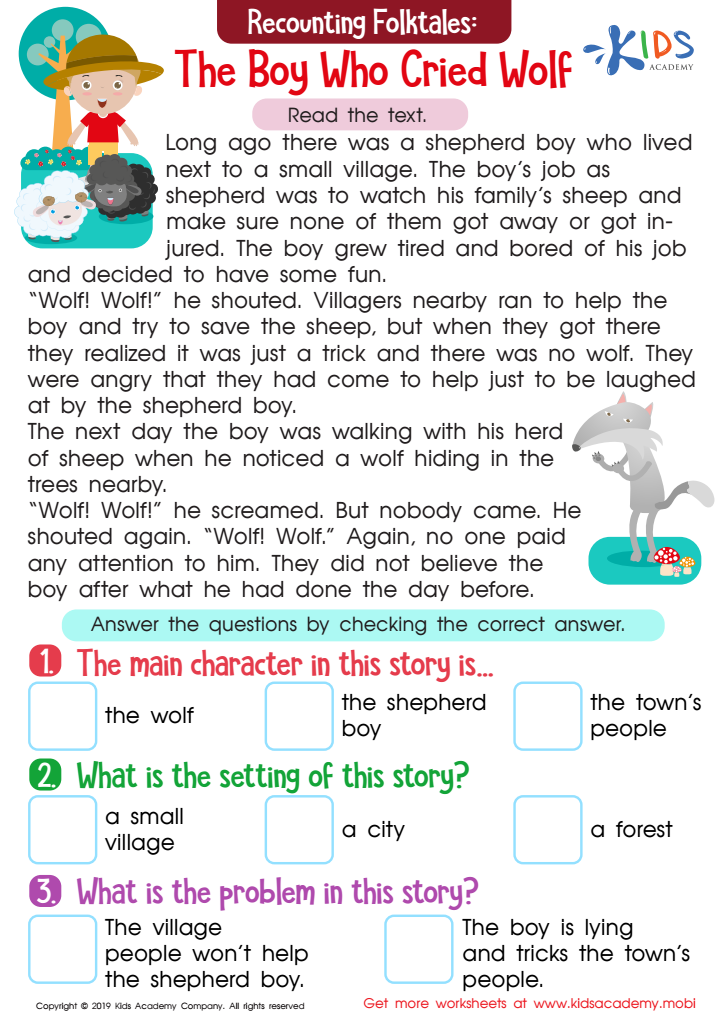
The Boy Who Cried Wolf Part 1 Worksheet







.jpg)
Text analysis is critical for children ages 5-9 because it lays the foundation for their literacy skills and cognitive development. At this formative stage, children are transitioning from simple recognition of letters and sounds to more complex understanding of words and sentences. By engaging in text analysis activities, young learners develop essential skills such as comprehension, vocabulary, and critical thinking.
When parents and teachers emphasize text analysis, they help children derive meaning from what they read, rather than merely decoding the words. This deepens a child's love for reading, enhances their ability to make inferences, and strengthens their overall understanding of language. It turns reading into an interactive and thoughtful activity, fostering engagement and curiosity.
Furthermore, text analysis also improves a child's ability to express themselves. By understanding how sentences work and how ideas are conveyed in written form, children become better communicators. This skill is not limited to reading; it extends to speaking and writing, benefiting their overall academic performance.
Incorporating text analysis from a young age ensures that children are not just learning to read but are reading to learn. It equips them with crucial tools for lifelong learning and good academic habits, forming a strong educational foundation that supports their future success.








