Explore our "Understanding Multiplication, Addition & Subtraction Worksheets" designed for children ages 5-9! This resource helps young learners grasp essential math concepts through engaging and interactive activities. Each worksheet is tailored to build a solid foundation in multiplication while reinforcing addition and subtraction skills. Bright illustrations and age-appropriate problems encourage children to practice their math abilities confidently. Perfect for both classroom and home learning, these worksheets promote critical thinking and problem-solving skills. Help your child advance their arithmetic knowledge with fun, effective learning tools. Start their math journey today and watch them excel in foundational math operations!
Check out this FREE Trial Lesson on Addition & Subtraction for age 5-9!

Exactly the Same, or Not

Favorites
With answer key
Interactive
  • 5-9
  • Understanding multiplication
  • Addition & Subtraction
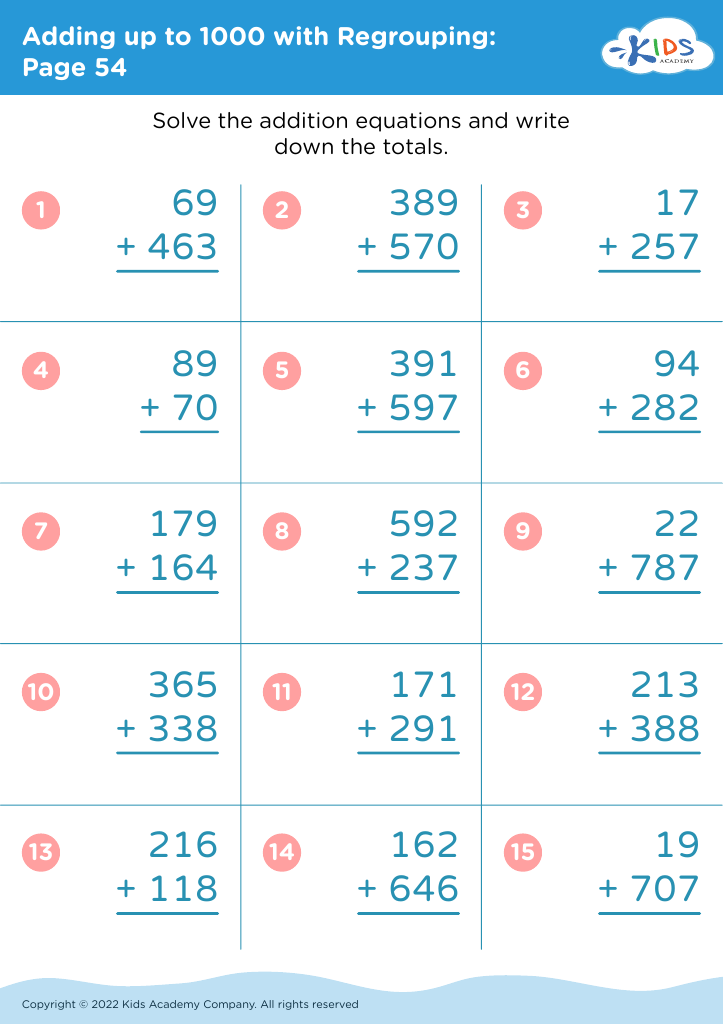
Adding up to 1000 with Regrouping: Page 54
Worksheet
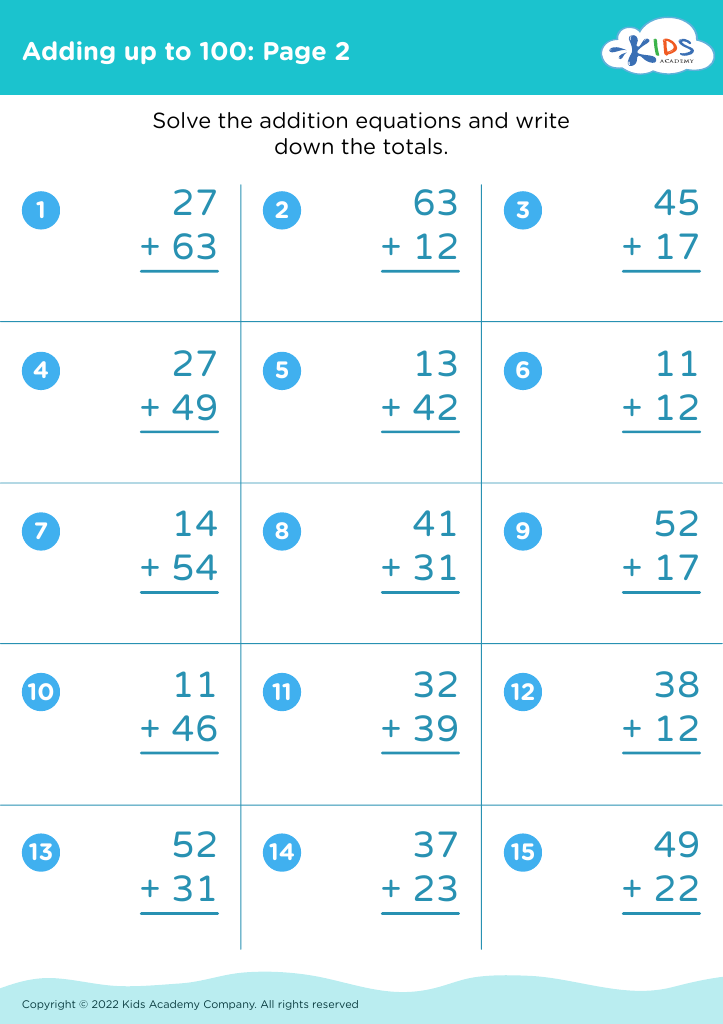
Adding up to 100: Page 2

Adding up to 100: Page 2

Adding up to 100: Page 2
Worksheet
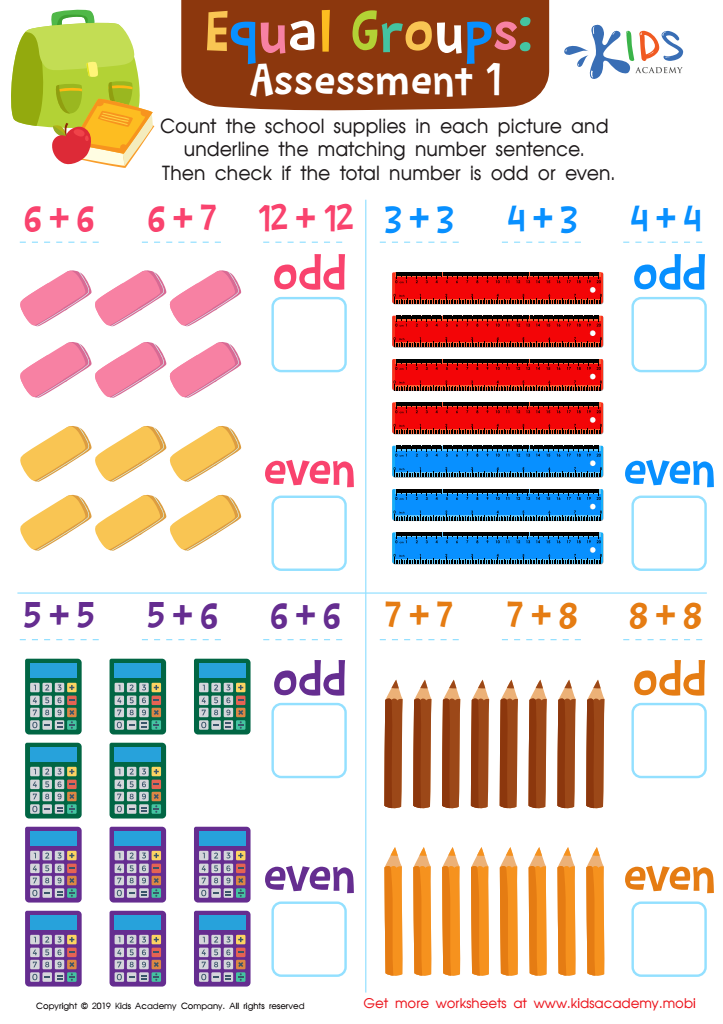
Equal Groups: Assessment1 Worksheet

Equal Groups: Assessment 1 Worksheet

Have your students count the school supplies in each picture. Underline the number sentence that matches. Ask them if the total number is odd or even. Help your eager little preschoolers explore their classroom, which is full of pencils, chairs, desks, a blackboard and the teacher's desk.
Equal Groups: Assessment 1 Worksheet
Worksheet
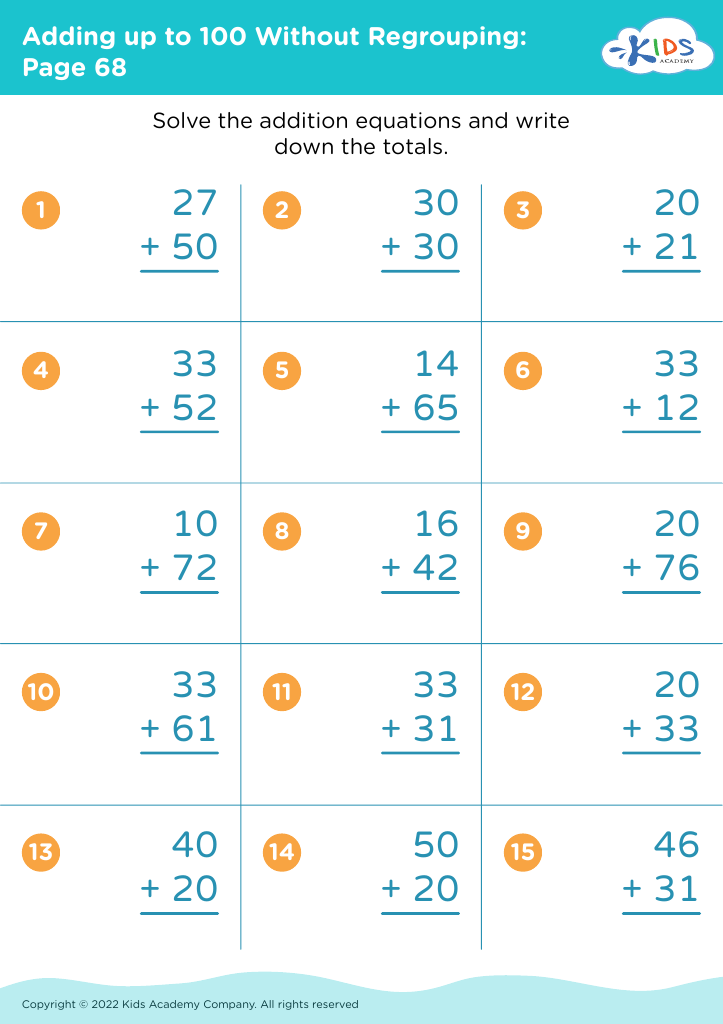
Adding up to 100 Without Regrouping: Page 68
Worksheet
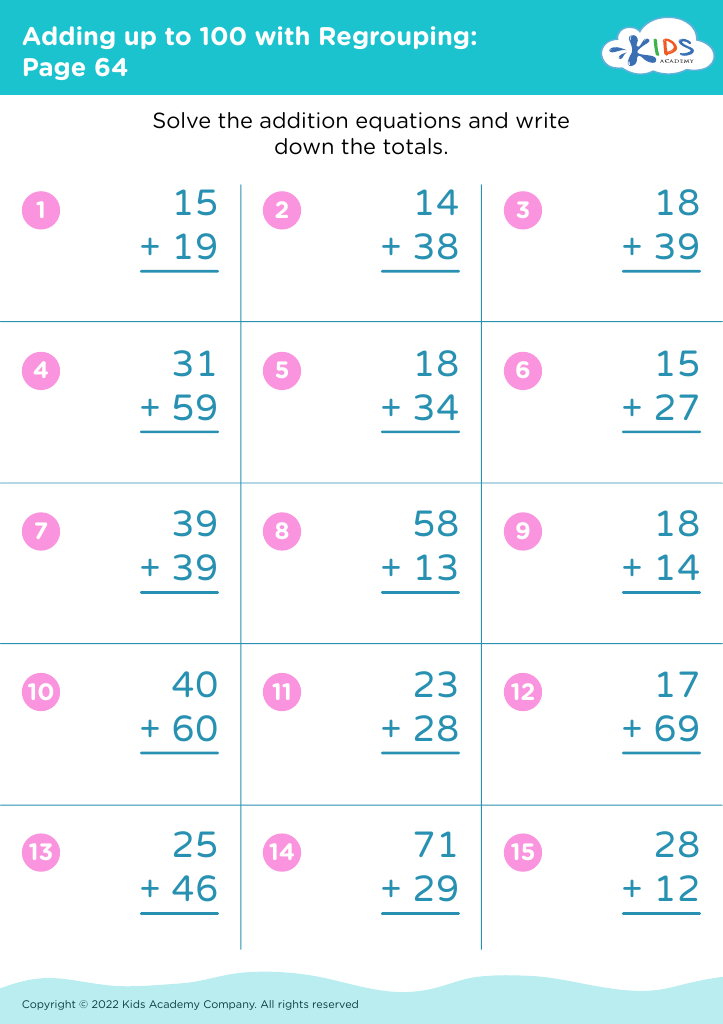
Adding up to 100 with Regrouping: Page 64
Worksheet
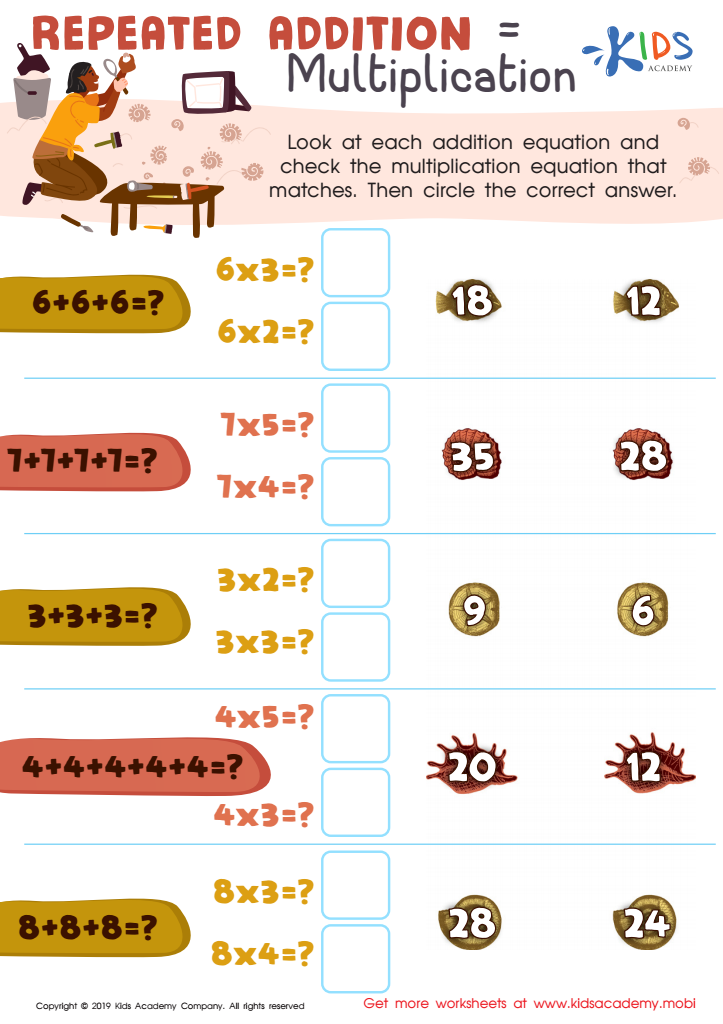
Repeated Addition = Multiplication Worksheet
Repeated Addition = Multiplication Worksheet

If your child is having trouble with math, worksheets like this can help them get more practice. Addition, subtraction, and multiplication go together. Look over each addition equation and pick the matching multiplication equation, then circle the correct answer. This can give your child the necessary practice to understand mathematics better.
Repeated Addition = Multiplication Worksheet
Worksheet
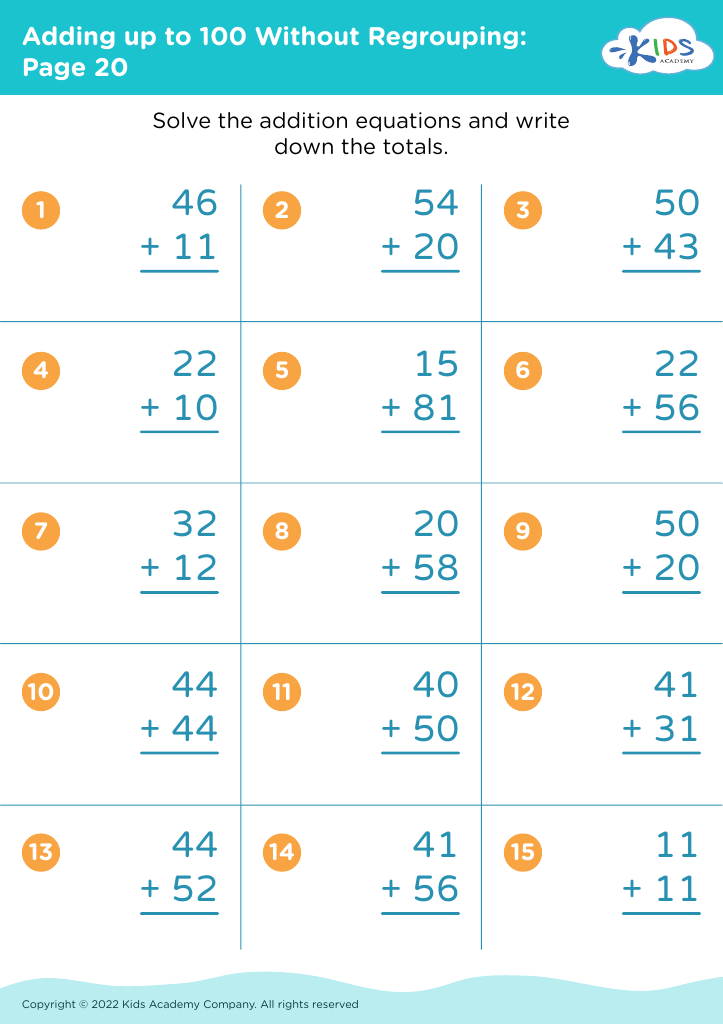
Adding up to 100 Without Regrouping: Page 20
Worksheet
Ticket for the Train Worksheet
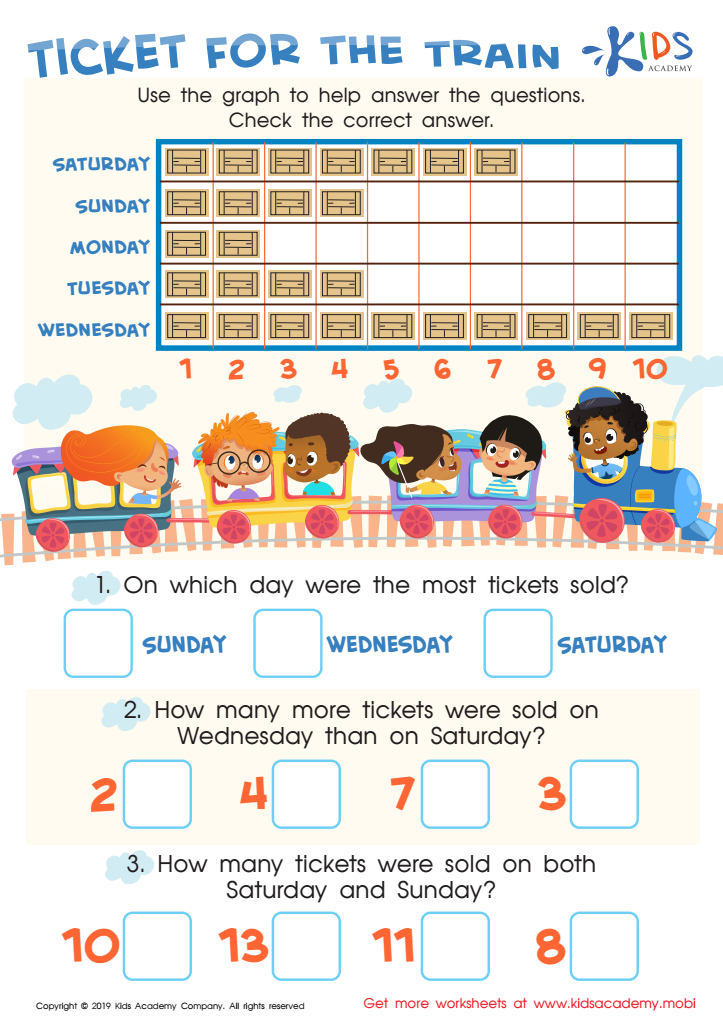
Ticket for the Train Worksheet
It's important to use fun scenarios with familiar objects when teaching kids. Try discussing train rides and the accompanying picture graph. Ask questions about it, then help kids check the correct answers. Let them enjoy the learning process!
Ticket for the Train Worksheet
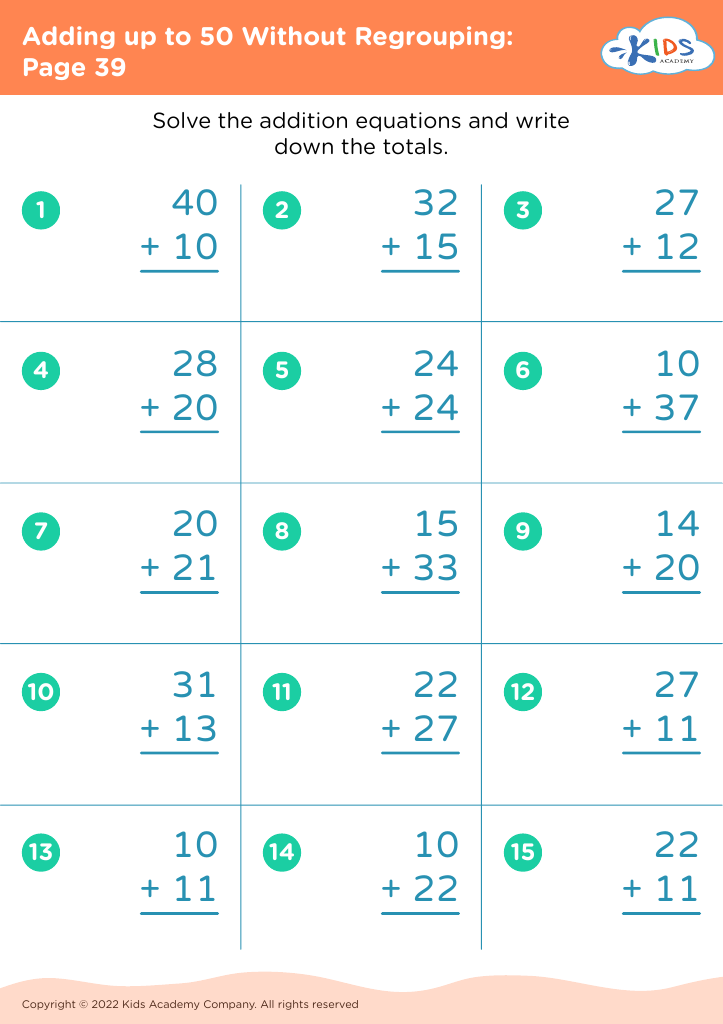
Worksheet
Adding up to 50 Without Regrouping: Page 39
Worksheet
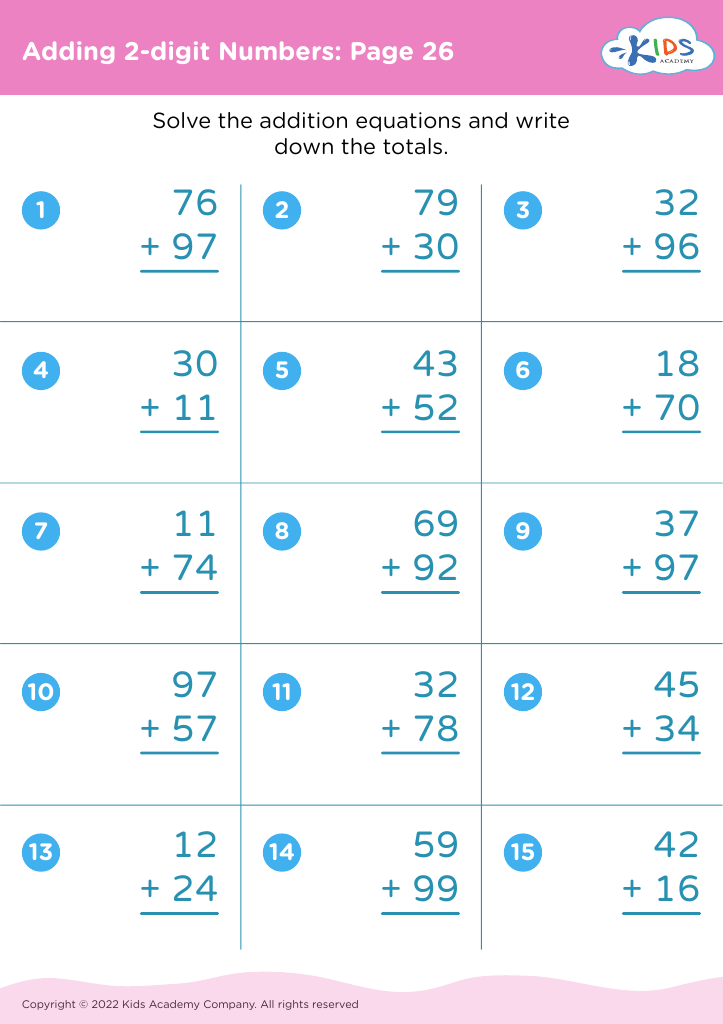
Adding 2-digit Numbers: Page 26

Adding 2-digit Numbers: Page 26

Adding 2-digit Numbers: Page 26
Worksheet
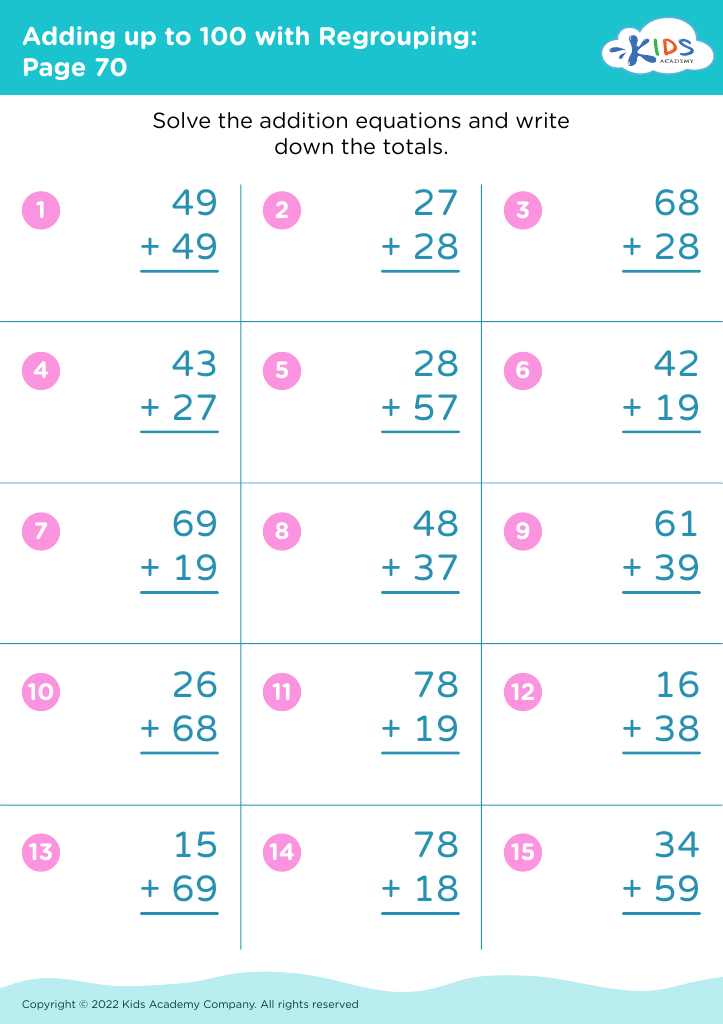
Adding up to 100 with Regrouping: Page 70
Worksheet
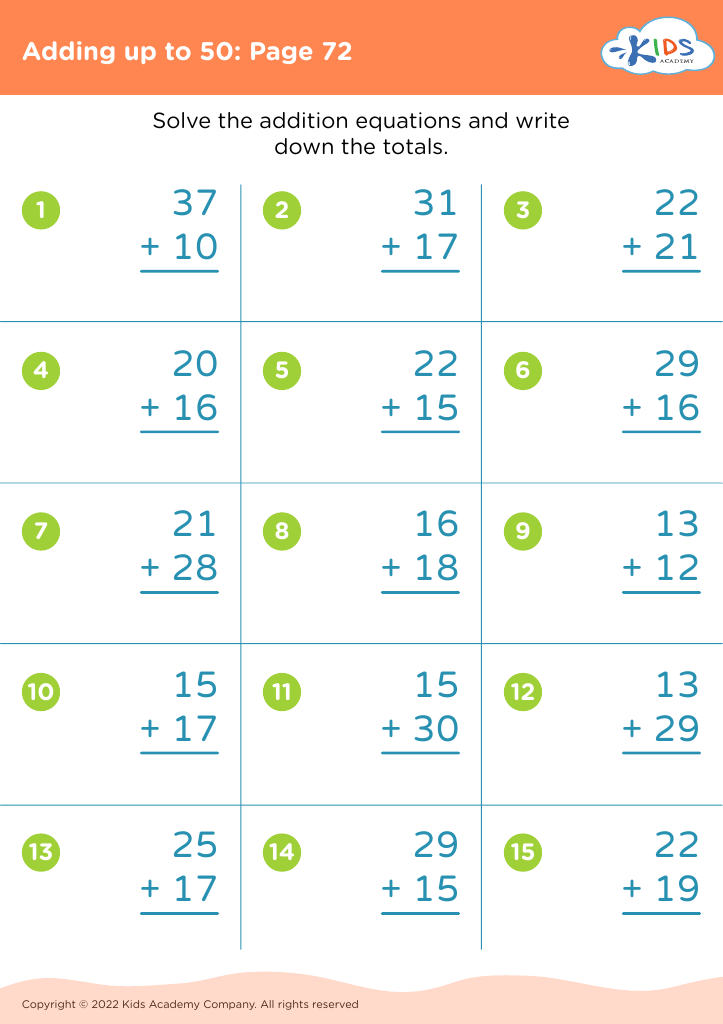
Adding up to 50: Page 72

Adding up to 50: Page 72

Adding up to 50: Page 72
Worksheet
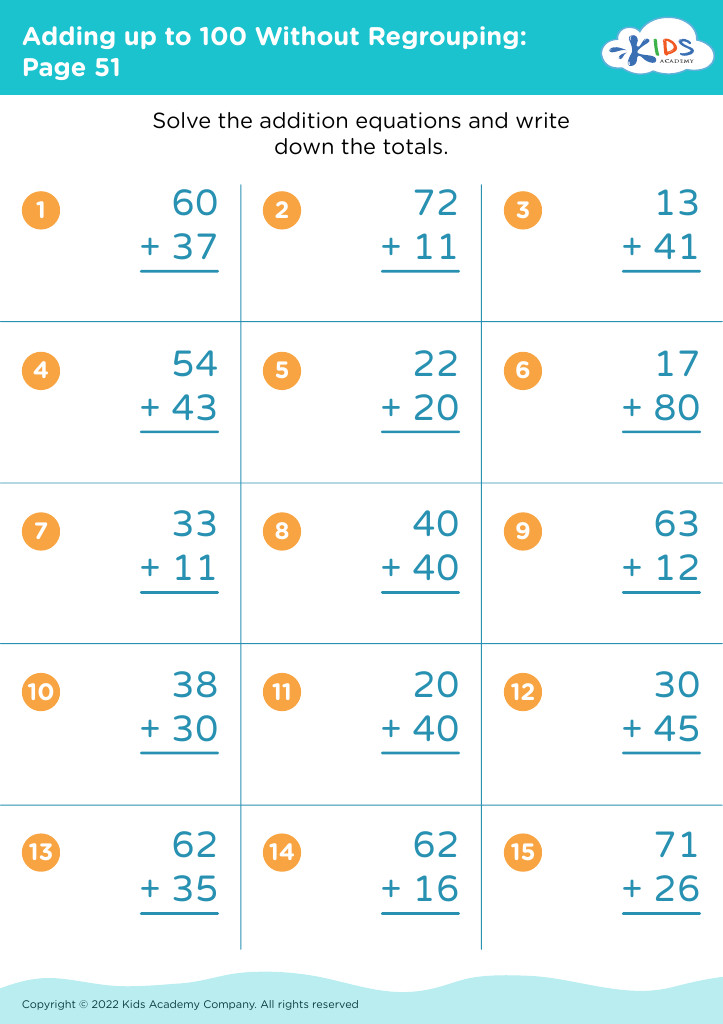
Adding up to 100 Without Regrouping: Page 51
Worksheet
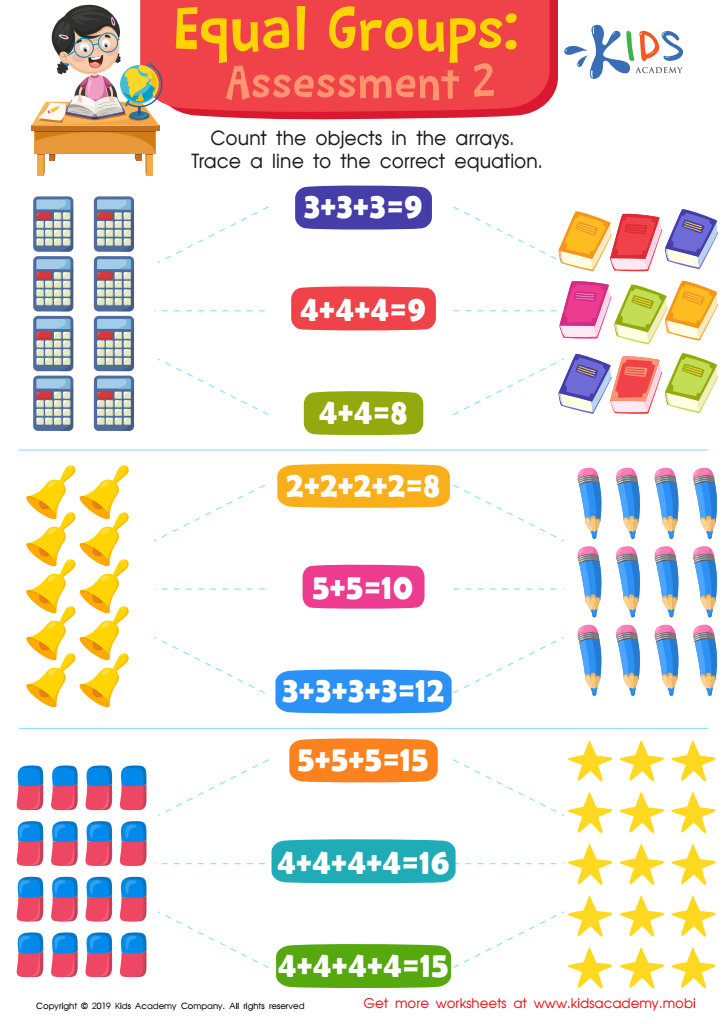
Equal Groups: Assessment 2 Worksheet
Equal Groups: Assessment 2 Worksheet
Get your kids to pay attention to learning with familiar objects, bright colors, and this worksheet. It has six arrays - ask kids to identify them and count the objects. Then, help them trace a line to the correct equation.
Equal Groups: Assessment 2 Worksheet
Worksheet
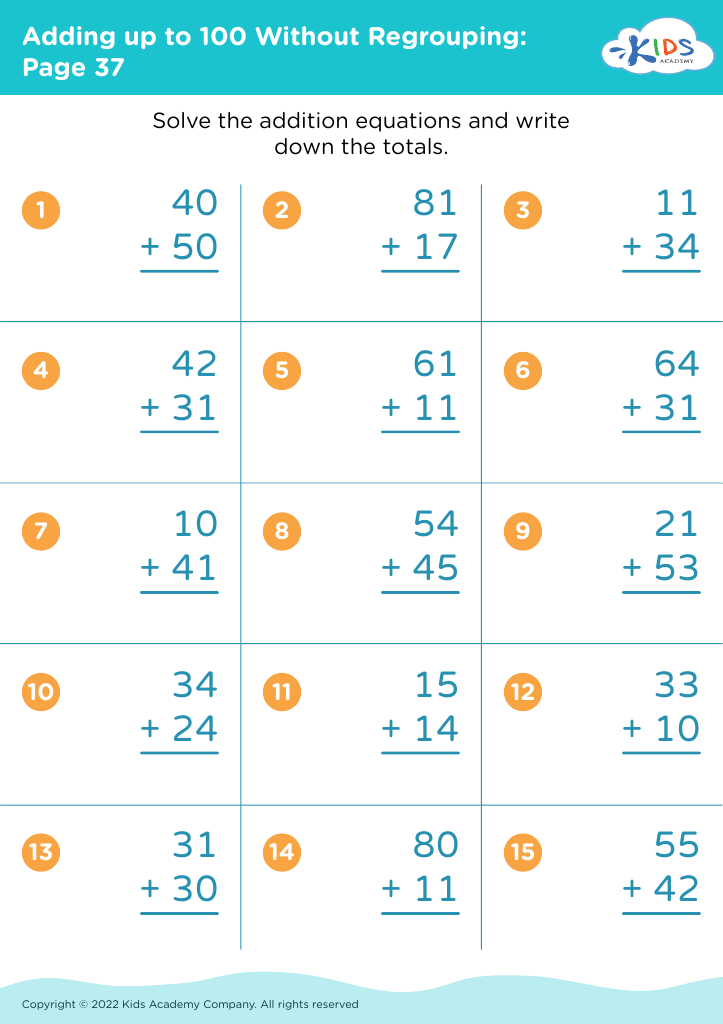
Adding up to 100 Without Regrouping: Page 37
Worksheet
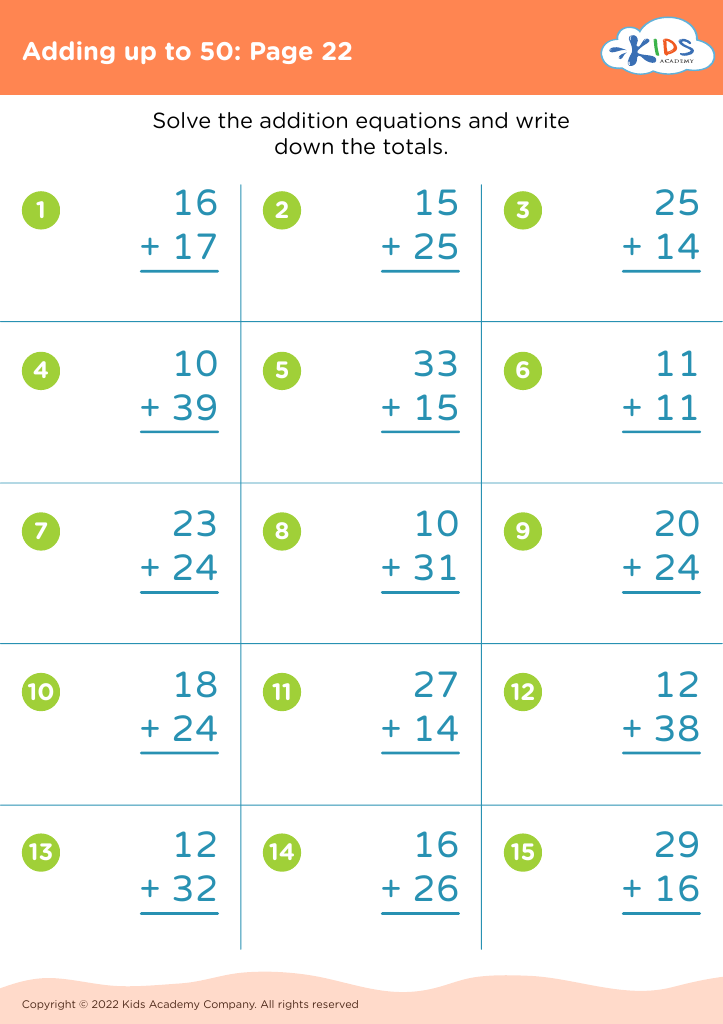
Adding up to 50: Page 22

Adding up to 50: Page 22

Adding up to 50: Page 22
Worksheet
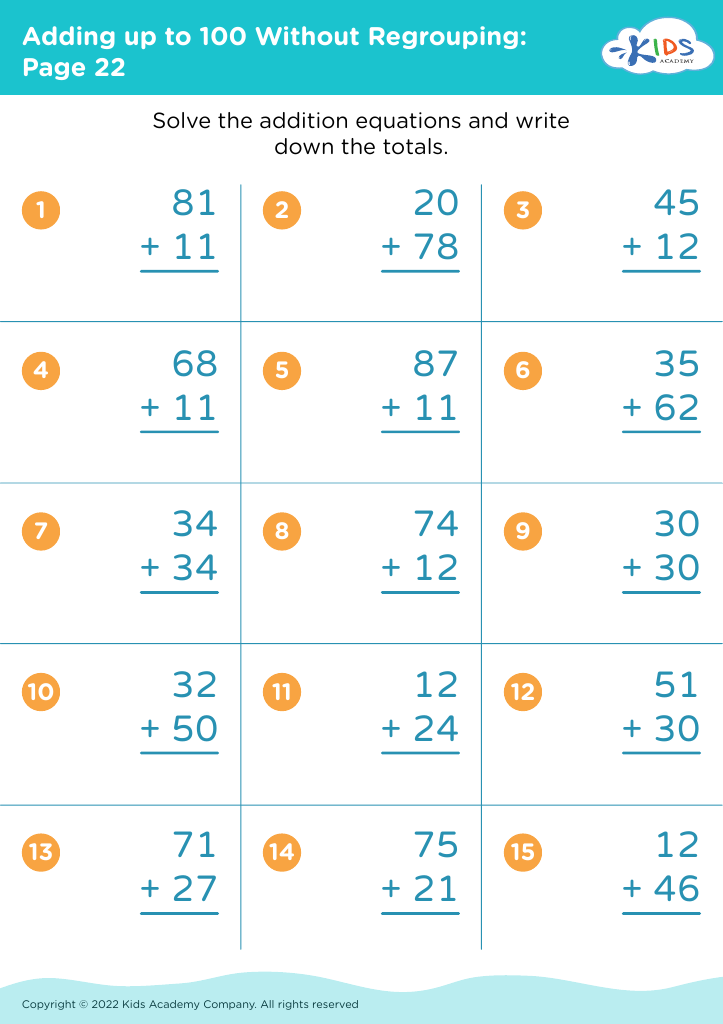
Adding up to 100 Without Regrouping: Page 22
Worksheet
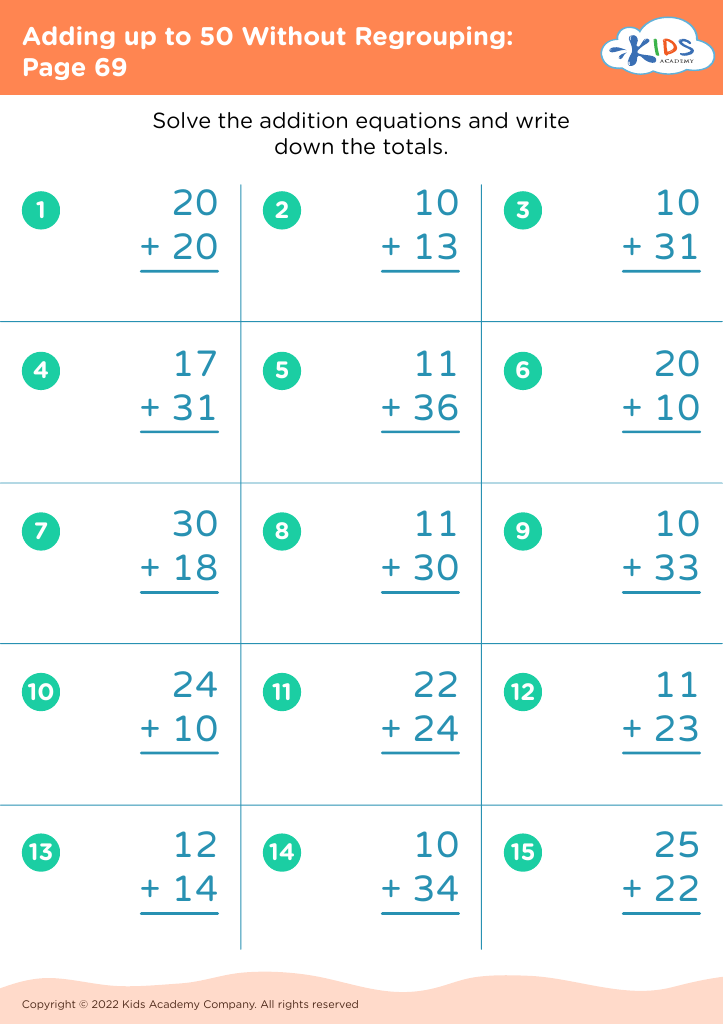
Adding up to 50 Without Regrouping: Page 69
Worksheet
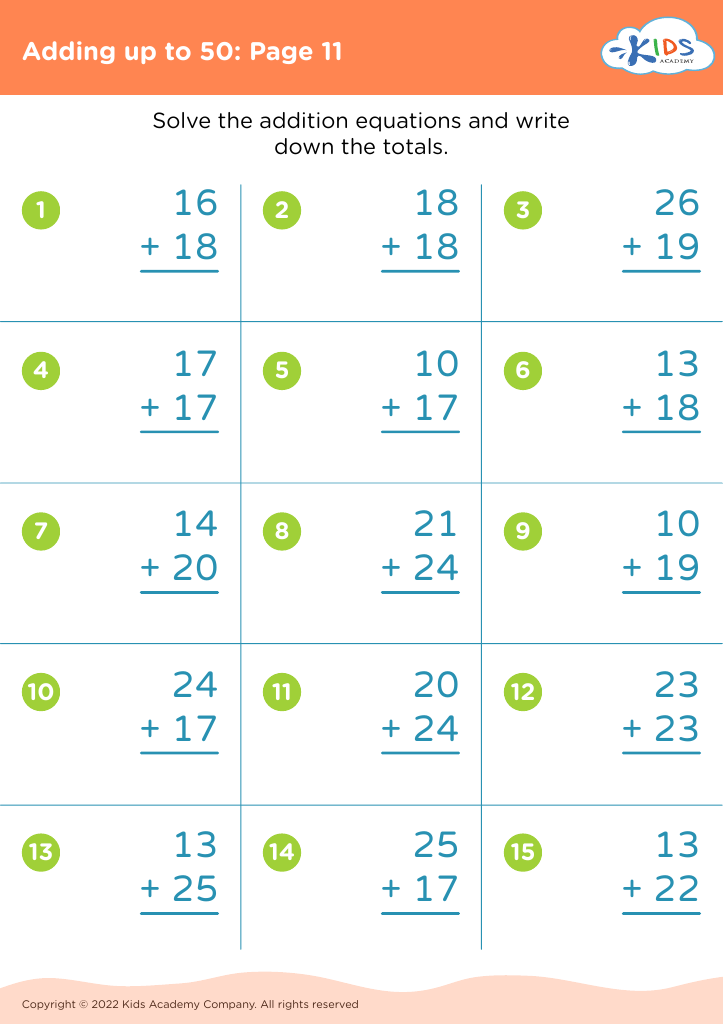
Adding up to 50: Page 11

Adding up to 50: Page 11

Adding up to 50: Page 11
Worksheet
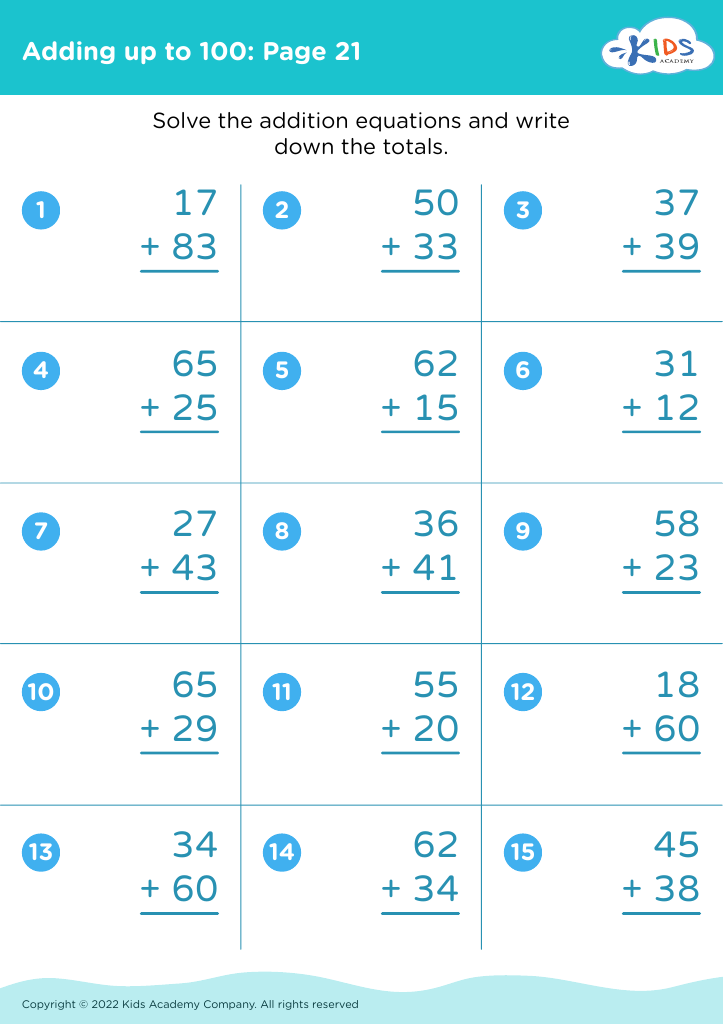
Adding up to 100: Page 21

Adding up to 100: Page 21

Adding up to 100: Page 21
Worksheet
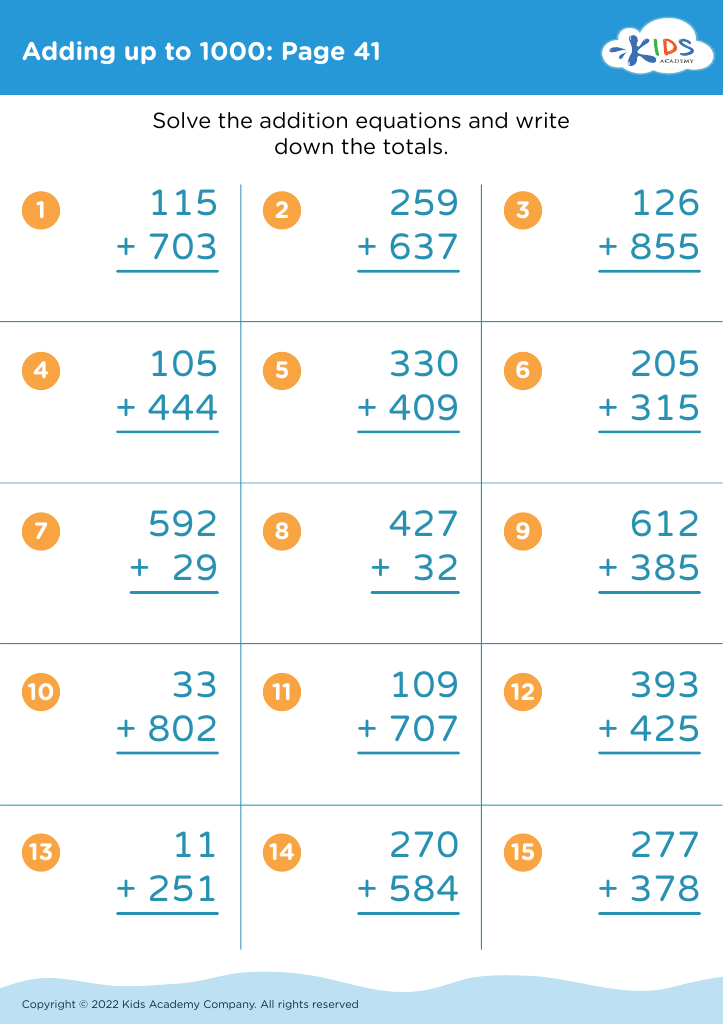
Adding up to 1000: Page 41

Adding up to 1000: Page 41

Adding up to 1000: Page 41
Worksheet
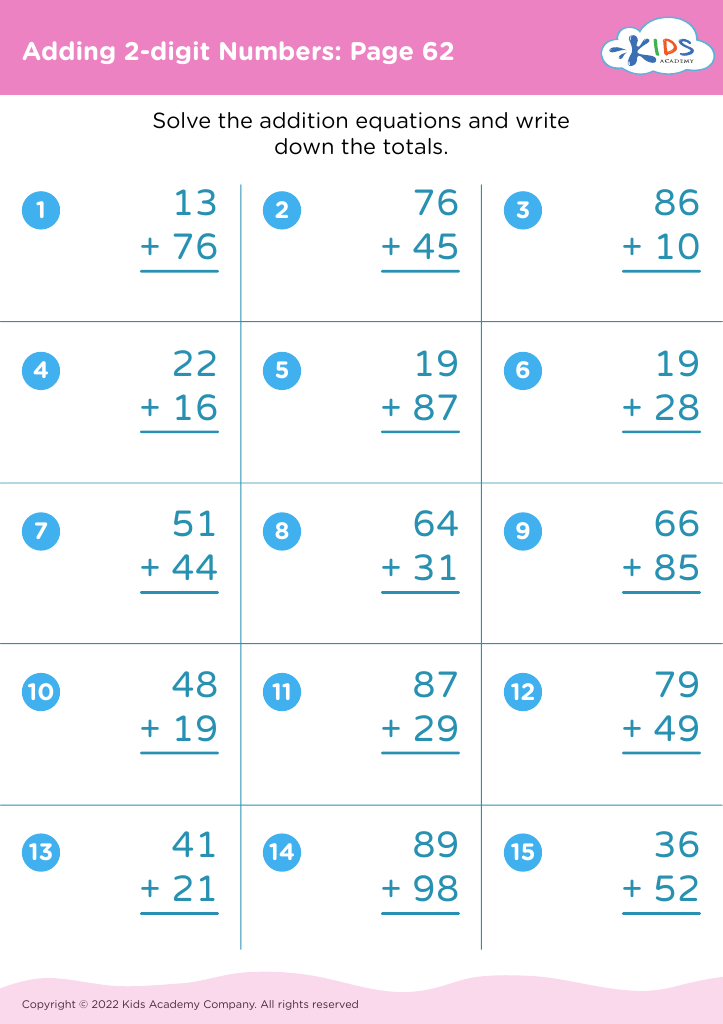
Adding 2-digit Numbers: Page 62

Adding 2-digit Numbers: Page 62

Adding 2-digit Numbers: Page 62
Worksheet
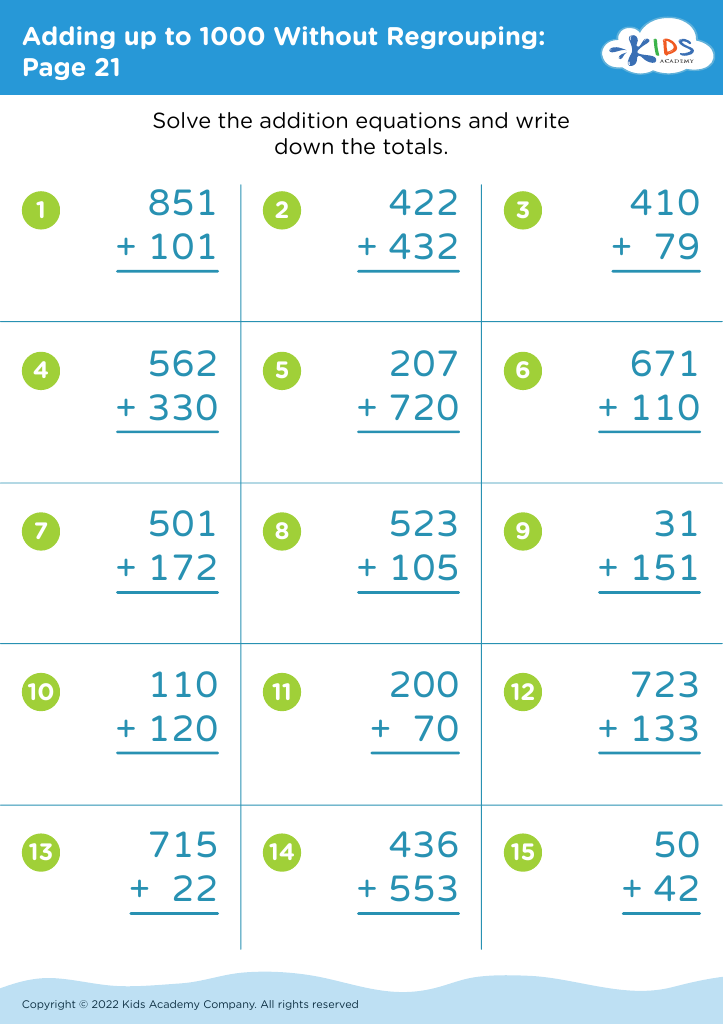
Adding up to 1000 Without Regrouping: Page 21
Worksheet
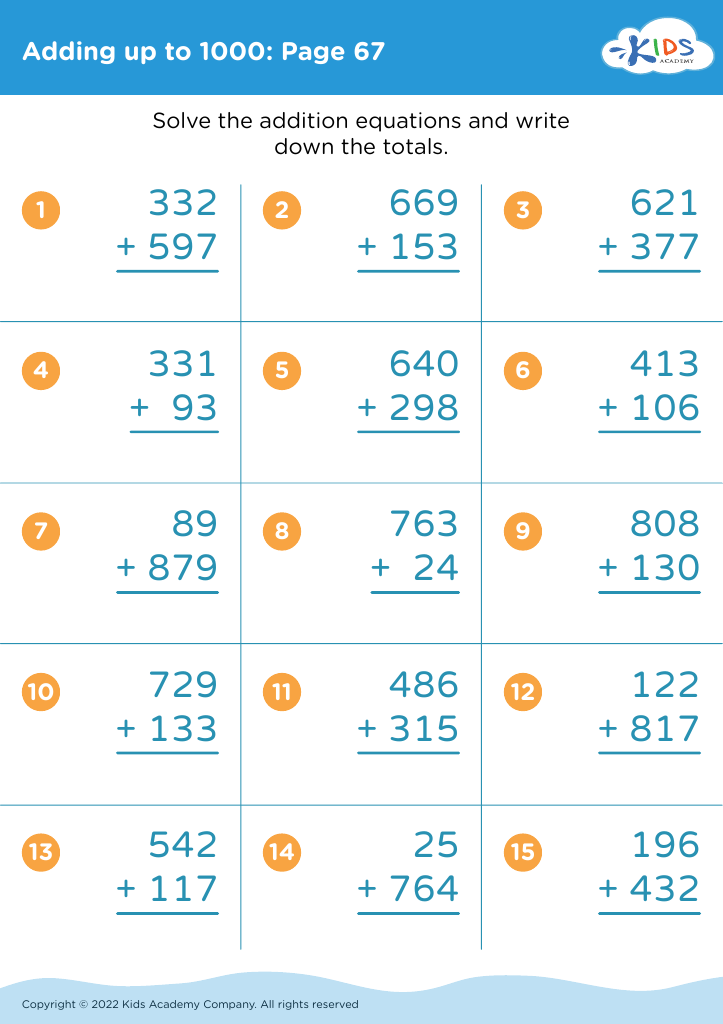
Adding up to 1000: Page 67

Adding up to 1000: Page 67

Adding up to 1000: Page 67
Worksheet


Understanding multiplication, addition, and subtraction is crucial for children ages 5-9 as these concepts form the foundation for their mathematical development and future academic success. During these early years, children develop critical cognitive skills and number sense, which are essential for problem-solving and logical reasoning.

Parents and teachers should care because mastering these basic operations enables children to handle more complex mathematical concepts as they progress in their education. A strong foundation in addition and subtraction helps kids to easily understand multiplication as a form of repeated addition. This conceptual understanding is vital as children transition to more advanced math in later grades.

Moreover, being fluent in these operations boosts children's confidence and reduces math anxiety, which often emerges in later years if foundational skills are lacking. Engaging children in a fun and supportive learning environment can foster a positive attitude towards math.

Additionally, these skills impact everyday life situations—from managing finances to tackling word problems in school. By encouraging children to understand and appreciate the relevance of these operations, parents and teachers play a vital role in shaping their mathematical self-efficacy and long-term academic success. This investment in early math education will serve them throughout their life.