Filters

94 filtered results

Clear all filters
Favorites
With answer key
Interactive

94 filtered results

Difficulty Level

Grade


Explore our engaging Visual Learning Addition & Subtraction Worksheets designed for children ages 5-9. These worksheets use colorful visuals and fun illustrations to reinforce essential mathematical concepts, making learning interactive and enjoyable. Tailored for early learners, they help develop number recognition, counting, and basic arithmetic skills through visual aids like images and diagrams. Each worksheet encourages critical thinking and problem-solving while promoting an understanding of addition and subtraction in a playful manner. Perfect for at-home practice or classroom use, our resources ensure that young learners grasp foundational math skills effectively! Download and nurture your child's love for learning today!
Check out this FREE Trial Lesson on Addition & Subtraction for age 5-9!

L

Favorites
With answer key
Interactive
  • 5-9
  • Visual Learning
  • Addition & Subtraction
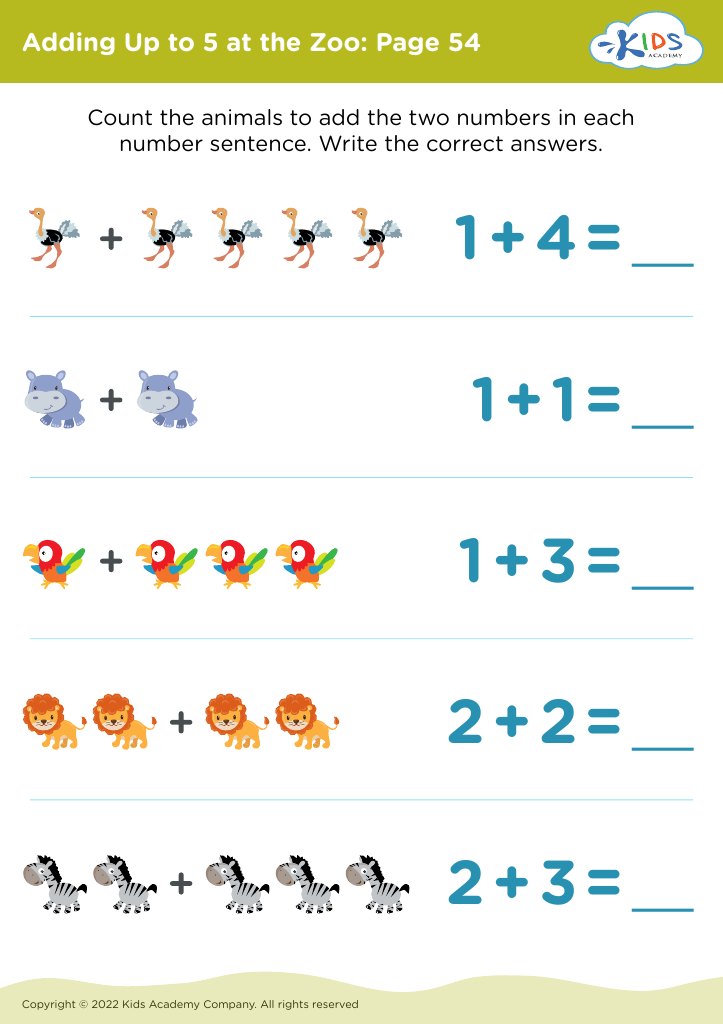
Adding Up to 5 at the Zoo: Page 54
Worksheet
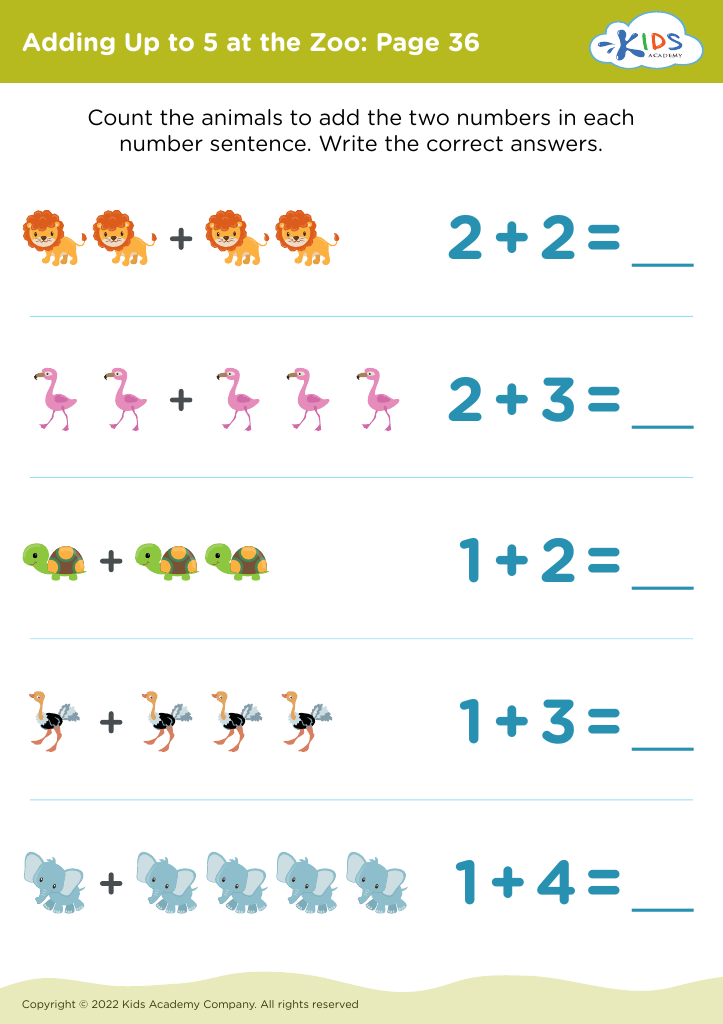
Adding Up to 5 at the Zoo: Page 36
Worksheet
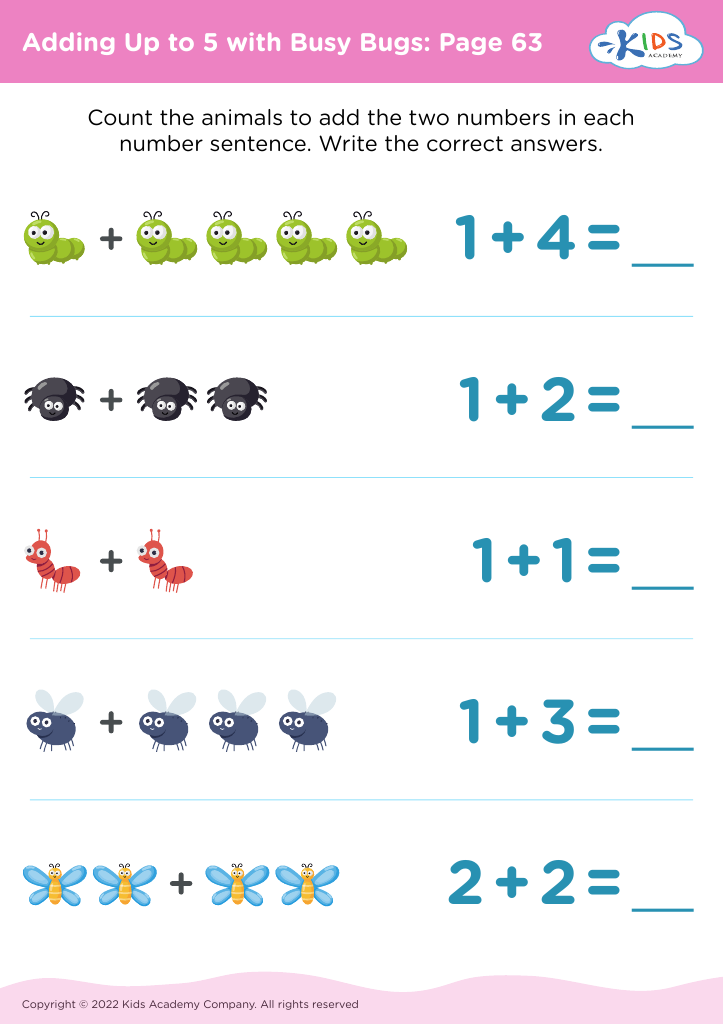
Adding Up to 5 with Busy Bugs: Page 63
Worksheet
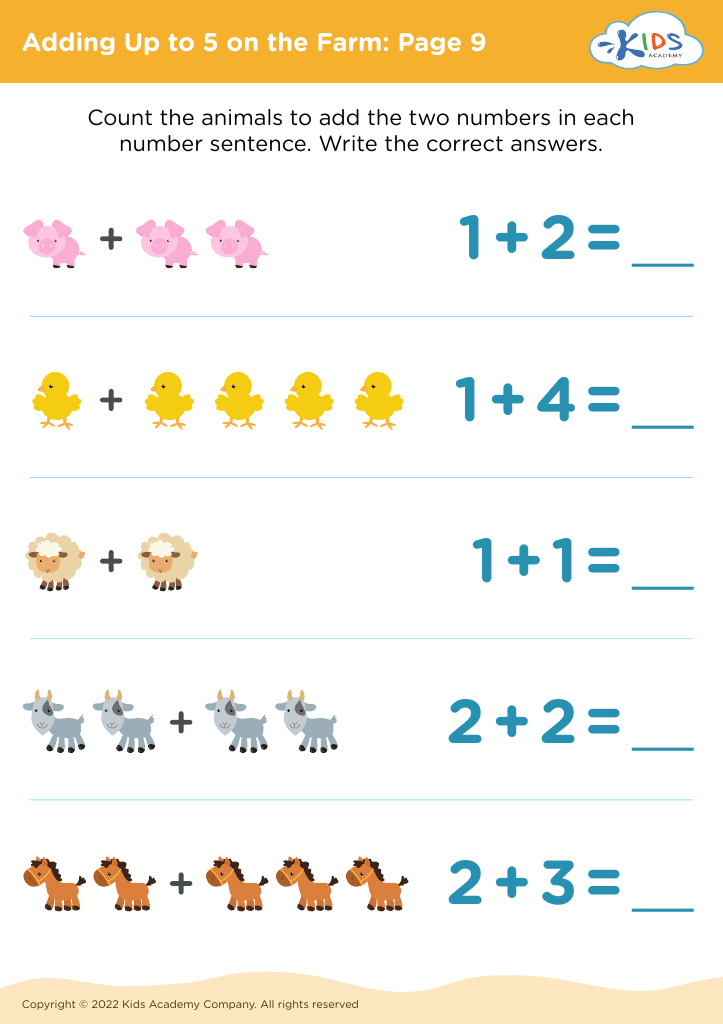
Adding Up to 5 on the Farm: Page 9
Worksheet
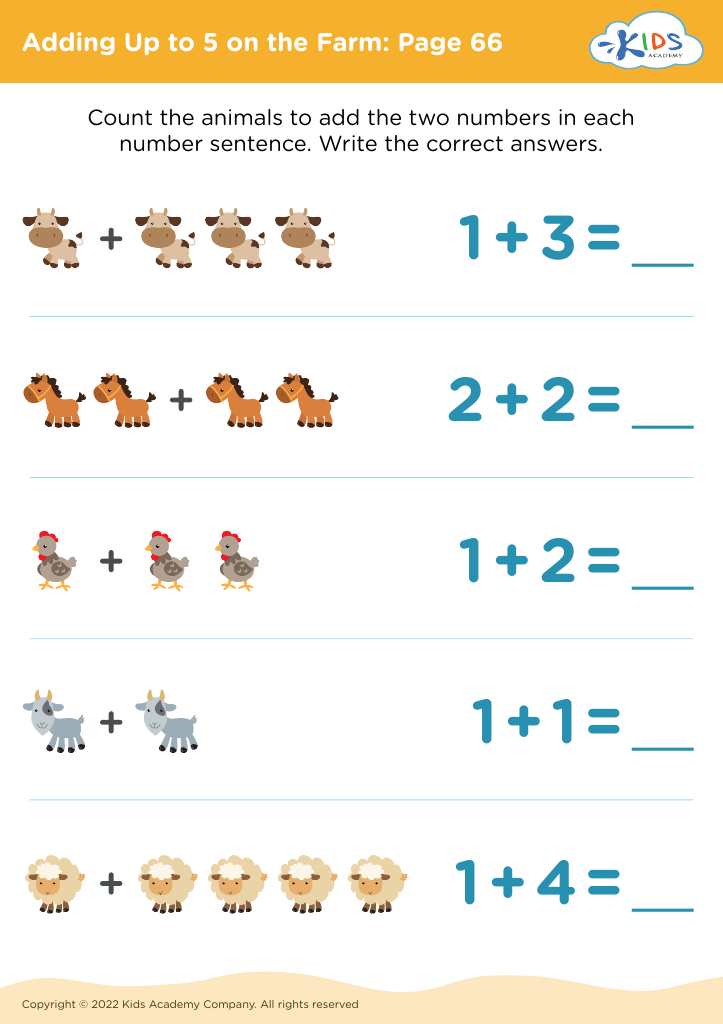
Adding Up to 5 on the Farm: Page 66
Worksheet
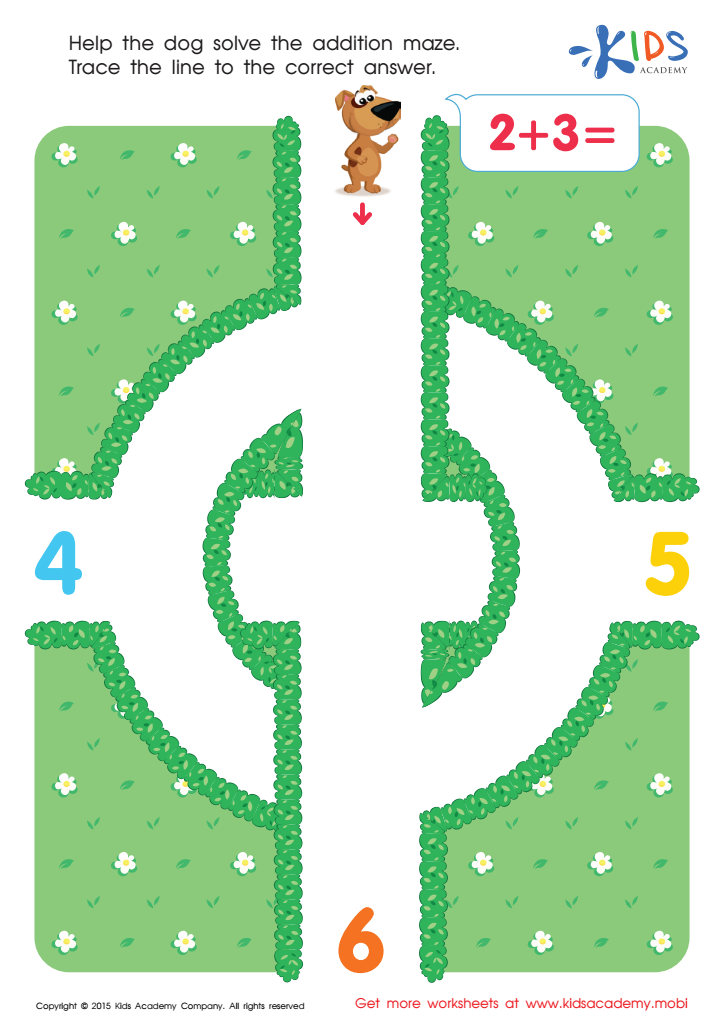
Math: Two And Three Addition PDF Worksheet

Two And Three Addition Worksheet

Give your children the task and let them find the path to the right answer while they make their way through the maze, and don't forget to let them trace the path.
Two And Three Addition Worksheet
Worksheet
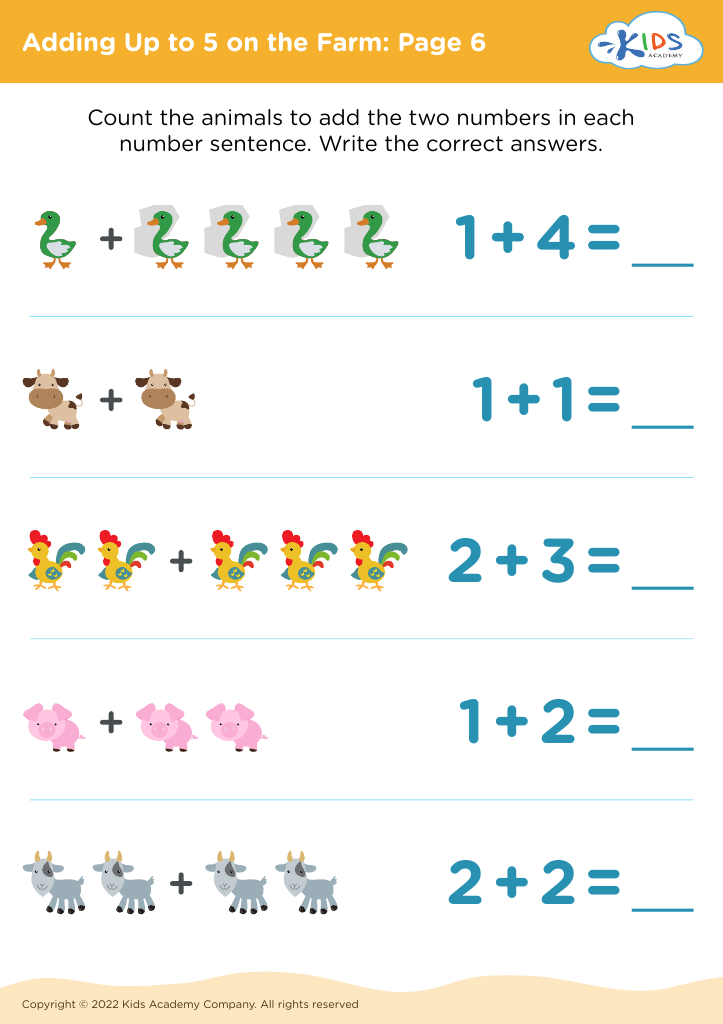
Adding Up to 5 on the Farm: Page 6
Worksheet
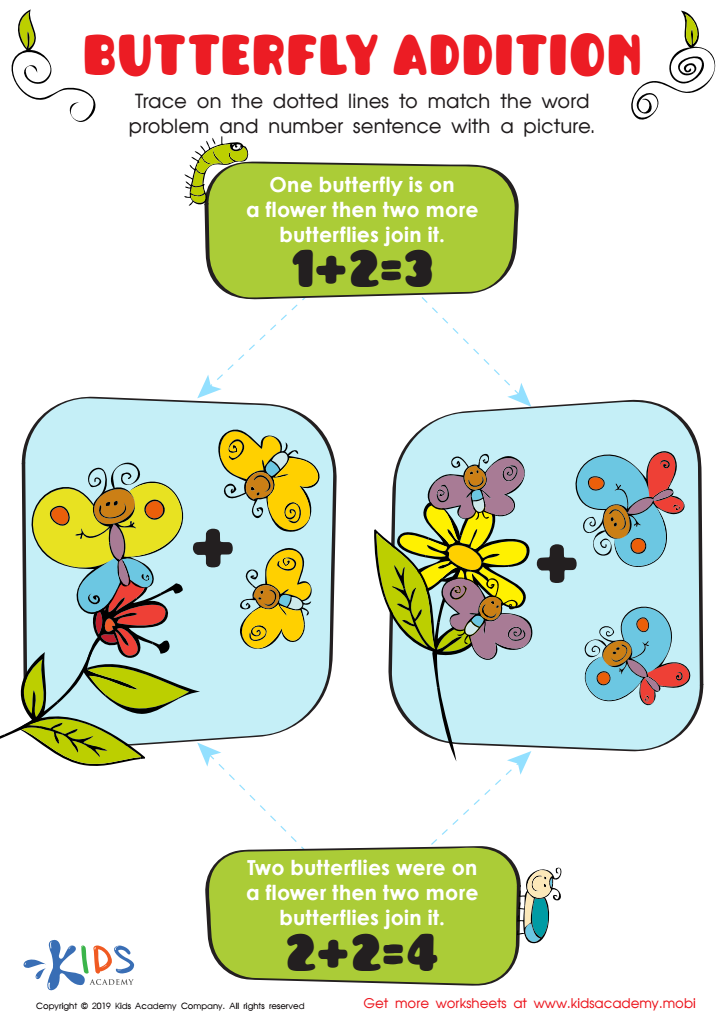
Butterfly Addition Worksheet

Butterfly Addition Worksheet

This tracing sheet is great for kids to work on math skills and have fun too. Read the word problems to them, then help them trace the dotted lines to match the problem and number sentence to a picture. Not only is it educational, it's beautiful too - your kids will love learning about butterflies!
Butterfly Addition Worksheet
Worksheet
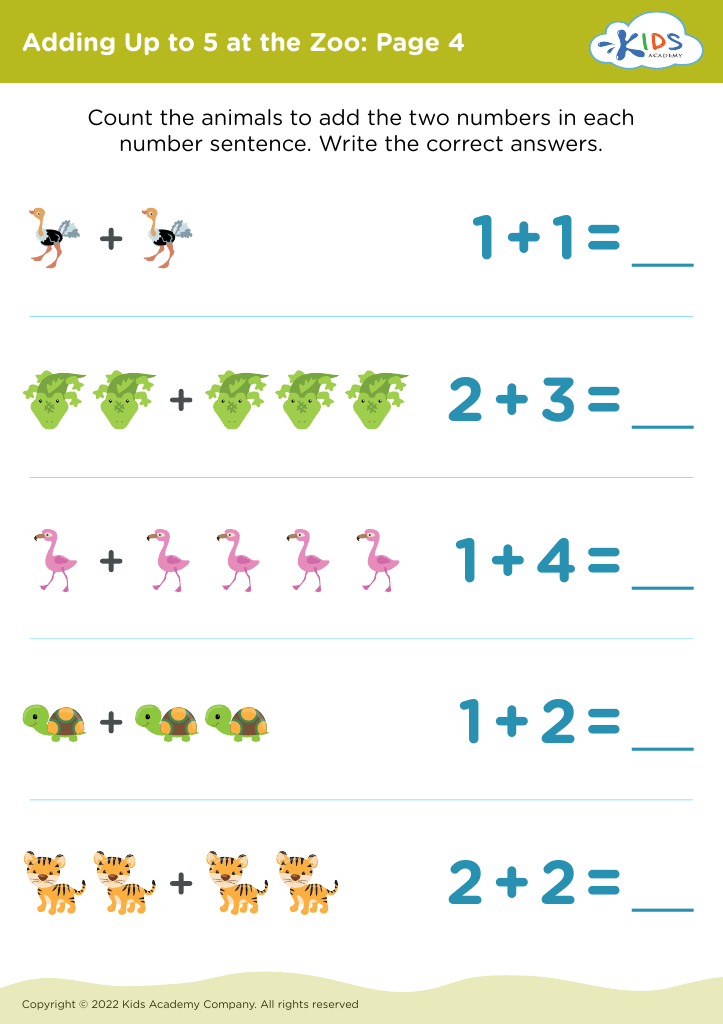
Adding Up to 5 at the Zoo: Page 4

Adding Up to 5 at the Zoo: Page 4

Adding Up to 5 at the Zoo: Page 4
Worksheet
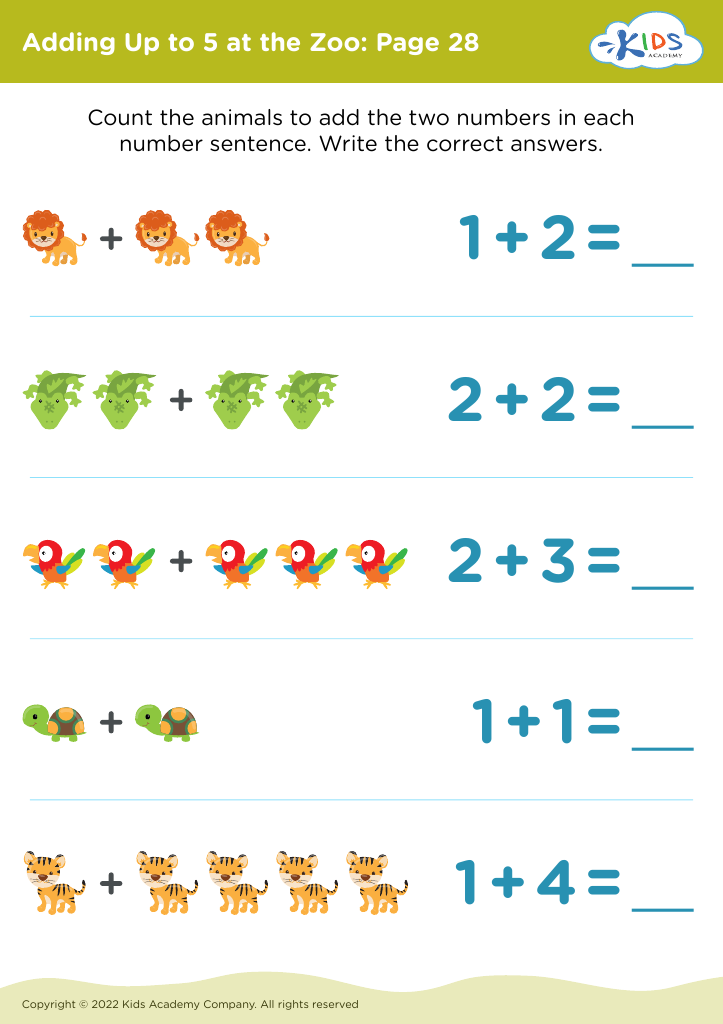
Adding Up to 5 at the Zoo: Page 28
Worksheet
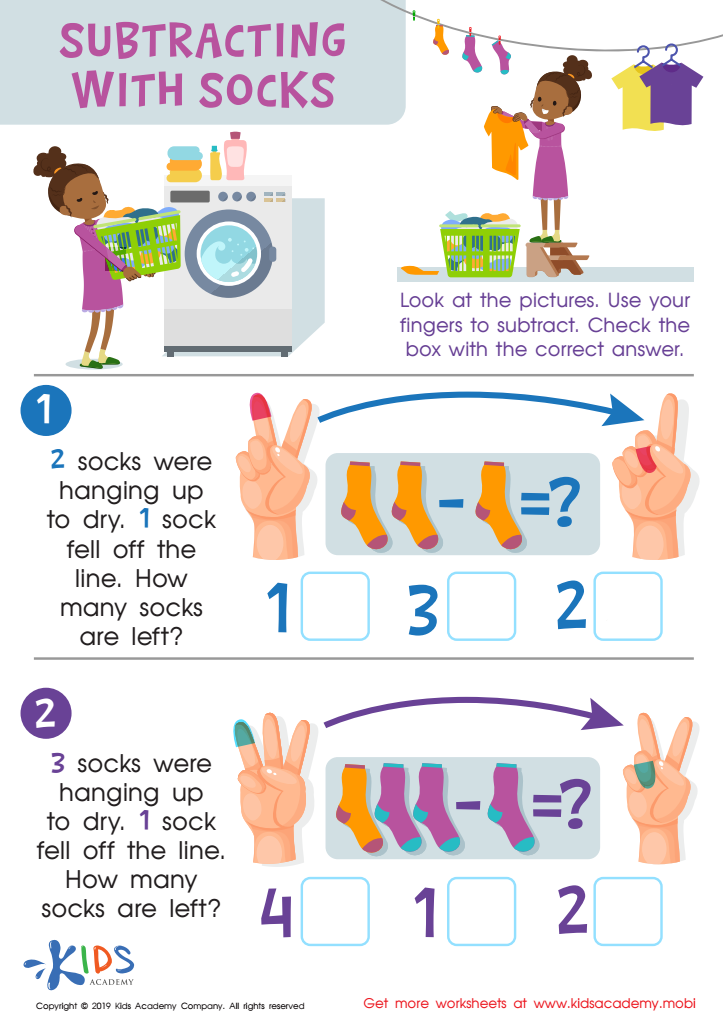
Subtracting Socks Worksheet
Subtracting Socks Worksheet
Before beginning this exercise with your children, warm them up with a counting game. If math is not their favorite subject, use this worksheet. Help them read the two word problems, then use their fingers to count and subtract. Ask them to select the correct answer and check the box.
Subtracting Socks Worksheet
Worksheet
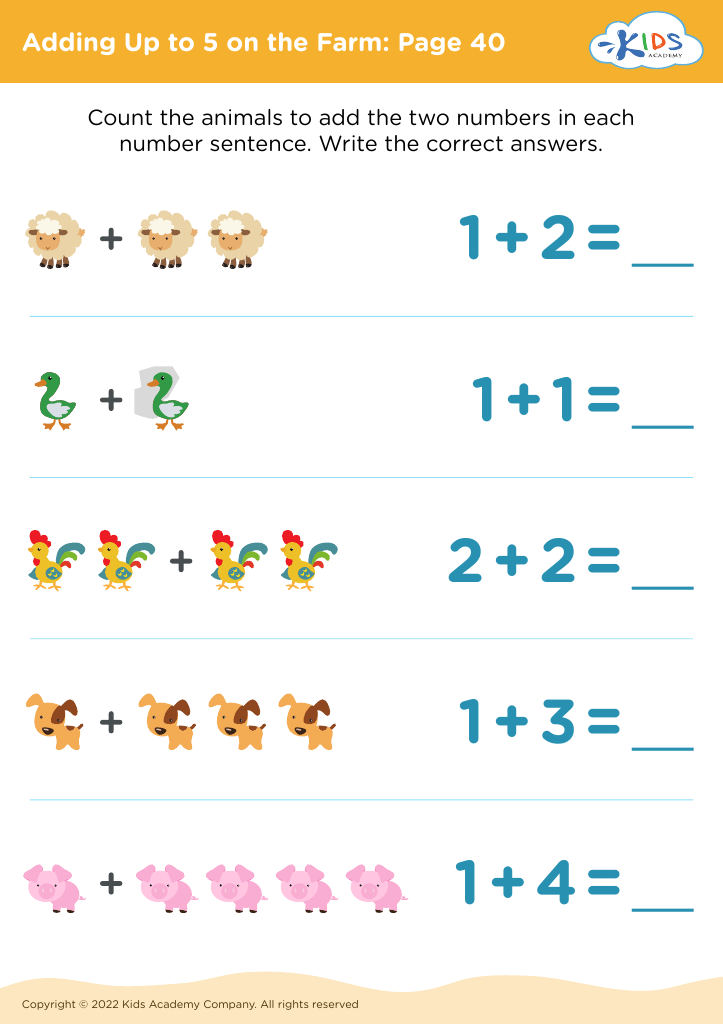
Adding Up to 5 on the Farm: Page 40
Worksheet
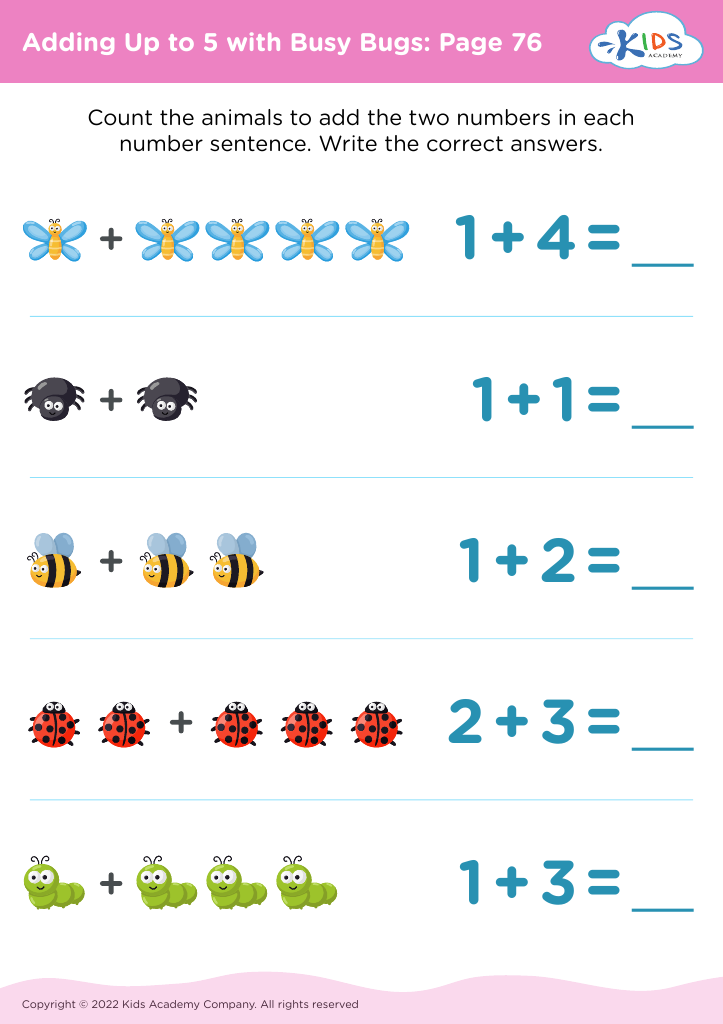
Adding Up to 5 with Busy Bugs: Page 76
Worksheet
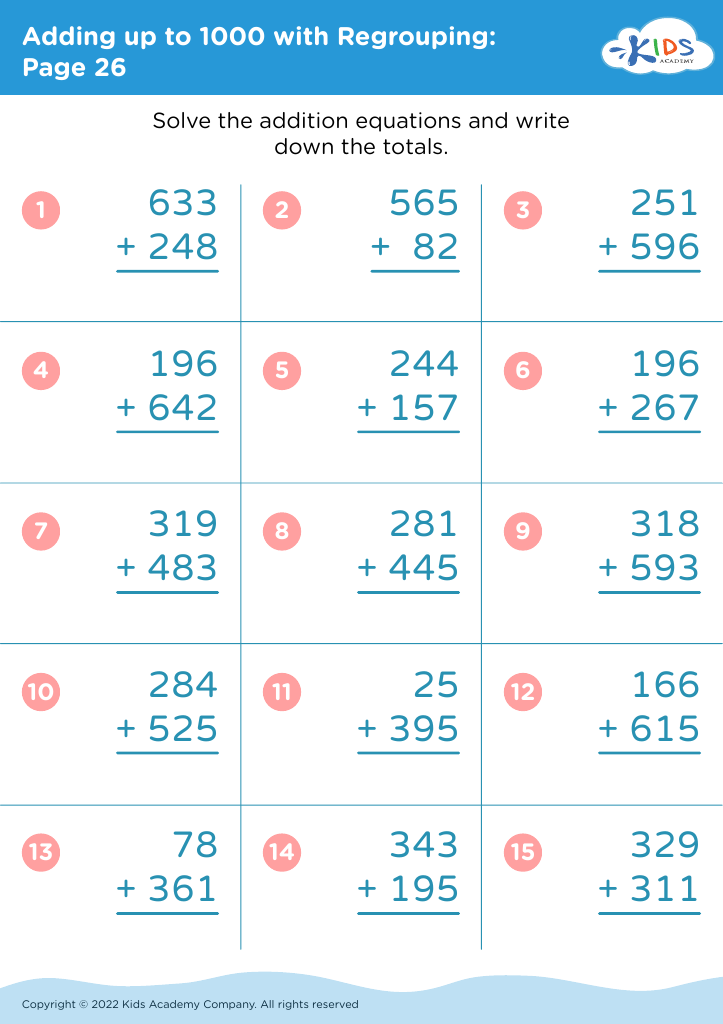
Adding up to 1000 with Regrouping: Page 26
Worksheet
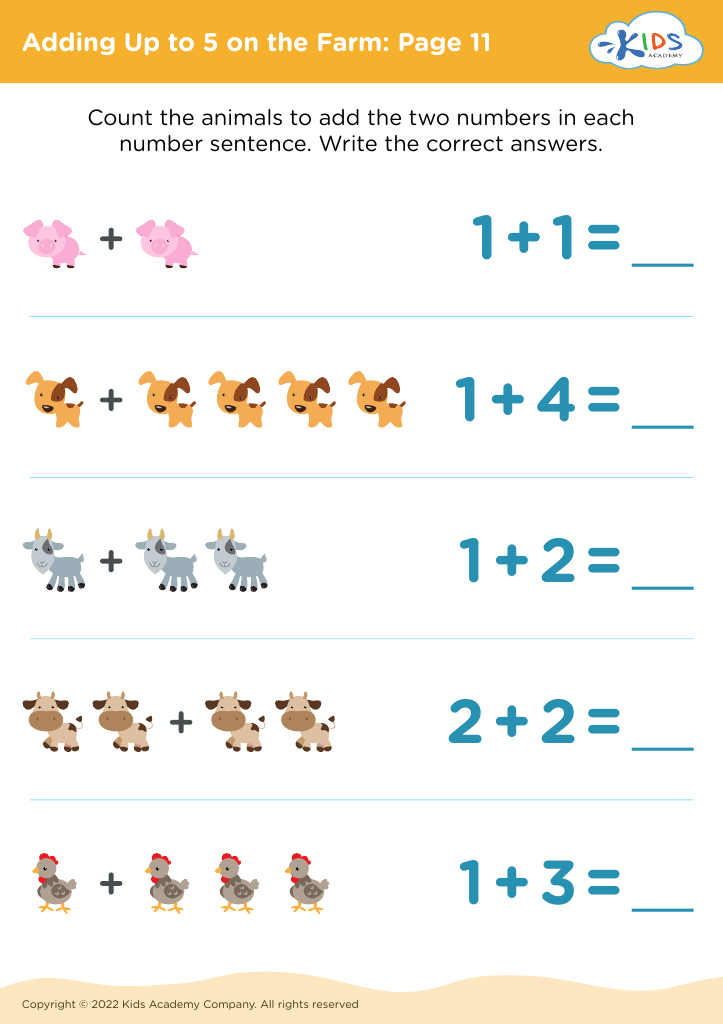
Adding Up to 5 on the Farm: Page 11
Worksheet
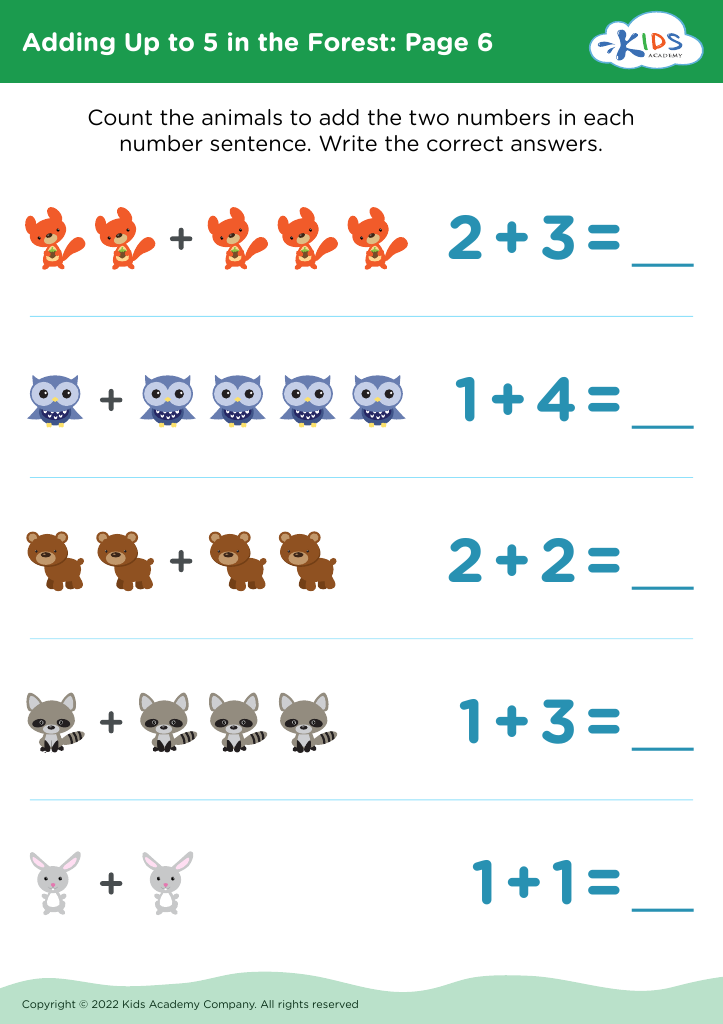
Adding Up to 5 in the Forest: Page 6
Worksheet
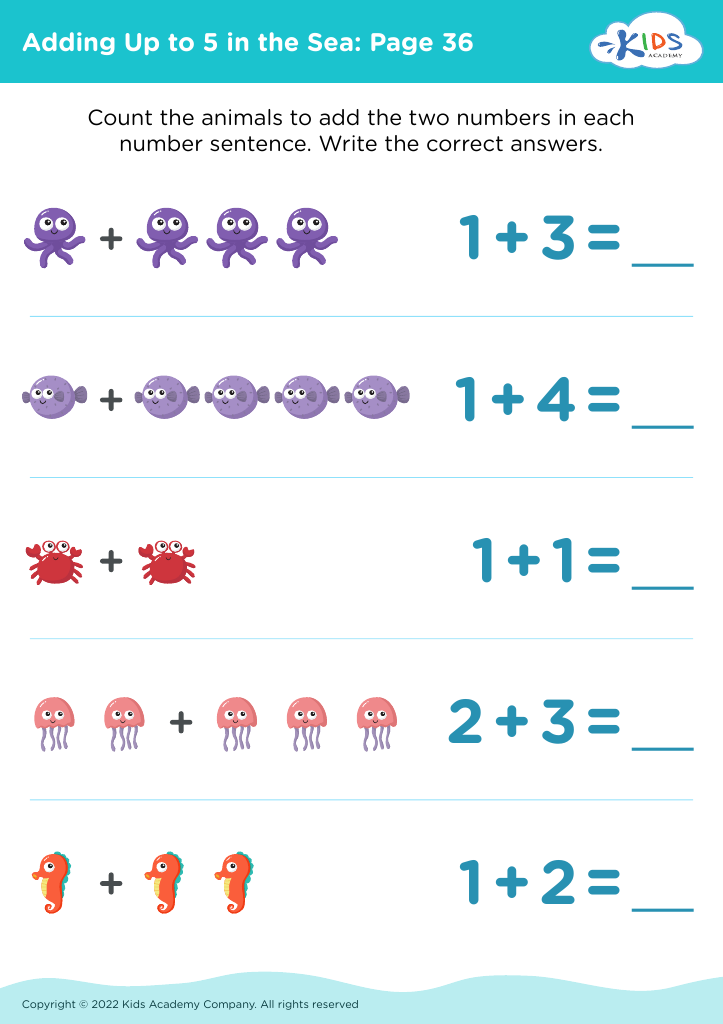
Adding Up to 5 in the Sea: Page 36
Worksheet
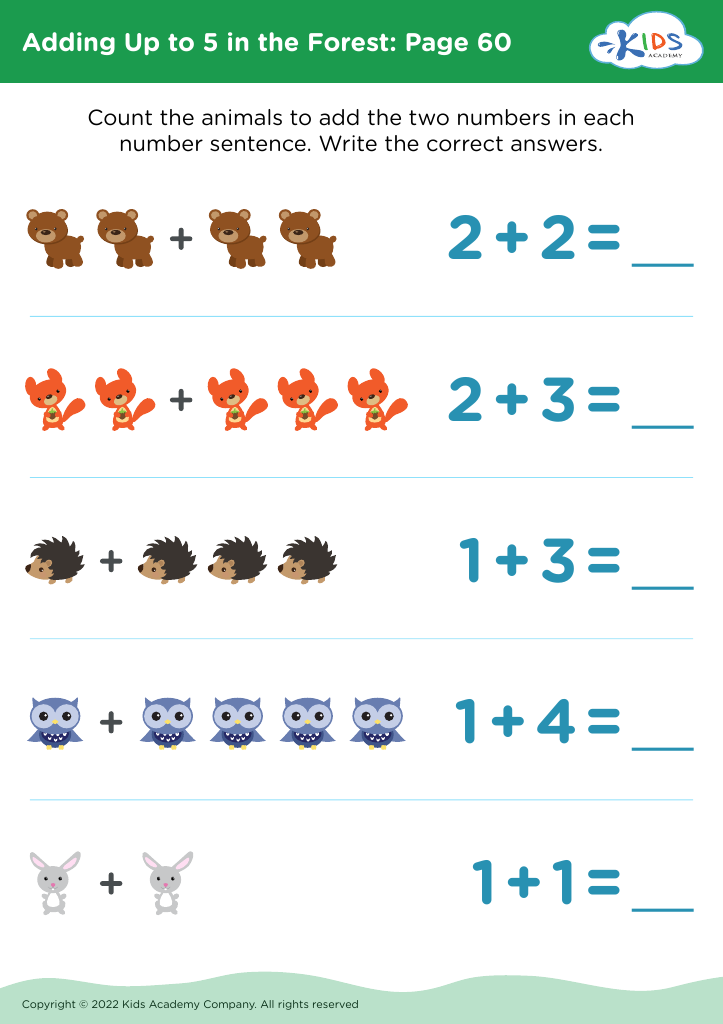
Adding Up to 5 in the Forest: Page 60
Worksheet
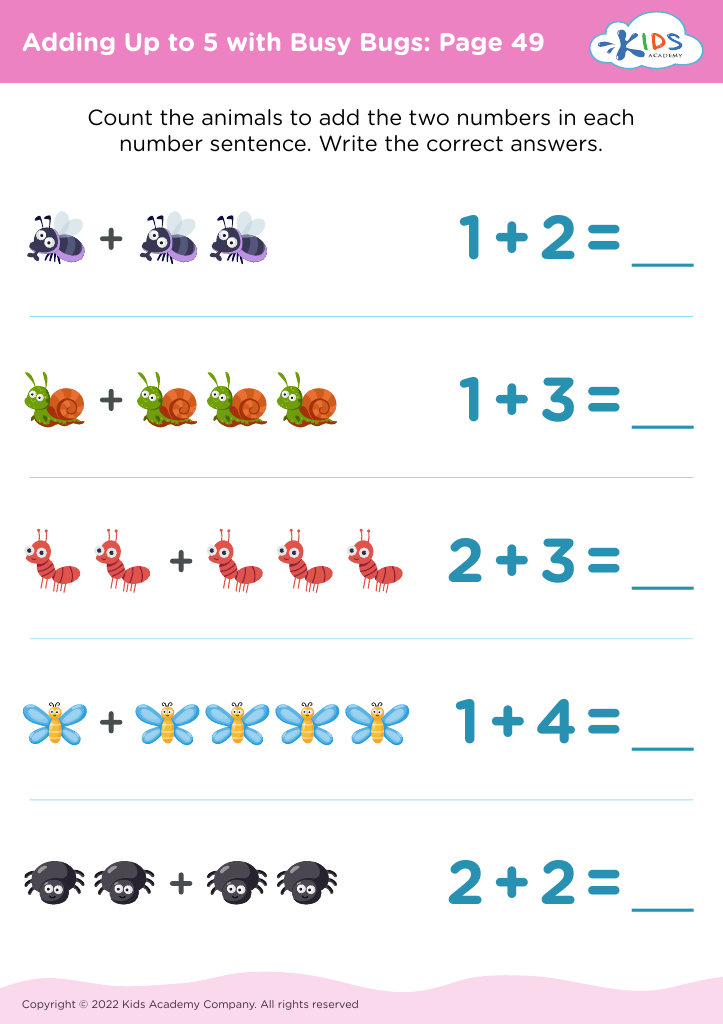
Adding Up to 5 with Busy Bugs: Page 49
Worksheet
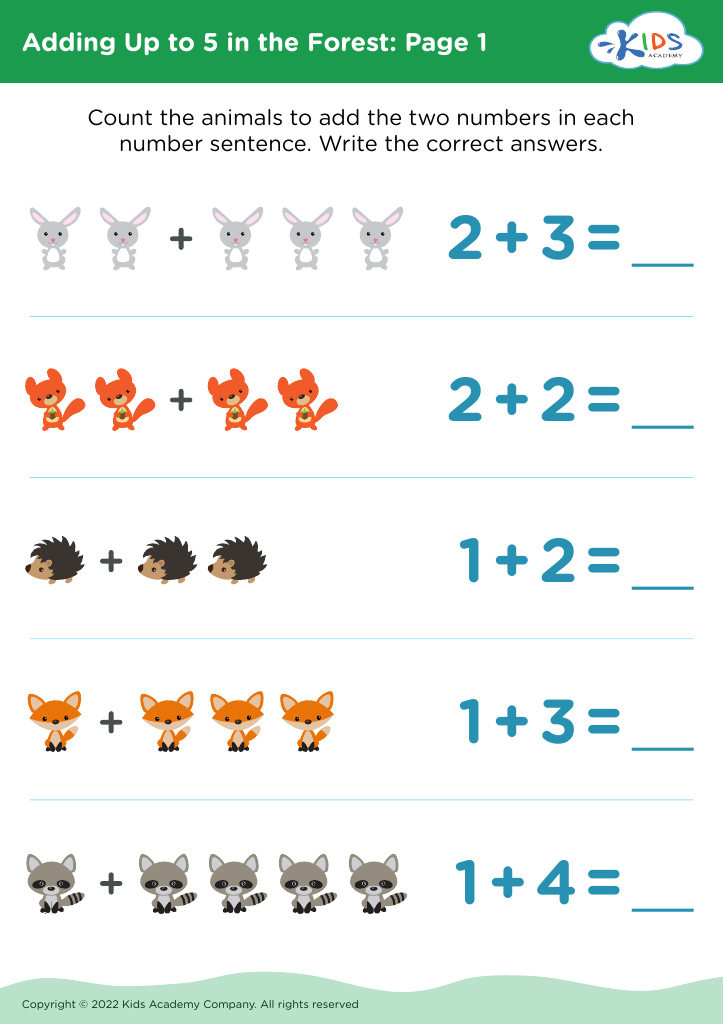
Adding Up to 5 in the Forest: Page 1
Worksheet
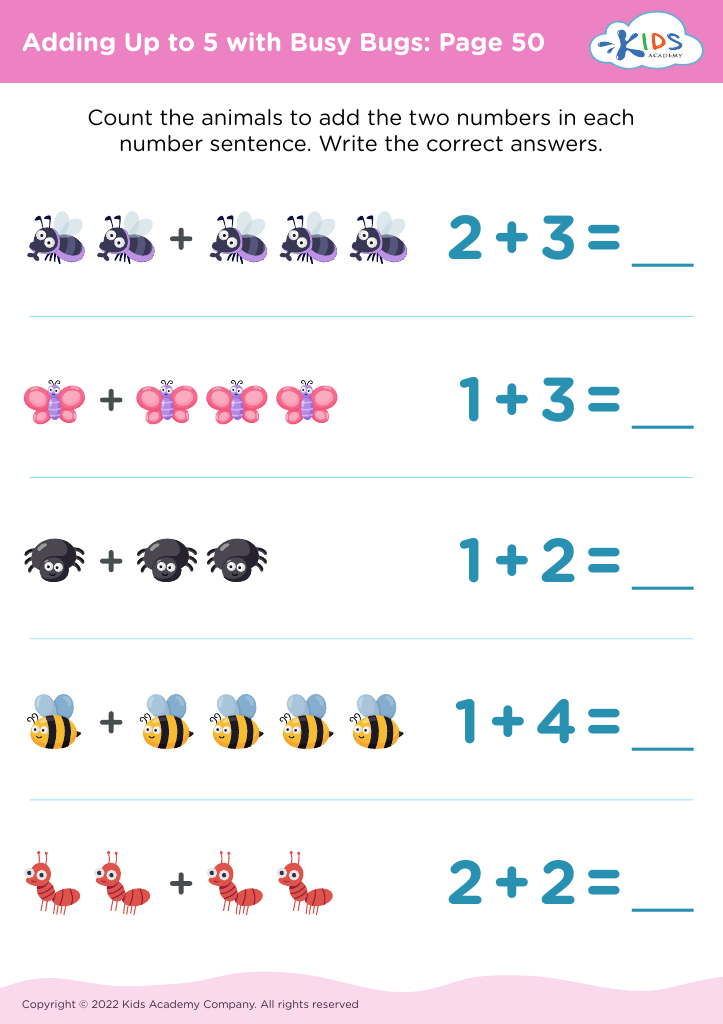
Adding Up to 5 with Busy Bugs: Page 50
Worksheet
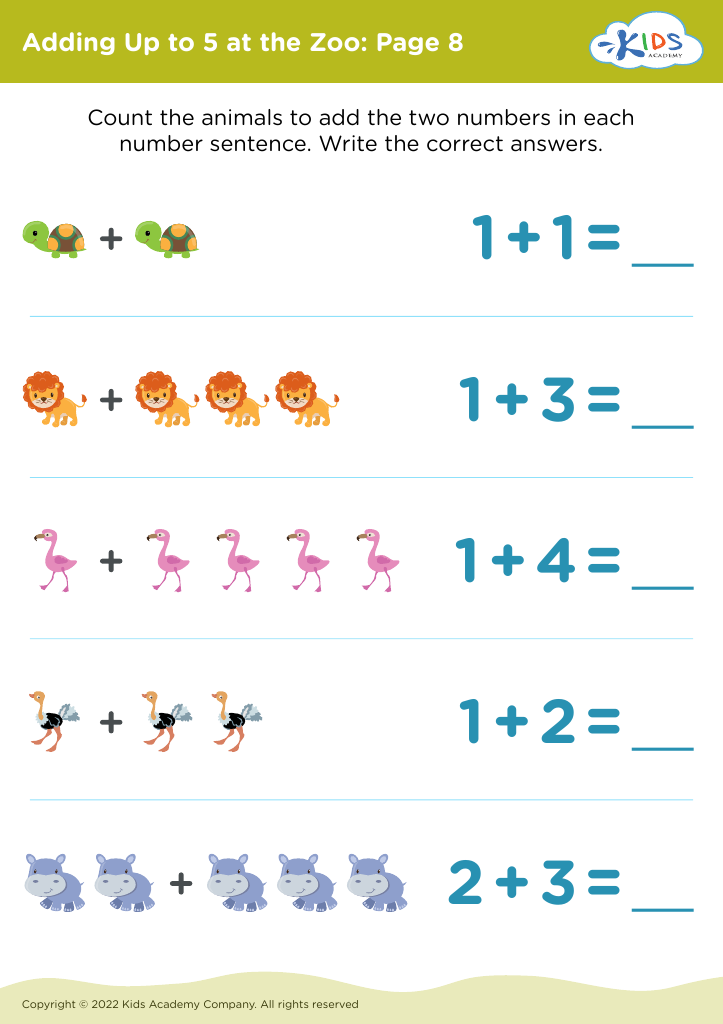
Adding Up to 5 at the Zoo: Page 8

Adding Up to 5 at the Zoo: Page 8

Adding Up to 5 at the Zoo: Page 8
Worksheet
Free 2 digit addition worksheet

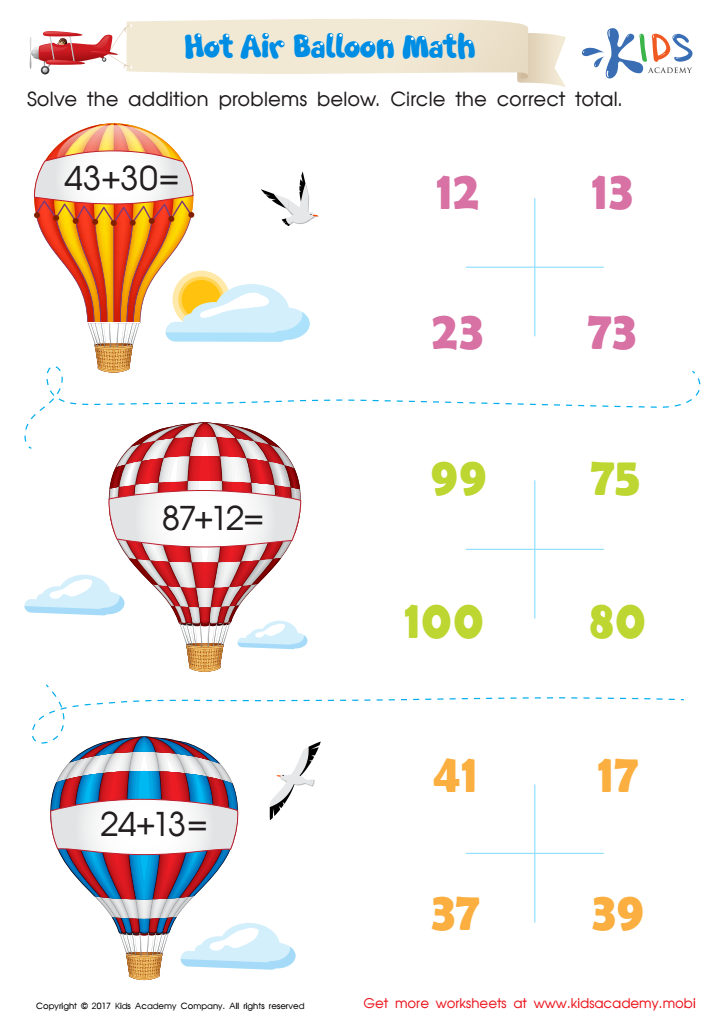
Hot Air Balloon Math Worksheet
It uses engaging pictures and a hot air balloon theme to keep your child interested, and it’s designed to build addition confidence.
Hot Air Balloon Math Worksheet

Worksheet
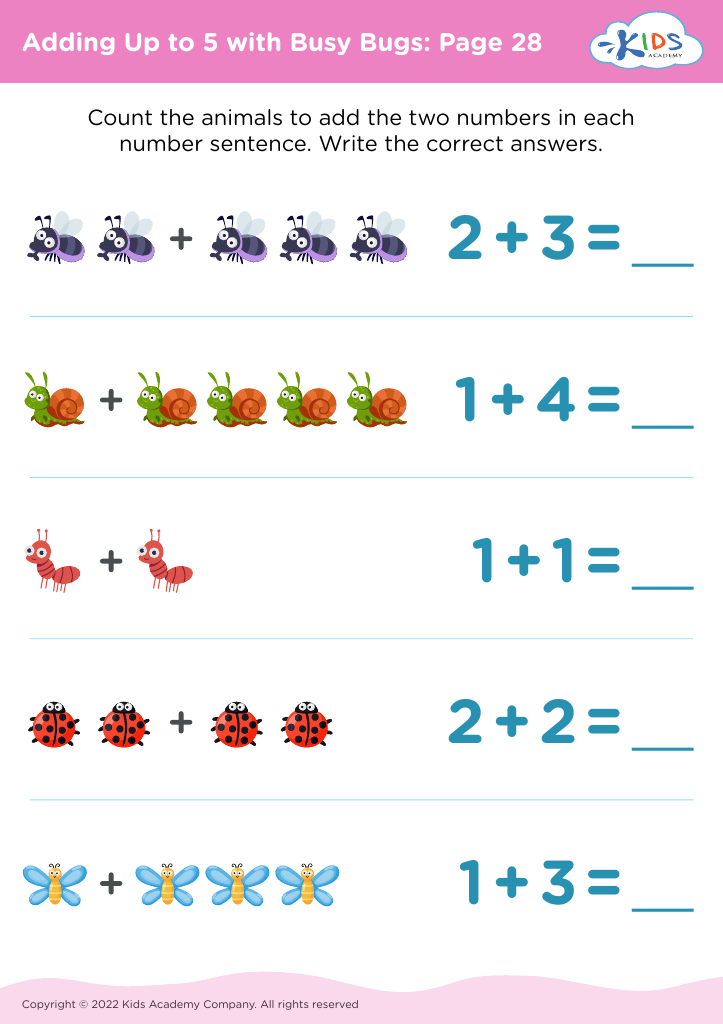
Adding Up to 5 with Busy Bugs: Page 28
Worksheet


Visual learning is a crucial method for teaching addition and subtraction to children aged 5-9 as it engages their natural curiosity and enhances comprehension. Young learners often benefit from visual aids such as number lines, counters, and colorful charts, which help bridge the gap between abstract concepts and concrete understanding.

Creating a visual representation of mathematical problems allows children to see relationships and patterns, making it easier for them to grasp basic operations. This approach is especially beneficial for diverse learning styles; some children are visual learners, while to others, a hands-on method can solidify their understanding.

Furthermore, visual learning fosters problem-solving skills and critical thinking, as children learn to manipulate visuals to arrive at solutions. It also supports memorization of math facts, enabling them to become more confident in their abilities.

Teachers and parents who incorporate visual strategies in teaching can boost motivation and engagement among students. Ultimately, fostering a strong foundation in visual learning during these formative years promotes higher achievement in mathematics and other subjects as children progress in their education. Investing in this learning style ensures children develop the skills they need for continued success.