Filters

1258 filtered results

Clear all filters
Favorites
With answer key
Interactive

1258 filtered results

Difficulty Level

Grade


Subject

    Check out this FREE Trial Lesson on Addition for age 5-9!

    P

    Favorites
    With answer key
    Interactive
    • 5-9
    • Addition
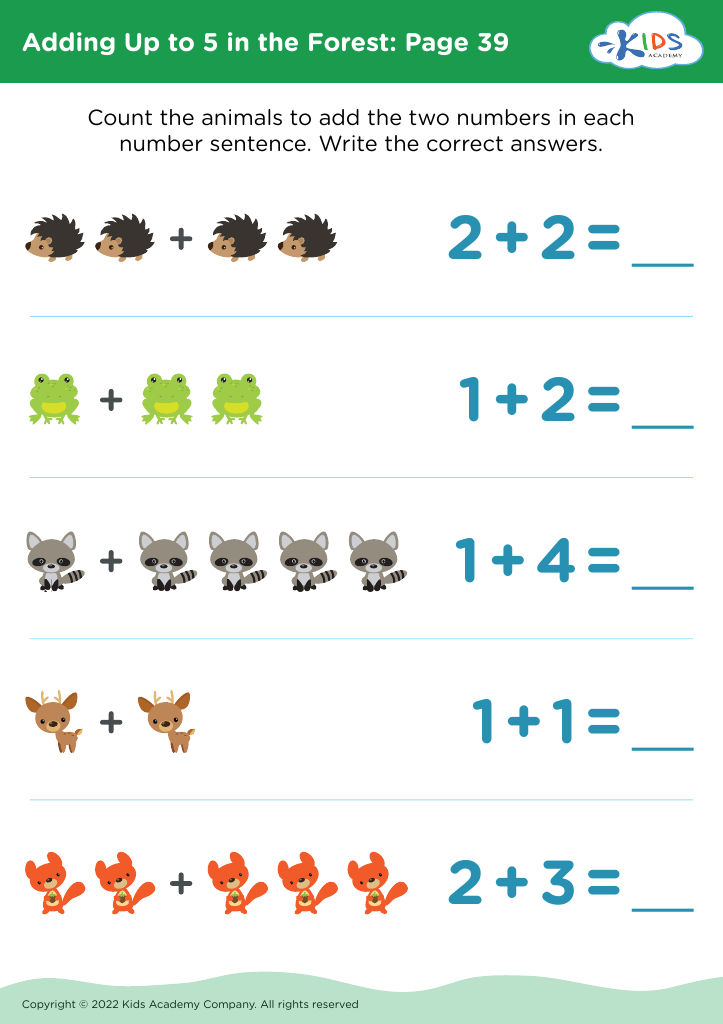
    Adding Up to 5 in the Forest: Page 39
    Adding Up to 5 in the Forest: Page 39
    Adding Up to 5 in the Forest: Page 39
    Worksheet
    Adding up to 100: Page 36
    Adding up to 100: Page 36

    Adding up to 100: Page 36

    Adding up to 100: Page 36
    Worksheet
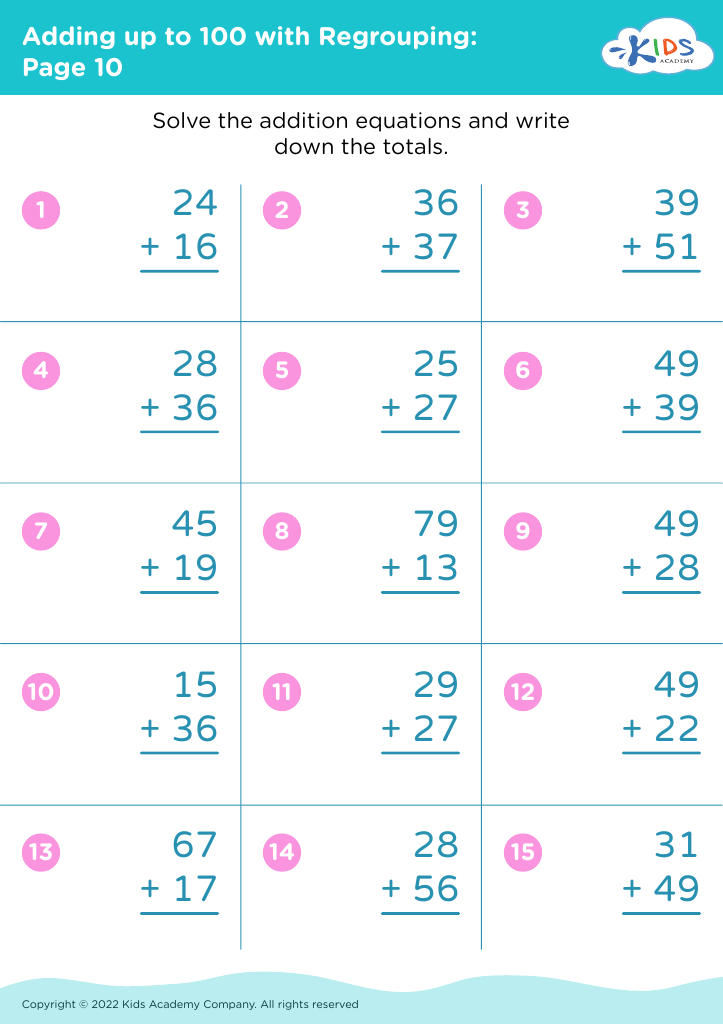
    Adding up to 100 with Regrouping: Page 10
    Adding up to 100 with Regrouping: Page 10
    Adding up to 100 with Regrouping: Page 10
    Worksheet
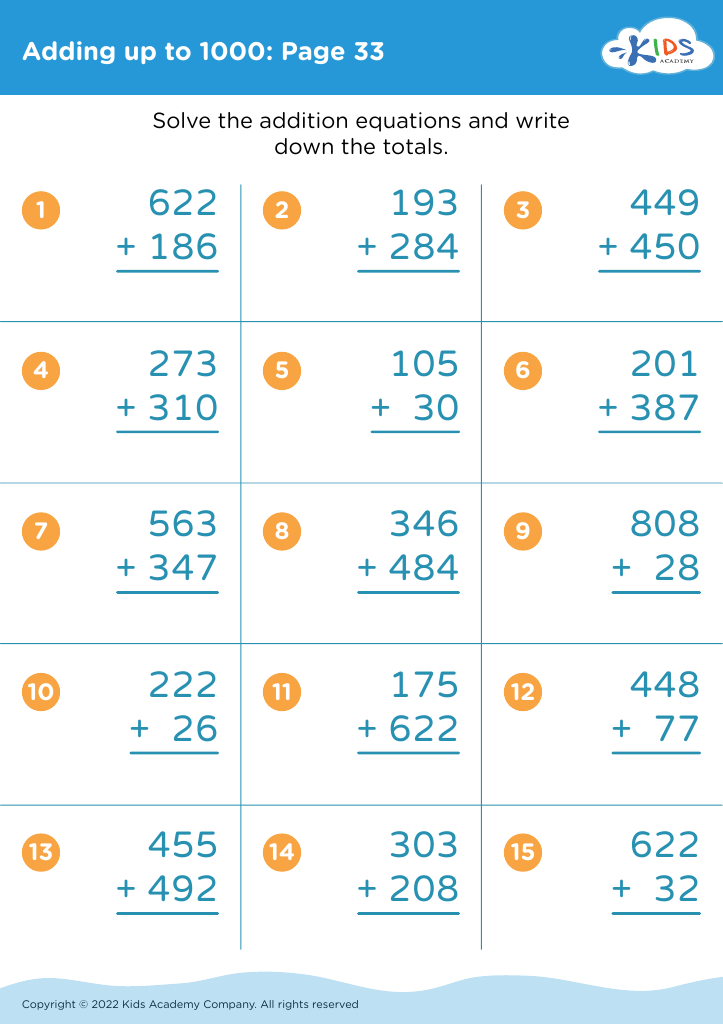
    Adding up to 1000: Page 33
    Adding up to 1000: Page 33

    Adding up to 1000: Page 33

    Adding up to 1000: Page 33
    Worksheet
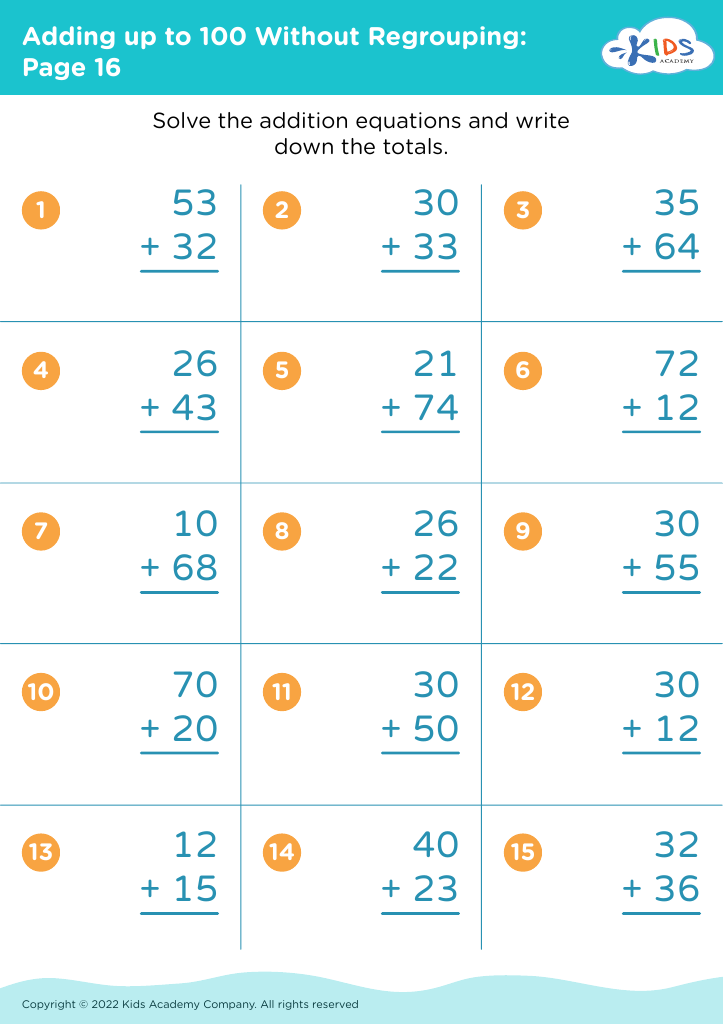
    Adding up to 100 Without Regrouping: Page 16
    Adding up to 100 Without Regrouping: Page 16
    Adding up to 100 Without Regrouping: Page 16
    Worksheet
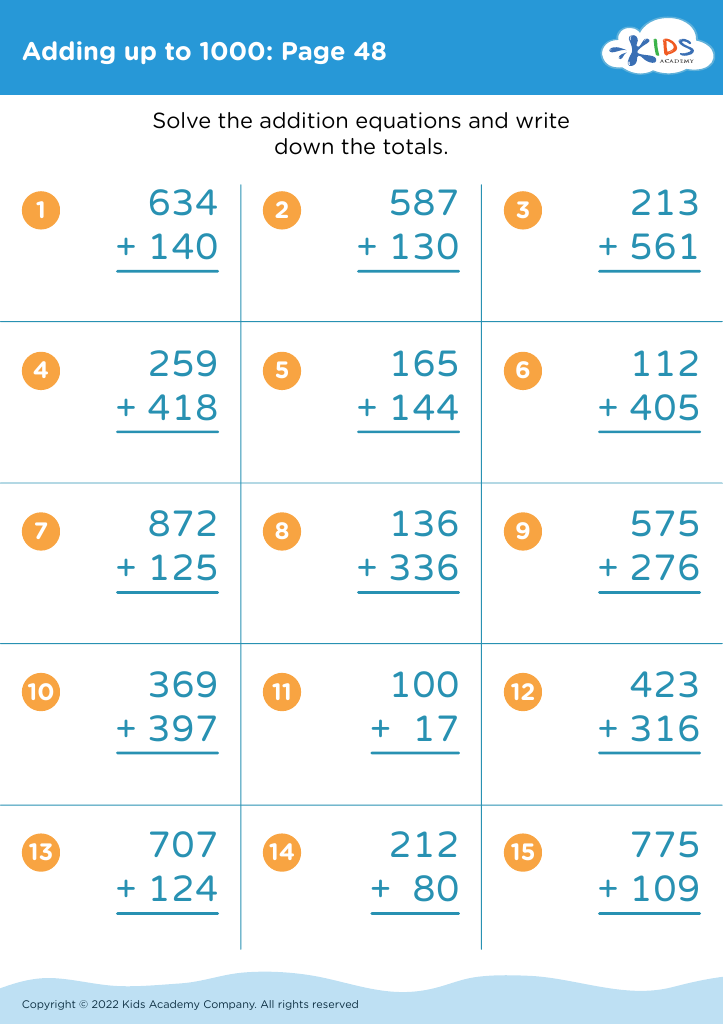
    Adding up to 1000: Page 48
    Adding up to 1000: Page 48

    Adding up to 1000: Page 48

    Adding up to 1000: Page 48
    Worksheet
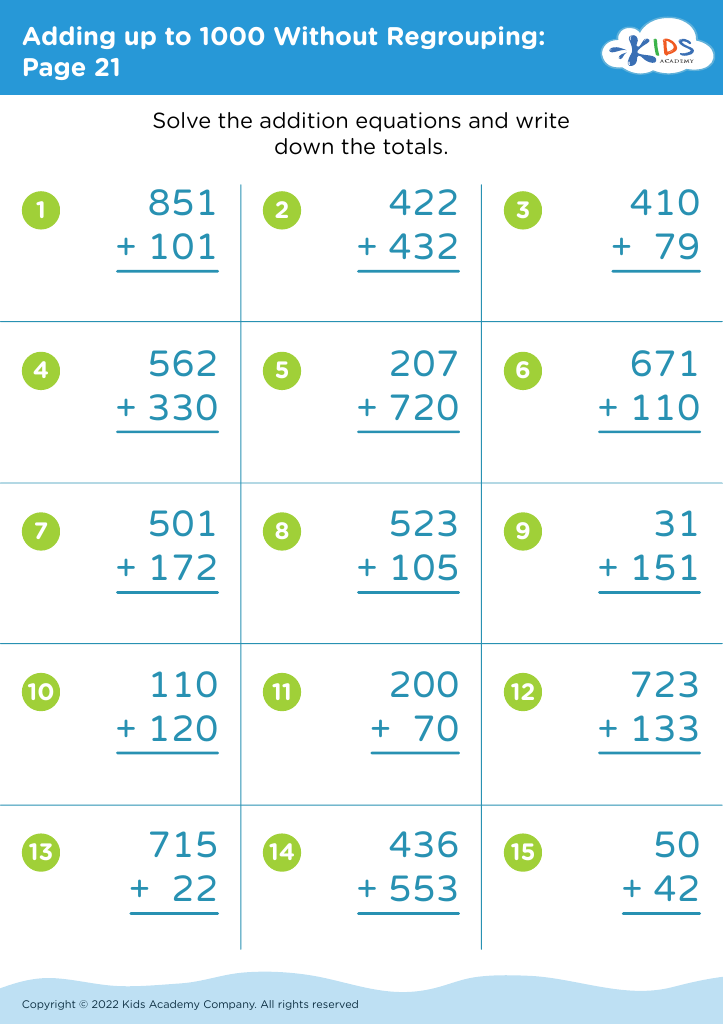
    Adding up to 1000 Without Regrouping: Page 21
    Adding up to 1000 Without Regrouping: Page 21
    Adding up to 1000 Without Regrouping: Page 21
    Worksheet
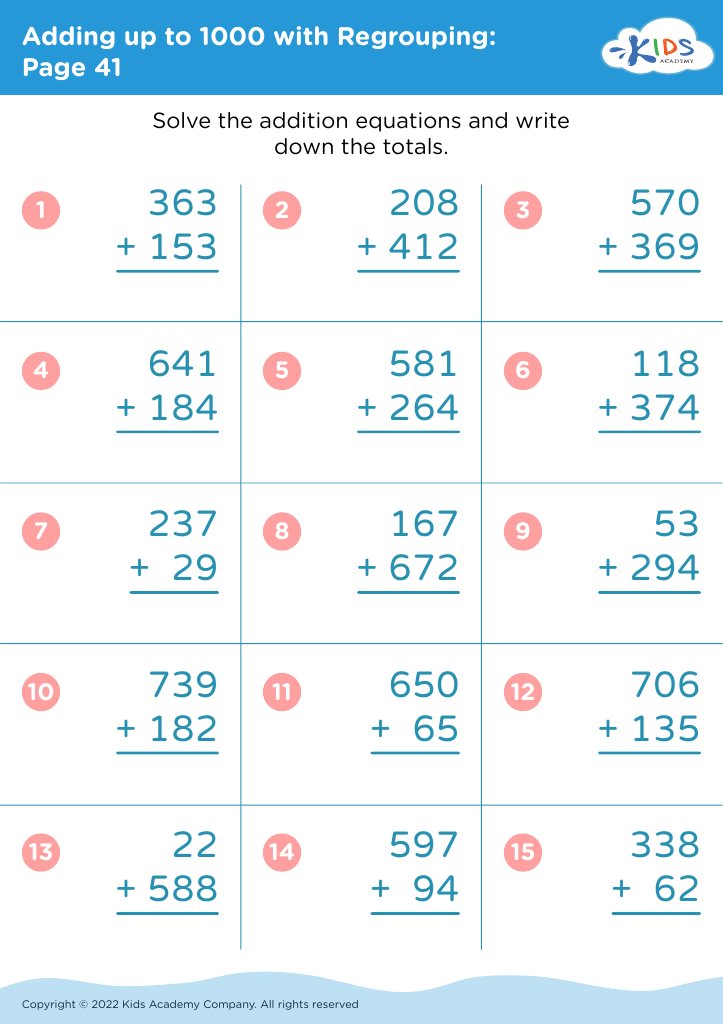
    Adding up to 1000 with Regrouping: Page 41
    Adding up to 1000 with Regrouping: Page 41
    Adding up to 1000 with Regrouping: Page 41
    Worksheet
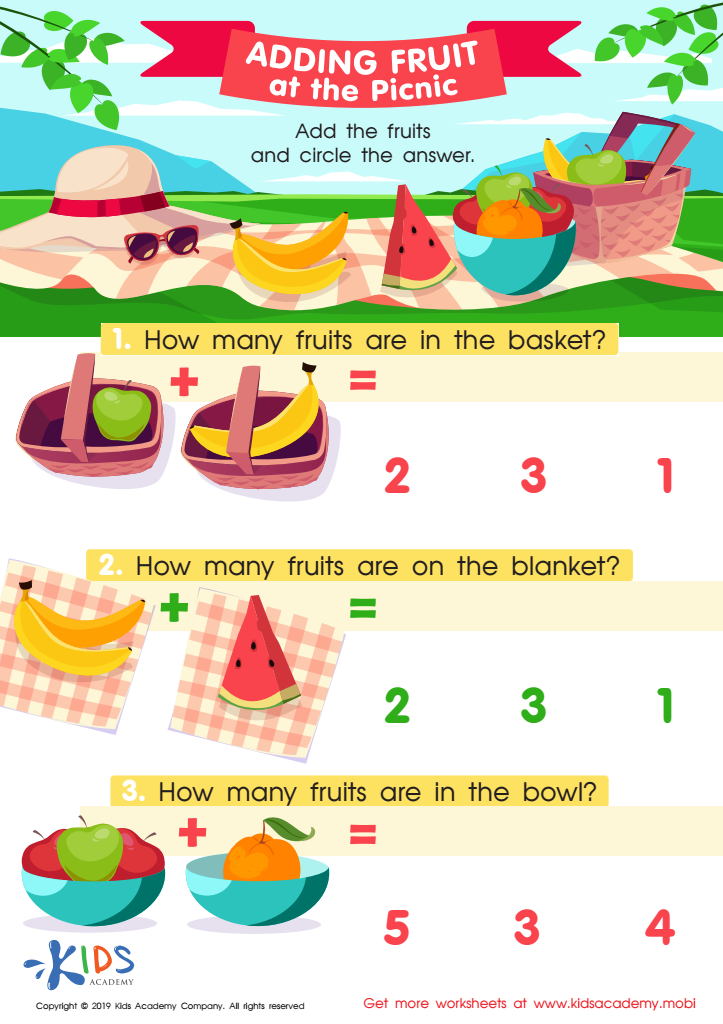
    Adding Fruit at the Picnic Worksheet
    Adding Fruit at the Picnic Worksheet

    Adding Fruit at the Picnic Worksheet

    Picnics are a great way for the family to enjoy a fun day in the sun! Get your kids involved by having them help load the picnic basket and do this worksheet to practice their math skills while they get ready. Identify the fruits in the picture, add them up, and circle the correct answer.
    Adding Fruit at the Picnic Worksheet
    Worksheet
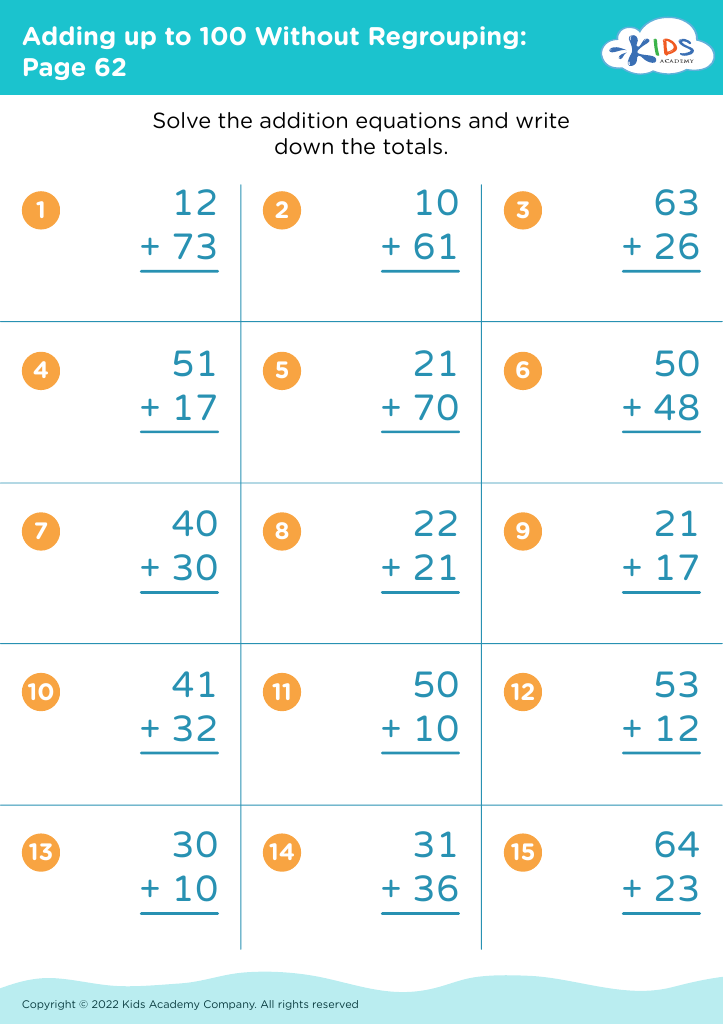
    Adding up to 100 Without Regrouping: Page 62
    Adding up to 100 Without Regrouping: Page 62
    Adding up to 100 Without Regrouping: Page 62
    Worksheet
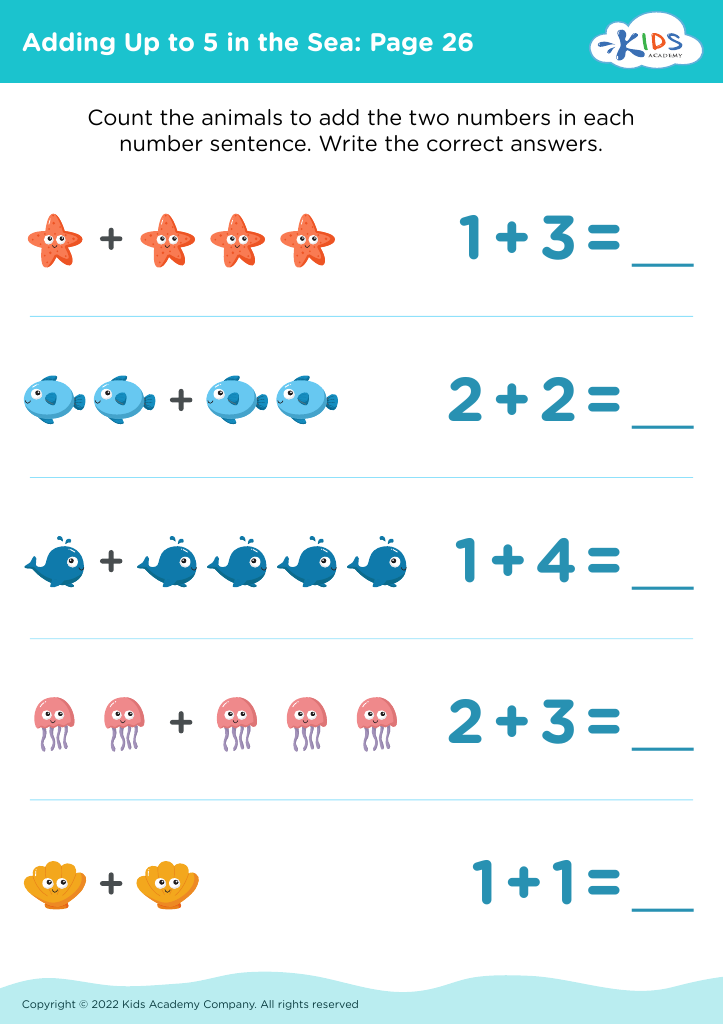
    Adding Up to 5 in the Sea: Page 26
    Adding Up to 5 in the Sea: Page 26
    Adding Up to 5 in the Sea: Page 26
    Worksheet
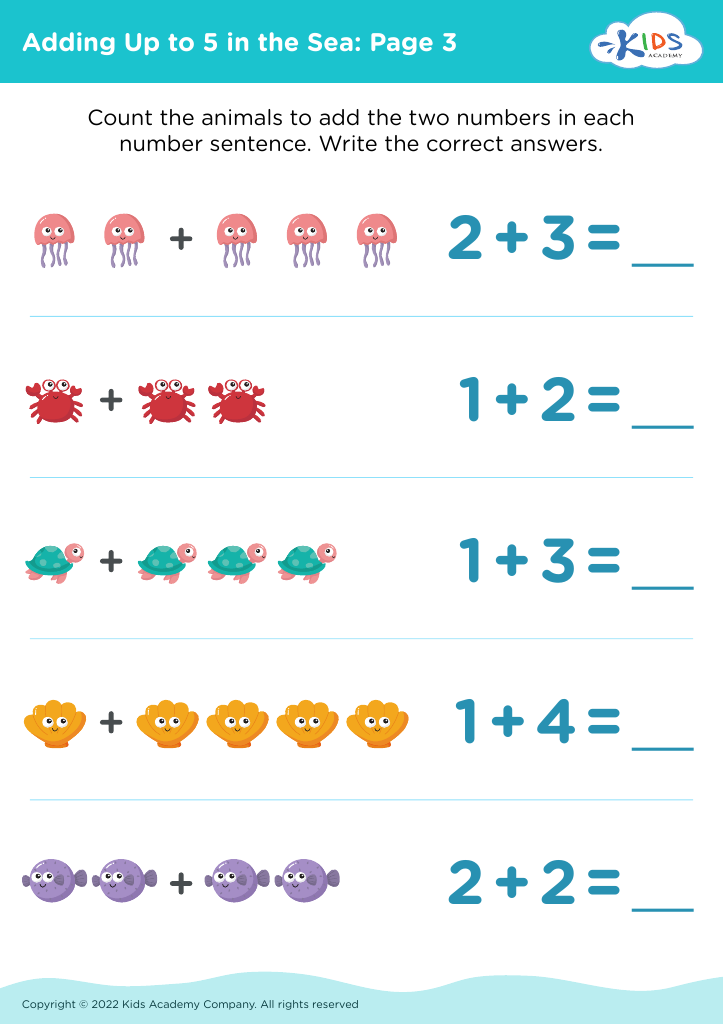
    Adding Up to 5 in the Sea: Page 3
    Adding Up to 5 in the Sea: Page 3

    Adding Up to 5 in the Sea: Page 3

    Adding Up to 5 in the Sea: Page 3
    Worksheet
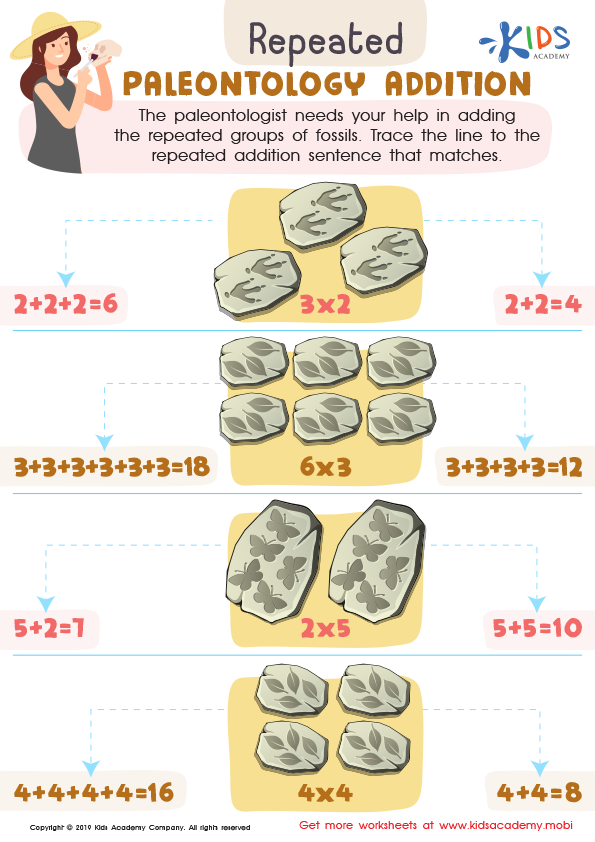
    Repeated Archaeology Addition Worksheet
    Repeated Archaeology Addition Worksheet
    Repeated Archaeology Addition Worksheet
    Does your child have dreams for the future? Help them explore the different professions available to them and what each entails. This traceable sheet, featuring an archaeologist completing their work, will show your kid how to find the repeated addition sentence that matches the line. Hold their hand as they complete the activity, inspiring them to pursue their big dreams!
    Repeated Archaeology Addition Worksheet
    Worksheet
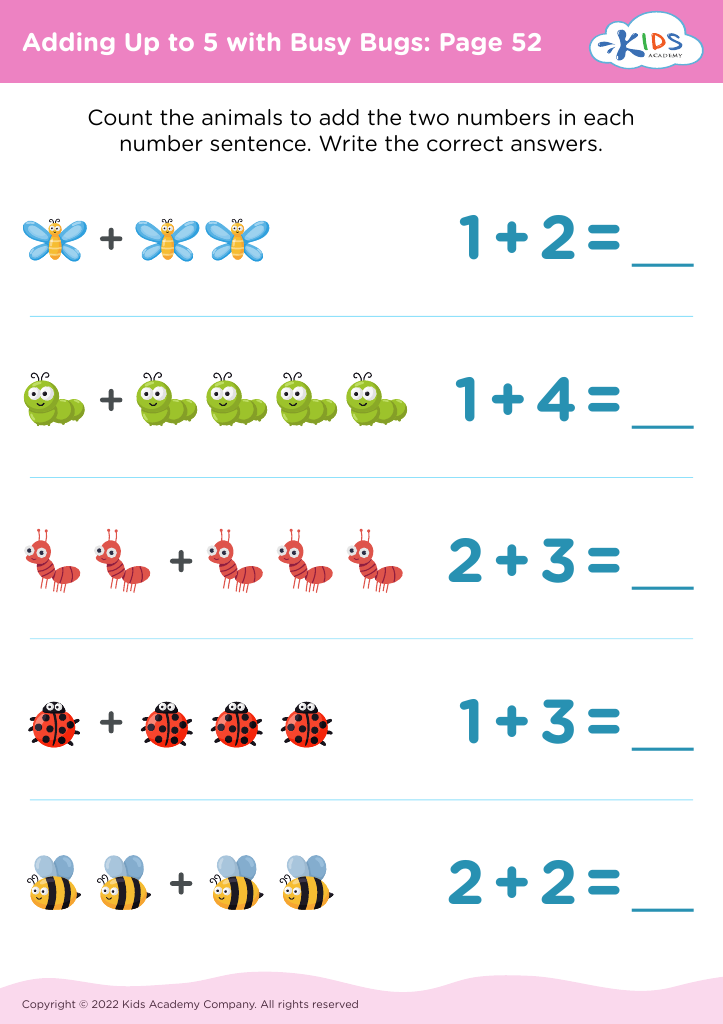
    Adding Up to 5 with Busy Bugs: Page 52
    Adding Up to 5 with Busy Bugs: Page 52
    Adding Up to 5 with Busy Bugs: Page 52
    Worksheet
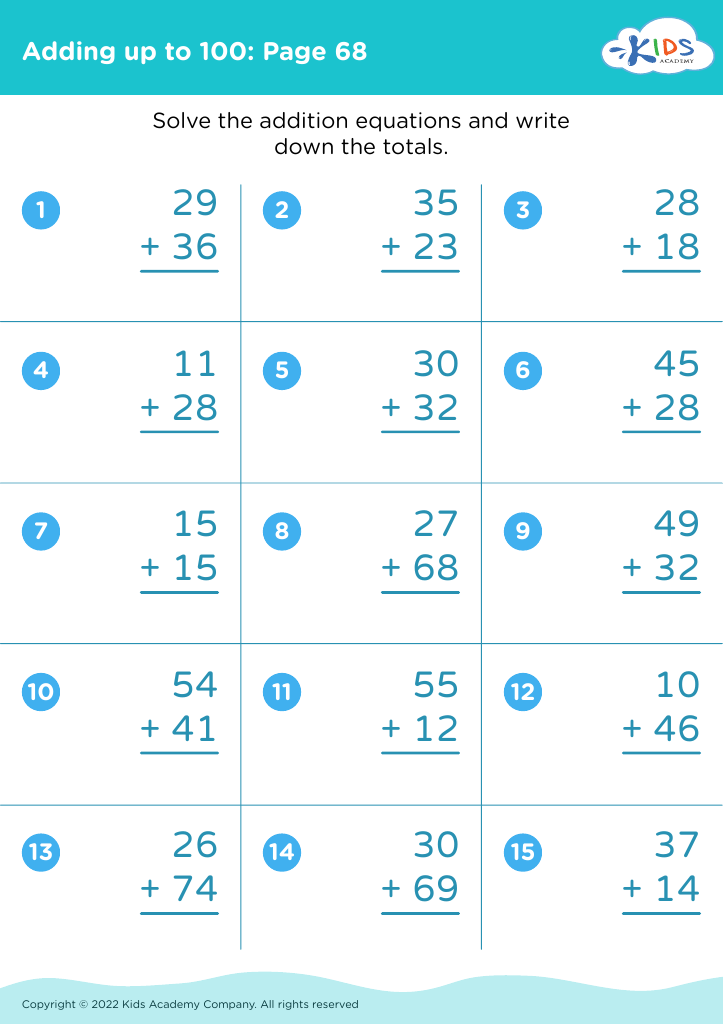
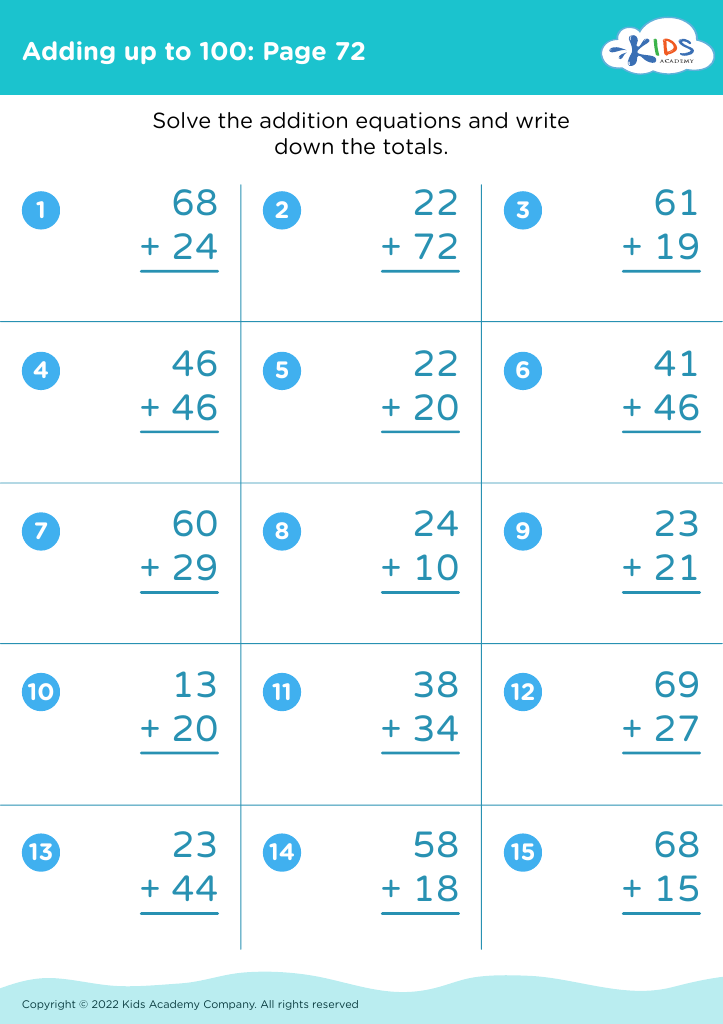
    Adding up to 100: Page 72
    Adding up to 100: Page 72

    Adding up to 100: Page 72

    Adding up to 100: Page 72
    Worksheet
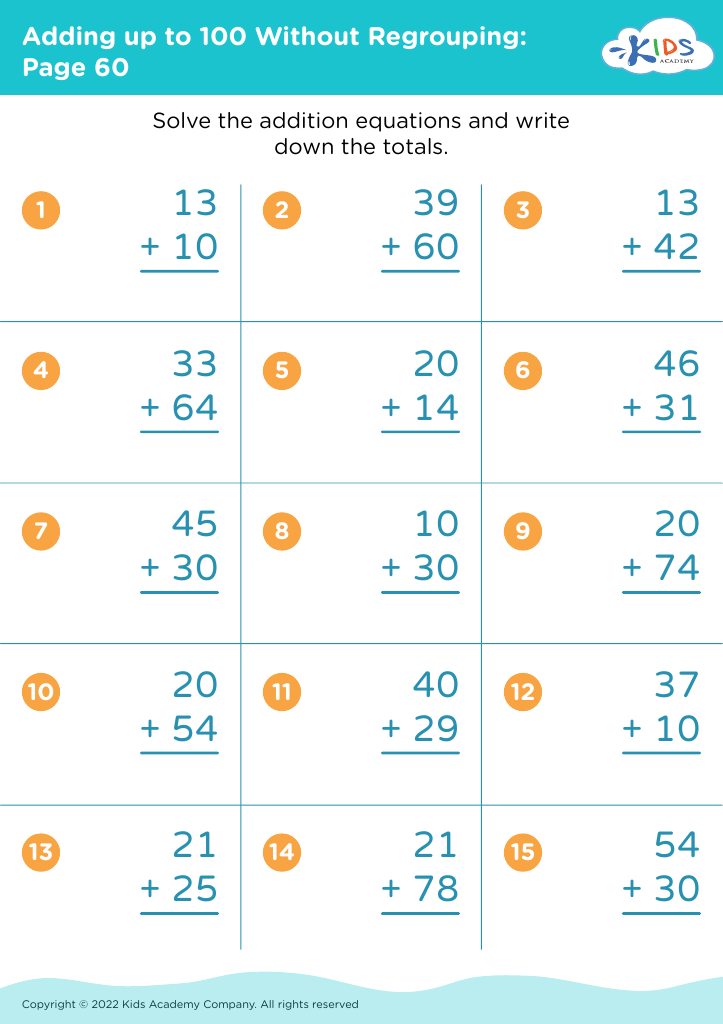
    Adding up to 100 Without Regrouping: Page 60
    Adding up to 100 Without Regrouping: Page 60
    Adding up to 100 Without Regrouping: Page 60
    Worksheet
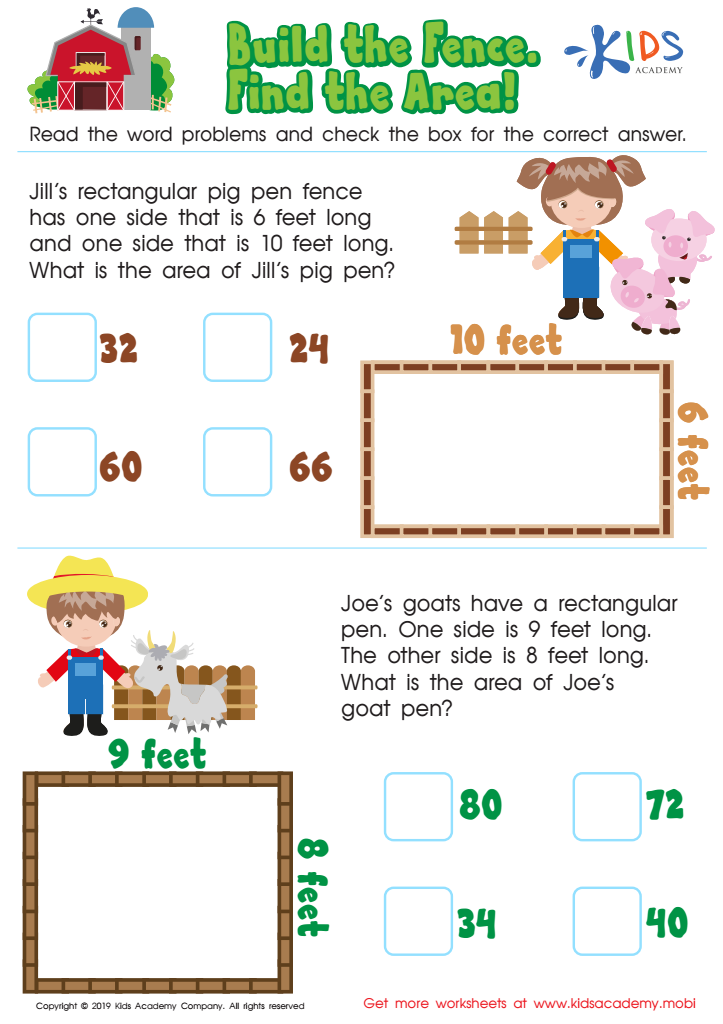
    Build the Fence, Find the Area Worksheet
    Build the Fence, Find the Area Worksheet
    Build the Fence, Find the Area Worksheet
    Help your kids gain skills in mathematics with this simple worksheet. Kids can refresh their addition and subtraction to solve geometry problems. Read the word problems and then help them check the box for the correct answer if they need extra help. This worksheet is great for improving kids' familiarity with basic equations.
    Build the Fence, Find the Area Worksheet
    Worksheet
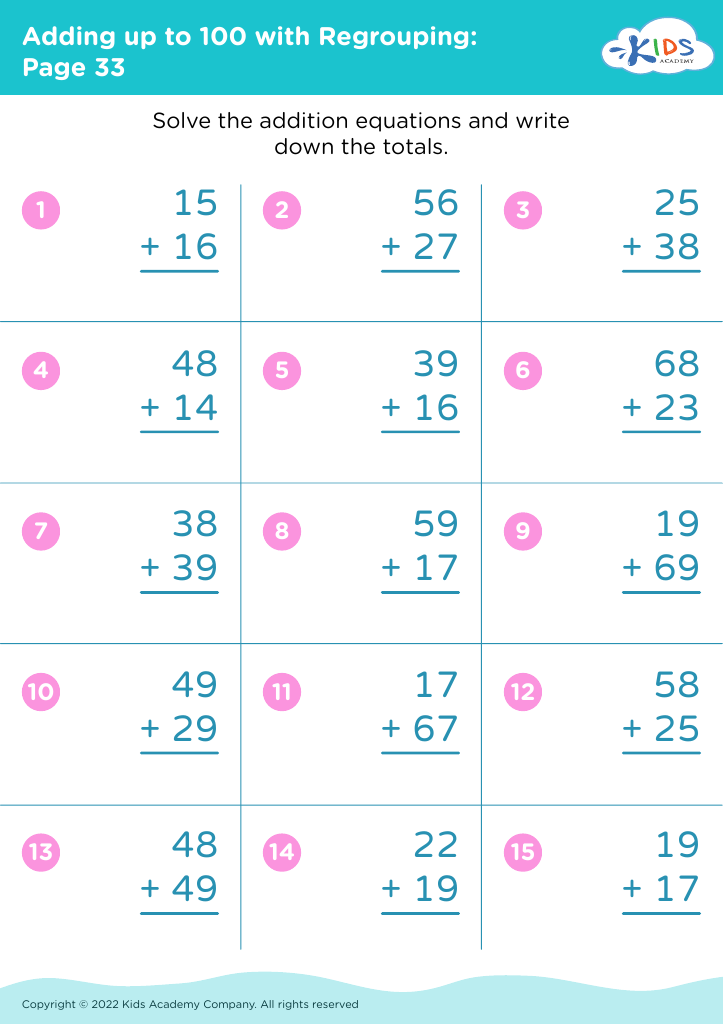
    Adding up to 100 with Regrouping: Page 33
    Adding up to 100 with Regrouping: Page 33
    Adding up to 100 with Regrouping: Page 33
    Worksheet
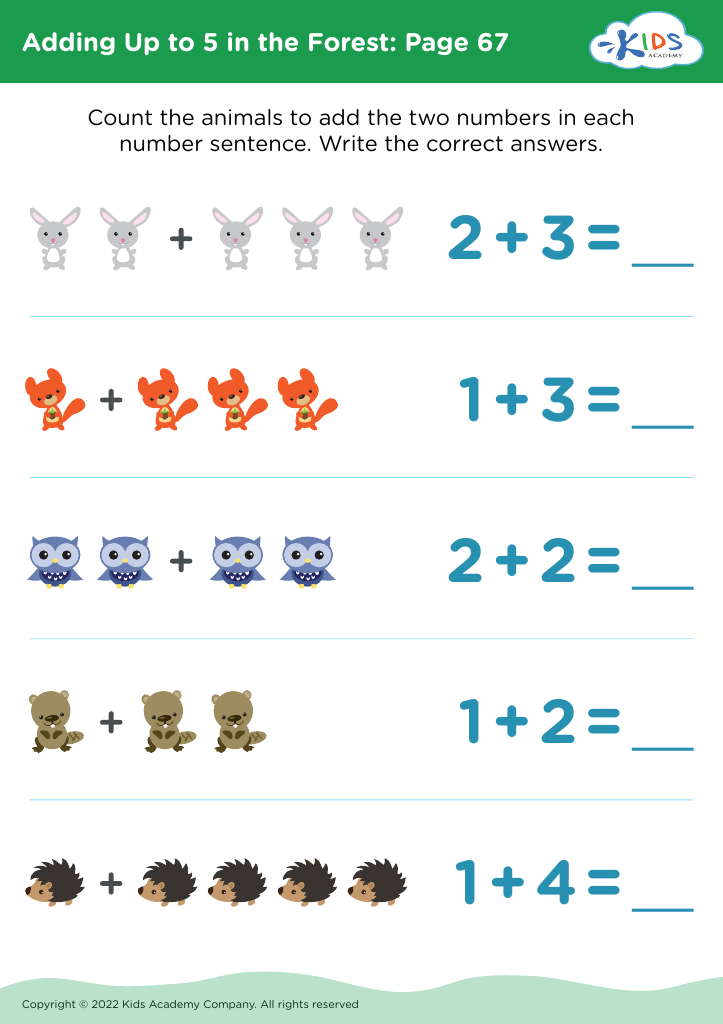
    Adding Up to 5 in the Forest: Page 67
    Adding Up to 5 in the Forest: Page 67
    Adding Up to 5 in the Forest: Page 67
    Worksheet
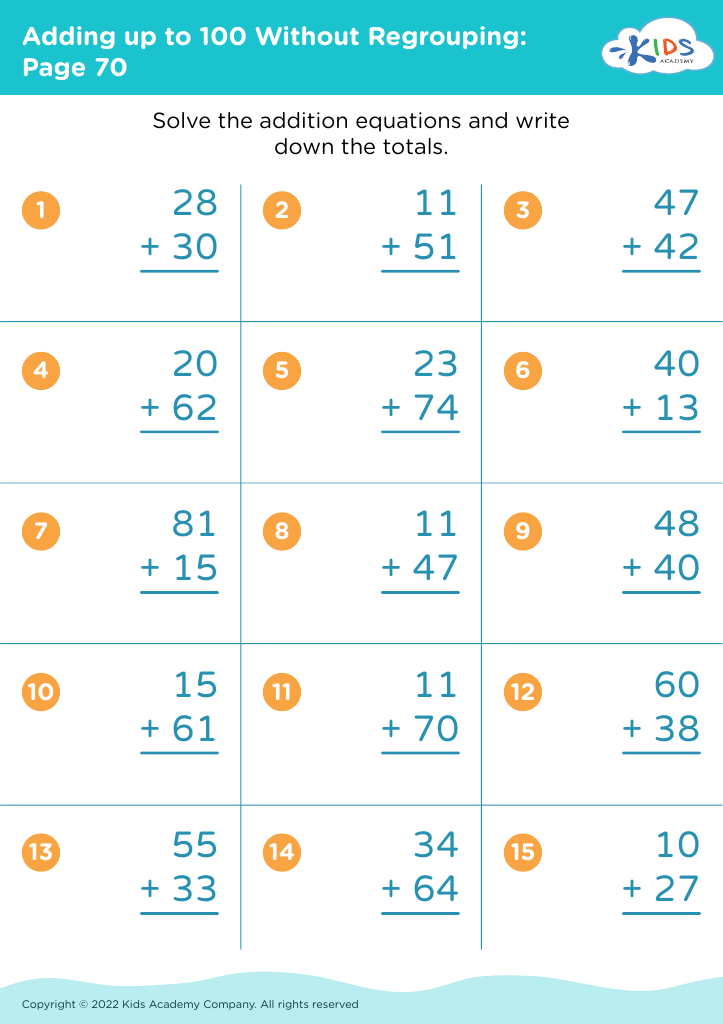
    Adding up to 100 Without Regrouping: Page 70
    Adding up to 100 Without Regrouping: Page 70
    Adding up to 100 Without Regrouping: Page 70
    Worksheet
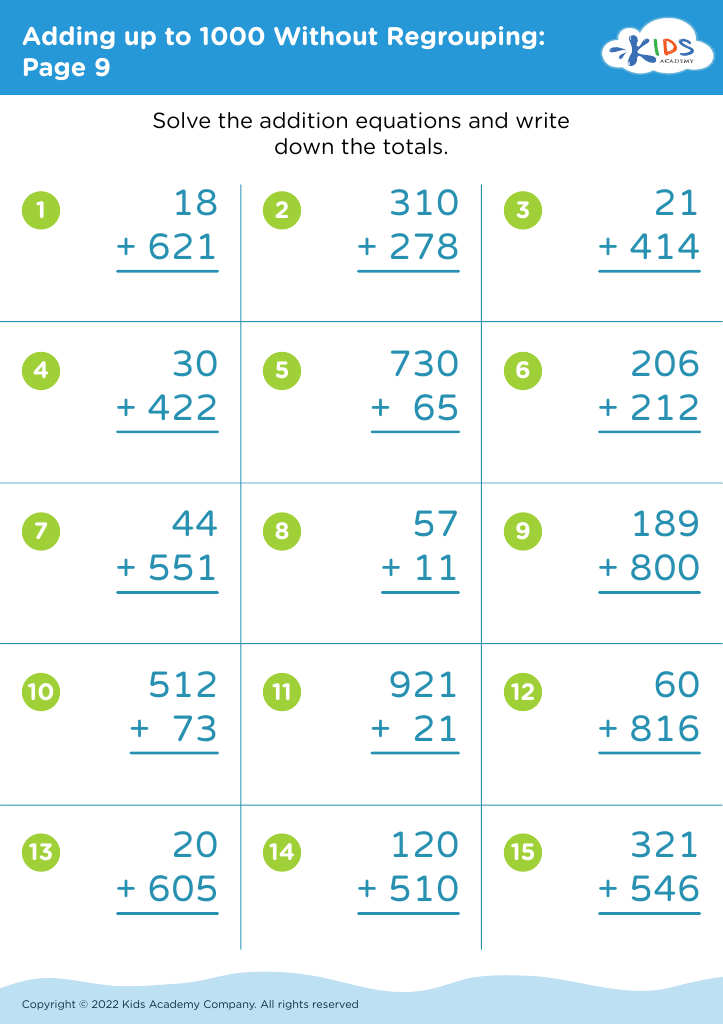
    Adding up to 1000 Without Regrouping: Page 9
    Adding up to 1000 Without Regrouping: Page 9
    Adding up to 1000 Without Regrouping: Page 9
    Worksheet
    Adding up to 1000 Without Regrouping: Page 28
    Adding up to 1000 Without Regrouping: Page 28
    Adding up to 1000 Without Regrouping: Page 28
    Worksheet
    Adding Up to 5 with Busy Bugs: Page 11
    Adding Up to 5 with Busy Bugs: Page 11
    Adding Up to 5 with Busy Bugs: Page 11
    Worksheet
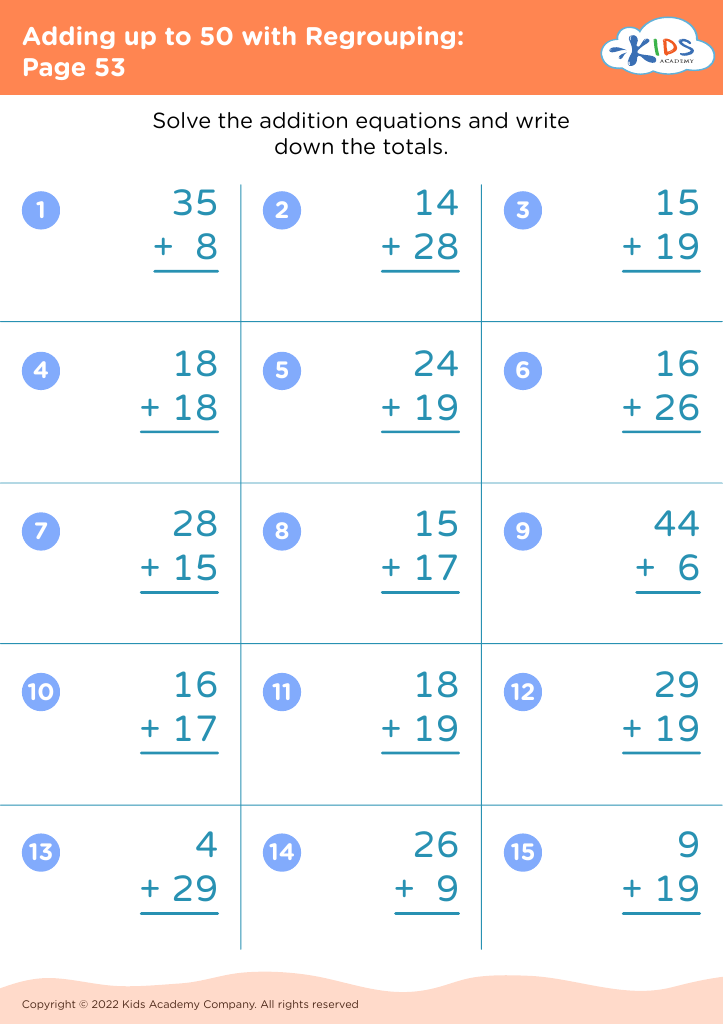
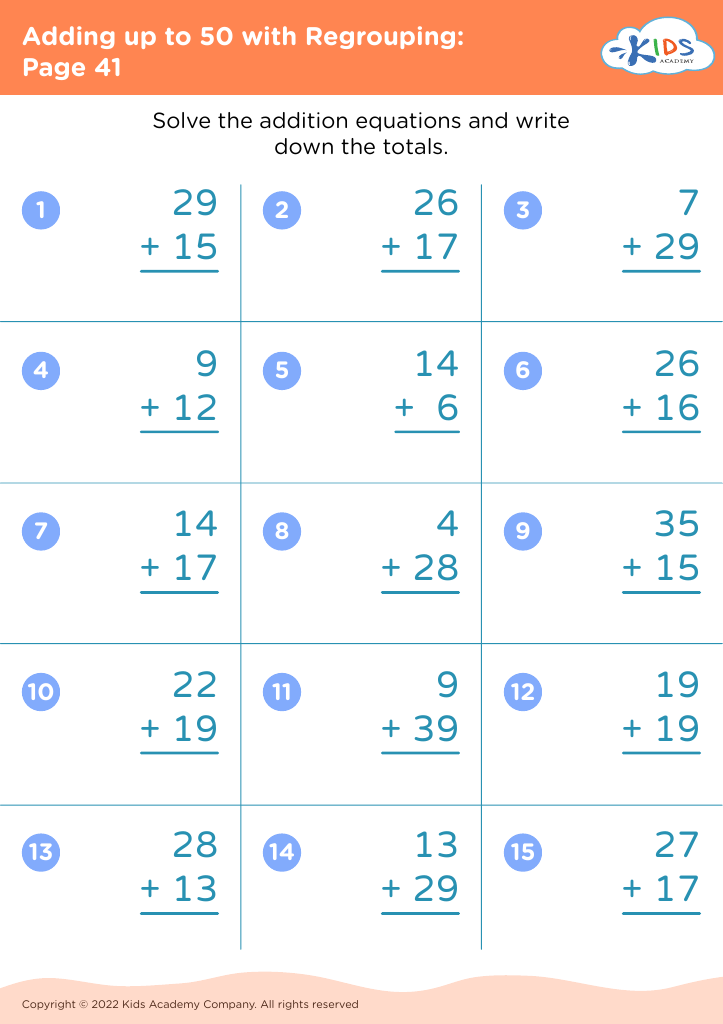
    Adding up to 50 with Regrouping: Page 41
    Adding up to 50 with Regrouping: Page 41
    Adding up to 50 with Regrouping: Page 41
    Worksheet


    Understanding addition is fundamental for young children aged 5-9 because it establishes a critical foundation for all future math learning and everyday application. During these formative years, children's brains are developing rapidly, and they are capable of grasping essential numerical concepts. Addition is one of the core building blocks of mathematics.

    When children learn addition, they not only learn how to sum numbers but also develop problem-solving skills, logical thinking, and the ability to approach different challenges. Addition also helps in building confidence and academic resilience. Mastering basic arithmetic lays the groundwork for future topics like subtraction, multiplication, and division, making complex problems more approachable as they advance through school.

    For parents and teachers, fostering a positive environment for learning addition is also an excellent opportunity to promote a growth mindset. Children can be encouraged to view challenges as opportunities to learn rather than obstacles, aiding in their overall intellectual and emotional development.

    Additionally, core life skills are enhanced. From understanding the cost of items to preparing a simple recipe or sharing objects fairly among friends, addition is applicable in countless everyday scenarios. By investing time and attention in helping children become proficient in addition, caregivers can ensure they are equipped with essential life skills that contribute to their overall success and well-rounded development.