Multiplication Worksheets for Ages 5-9 - Page 5
104 filtered results
-
From - To
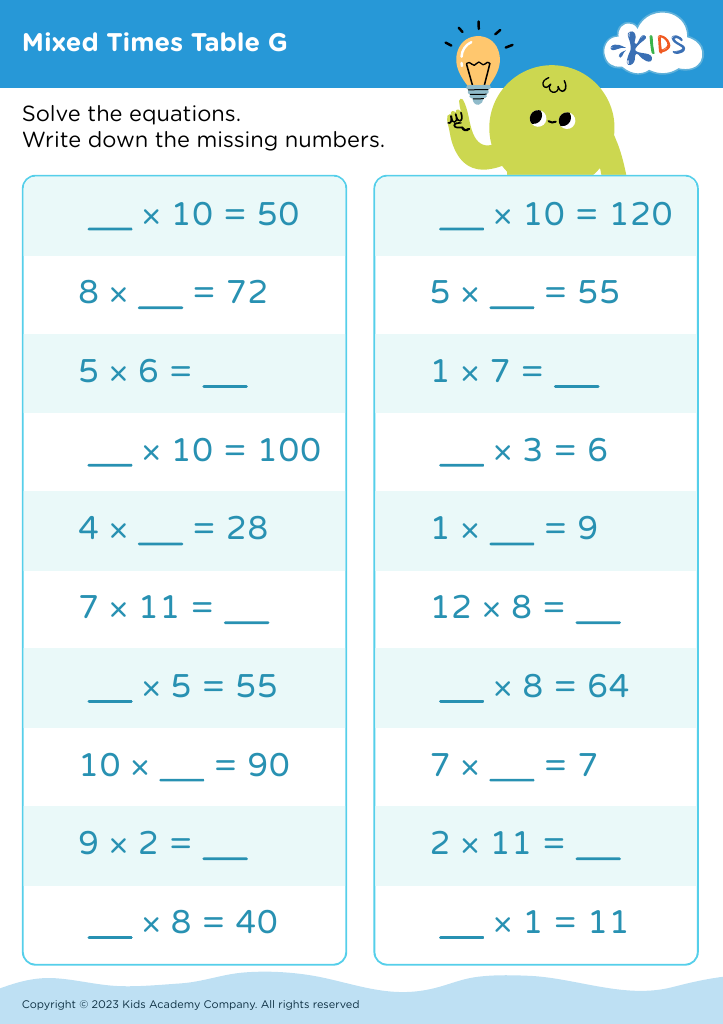
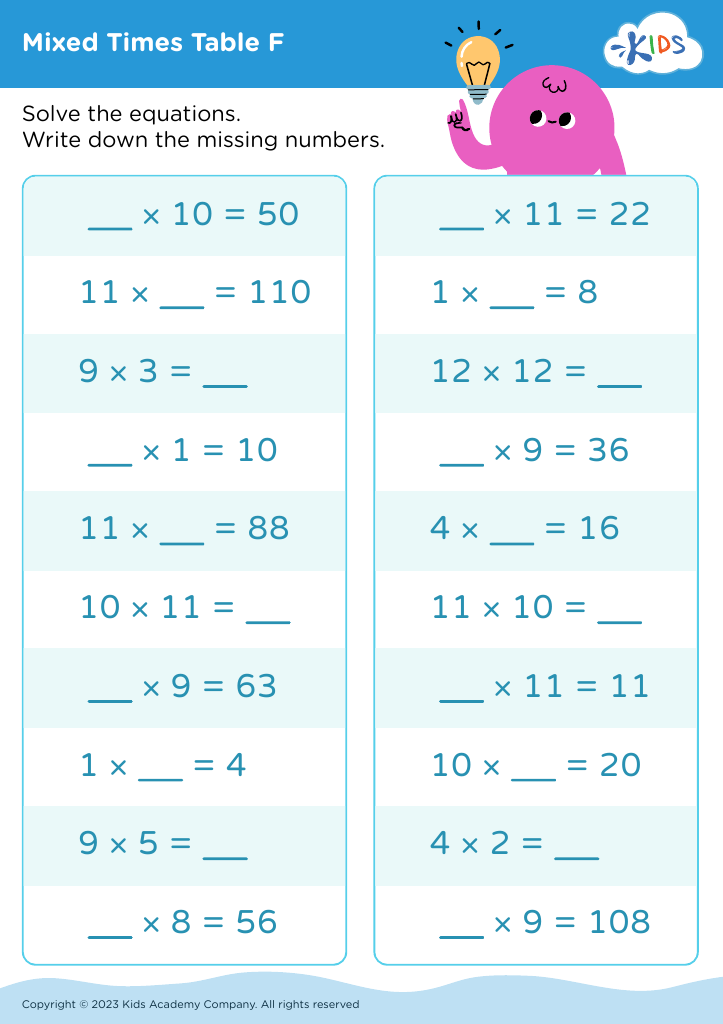
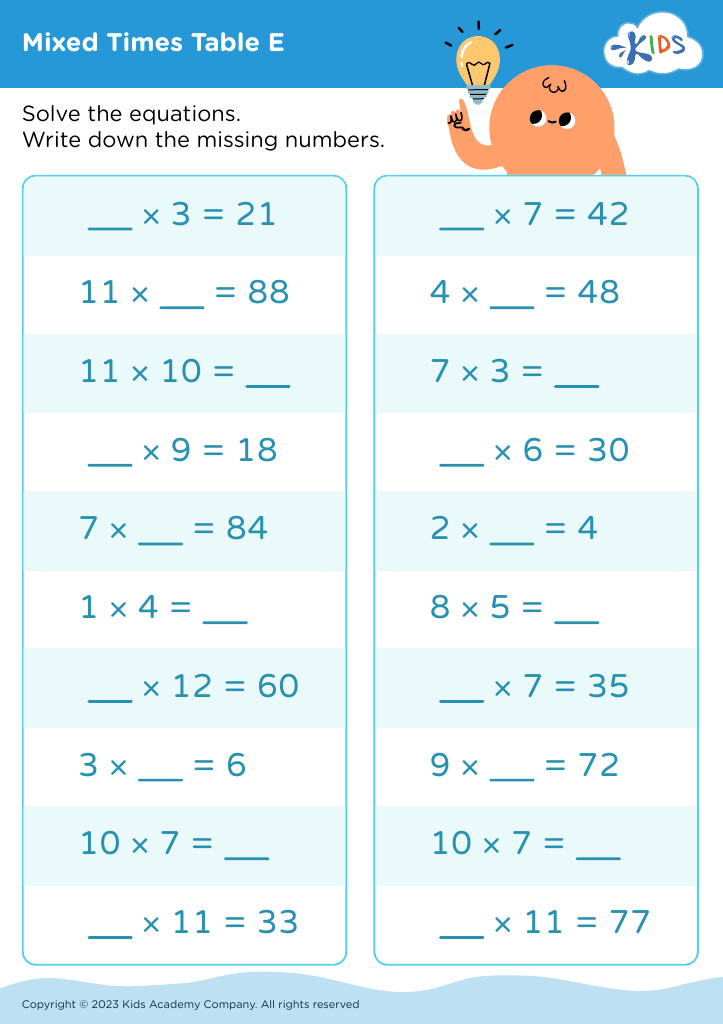
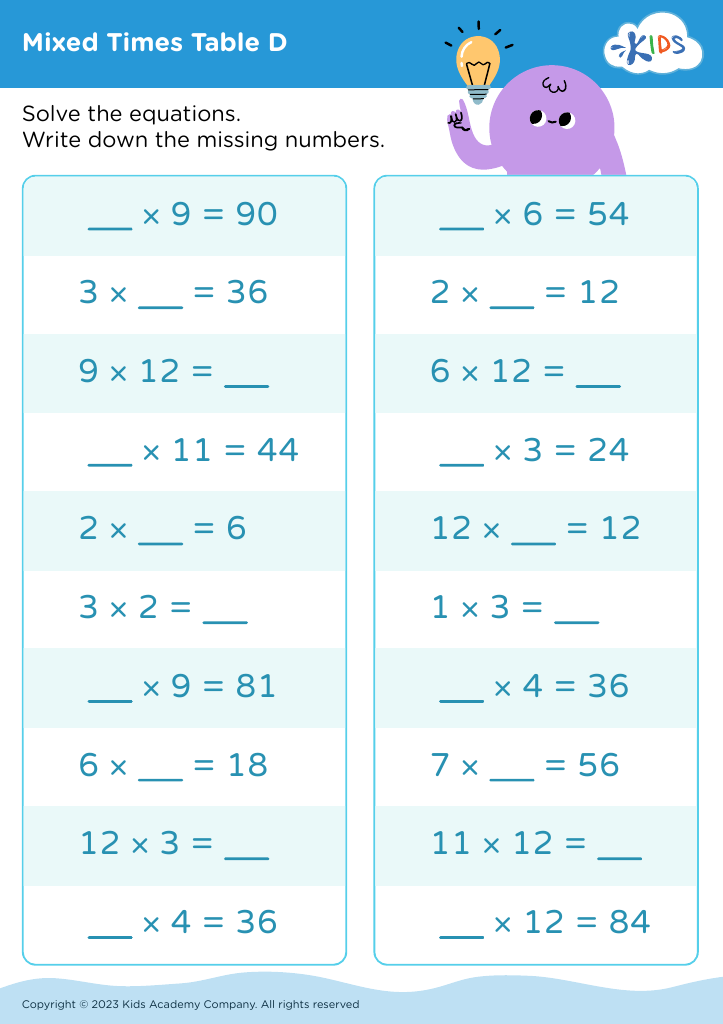
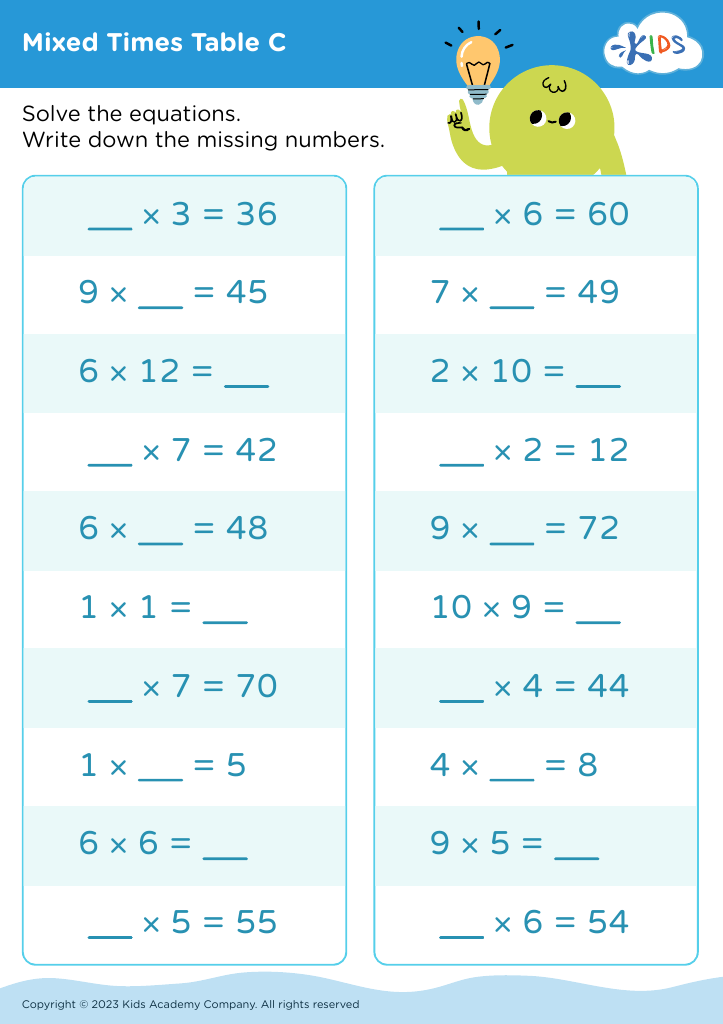
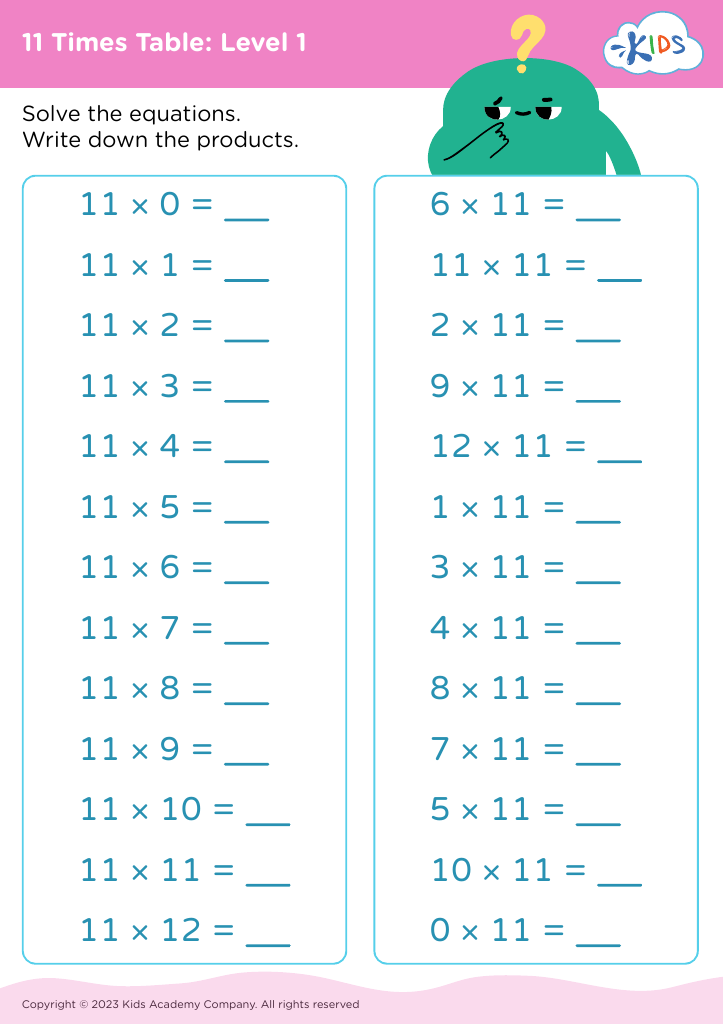
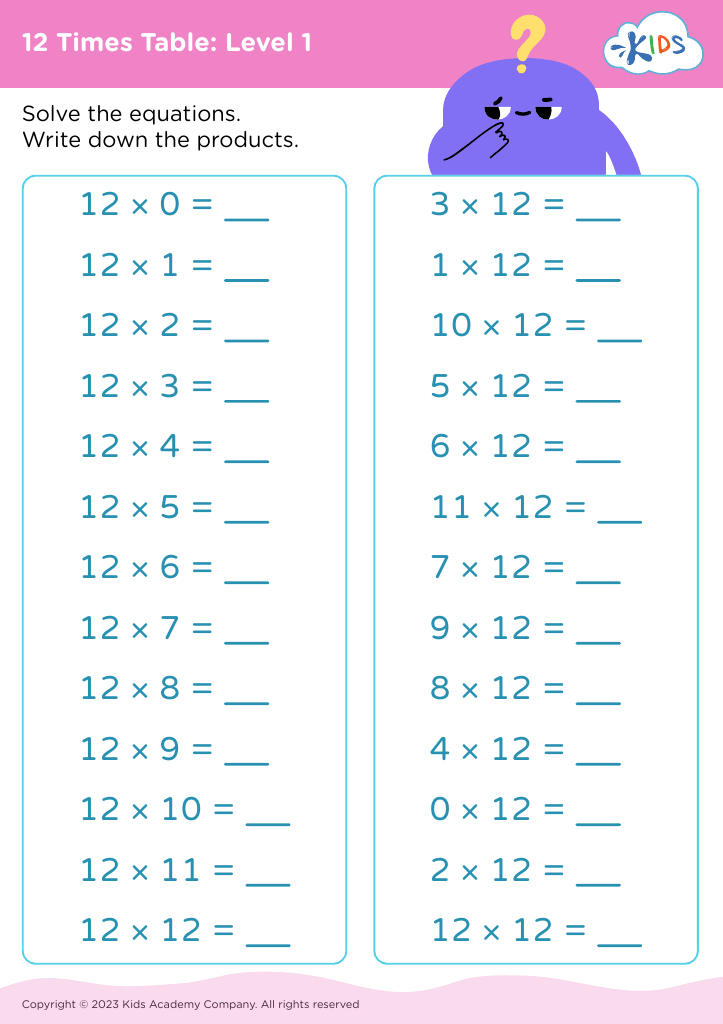
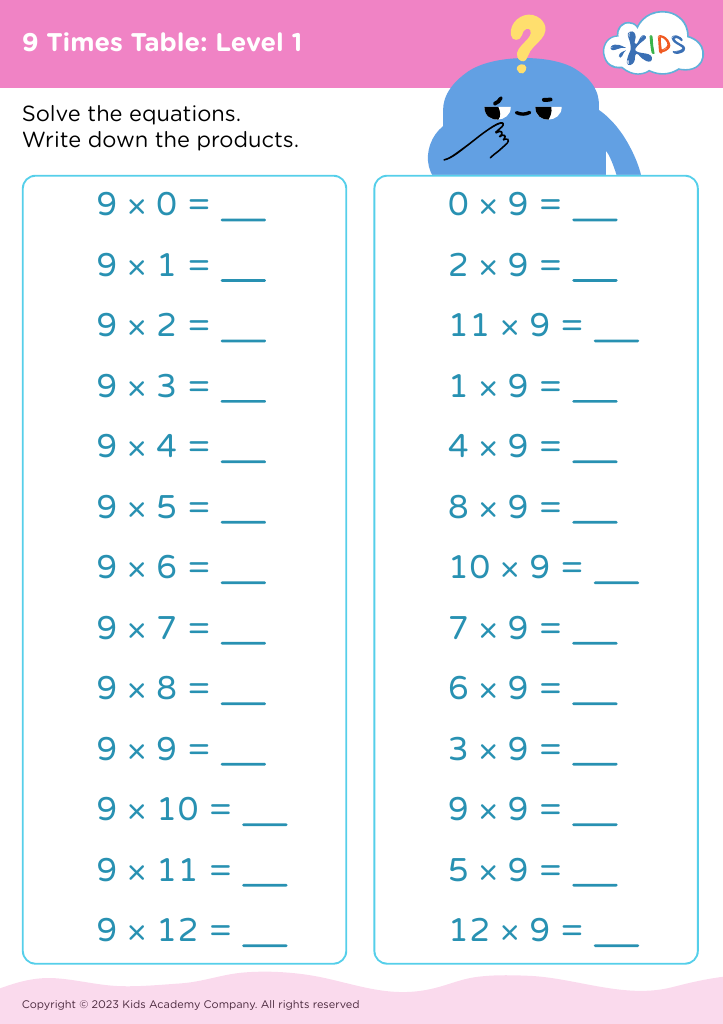






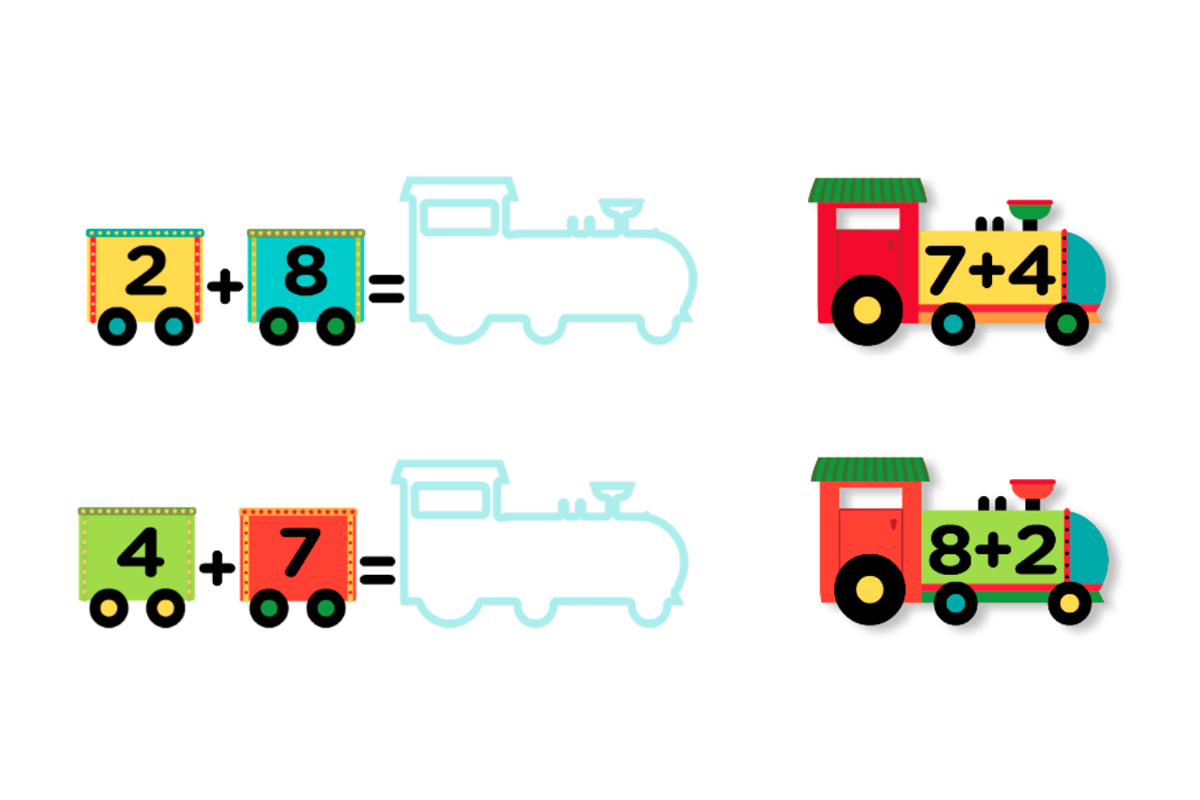

Multiplication is a fundamental math skill that serves as a building block for all future arithmetic concepts, making it crucial for children aged 5-9. At this early stage, children are developing their number sense and understanding of mathematical relationships. Multiplication introduces them to the concept of repeated addition, which can enhance their overall grasp of numbers and improve problem-solving skills.
Parents and teachers should care about multiplication because it fosters critical thinking and cognitive development. Mastering multiplication not only aids in everyday calculations but also lays the groundwork for more complex math, such as division, fractions, and even geometry. Furthermore, a solid foundation in multiplication boosts a child's confidence and encourages a positive attitude towards math.
Additionally, introducing multiplication in engaging ways, such as games and interactive activities, makes learning fun, which is vital for maintaining children's interest in mathematics. By prioritizing this skill, parents and teachers can help students excel academically, ensuring they're prepared for challenges in higher-grade levels. Ultimately, nurturing multiplication skills early on empowers children to become confident, capable learners who appreciate the role of mathematics in their everyday lives.








