Sorting Worksheets for Ages 5-9 - Page 2
27 filtered results
-
From - To
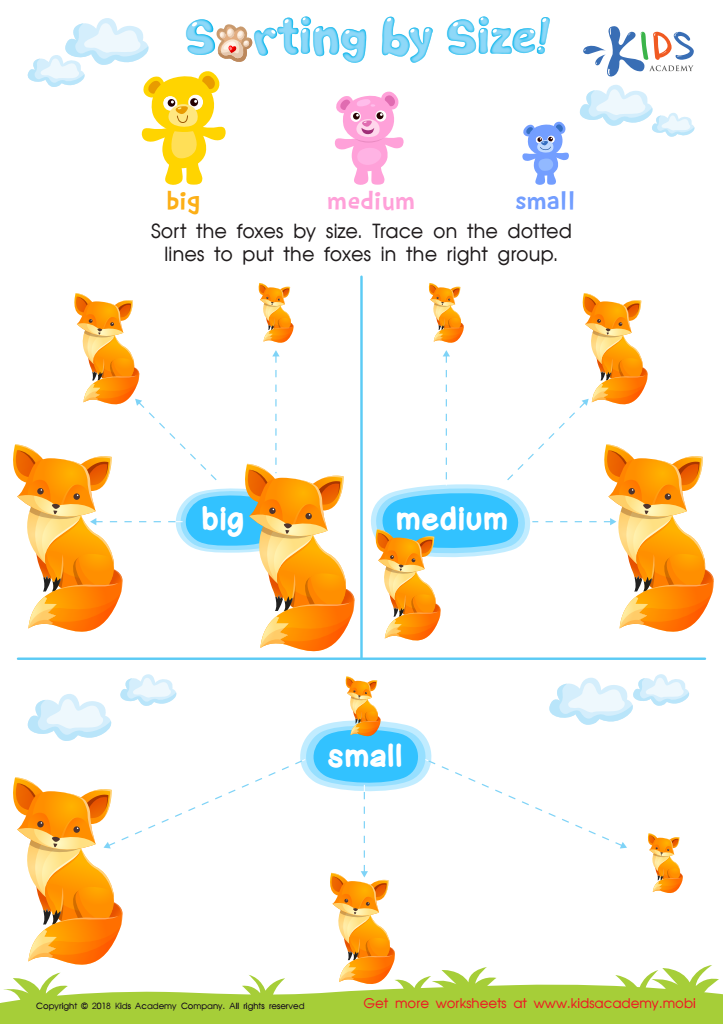
Sorting by Size Worksheet
 Assign to My Students
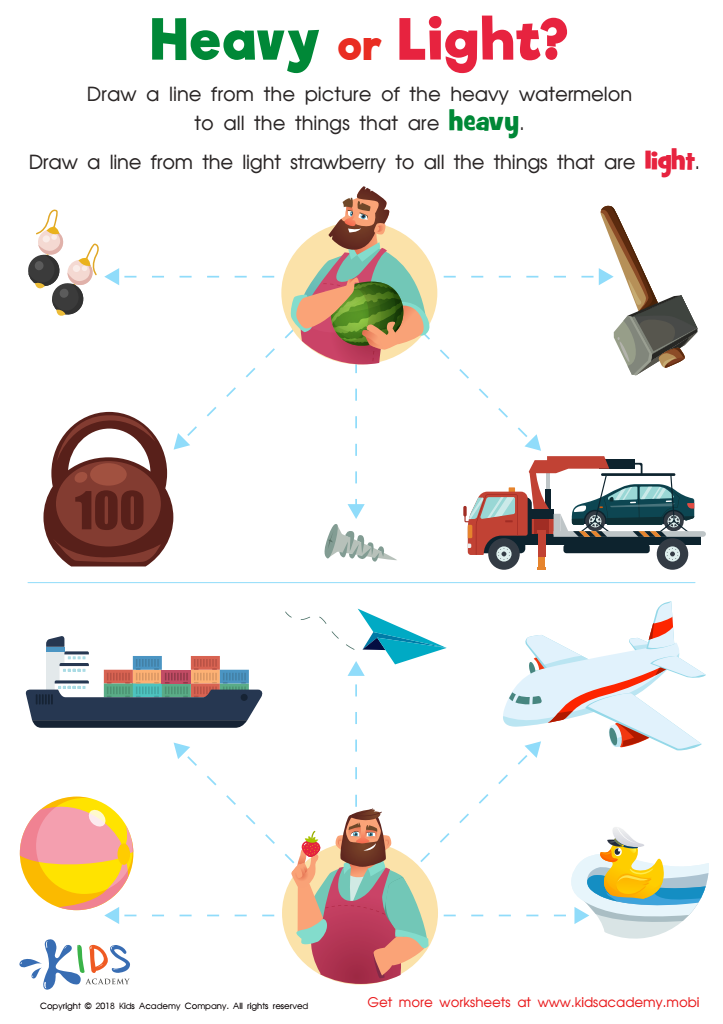
Heavy or Light? Worksheet
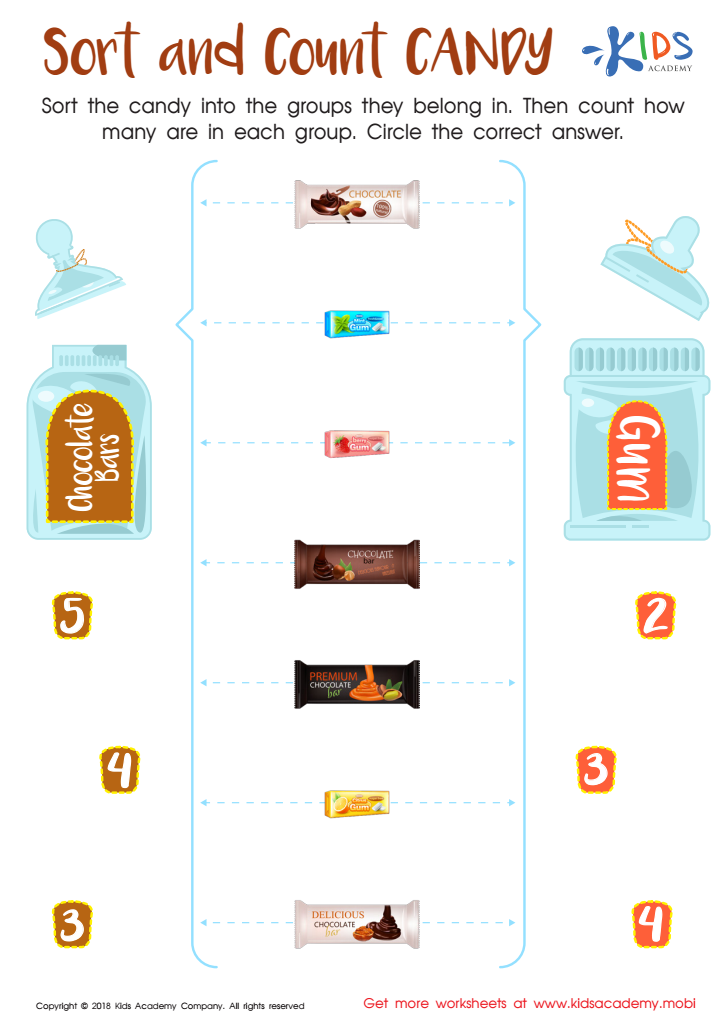
Sort and Count Candy Worksheet








Sorting is a fundamental cognitive skill that is crucial for children aged 5-9 as it lays the groundwork for more complex mathematical and problem-solving abilities. By engaging in sorting activities, children learn to observe similarities and differences, categorize items, and recognize patterns. These skills are directly linked to early math and science understanding, essential for success in these subjects later on.
Moreover, sorting enhances critical thinking as children determine which characteristics to focus on, such as color, shape, size, or type. This process naturally develops their decision-making and analytical abilities. For example, when sorting by color, a child learns to group all red items together, distinguishing them from blue or green ones. This paves the way for higher-order thinking skills such as hypothesis testing and data analysis.
Social-emotionally, sorting activities can promote persistence, attention to detail, and organizational skills—traits valuable in both academic and everyday situations. In group settings, sorting can encourage cooperation and discussion, as children work together to decide on categories and assemble groups.
By valuing and incorporating sorting activities into home or classroom routines, parents and teachers provide children with tools to foster intellectual growth and practical life skills, establishing a strong foundation for future learning experiences.








