Understanding symmetry Science Worksheets for Ages 5-9
3 filtered results
-
From - To
Our "Understanding Symmetry Science Worksheets for Ages 5-9" are tailored to nurture young minds in recognizing and appreciating symmetry in the world around them. These engaging worksheets combine vibrant illustrations with interactive activities, prompting kids to identify, draw, and complete symmetrical shapes and patterns. Designed to enhance spatial awareness and critical thinking, our science worksheets provide a fun and educational foundation in symmetry. Perfect for both classroom use and homeschool settings, these resources will captivate students aged 5-9 and inspire a lifelong love for learning. Explore symmetry with your child today!
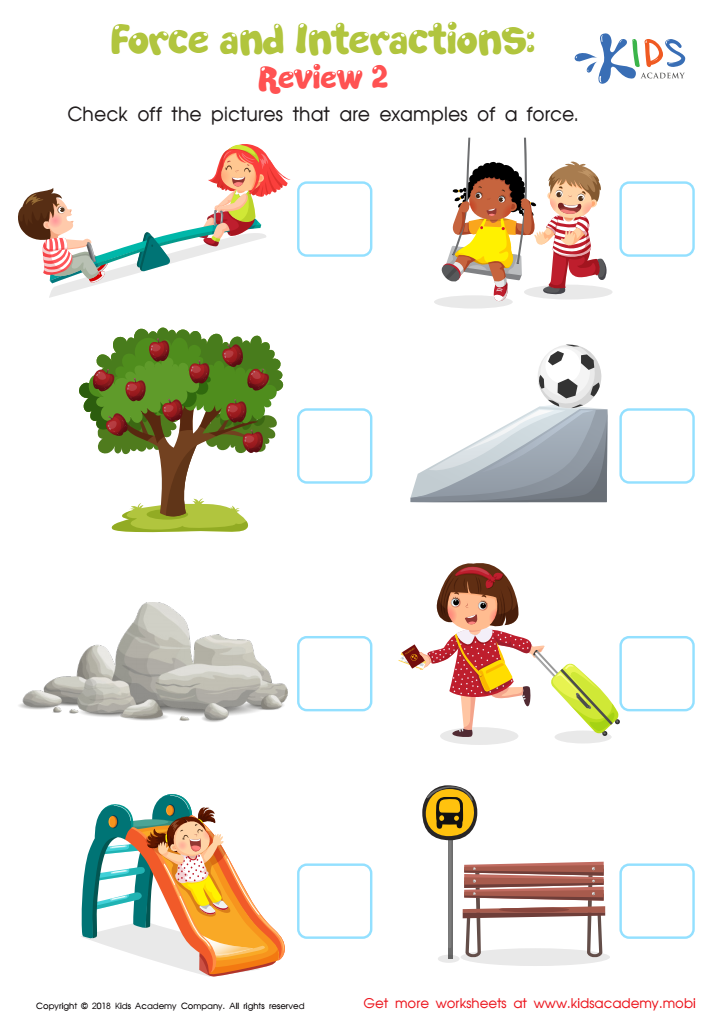
Force and Interactions: Review 2 Worksheet
 Assign to My Students
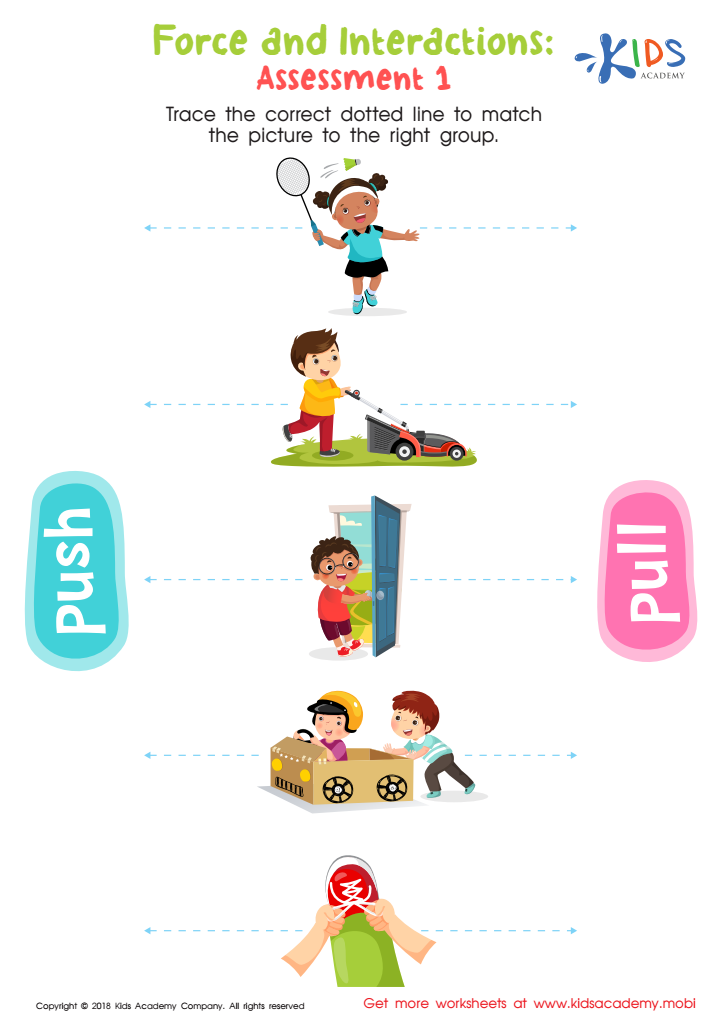
Force and Interactions: Assessment 2 Worksheet
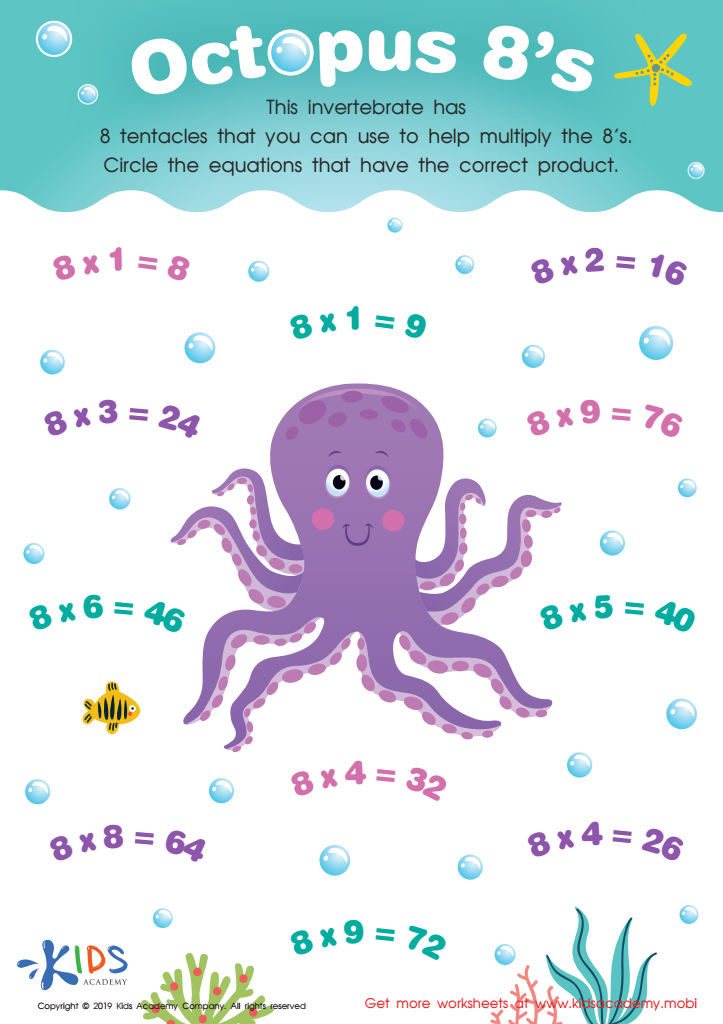
Octopus 8’s Worksheet





Understanding symmetry is foundational for early childhood development in various domains, from basic mathematical reasoning to artistic expression and critical thinking skills. For ages 5-9, symmetry isn't just a math concept; it is a key to unlocking numerous cognitive abilities.
Firstly, symmetry introduces children to patterns and spatial awareness. Recognizing symmetrical patterns enhances problem-solving skills, making it easier for children to understand number operations, geometry, and even parts of more complex subjects like algebra later in school. It fosters logical reasoning and prediction, as children learn to expect and identify patterned outcomes.
Secondly, symmetry is omnipresent in nature and everyday surroundings, enhancing observational skills. By noticing symmetry in leaves, animals, and human faces, children cultivate an appreciation for the natural world as well as finer motor skills while drawing or crafting symmetrical art projects.
Additionally, engaging with symmetry nurtures creativity and artistic sensibility. Whether it's cutting paper snowflakes or creating symmetrical paintings, children find joy and confidence in their capabilities, fostering a love for learning.
Furthermore, symmetry can be an inclusive concept: every child can achieve success with basic symmetrical activities regardless of their initial skill level. This sense of accomplishment boosts self-esteem and encourages a positive attitude toward more challenging subjects.
Overall, understanding symmetry equips children with academic skills, enriches their creativity, and instills a deeper appreciation for the world, thus being integral to their holistic development.







