Counting skills Plants and Animals Worksheets for Ages 5-9
9 filtered results
Difficulty Level
Grade
Age
-
From - To
Subject
Activity
Standards
Explore our engaging "Counting Skills: Plants and Animals Worksheets" designed for children ages 5-9. These worksheets combine essential counting practice with the fascinating world of plants and animals, making learning both fun and educational. Kids will enhance their counting skills as they identify and tally various plants and animals, reinforcing their numeracy alongside science knowledge. Each worksheet is crafted to cater to different learning styles, ensuring an optimal experience for every child. Perfect for use at home or in the classroom, these resources will help young learners develop critical thinking and mathematical skills in an interactive environment. Start counting with nature today!
Favorites
With answer key
Interactive
How Many Tadpoles Worksheet
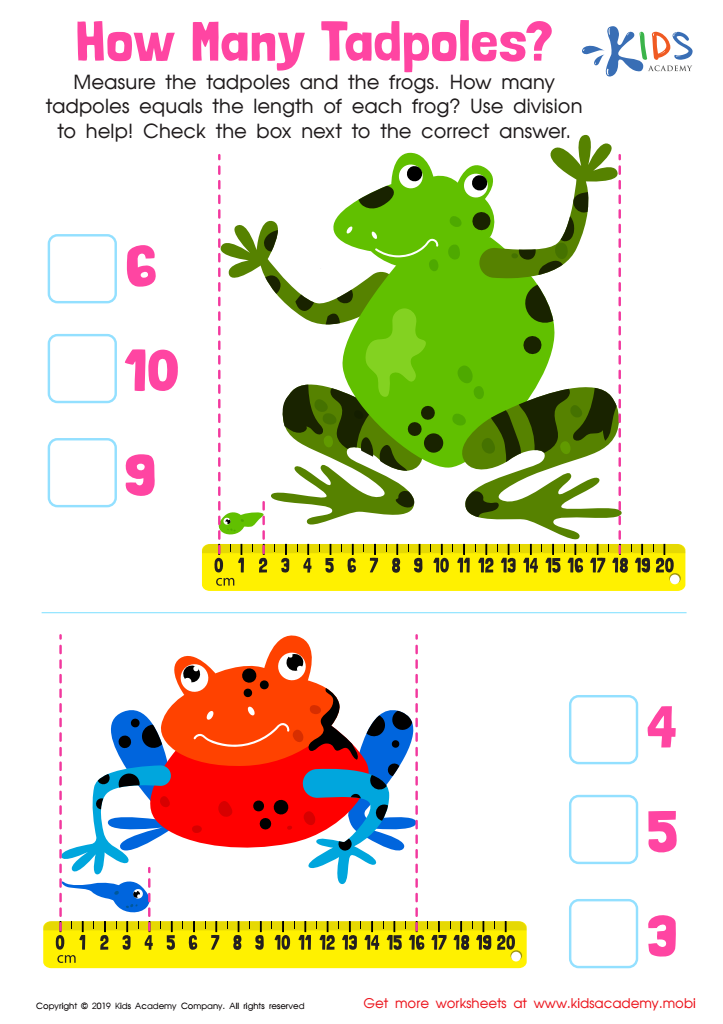
Kids love tadpoles! They'll have fun using them to work out the measurements of their frog friends. By dividing the length of the frogs by the length of the tadpoles, children can deduce how many tadpoles it takes to equal a frog. With the use of 'how many' and 'each' they'll solve math problems without realizing it!
 Assign to My Students
How Many Tadpoles Worksheet
Worksheet

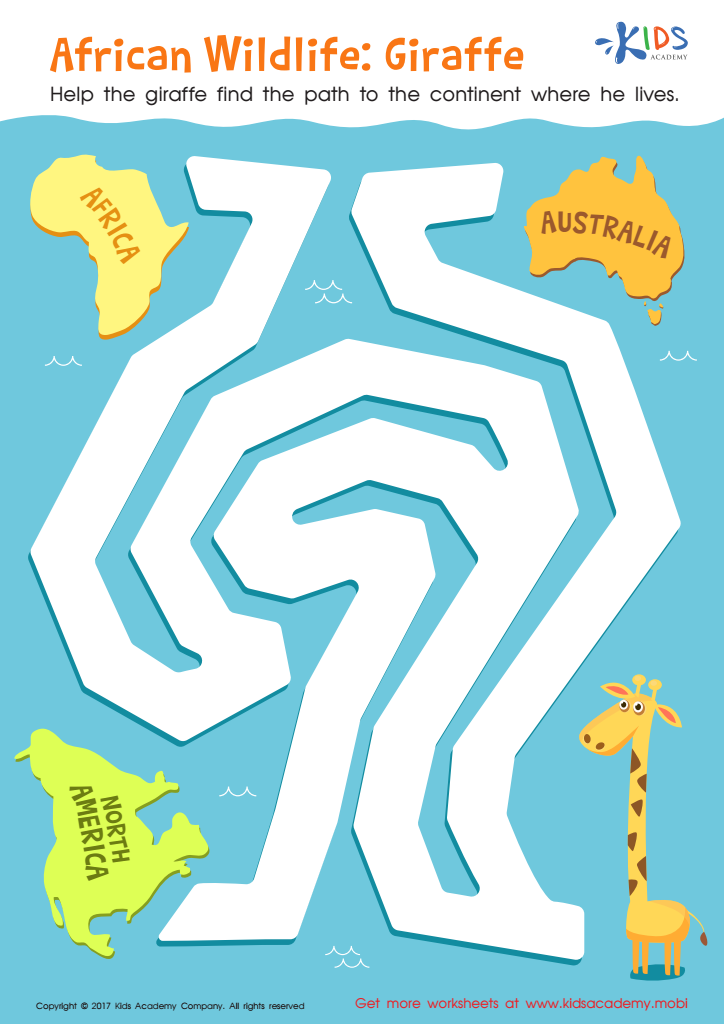
African Wildlife: Giraffe Worksheet
Help the giraffe get home! This African wildlife giraffe worksheet will boost your child's logical reasoning skills while they complete a maze to help the giraffe navigate choppy waters. Learn about different continents and their unique climates, practice problem solving and expand knowledge of the world and its habitats. Perfect for inspiring little learners!
African Wildlife: Giraffe Worksheet
Worksheet
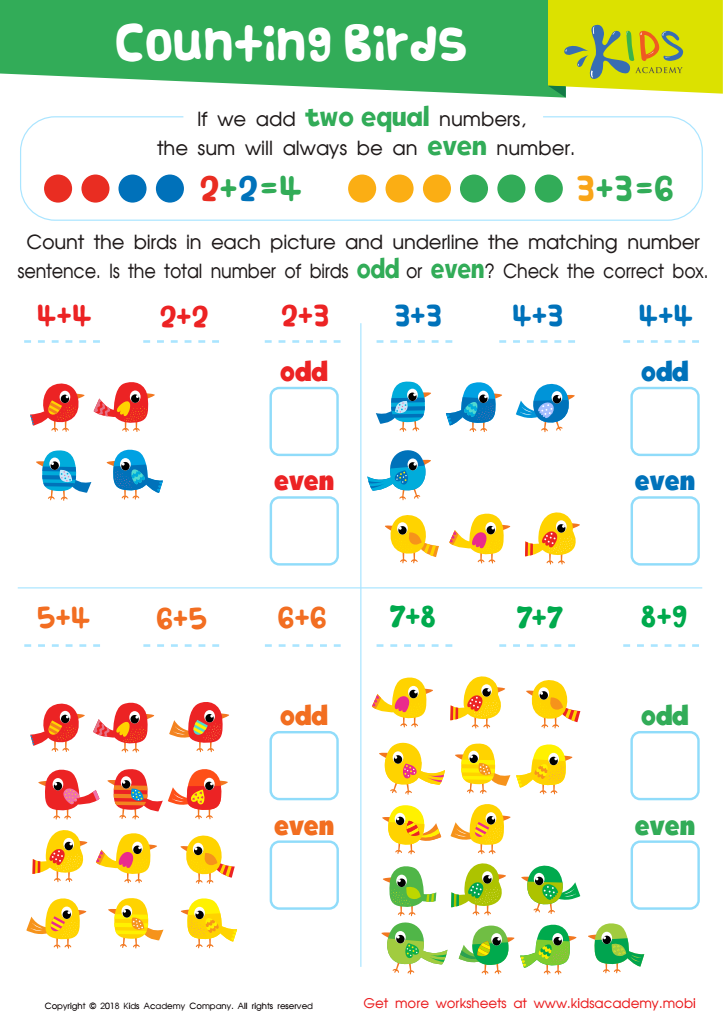
Counting Birds Worksheet
Help your child count and underline the matching number sentence in the worksheet. Ask them if the total number of birds in each picture is odd or even, then check the correct box. When two equal numbers are added, the sum is always an even number (e.g. 2+2=4, 4+4=8, both divisible by 2).
Counting Birds Worksheet
Worksheet
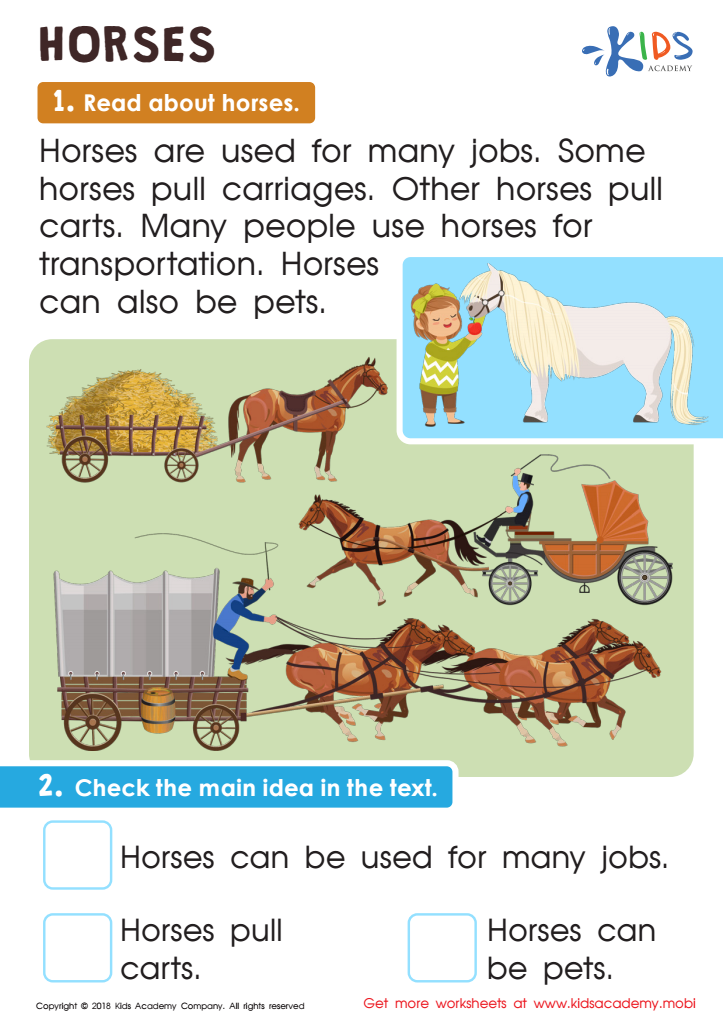
Horses Worksheet
Help your little reader differentiate between details and the main idea with this fun worksheet about horses. Kids will be excited to learn about the different roles horses play. To ensure they understand the overall concept, discuss it before having them choose the right statement at the end.
Horses Worksheet
Worksheet
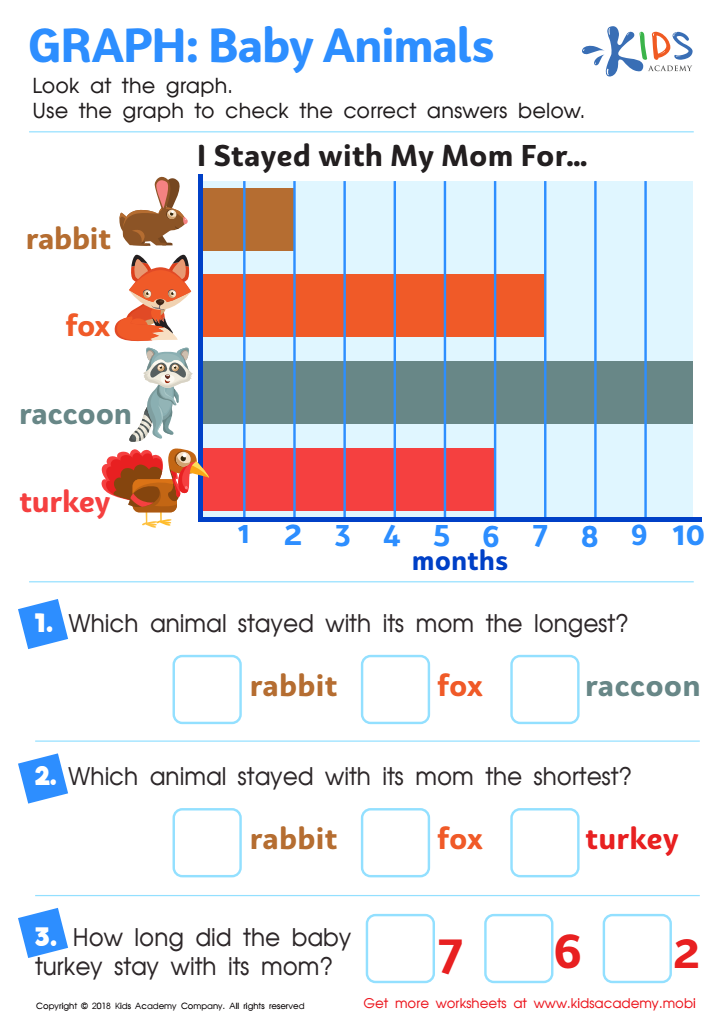
Graph: Baby Animals Worksheet
Graphs are essential for learning in math, science and ELA. This worksheet featuring baby animals is a fun way to practice reading graphs. Look at the graph and answer the questions below it. Check the boxes for the right answers based on the data.
Graph: Baby Animals Worksheet
Worksheet
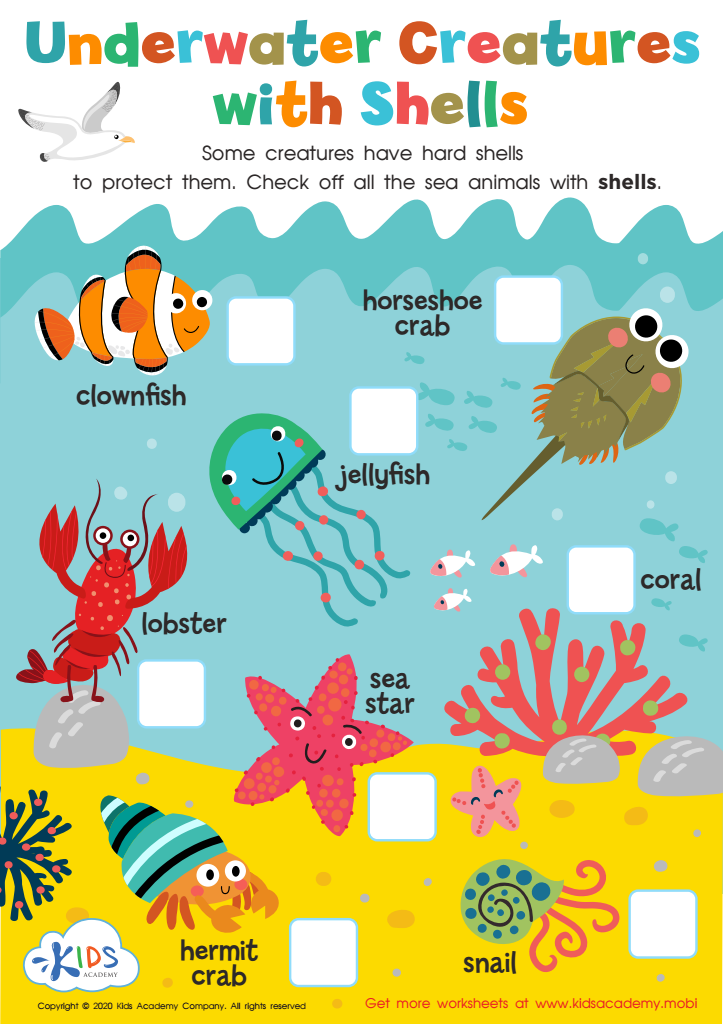
Underwater Creatures with Shells Worksheet
Teach your child about sea creatures with this vibrant PDF science worksheet! Comb through the colorful image to identify animals with shells; compare them to others and check them off. Let them know shells don't just wash up on beach, they serve as protection for sea creatures!
Underwater Creatures with Shells Worksheet
Worksheet
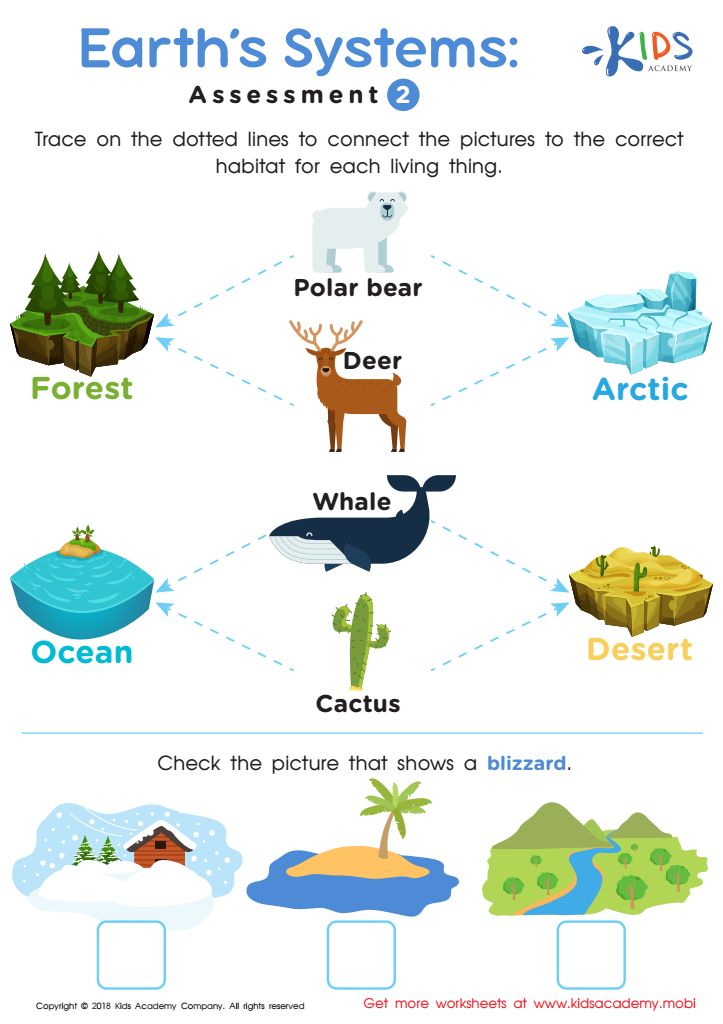
Earth's Systems: Assessment 2
Kids will love this free printable worksheet to assess their knowledge of habitats and the living creatures found in them. They'll trace the dotted lines to connect the pictures of plants and animals to their respective habitat and identify the type of weather depicted. No, polar bears don't live in the ocean, but they do like to swim in icy waters! With this fun activity, your little learner will master earth science basics.
Earth's Systems: Assessment 2
Worksheet
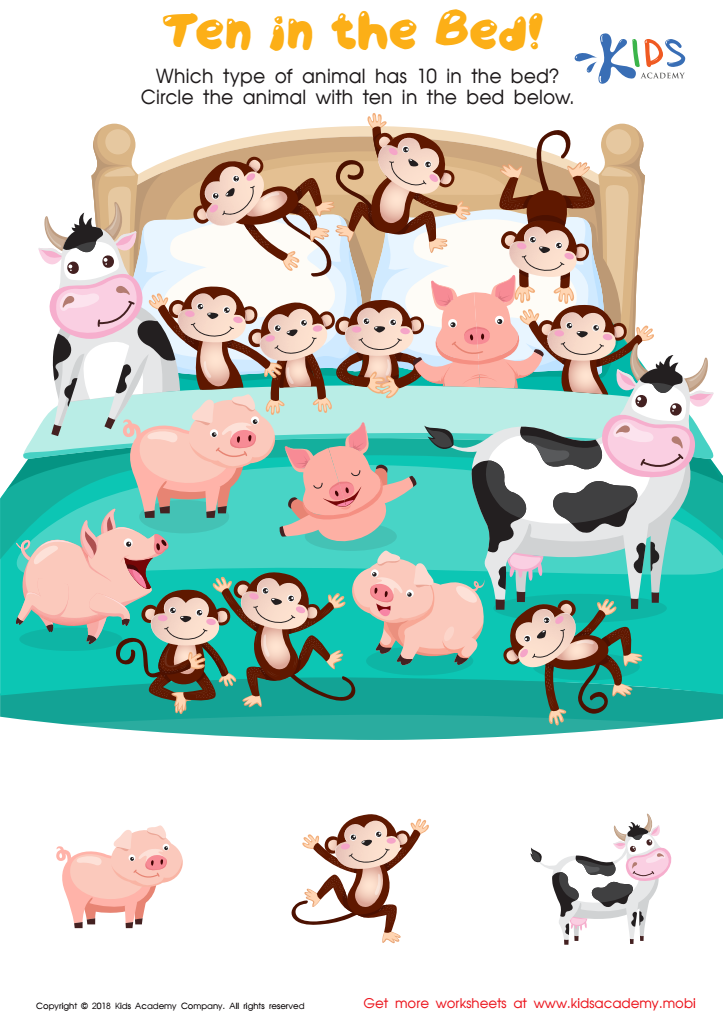
Ten in the Bed Worksheet
This fun worksheet has your kids counting and sorting friendly animal faces in a bed of ten! It's a great way for them to practice their mental math skills, like adding and multiplying more efficiently. Plus, it brings a new meaning to the classic song "Monkeys Jumping on the Bed"!
Ten in the Bed Worksheet
Worksheet
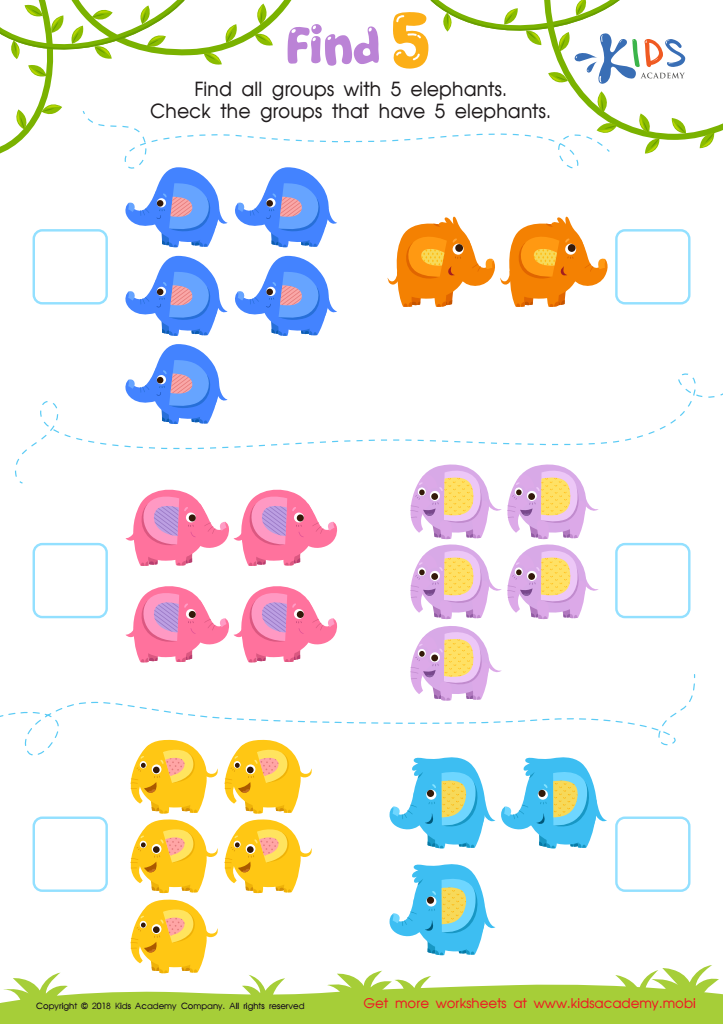
Find 5 Worksheet
Kids will love these cheery elephants that help them discover grouping and counting by fives. It's a great way to start learning addition and multiplication, while also developing fine motor skills. Download the free PDF and let the fun begin.
Find 5 Worksheet
Worksheet
Join Kids Academy for Free
Who is primarily going to use this learning content?








Counting skills related to plants and animals are crucial for children aged 5-9, as they lay the foundation for both mathematical understanding and environmental awareness. Engaging with the natural world through counting helps children develop essential cognitive skills, such as spatial awareness and logical reasoning. For instance, counting animals at a zoo or plants in a garden introduces basic numerical concepts while stimulating curiosity about living organisms.
Additionally, these counting activities promote observation and mindfulness, encouraging students to notice details and patterns in nature. This can foster a sense of responsibility towards the environment, as children learn to appreciate biodiversity and the role different species play in ecosystems.
Furthermore, collaborating on counting tasks provides opportunities for social interaction and teamwork. Parents and teachers can support children’s learning by integrating counting into fun, hands-on experiences, such as nature walks or gardening activities, enhancing not only their counting skills but also their overall science literacy.
In conclusion, investing time into developing counting skills related to plants and animals is beneficial for cognitive, social, and environmental education. It's an excellent way to cultivate a well-rounded sense of awareness and curiosity in young learners.