Division practice Plants and Animals Worksheets for Ages 5-9
4 filtered results
-
From - To
Enhance your child’s learning journey with our Division Practice Plants and Animals Worksheets for ages 5-9. These engaging and educational worksheets combine essential math skills with exciting science content. Through fun activities and exercises, children will practice division while discovering fascinating facts about plants and animals. Perfect for young learners, our worksheets are designed to make learning enjoyable and effective, fostering a love for math and science. Ideal for classroom use or additional at-home practice, these printable worksheets from Kids Academy will build foundational skills and encourage curiosity about the natural world. Start exploring today!
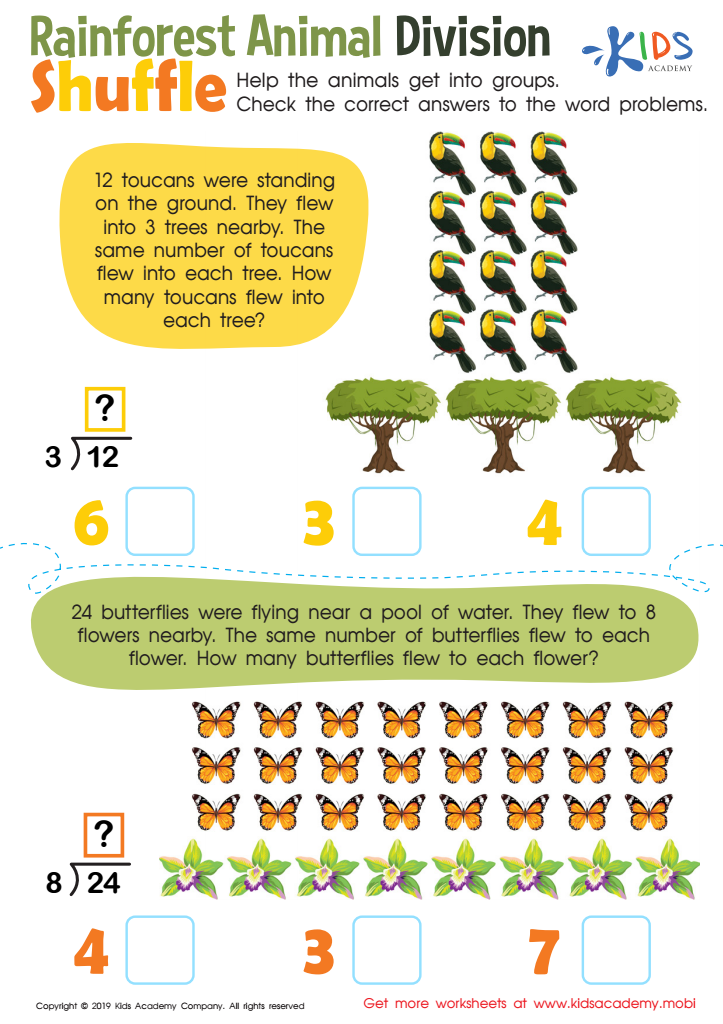
Rainforest Animal Division Worksheet
 Assign to My Students











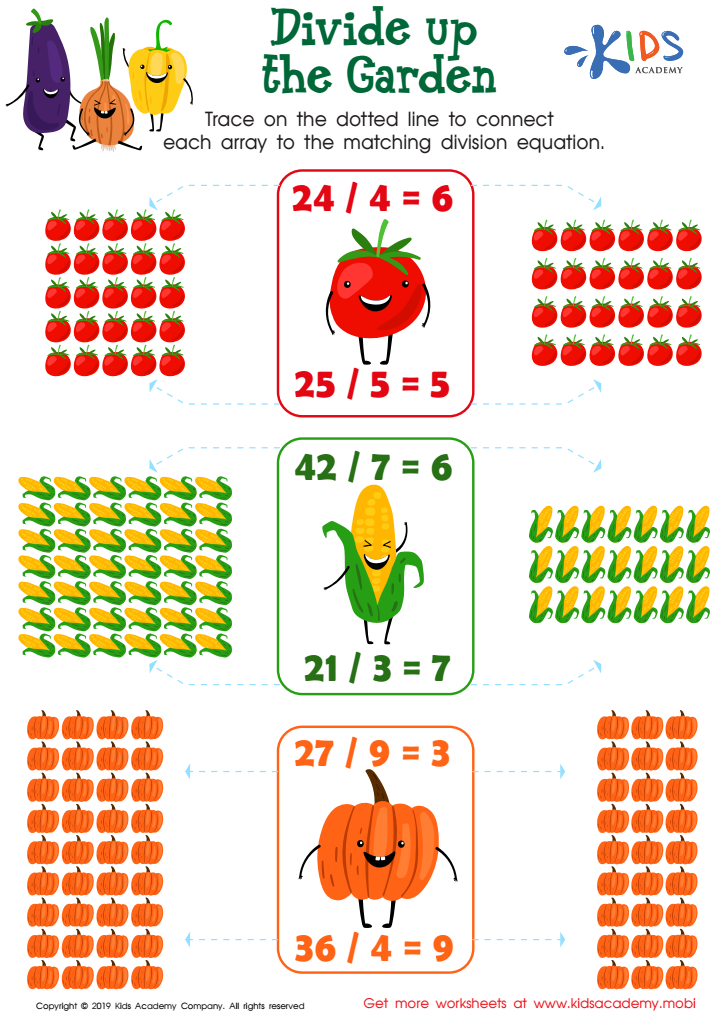
Divide up the Garden Worksheet
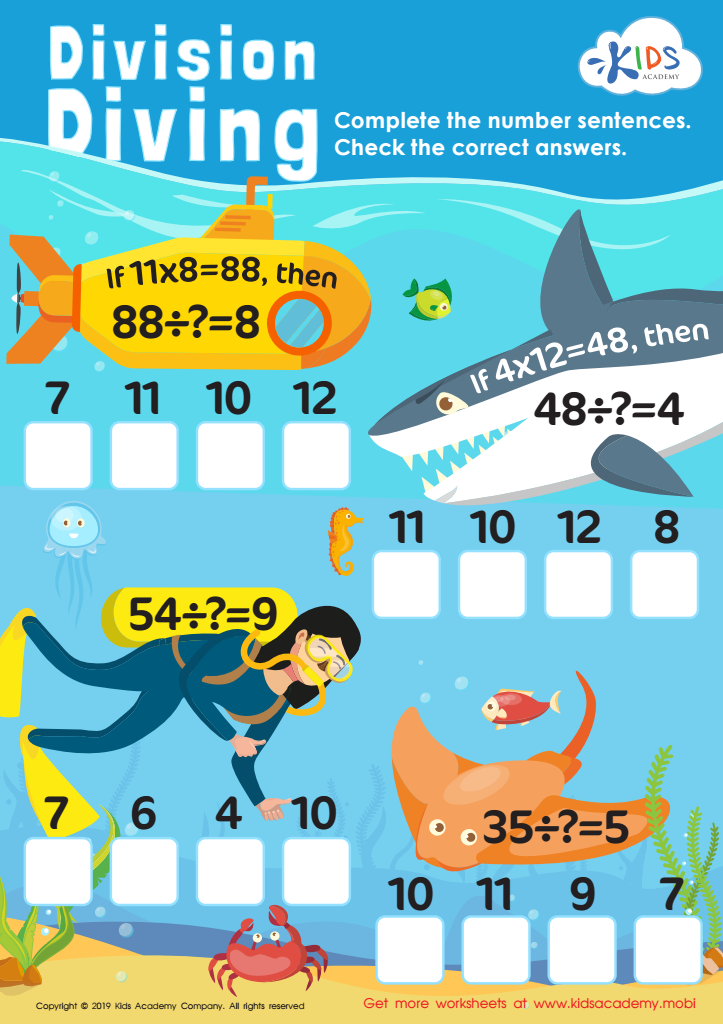
Division Diving Worksheet
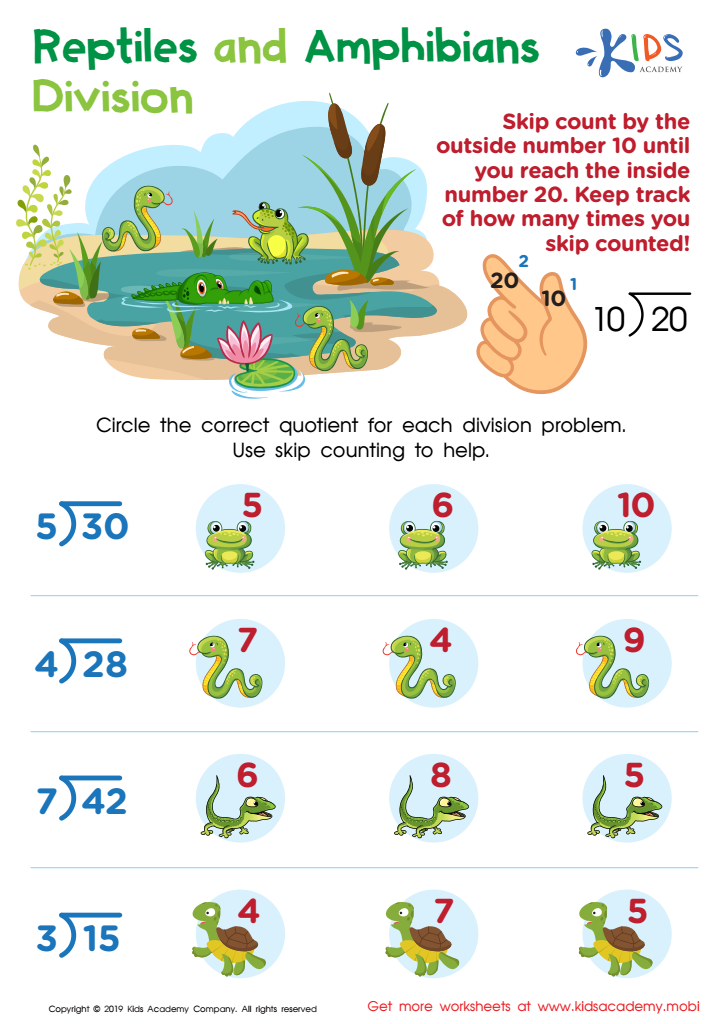
Reptile and Amphibians Division Worksheet








Parents and teachers should prioritize integrating activities related to division and the study of plants and animals into the learning experiences of children aged 5-9 for several compelling reasons. At this developmental stage, fostering a love for learning and curiosity about the world can set strong educational foundations. Firstly, division practice enhances numerical literacy, vital for future mathematical proficiency. Grasping division concepts early improves problem-solving and critical thinking skills, promoting cognitive development.
Equally important, learning about plants and animals nurtures observational skills and environmental awareness. Children naturally show curiosity about living things, and exploring these topics enables them to connect with nature, fostering respect for ecosystems. This interdisciplinary approach develops a holistic appreciation of science and mathematics. Examining plants and animals encourages inquiry-based learning, promoting hands-on activities, such as nature walks or simple experiments, enhancing engagement and retention.
Furthermore, combining these lessons cultivates patience, perseverance, and a systematic approach to problem-solving and investigation. It encourages intrinsic motivation and opens doors to discovering future passions or careers in STEM (Science, Technology, Engineering, Mathematics) fields. Therefore, focusing on division, plants, and animals in early education shapes well-rounded individuals, prepared for academic challenges and instilled with a lifelong love for discovery and learning.








