Understanding ecosystems Plants and Animals Worksheets for Ages 5-9
6 filtered results
-
From - To
Explore the fascinating world of ecosystems with our "Understanding Ecosystems: Plants and Animals Worksheets" for children aged 5-9! These engaging worksheets are designed to introduce young learners to the interconnected relationships between plants, animals, and their environments. Featuring colorful illustrations and fun activities, kids will discover how living things depend on each other for survival. Each worksheet enhances critical thinking and fosters an appreciation for nature, making science accessible and enjoyable. Perfect for classroom use or at-home learning, these resources will ignite curiosity and promote a lifelong love for ecology. Start your journey into ecosystems today!
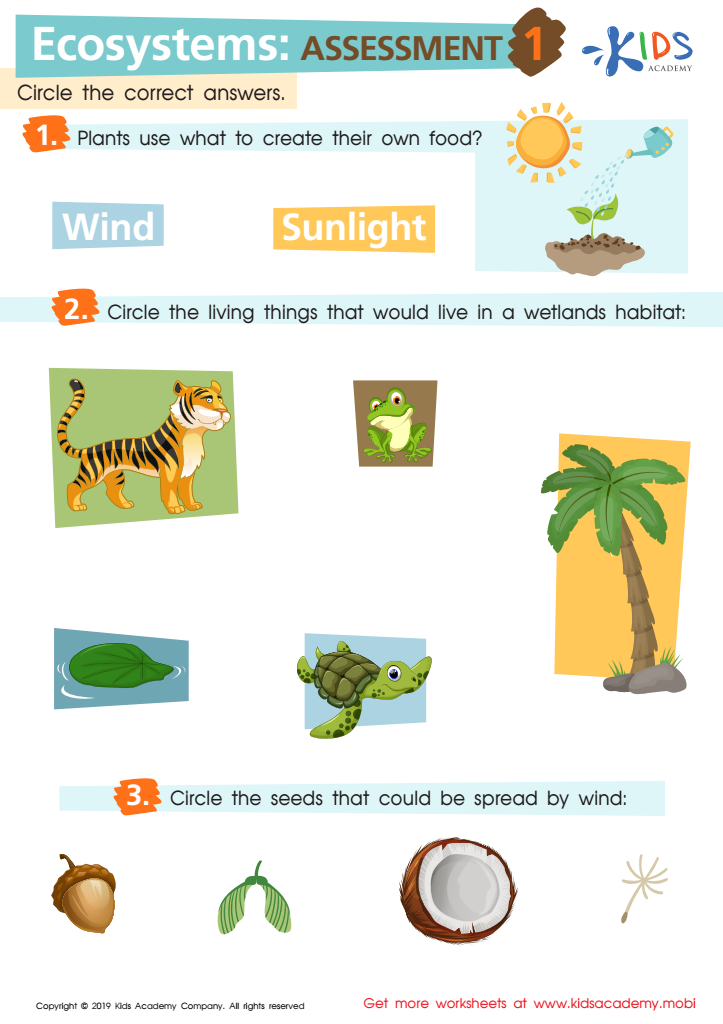
Ecosystems: Assessment 1 Worksheet
 Assign to My Students

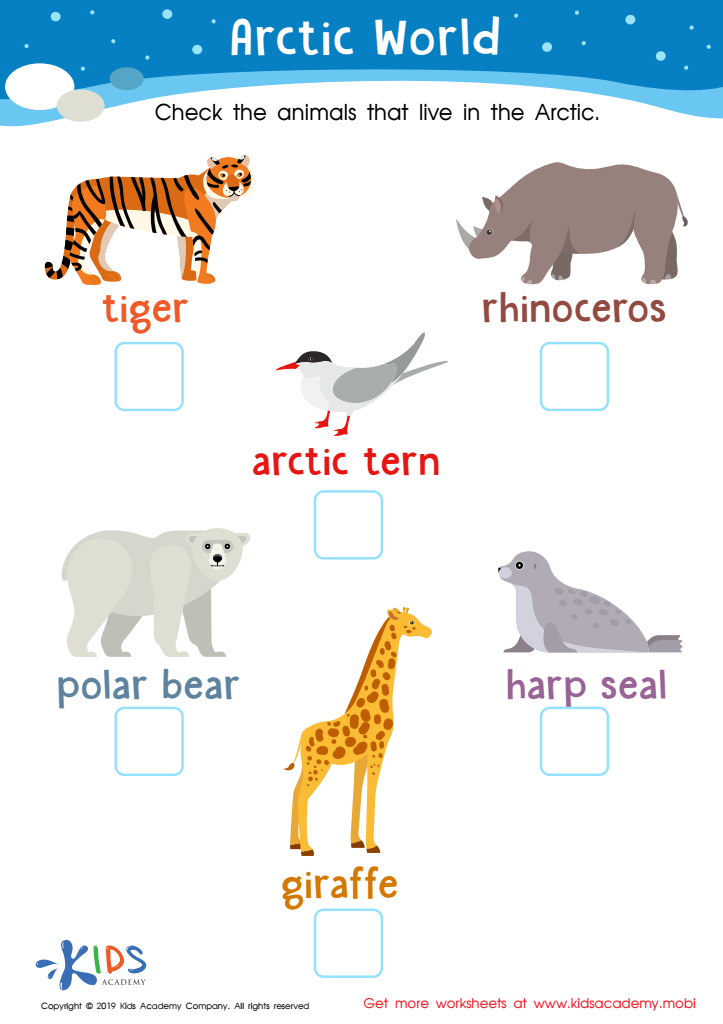
Arctic World Worksheet
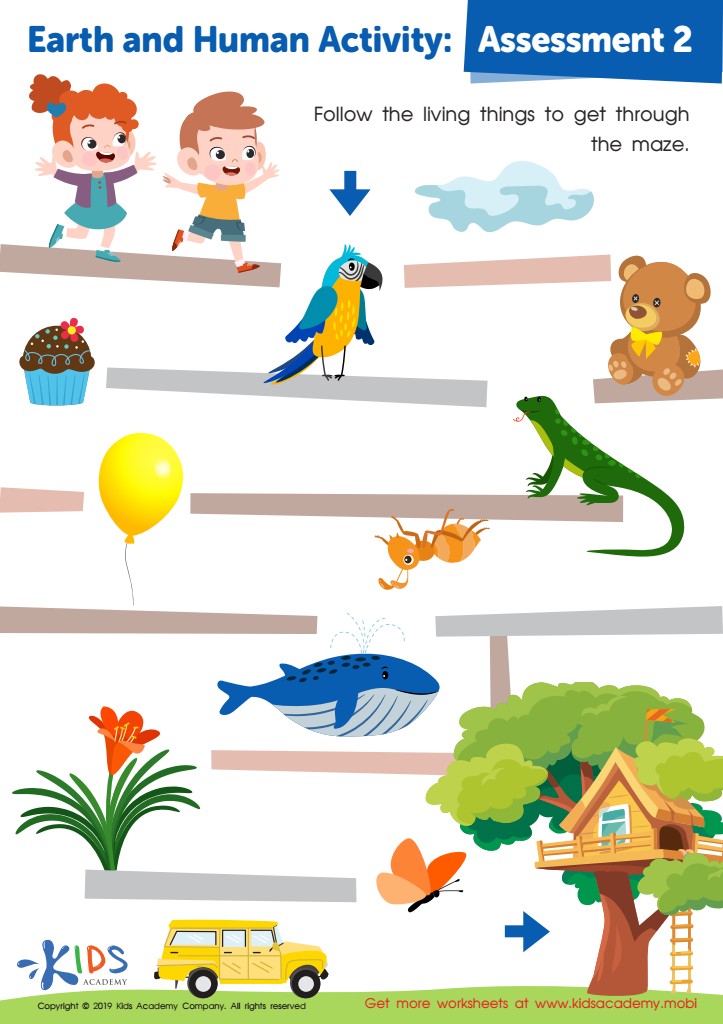
Earth and Human Activity: Assessment 2 Worksheet
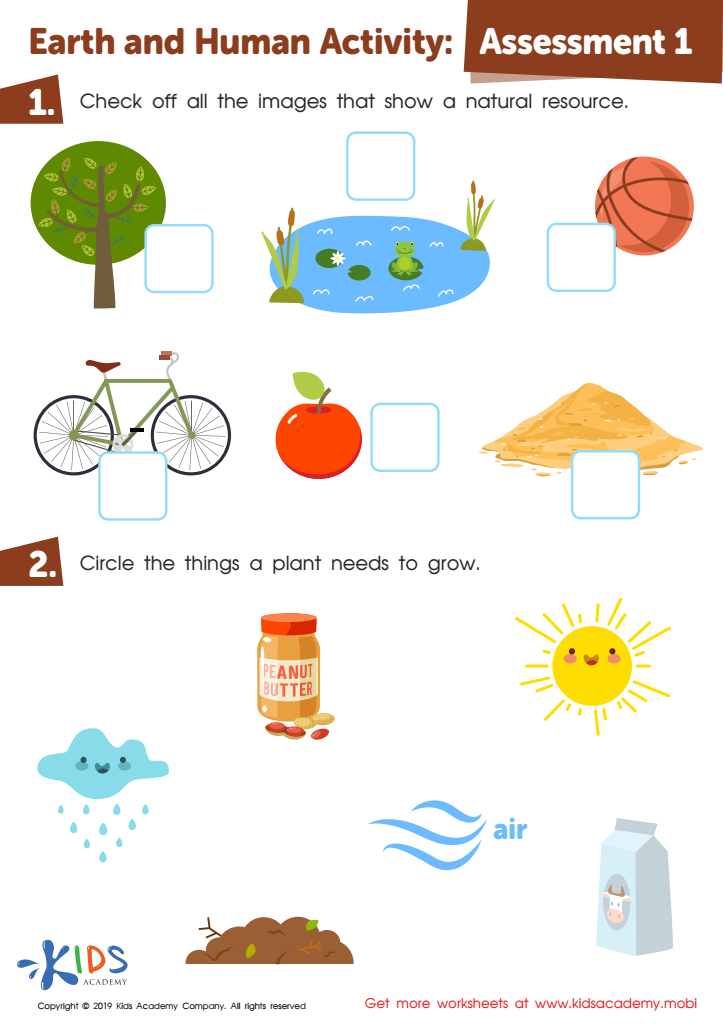
Earth and Human Activity: Assessment 1 Worksheet
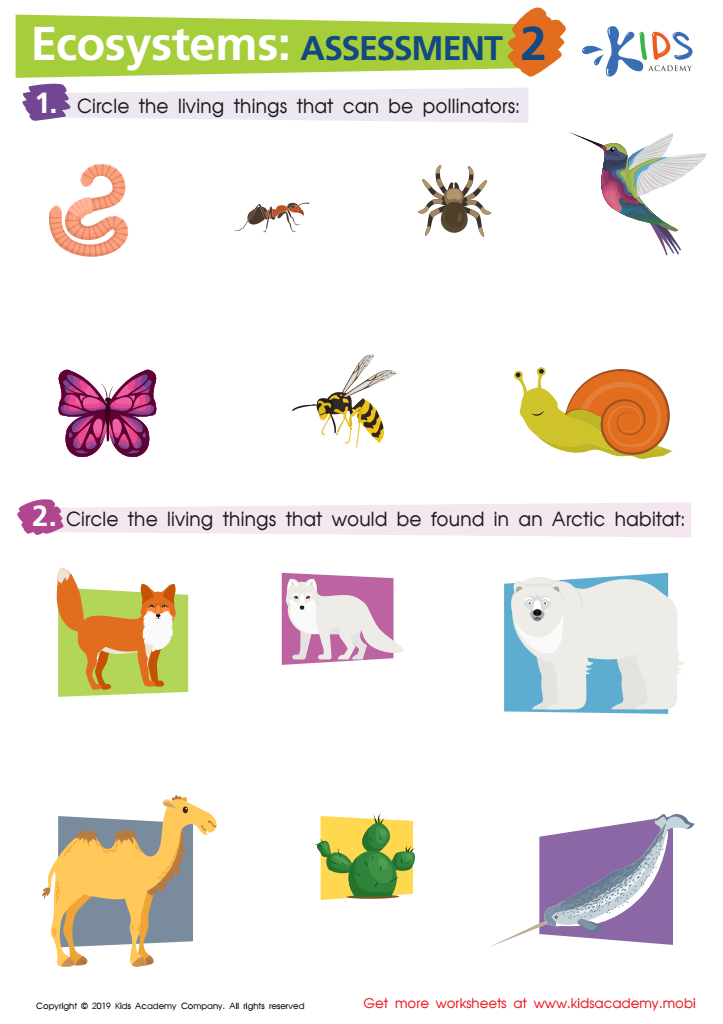
Ecosystems: Assessment 2 Worksheet
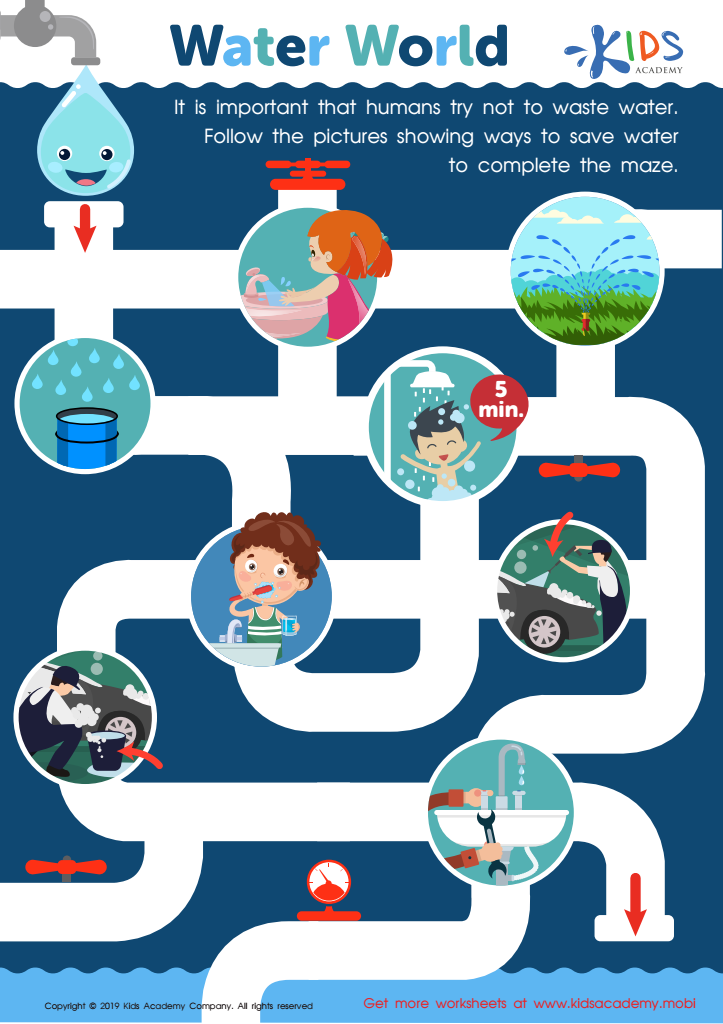
Water World Worksheet







Understanding ecosystems involving plants and animals is crucial for young children ages 5-9 because it lays the foundation for environmental awareness and stewardship. At this age, children are naturally curious about the world around them, making it an ideal time to introduce them to basic ecological concepts. By engaging with ecosystems, children learn how different organisms interact with each other and their environment, fostering a sense of responsibility towards nature.
Parents and teachers play a vital role in nurturing this curiosity. Exploring plant and animal relationships teaches children about the importance of biodiversity, food chains, and the impact of pollutants and habitat destruction. These lessons help instill values of conservation and encourage future generations to make sustainable choices.
Moreover, learning about ecosystems supports critical thinking and observation skills, as children explore nature through hands-on experiences. Activities like gardening, planting trees, or observing wildlife empower them to form connections between living things. This learning experience ultimately cultivates empathy for all forms of life and emphasizes the interdependence that characterizes our planet. By prioritizing ecosystem education at an early age, we equip children with the knowledge and appreciation needed to protect the environment as informed and engaged citizens.