Governance and Civics Worksheets for Ages 5-9 - Page 3
51 filtered results
-
From - To
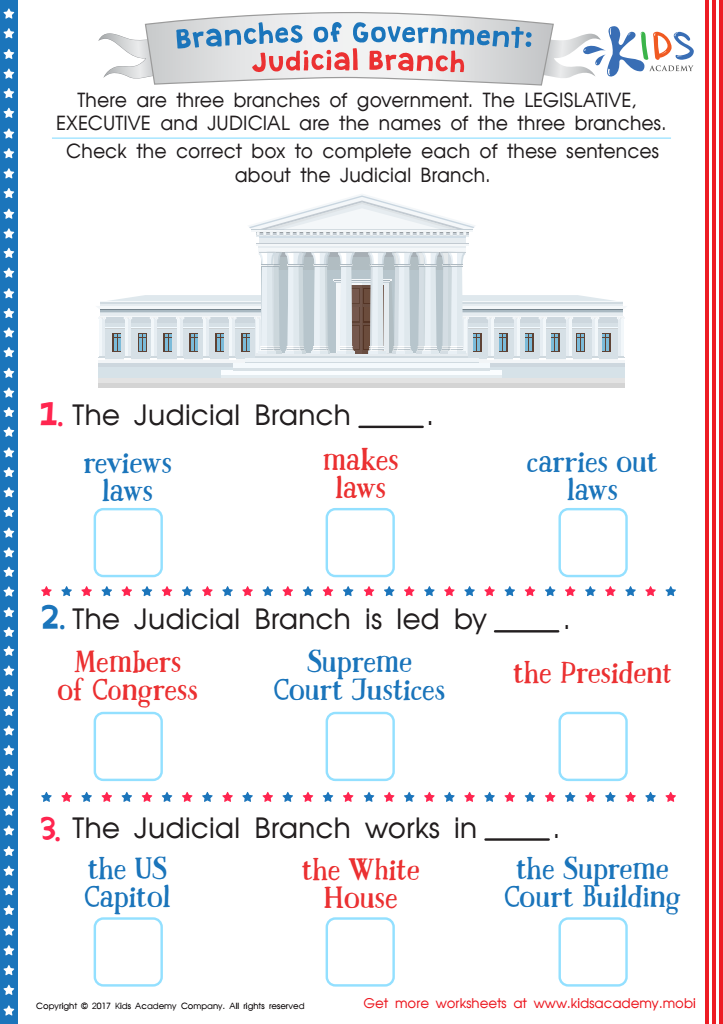
Braches of the Government: Judicial Branch Worksheet
 Assign to My Students
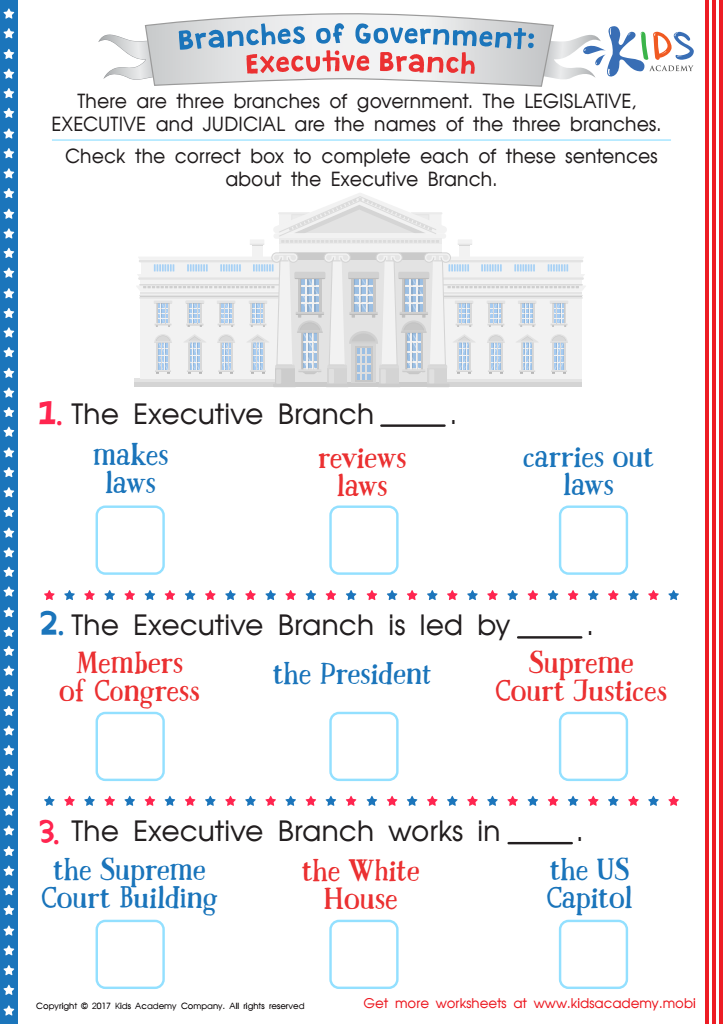
Branches of the Government: Executive Branch Printable
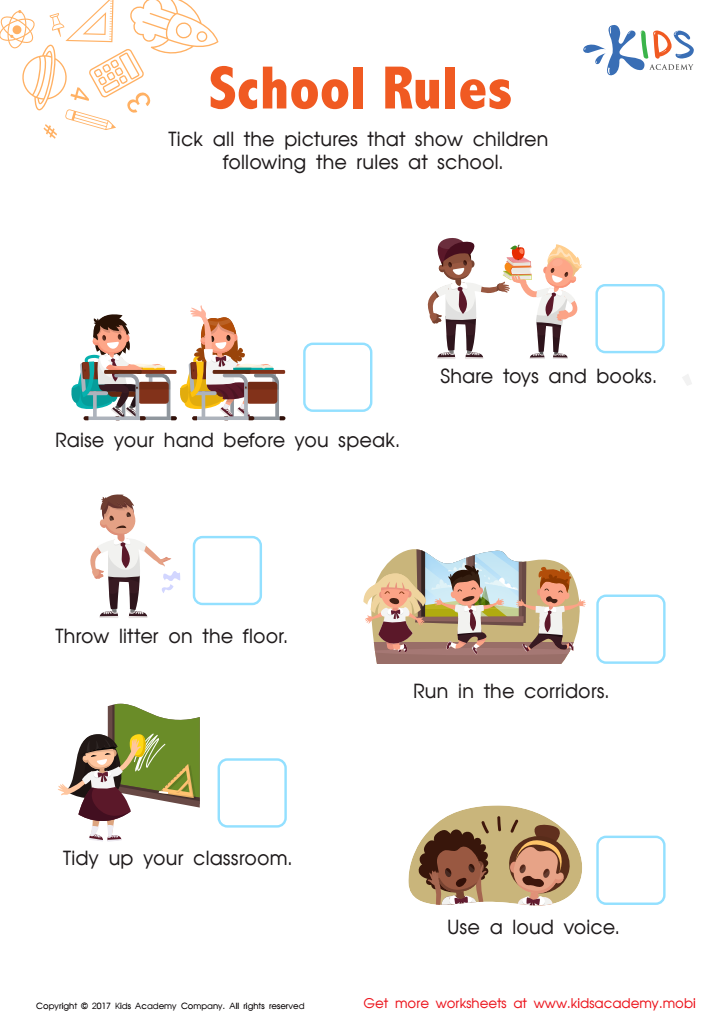
School Rules Worksheet


Understanding governance and civics from an early age lays a foundation for children to become informed and engaged citizens. Teaching children aged 5-9 about these concepts helps them grasp the importance of rules, fairness, and collective decision-making. By introducing kids to ideas like voting, community roles, and basic rights and responsibilities, parents and teachers foster essential life skills such as critical thinking, empathy, and cooperation.
Moreover, early civic education promotes social awareness and ethical behavior. When children observe how communities function and the importance of participation, they begin to value their own roles within their families, schools, and neighborhoods. This can lead to increased willingness to contribute, share, and respect others.
Civic lessons also encourage curiosity and questions about the world around them. With guided explorations, children learn to understand diversity, appreciate multiple perspectives, and acknowledge the role of governance in their everyday lives. This lays the groundwork for informed decision-making and active participation in society as they grow older.
Ultimately, instilling civic-mindedness early on equips young learners with a sense of belonging and responsibility, fostering tomorrow’s proactive and conscientious leaders. Prioritizing governance and civics education empowers children to recognize their potential impact on their communities and the broader world.








