
Following instructions Geometry Worksheets for 5-Year-Olds
5 filtered results
Difficulty Level
Grade
Age
-
From - To
Subject
Activity
Standards
Discover our engaging "Following Instructions Geometry Worksheets for 5-Year-Olds!" Designed to introduce young learners to basic geometry concepts, these worksheets help children develop essential skills as they follow simple directions to complete fun activities. Each worksheet features vibrant illustrations and straightforward prompts that enhance understanding and retention. Kids will enjoy identifying shapes, understanding spatial relationships, and applying their knowledge through creative tasks that foster both cognitive and motor skills. Perfect for home or school use, these resources encourage children to think critically while enjoying their learning journey. Download and inspire your child's love for geometry today!
Favorites
With answer key
Interactive
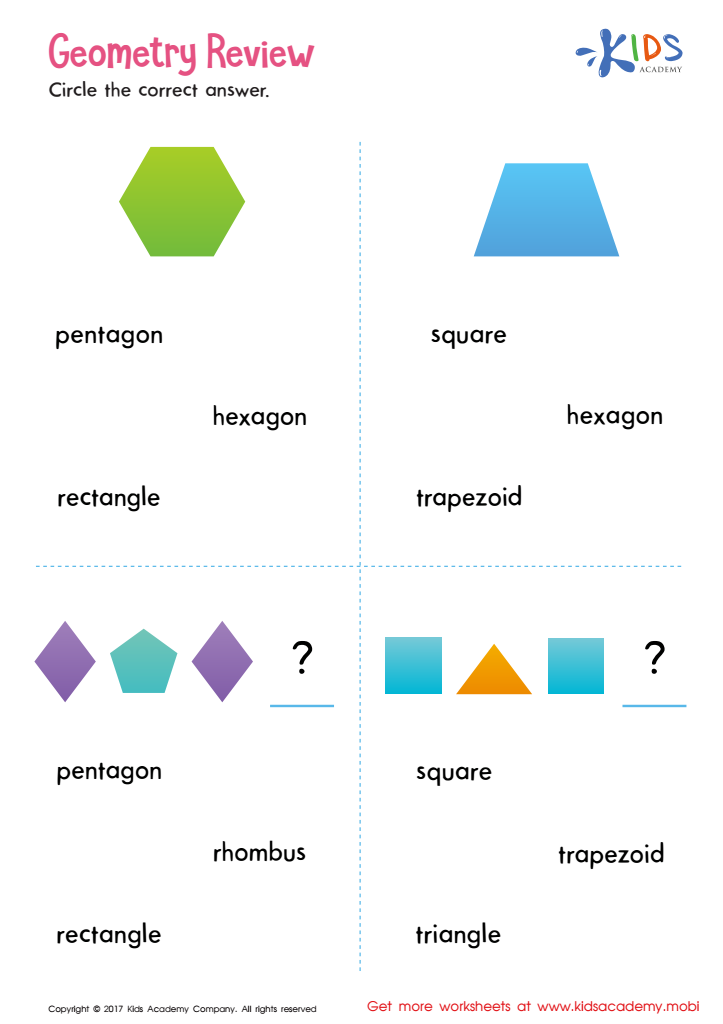
Geometry Review Printable
Repetition is key to success; give your child the practice they need with this geometry worksheet.
Geometry Review Printable
Worksheet











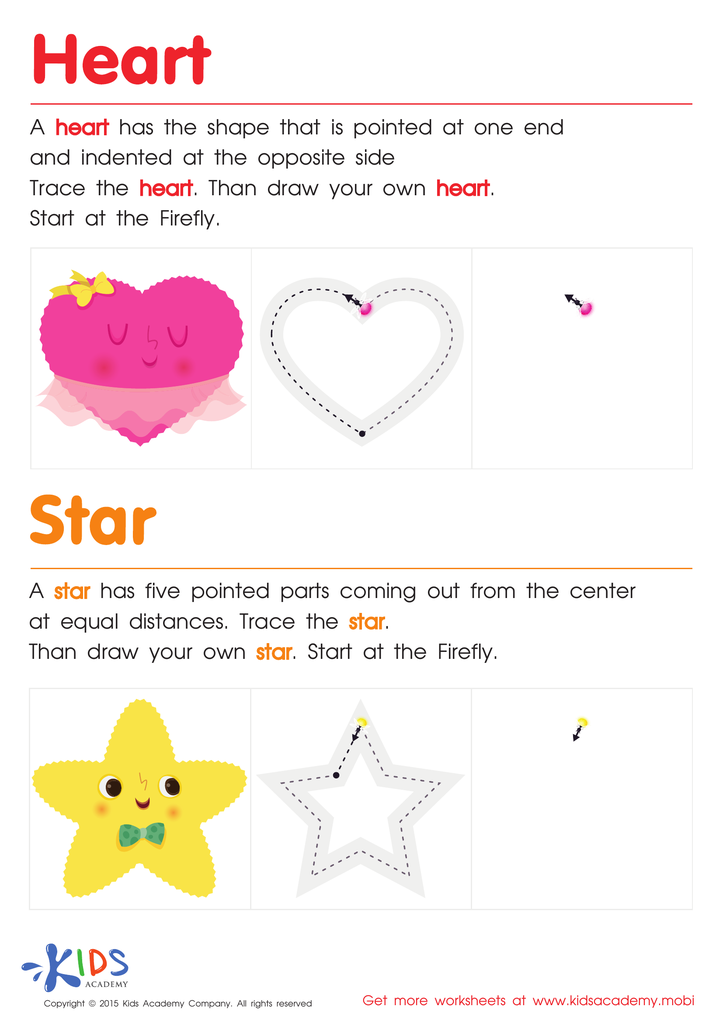
Let's Learn to Draw Hearts And Stars Printable
Trace and draw hearts and stars, learn their names and use them in your drawings. Start with the firefly and be creative!
Let's Learn to Draw Hearts And Stars Printable
Worksheet
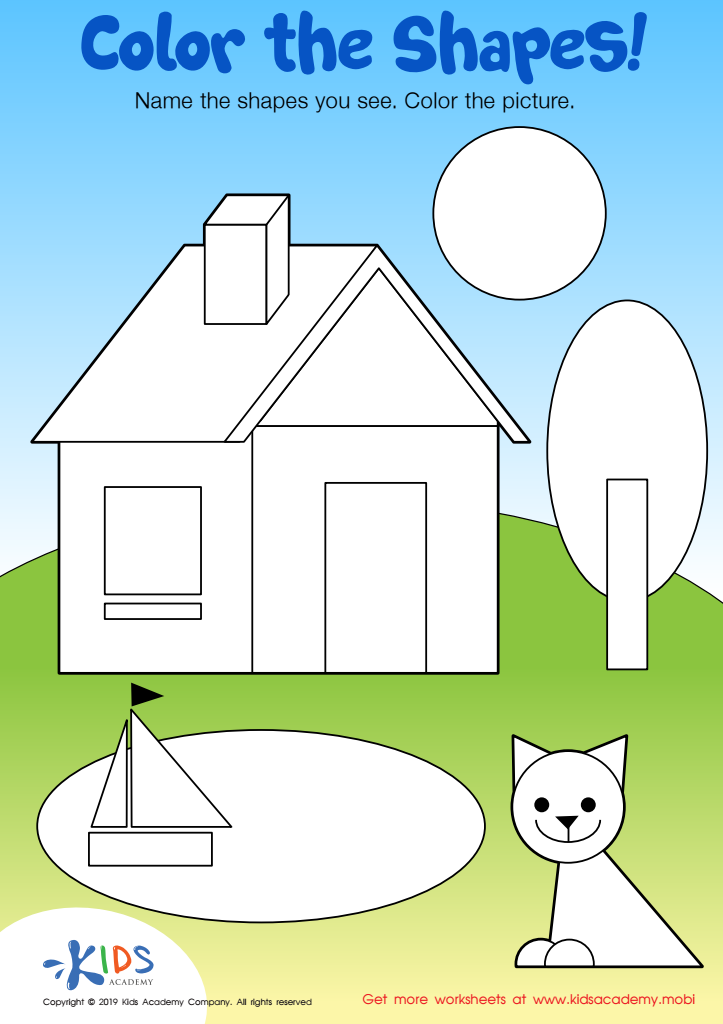
Color the Shapes Worksheet
Help your student master shape identification with this fun worksheet. Ask them to name the shapes in the picture, then color it! Ask questions like "How many squares do you see?" and "How many triangles?" to extend the learning. Identify squares, circles, triangles and rectangles with this enjoyable coloring page.
Download (PDF)
 Assign to My Students
Assign to My Students
Color the Shapes Worksheet
Worksheet
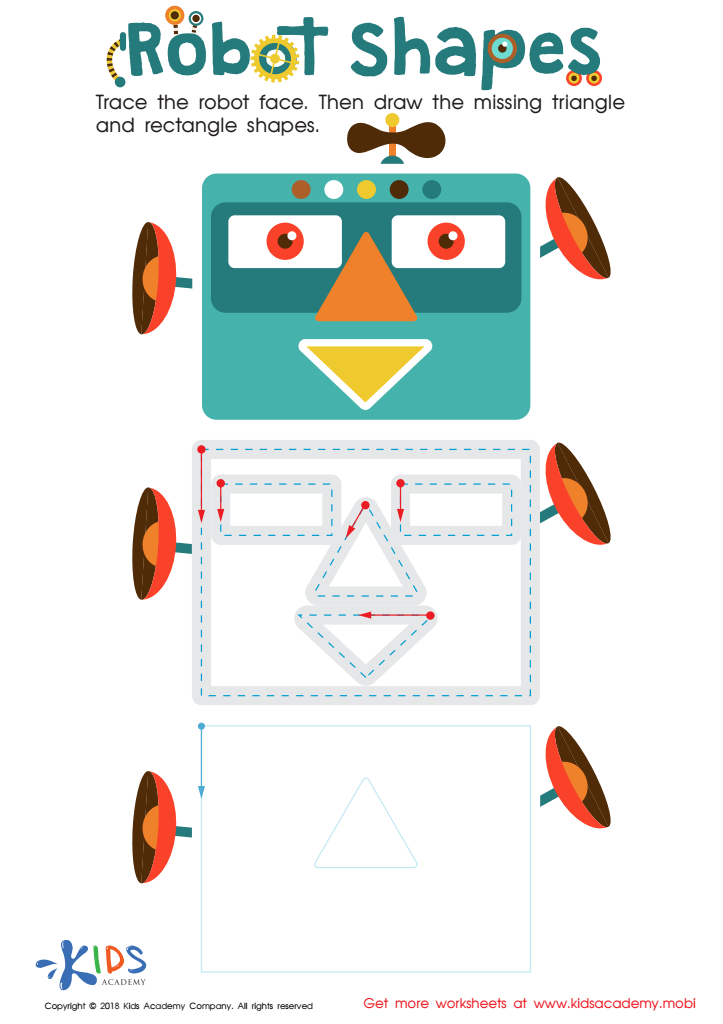
Robot Shapes Worksheet
Help your preschooler get started with math skills while having fun with this shape tracing worksheet featuring a cute robot! Ask them to study the first image, trace the dotted lines to draw the shapes in the second, and color the third. With this activity, they'll learn shapes while enjoying the funny robot pictures!
Robot Shapes Worksheet
Worksheet
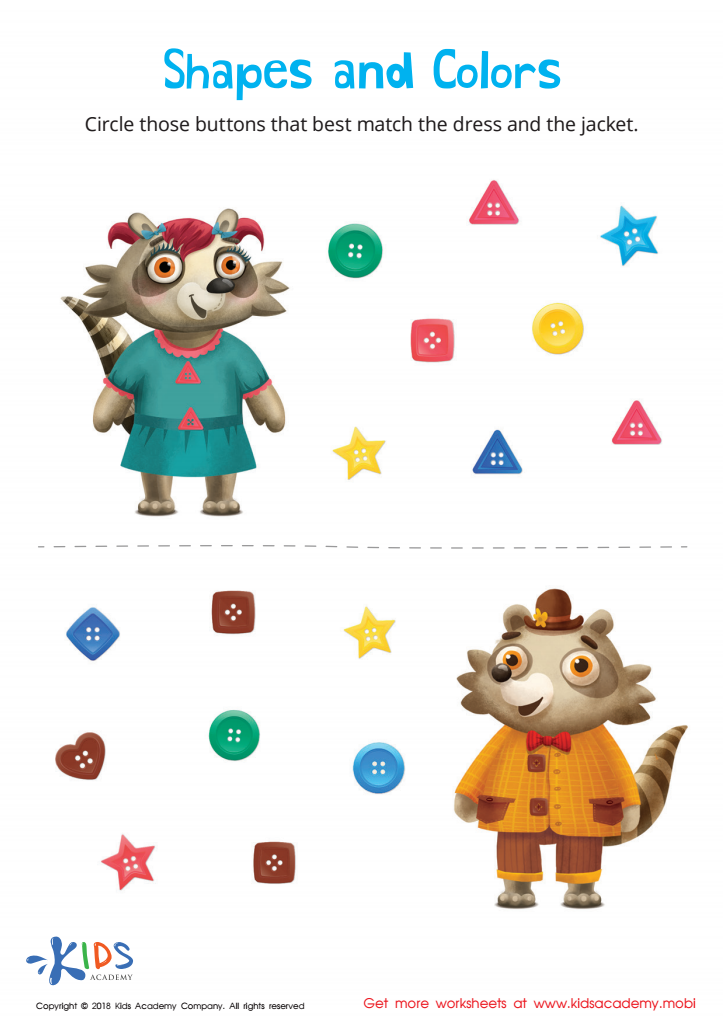
Shapes and Colors Worksheet
This worksheet is a fun way to teach toddlers shapes and colors! It has them match buttons on adorable racoon characters. Encourage your child to note the shape and color of the buttons then sort through and circle the matches. This helps build important attention to detail skills!
Shapes and Colors Worksheet
Worksheet
Join Kids Academy for Free
Who is primarily going to use this learning content?








Teaching 5-year-olds to follow instructions in geometry is essential for their cognitive and social development. At this age, children are like sponges, absorbing new concepts and skills critical for their future learning. Geometry introduces basic shapes, spatial awareness, and problem-solving skills that lay the groundwork for understanding more complex mathematical ideas. By following instructions, children learn to listen and comprehend, enhancing their communication skills.
For parents and teachers, emphasizing this skill ensures children's engagement and focus during lessons. It nurtures a sense of responsibility, as they learn to adhere to simple guidelines to achieve specific outcomes—be it drawing shapes or building structures with blocks. Moreover, working collaboratively on geometry projects fosters teamwork and patience, as children learn to share materials and ideas.
Following instructions in geometry also enriches children’s creativity and imagination. When they can accurately recreate shapes or patterns, they begin to build confidence in their abilities. At home and in school, promoting an environment where children can practice these skills helps them develop a strong foundation in math, preparing them for future academic challenges while also nurturing critical life skills such as patience, perseverance, and social interaction. Ultimately, these foundational learning experiences have lasting impacts on their education.








