
Chess rules understanding Worksheets for Ages 6-7
4 filtered results
Difficulty Level
Grade
Age
-
From - To
Subject
Activity
Standards
Introduce young minds to the captivating world of chess with our "Chess Rules Understanding Worksheets for Ages 6-7." These engaging and educational resources are designed to simplify chess fundamentals, making it accessible and fun for beginners. Each worksheet provides step-by-step guidance on piece movement, board setup, and basic strategies to foster strategic thinking and problem-solving skills. Perfectly tailored for kids aged 6 to 7, these printable activities promote cognitive development while keeping the learning experience enjoyable. Spark a lifelong appreciation for chess and enhance critical thinking abilities with these comprehensive and easy-to-follow worksheets.
Favorites
With answer key
Interactive
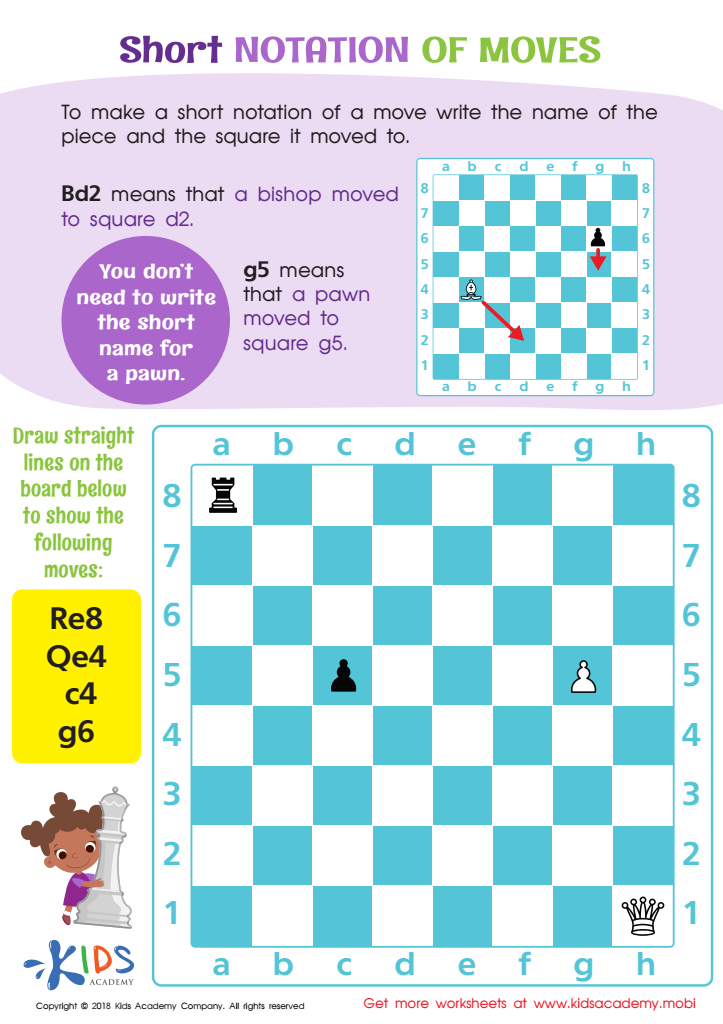
Short Notation of Moves Worksheet
To master chess, you need more than just knowing the pieces and their moves - you need to be able to make notations of your moves. To make a short notation, write the piece name and square it moved to; for example, Bd2 for bishop on d2. Pawns don't need the piece name, just the square; e.g. g5. Show your kids how to draw lines to the board for the moves given.
 Assign to My Students
Short Notation of Moves Worksheet
Worksheet
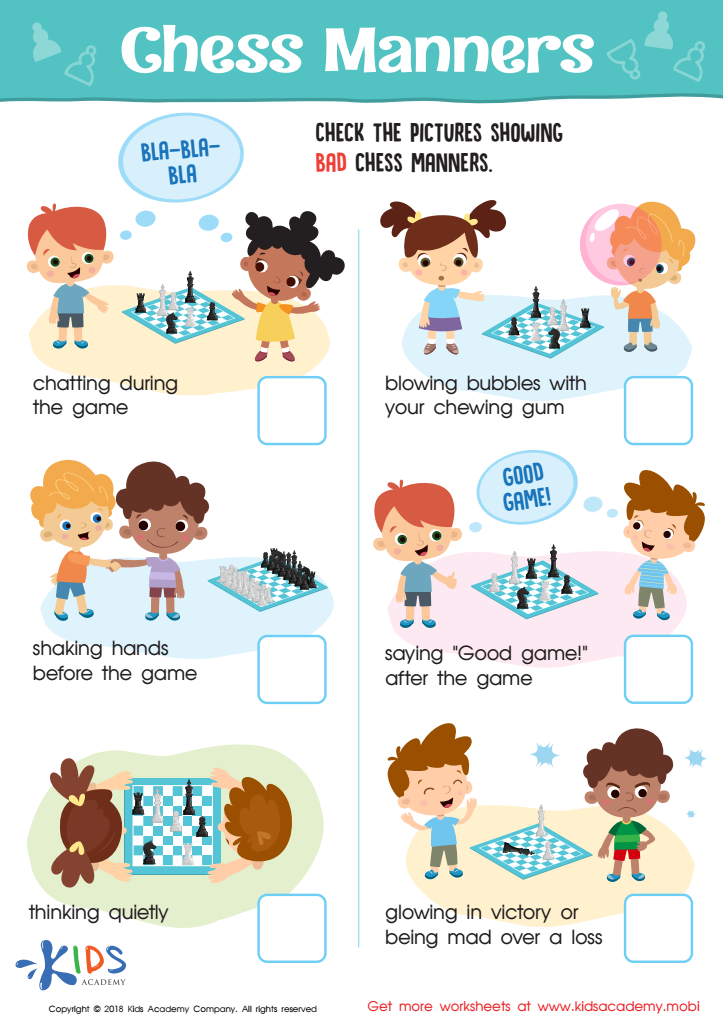
Chess Manners Worksheet
Teach your child chess manners in addition to table and social ones. Chess has clear rules and etiquette which must be followed for a proper game. Review this worksheet with your kid and discuss the pictures that show inappropriate behaviours. This will help them understand how to play the game correctly and with good manners.
Chess Manners Worksheet
Worksheet
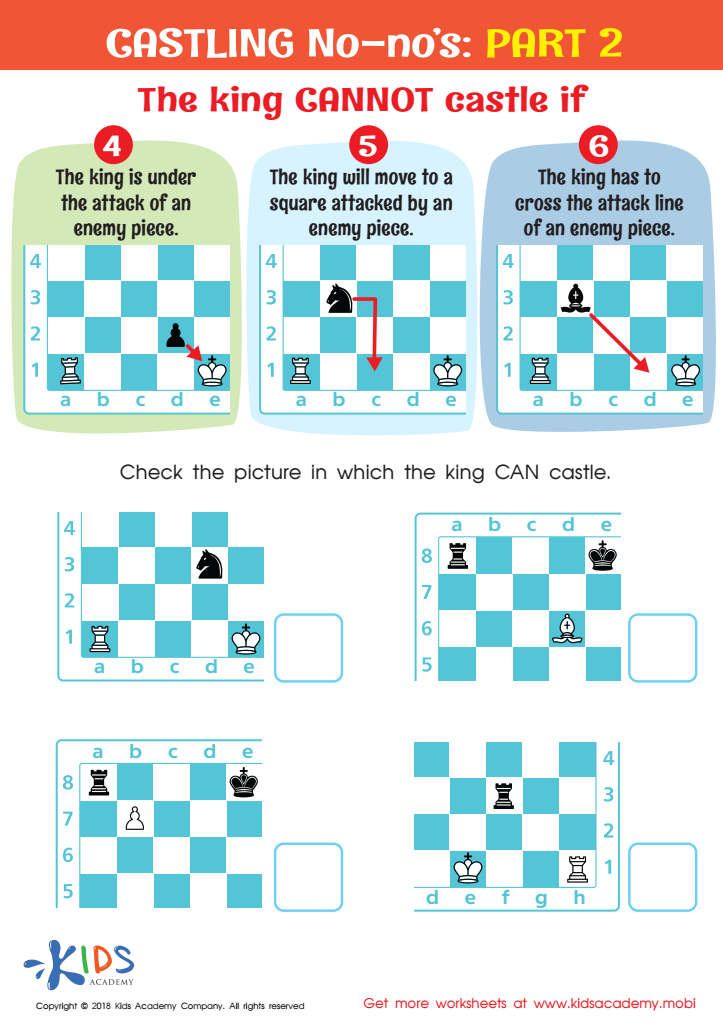
Castling No - no's: Part 2 Worksheet
Teach your child the rules of castling: no castling if the king is under attack or will move onto an attacked square, or cross an attack line. To prepare for a game of chess, help your child complete the exercise of identifying when the king can castle – check the pictures.
Castling No - no's: Part 2 Worksheet
Worksheet
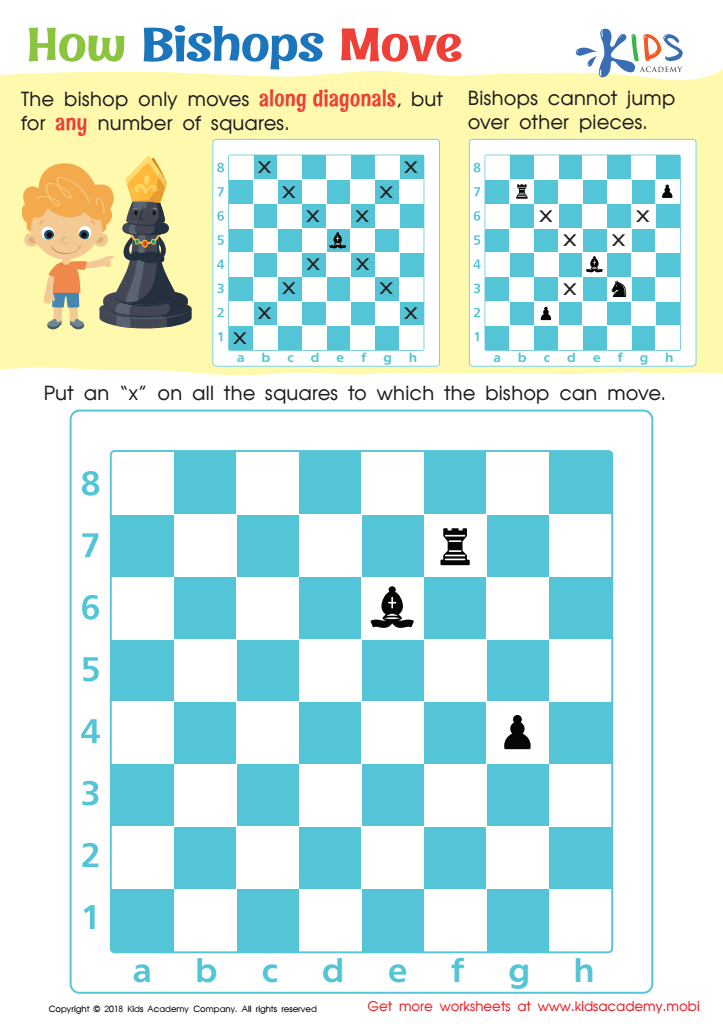
How Bishops Move Worksheet
There is no such thing as too much sharpening of skills. Encourage your child to learn more about chess technicalities with this simple worksheet. It shows them how a bishop moves: along diagonals any number of squares, but it can't jump over other pieces.
How Bishops Move Worksheet
Worksheet
Join Kids Academy for Free
Who is primarily going to use this learning content?




Understanding Chess rules for children aged 6-7 is crucial for several reasons that span beyond developing competence in the game itself. Firstly, comprehending Chess helps in honing critical thinking and problem-solving skills. This age group is at a crucial developmental stage where engaging in activities that stimulate cognitive growth is beneficial. By learning the rules and strategies of Chess, children practice planning ahead and thinking through the consequences of their actions, which are valuable life skills.
Moreover, Chess fosters patience and concentration. The game encourages children to focus, be patient, and approach challenges methodically. This aligns well with the developmental needs of 6-7-year-olds, who are maturing in their ability to pay attention and follow through with tasks, both essential for academic achievement.
Socially, Chess teaches important virtues such as sportsmanship, discipline, and respect. Players must learn to win gracefully and lose with dignity, which molds their character in positive ways. Engaging in this intellectual sport also introduces them to an environment where resilience and strategic flexibility are admired traits.
Furthermore, an early grasp of Chess and its rules can reveal talents and interests, potentially guiding extracurricular choices. It presents an opportunity for bonding, as playing with peers, parents, or mentors becomes a shared experience fostering emotional and social development. Therefore, prioritizing Chess education conjures multifaceted developmental benefits, critical to a child's formative years.








