Problem-Solving Skills Addition and Subtraction Word Problems Worksheets for Ages 6-7 - Page 2
33 filtered results
-
From - To
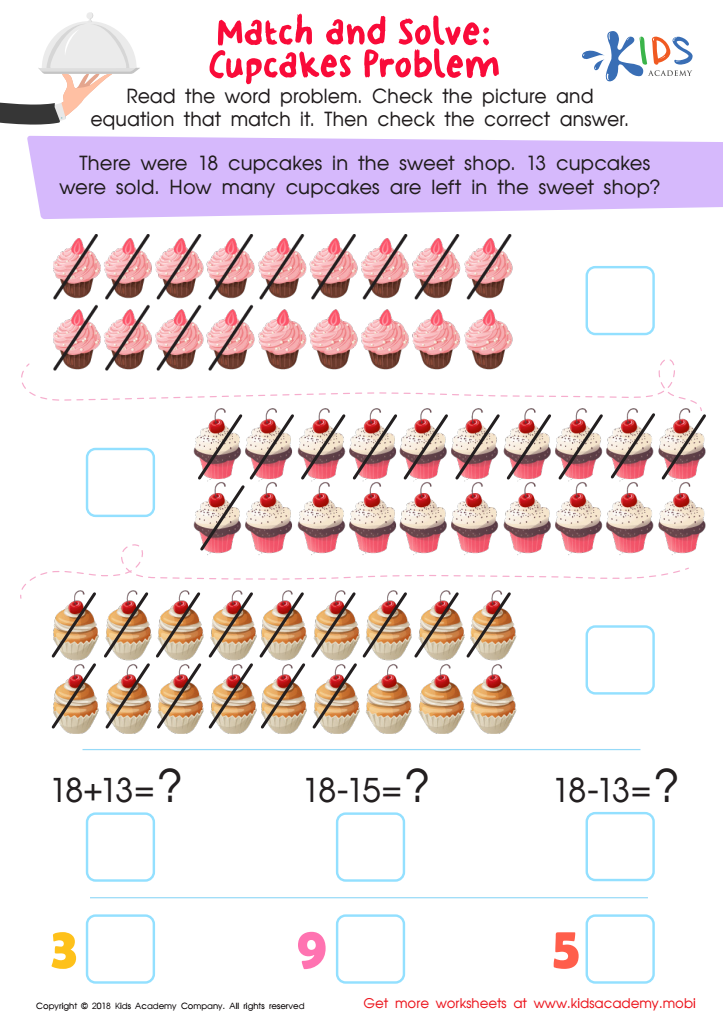
Match and Solve: Cupcakes Problem Worksheet
 Assign to My Students
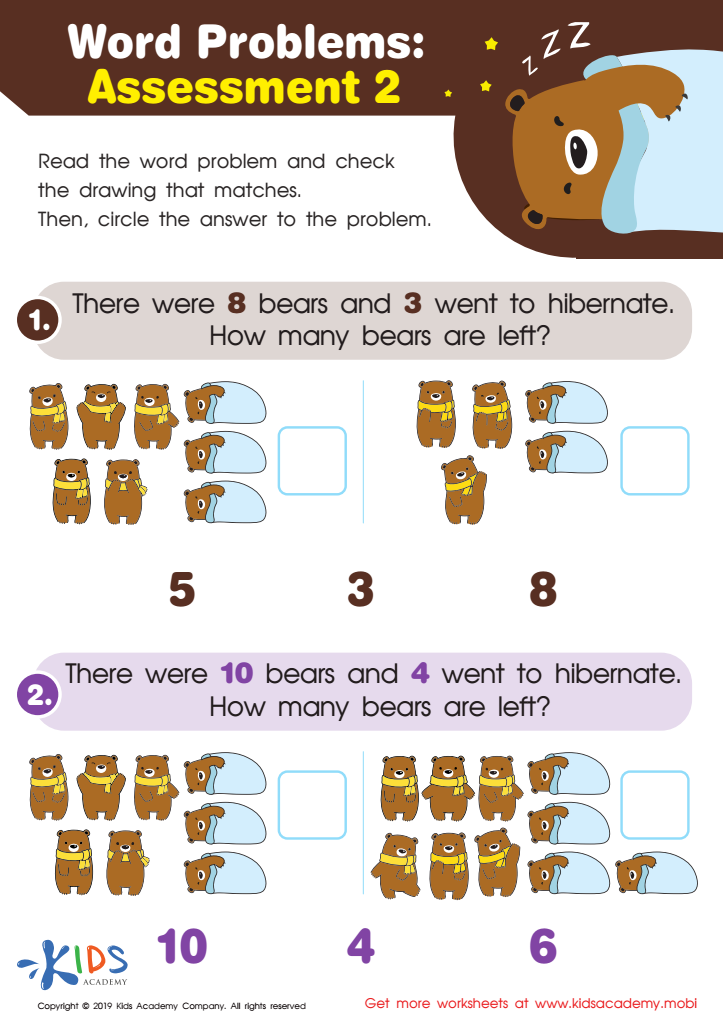
Word Problems: Assessment 2 Worksheet
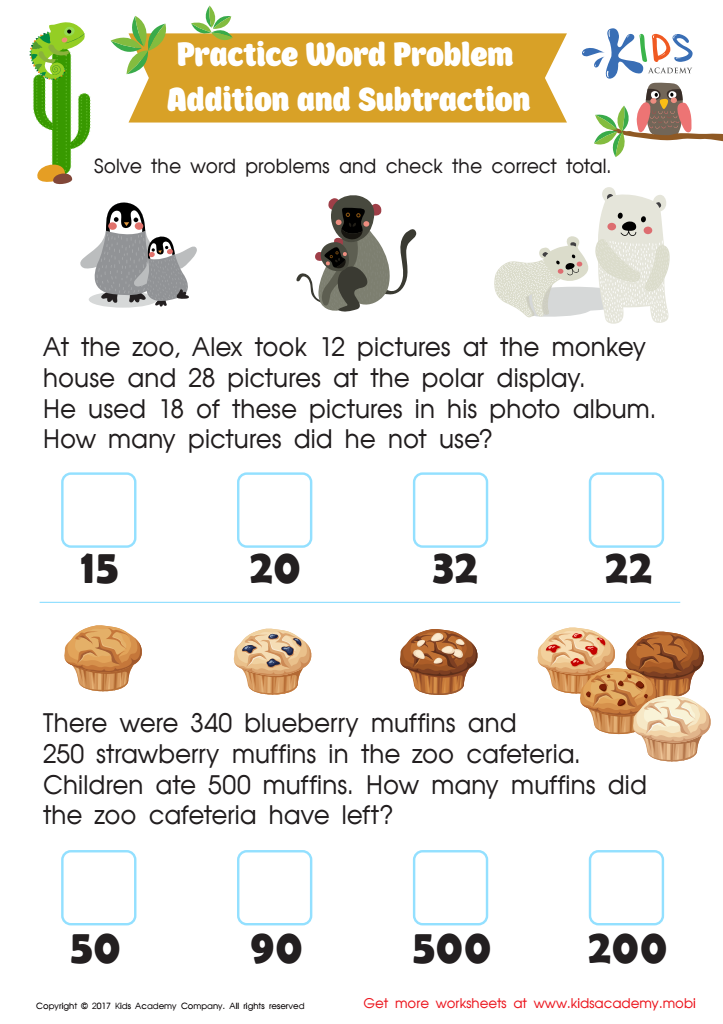
Addition and Subtraction: Word Problems Worksheet
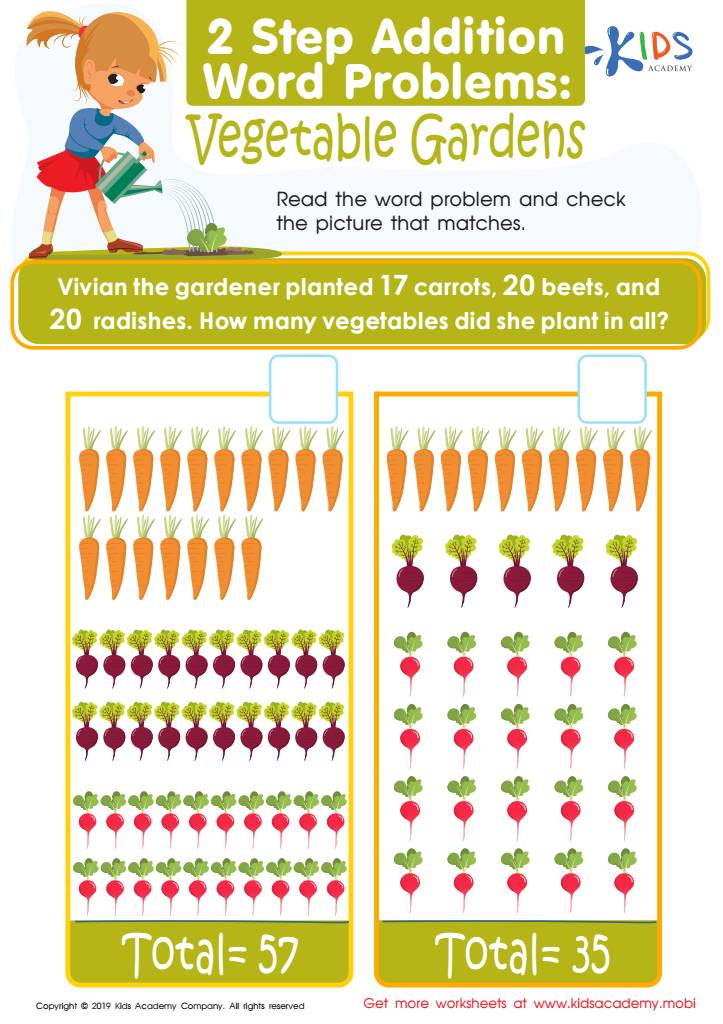
Vegetable Gardens Worksheet
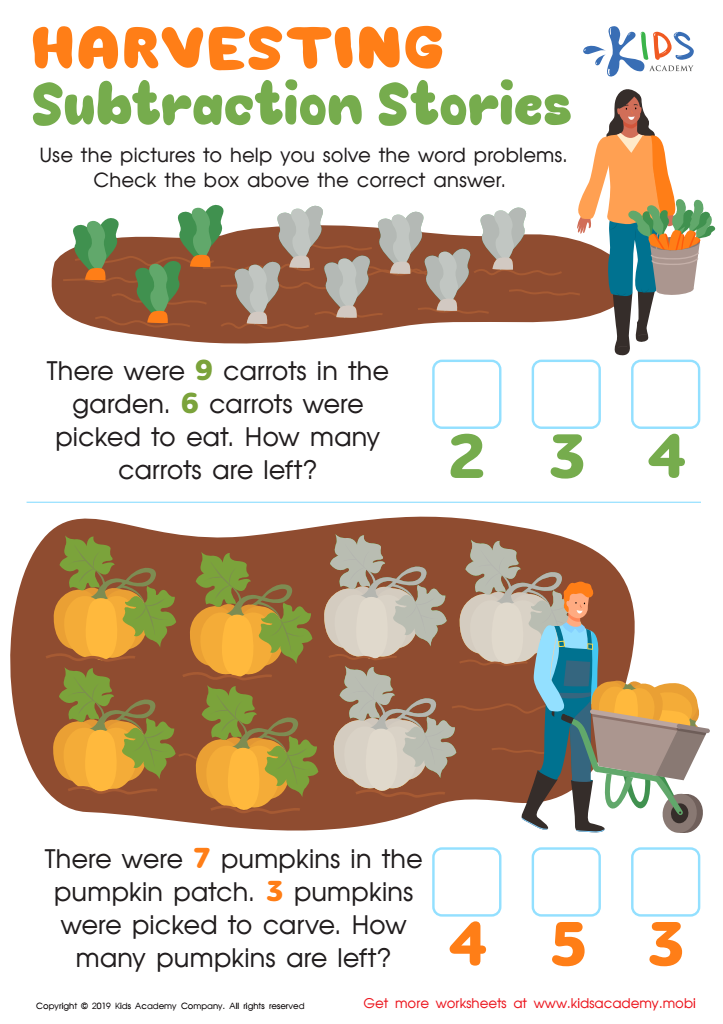
Harvesting Subtraction Stories Worksheet
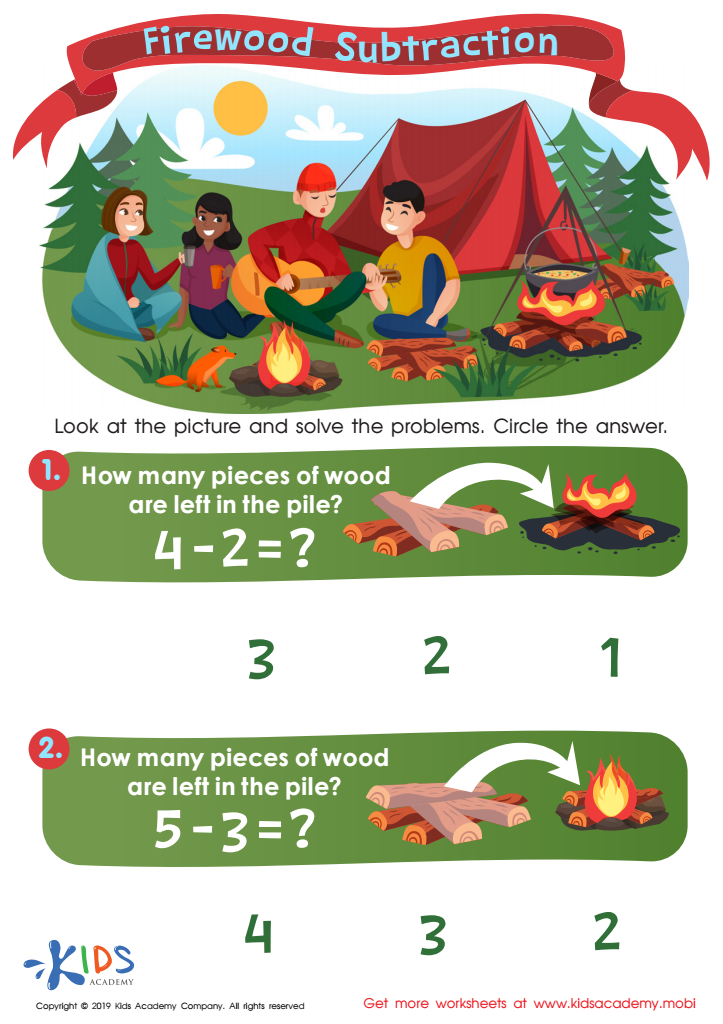
Firewood Subtraction Worksheet
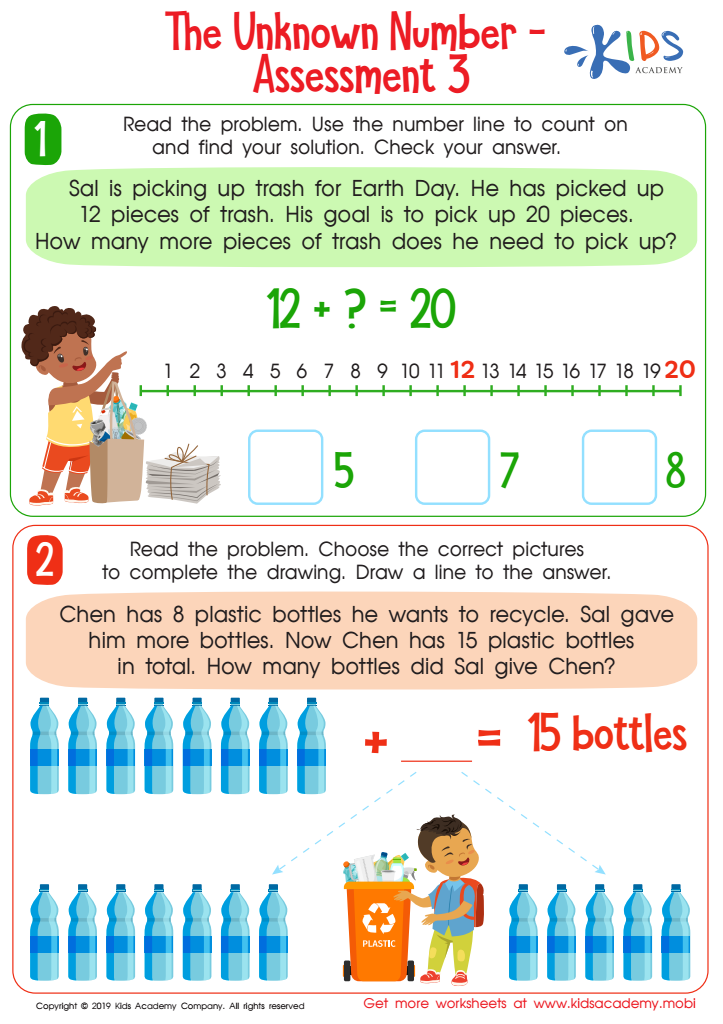
The Unknown Number - Assessment 3 Worksheet
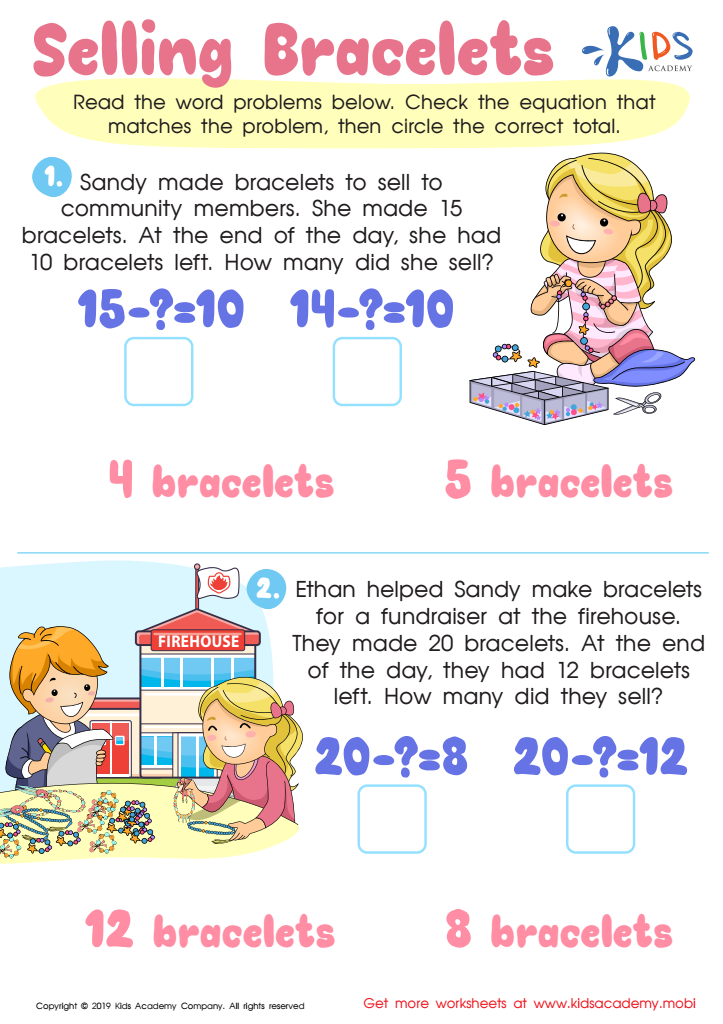
Selling the Bracelets Worksheet
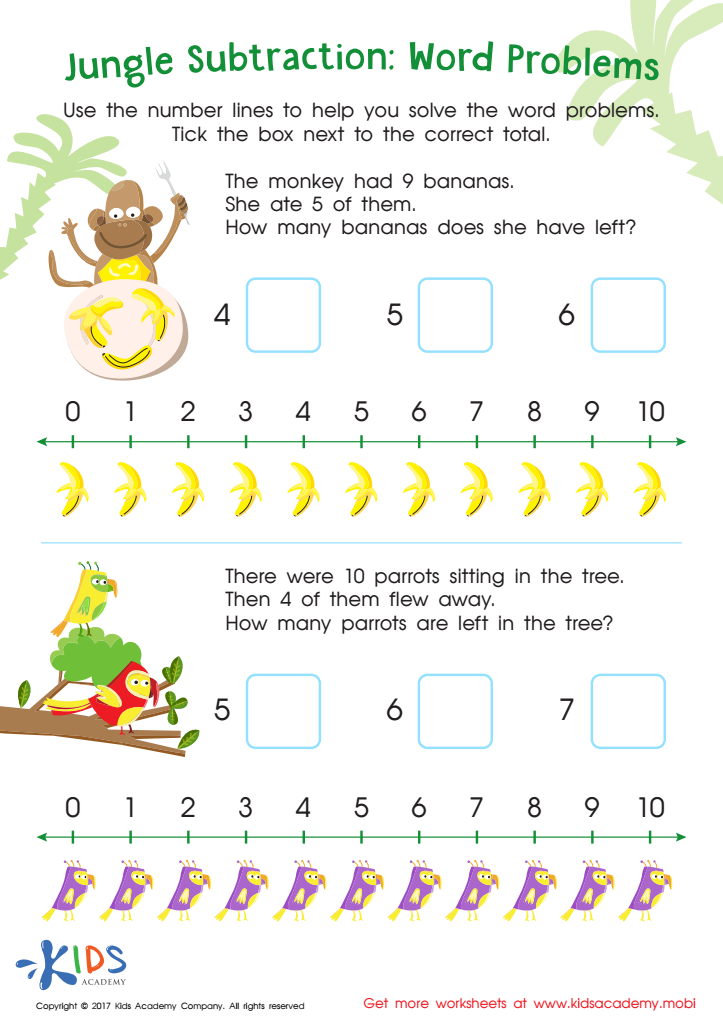
Jungle Subtraction Word Problems Substraction Worksheet








Parents and teachers should care about problem-solving skills, particularly in addition and subtraction word problems for ages 6-7, because these skills are foundational for a child's mathematical understanding and day-to-day reasoning. At this stage, children are developing critical thinking abilities that extend beyond math into all areas of learning. Word problems encourage children to comprehend and analyze real-life scenarios, fostering their ability to decode complex situations and identify relevant information.
Furthermore, mastering these problems helps children understand the practical applications of math in everyday situations, such as budgeting for a snack or sharing toys among friends. Developing strong problem-solving abilities early on boosts confidence and cultivates a positive attitude towards math, making future mathematical concepts less intimidating.
Moreover, these skills lay the groundwork for higher-order thinking, which includes analyzing, synthesizing, and evaluating information. This can lead to improved performance not just in math, but across multiple subjects. By engaging children in word problems, parents and teachers help cultivate resilience and persistence, as children learn to approach challenges thoughtfully and creatively. In an increasingly complex world, the ability to solve problems is essential for academic success and everyday life.